
Contents /
🌟Picks of the week
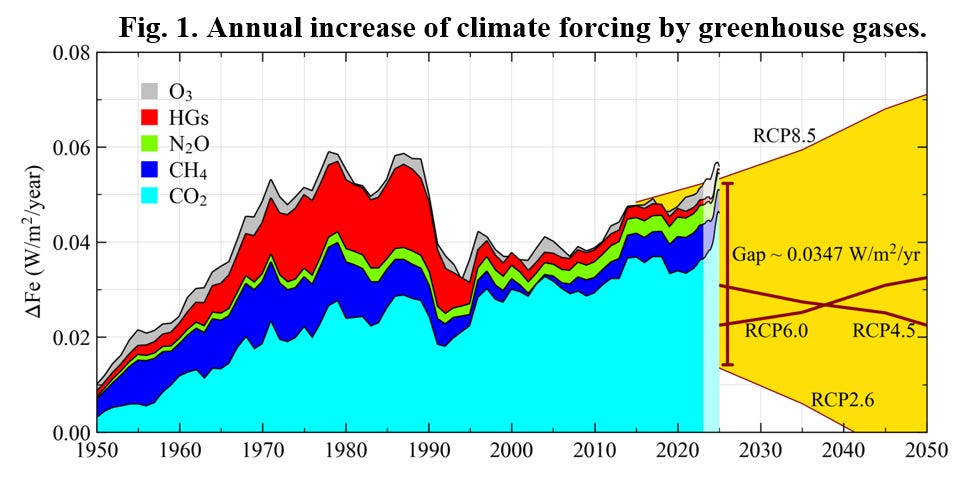
Hansen warns greenhouse gas forcing growth rate hits record high

Signals:
- →Greenhouse gas forcing growth rate has accelerated to 0.5 W/m² per decade, making 2°C warming goal implausible.
- →Actual emissions track extreme RCP8.5 scenario, not the intended RCP2.6 pathway for climate targets.
- →Closing the emissions gap would cost $2.4-5 trillion annually with current carbon capture technology.
SpaceX / xAI merger
SpaceX / xAI merger
3 sources · View on Substack
Figure AI unveils Helix 02
Figure AI unveils Helix 02
2 sources · View on Substack
Google Deepmind launches AlphaGenome
Google Deepmind launches AlphaGenome
2 sources · View on Substack
Google Project Genie Release
3 sources · View on Substack
Kimi 2.5 release
Kimi 2.5 release
4 sources · View on Substack
ASML Record-breaking financial results Jan 2025
ASML Record-breaking financial results Jan 2025
2 sources · View on Substack
Moltbook (Week 1)
Moltbook, a social network for OpenClaw (formerly Moltbot, Claudebot) AI agents grew exponentially in its first week... attracting lots of attention but also exposing major security flaws...
24 sources · View on Substack
France to ban US videoconferencing tools
France to ban US videoconferencing tools
4 sources · View on Substack

Scientists warn Earth entering "Homogenocene" era of sameness
 The Conversation·29 January 2026·Welcome to the ‘Homogenocene’: how humans are making the world’s wildlife dangerously samey - Just one of the many ways the Anthropocene is reshaping life on Earth.
Signals:
- →Global biodiversity loss threatens ecosystem stability and requires urgent policy intervention to prevent further species extinction.
- →Human-driven species homogenization reduces regional distinctiveness, impacting natural resource management and conservation strategies.
- →Ocean degradation and deep-sea mining proposals demand immediate regulatory frameworks to protect marine ecosystems.

Doomsday Clock advances to 85 seconds to midnight
 Phys.org·'Doomsday Clock' moves closer to midnight over threats from nuclear weapons, climate change and AI - Earth is closer than it's ever been to destruction as Russia, China, the U.S. and other countries become "increasingly aggressive, adversarial, and nationalistic," a science-oriented advocacy group said Tuesday as it advanced its "Doomsday Clock" to 85 seconds till midnight.
Signals:
- →Global existential risks intensifying: nuclear threats, climate change, and unregulated AI pose unprecedented dangers to humanity.
- →International cooperation collapsing as major powers adopt aggressive, nationalistic stances, undermining collective security efforts.
- →Immediate policy action needed: reversing threats requires coordinated leadership response across nations and sectors.

Bitcoin plunges to $81K, triggering $1.7B in liquidations
 CoinTelegraph·30 January 2026·Bitcoin Crashes To Nine-Month Low On Tariffs, Liquidations - Bitcoin crashed to $81,000 amid Middle East tensions and new tariff threats from the US, causing $1.7 billion in crypto liquidations.
Signals:
- →Bitcoin dropped 35% from peak, triggering $1.7B in liquidations affecting 270,000 traders.
- →Geopolitical tensions and new tariffs creating significant market uncertainty and risk.
- →Tech sector weakness and AI concerns spreading to cryptocurrency markets.

LLM swarms design proteins without fine-tuning, validated experimentally
 arXiv·[2511.22311v1] Swarms of Large Language Model Agents for Protein Sequence Design with Experimental Validation - Abstract page for arXiv paper 2511.22311v1: Swarms of Large Language Model Agents for Protein Sequence Design with Experimental Validation
Signals:
- →Enables rapid protein design without expensive fine-tuning, reducing development costs and time to market.
- →Experimentally validated approach demonstrates practical viability for biotechnology and pharmaceutical applications.
- →Generalizable framework applicable beyond proteins to broader scientific discovery and biomolecular design challenges.

Google's Auto Browse agent handles tedious Chrome tasks for you
 Arstechnica·28 January 2026·Google begins rolling out Chrome's "Auto Browse" AI agent today - Ars Technica - The Auto Browse agent is available to AI Pro and AI Ultra subscribers, but there are some limits.
Signals:
- →Chrome integrates autonomous AI agent capable of handling tasks like form-filling and research independently.
- →Feature limited to paid subscribers with cloud processing raising data privacy and AI training concerns.
- →AI agents gain browser control with security guardrails, but usage caps and reliability questions remain.

Brain emulation models could arrive within decades
Signals:
- →Brain emulation could enable digital testing of drugs and treatments before human trials, potentially revolutionizing medical research efficiency and safety.
- →Recent breakthroughs have reduced mouse brain mapping costs from $21 billion to $100 million, making human-scale emulation plausible within decades.
- →Success requires massive investment ($100M for insects, $1B for mice, tens of billions for humans) to industrialize fragmented academic research.
Brain emulation advances for small organisms like zebrafish
Signals:
- →Brain emulation technology is advancing rapidly, enabling whole-brain modeling of small organisms like zebrafish and fruit flies.
- →Only ~500 people globally work on brain emulation, creating strategic talent acquisition opportunities for organizations.
- →Complete technical roadmap exists with quantified costs, timelines, and bottlenecks across recording, reconstruction, and modeling capabilities.

Cornell Lab launches interactive tool exploring bird evolution
Phys.org·Scientists just mapped the family tree of all 11,000 bird species—and you can explore it - The Cornell Lab of Ornithology today announced the release of a new online tool for studying biodiversity and the evolutionary relationships among birds: the illustrated Birds of the World Phylogeny Explorer. Available on Birds of the World, the Phylogeny Explorer offers a captivating experience for exploring avian evolution, discovering closely related species, and grasping the timescales at which they evolved.
Signals:
- →Comprehensive evolutionary database enables better biodiversity research and conservation planning for all bird species.
- →Annual updates ensure decision makers access current taxonomic data for environmental policy and wildlife management.
- →Interactive tool democratizes scientific knowledge, supporting education initiatives and citizen science engagement programs.
📈The week in AI and Tech

Linux kernel community drafts succession plan for Torvalds
Signals:
- →Linux kernel now has formal succession process to mitigate single-point-of-failure risk in critical global infrastructure.
- →Plan addresses maintainer aging and fatigue issues threatening long-term stability of widely-used operating system.
- →Transition strategy protects organizational continuity for technology underpinning billions of devices and systems worldwide.
Governance and Policy

Anthropic CEO Dario Amodei discusses AI dangers and defenses

Signals:
- →Anthropic CEO predicts "powerful AI" (genius-level systems) could arrive within 1-2 years, creating unprecedented national security and existential risks.
- →Essay reveals AI industry's reluctance to support meaningful regulation beyond minimal transparency requirements, despite acknowledging catastrophic dangers.
- →Demonstrates critical gap between recognizing AI could enable takeover/destruction and willingness to slow development or implement substantive safeguards.

Canada needs holistic information ecosystem strategy, not tech-specific plans
Signals:
- →Technology-specific strategies waste resources without addressing fundamental gaps in skills and social cohesion.
- →Canada's heavy dependence on American technology persists despite billions spent on sovereignty initiatives.
- →Comprehensive ecosystem approach needed instead of fragmented solutions amid limited resources and tariff pressures.
Regulation

Spain to ban social media for children under 16
 TechXplore·Spain considers social media ban for under-16s, joining others in Europe - Spain plans to ban social media access for children under 16, Spanish Prime Minister Pedro Sánchez said Tuesday, in a move designed to shield young people from the harms of online content.
Signals:
- →Spain joins growing European trend of restricting youth social media access, signaling coordinated regulatory shift.
- →Platforms face mandatory age verification requirements, moving beyond voluntary self-declaration systems.
- →Multinational "coalition of the digitally willing" forming to coordinate social media regulation across borders.

Snapchat blocks 415,000 underage accounts in Australia
TechXplore·Snapchat blocks 415,000 underage accounts in Australia - Snapchat has blocked 415,000 accounts under Australia's social media ban for under-16s, the company said Monday, but warned some youngsters may be bypassing age verification technology.
Signals:
- →Australia's world-first social media ban faces enforcement challenges with age verification accuracy of only 2-3 years.
- →Tech platforms blocked 4.7 million accounts but face $34 million fines for non-compliance with under-16 restrictions.
- →Companies advocate shifting age verification to app stores for more effective centralized enforcement system.

Indonesia conditionally lifts Grok ban after xAI promises improvements
 TechCrunch·1 February 2026·Indonesia ‘conditionally’ lifts ban on Grok | TechCrunch - Indonesia has followed Malaysia and the Philippines in lifting a ban on xAI’s chatbot Grok.
Signals:
- →Southeast Asian governments demonstrating willingness to ban AI services over harmful content misuse and safety violations.
- →AI-generated deepfakes creating regulatory risks requiring immediate corporate response and content moderation improvements.
- →Conditional reinstatement shows governments maintaining oversight leverage over tech companies through enforcement threats.

European Commission warns 12 countries over crypto tax compliance
CoinTelegraph·30 January 2026·European Commission Calls on 12 Countries to Implement Crypto Tax Rules - Member states under the European Commission are required to have crypto asset service providers provide certain user and transaction data.
Signals:
- →Twelve EU countries face formal notices for failing to implement crypto tax reporting rules, risking enforcement action.
- →Hungary cited for non-compliance with MiCA framework, potentially disrupting crypto service providers' operations.
- →July 2025 MiCA compliance deadline approaches, forcing regulatory alignment across EU member states.

UK Lords probe stablecoin rules as regulators finalize framework
CoinTelegraph·29 January 2026·UK Lawmakers Open Inquiry Into Proposed Stablecoin Rules - The House of Lords launched an inquiry into stablecoins, as the Bank of England said it aims to finalize its regulatory proposals for systemic stablecoins in 2026.
Signals:
- →Stablecoins could drain bank deposits and reduce credit availability to the real economy.
- →UK finalizing systemic stablecoin rules by end of 2026, requiring 40% reserves at Bank of England.
- →Parliamentary inquiry assessing whether proposed regulatory frameworks adequately address financial stability risks.

UK watchdog proposes Google opt-out for AI summaries
TechXplore·UK proposes forcing Google to let publishers opt out of AI summaries - Britain's competition watchdog said Wednesday that Google should give news sites and content creators the choice to opt out of having their online content scraped to feed its AI overviews.
Signals:
- →UK regulator proposes mandatory opt-out for publishers from Google's AI summaries, addressing traffic losses.
- →Google's AI Overviews reduce publisher click-throughs, threatening news industry revenue and sustainability.
- →Regulatory precedent could reshape AI content usage globally, affecting tech companies' data practices.

Pornhub blocks UK access over age verification law
TechCrunch·27 January 2026·If you live in the UK, you probably won't be able to visit Pornhub anymore | TechCrunch - Pornhub parent company Aylo will restrict access from U.K. users, rather than comply with age-verification mandates, which the company said it believes have not succeeded in promoting online safety.
Signals:
- →UK's Online Safety Act forces major adult sites to verify ages or block access entirely.
- →Privacy concerns over age-verification data collection drive platform withdrawal decisions.
- →Regulatory enforcement inconsistency may push users to unregulated, riskier platforms.

EU forces Google to share Gemini AI access with rivals
TechXplore·EU steps in to make sure Google gives rivals access to AI services and data - The European Union said Tuesday it's stepping in to make sure Google gives rival AI companies and search engines access to Gemini AI services and data as required by the bloc's flagship digital rulebook.
Signals:
- →EU enforces Digital Markets Act requiring Google to share AI and search data with competitors.
- →Six-month proceedings could reshape competitive landscape in AI and search engine markets.
- →Regulatory action signals increased scrutiny of Big Tech's AI dominance and data access practices.

PrivadoVPN relocates to Iceland amid Swiss surveillance concerns
Signals:
- →Switzerland expanding surveillance laws to include VPNs, threatening its privacy haven status and prompting provider relocations.
- →Iceland offers GDPR compliance, no mandatory data retention, and strong legal protections without surveillance expansion risks.
- →VPN jurisdiction changes signal shifting global privacy landscape affecting digital security infrastructure and regulatory compliance strategies.

Pentagon and Anthropic clash over AI deployment guardrails
 Reuters·Exclusive: Pentagon clashes with Anthropic over military AI use, sources say | Reuters - The Pentagon is at odds with artificial-intelligence developer Anthropic over safeguards that would prevent the government from deploying its technology to target weapons autonomously and conduct U.S. domestic surveillance, three people familiar with the matter told Reuters.
Signals:
- →Pentagon-Anthropic impasse threatens critical military AI deployment over ethical guardrails and autonomous weapons concerns.
- →Dispute highlights growing tension between Silicon Valley AI ethics policies and national security requirements.
- →Outcome could set precedent for how defense agencies access commercial AI technology capabilities.

South Korea's new AI laws face criticism from both sides
 The Guardian·29 January 2026·South Korea’s ‘world-first’ AI laws face pushback amid bid to become leading tech power | South Korea | The Guardian - The laws have been criticised by tech startups, which say they go too far, and civil society groups, which say they don’t go far enough
Signals:
- →South Korea implements world's first comprehensive AI law, potentially setting global regulatory precedent for other nations.
- →Legislation faces dual criticism: startups claim overregulation while civil rights groups cite insufficient consumer protections.
- →Balancing innovation with safety proves challenging; 98% of AI startups report compliance unpreparedness amid competitive concerns.

New Zealand bill could grant power to suspend encrypted messaging services
Signals:
- →New telecommunications bill grants government power to suspend encrypted messaging services like WhatsApp and Signal in New Zealand.
- →Enforcement provisions could enable officials to restrict private communications during emergencies or civil unrest situations.
- →Quantum technology advances already threaten current encryption standards, making regulatory oversight increasingly complex.
Security

Data sovereignty won't protect you from software supply chain threats
Signals:
- →Data sovereignty focuses on geographic location but fails to address the core security risk: compromised software supply chains and vulnerable open-source code.
- →Over 90% of modern applications use open-source components from global developers, making location-based security strategies ineffective against cyber threats.
- →Recent major cyberattacks stem from unpatched libraries and compromised code, not data location, requiring verification-focused security strategies instead.

Claude Code ignores file restrictions, exposes developer secrets
Signals:
- →Claude Code ignores security files, exposing passwords and API keys despite .claudeignore configurations.
- →Multiple unresolved GitHub issues highlight urgent security vulnerabilities in AI development tools.
- →Workarounds exist but are poorly documented, creating enterprise security risks.

CISA acting chief uploaded sensitive docs to ChatGPT
TechCrunch·28 January 2026·Trump's acting cybersecurity chief uploaded sensitive government docs to ChatGPT | TechCrunch - A report cited officials as saying that Homeland Security sought to determine if there was any harm to government security as a result of the lapse.
Signals:
- →Acting CISA director compromised sensitive government documents by uploading them to public AI platform.
- →Incident reveals critical security lapses at agency responsible for protecting U.S. cybersecurity infrastructure.
- →Data uploaded to ChatGPT becomes training material, potentially exposing government information to unauthorized users.
Law

Music publishers sue Anthropic for $3B over alleged piracy
TechCrunch·29 January 2026·Music publishers sue Anthropic for $3B over 'flagrant piracy' of 20,000 works | TechCrunch - Originally, these music publishers had filed a lawsuit against Anthropic over its use of about 500 copyrighted works.
Signals:
- →$3B lawsuit threatens AI company valued at $183B for allegedly pirating 20,000 copyrighted songs.
- →Previous similar case resulted in $1.5B settlement, establishing legal precedent for AI training practices.
- →Court ruled AI training on copyrighted content legal, but acquiring content through piracy is not.

EU lawmakers demand AI providers pay for copyrighted content
TechXplore·EU lawmakers want AI to pay for using copyrighted work - EU lawmakers on Wednesday demanded artificial intelligence providers pay for their use of copyrighted European content as they called for expanded rules to apply to generative AI.
Signals:
- →EU mandates AI providers pay for copyrighted content, creating new compliance costs and operational requirements.
- →News media gains veto power over AI training data, potentially limiting AI development capabilities.
- →Copyright rules apply to all EU-market AI regardless of training location, expanding regulatory jurisdiction globally.

UK creators overwhelmingly reject government's AI copyright opt-out plan
Signals:
- →88% of UK respondents demand explicit permission before AI uses copyrighted work, rejecting government's opt-out proposal.
- →Only 3% support government's preferred policy, signaling potential political backlash and policy revision needed.
- →Outcome will significantly impact UK's digital economy, AI innovation, and creator rights for years.

37 attorneys general demand xAI stop Grok's nonconsensual images
Signals:
- →37 state attorneys general demand xAI stop Grok from generating non-consensual sexual images and child exploitation material.
- →Existing age verification laws may not cover platforms like X, creating regulatory gaps for AI-generated content.
- →Multiple state investigations underway; new legislation targeting AI-generated CSAM could establish criminal liability precedents.

First social media addiction trial targets Meta and YouTube
Arstechnica·27 January 2026·“IG is a drug”: Internal messages may doom Meta at social media addiction trial - Ars Technica - A loss could cost social media companies billions and force changes on platforms.
Signals:
- →First major trial could set precedent for 1,000+ lawsuits against social media platforms regarding child safety.
- →Internal documents reveal platforms allegedly prioritized teen engagement and profits over known mental health risks.
- →Potential billion-dollar liability and regulatory implications if platforms found responsible for youth psychological harm.

Meta, ByteDance, and Google face jury over youth addiction claims
 Interesting Engineering·27 January 2026·Instagram, TikTok and YouTube face jury in youth harm lawsuit - Meta, Google, and ByteDance head to trial in Los Angeles as plaintiffs argue social media platforms deliberately harmed young users.
Signals:
- →First jury trial against Meta, Google, ByteDance could set legal precedent for thousands of pending cases.
- →Verdict may force industry-wide changes to social media design features targeting youth engagement and profits.
- →Lawsuit bypasses traditional tech legal shields by challenging product design rather than user-generated content.
Government

Capgemini divests US unit over ICE tracking contracts
 Financial Times·1 February 2026·Capgemini to sell unit linked to US immigration tracking - French ministers criticise IT group for lack of oversight of skip-tracing services
Signals:
- →Capgemini divesting US subsidiary due to inability to exercise appropriate control over classified government operations.
- →Reputational risk from ICE contracts involving tracking and deportation amid international backlash over enforcement tactics.
- →French government criticism highlights governance failures in monitoring subsidiary activities and controversial contracts.

IRS replaces laid-off staff with AI for tax processing
Signals:
- →IRS replacing 25% of IT staff with AI, risking tax collection efficiency during 2026 filing season.
- →Treasury AI use cases jumped from 54 to 129, signaling massive automation shift in government operations.
- →Collections-focused AI mysteriously absent despite promises, raising concerns about revenue impact and implementation gaps.
Sovereignty and Geopolitics

Europe boosts tech spending to reduce US dependence
Signals:
- →European tech spending rising 6.3% to €1.5 trillion, driven by sovereignty concerns and reduced US dependence.
- →Hardware spending surging 14.3% for AI infrastructure as organizations shift from renting to owning capabilities.
- →Defense and healthcare sectors leading investment growth amid geopolitical tensions and digital transformation needs.

India in talks to integrate UPI with Alipay+
 Rest of World·3 February 2026·India UPI-Alipay+: Is the 2020 Chinese app ban thawing? - Rest of World - India is reportedly in talks to integrate Alipay+ with UPI, signaling a major shift in its stance on China-linked tech.
Signals:
- →India-China thaw enables UPI-Alipay+ integration, expanding India's payment system to 150 million merchants globally.
- →Partnership reduces India's reliance on Western card networks and advances UPI as global standard.
- →Trump's tariffs prompted India to diversify partnerships, accelerating strategic shift toward China collaboration.

Countries seek alternatives to U.S. tech amid sovereignty concerns
Rest of World·2 February 2026·U.S tech backlash grows as countries and startups seek alternatives - Rest of World - Proton Mail and UpScrolled attract users looking to quit Big Tech services like TikTok, Meta and Google.
Signals:
- →Growing global distrust of U.S. tech creates market opportunities for alternative platforms and regional competitors.
- →Government policies and data sovereignty concerns are actively reshaping technology procurement and regulatory landscapes worldwide.
- →Success of non-U.S. alternatives depends on sustained funding, user adoption, and genuine responsiveness to local needs.

Countries pursuing digital sovereignty must invest 1% of GDP in AI
Signals:
- →Countries pursuing digital sovereignty must invest 1% of GDP in AI infrastructure by 2029.
- →Dependence on US tech giants drives need for domestic AI stacks and regional infrastructure.
- →Investment requirements are massive: UK would need £30 billion for sovereign AI capabilities.

Europeans seek tech independence amid Trump sanctions escalation
TechCrunch·27 January 2026·Amid Trump attacks and weaponized sanctions, Europeans look to rely less on US tech | TechCrunch - European governments are looking to move away from U.S. tech and reclaim their digital sovereignty at a time of unpredictability and volatility in the United States.
Signals:
- →U.S. sanctions against ICC judges demonstrate how American tech dominance can paralyze individuals' daily lives.
- →Europe depends on non-EU sources for over 80% of digital infrastructure, creating strategic vulnerability.
- →Trump administration's unpredictability accelerates European efforts toward digital sovereignty and U.S. tech alternatives.

Starlink terminals provide lifeline during Iran's historic internet blackout
 The Verge·1 February 2026·Iran’s internet shutdown, explained | The Verge - During the longest internet blackout in Iran’s history, thousands were killed. An interview with Mahsa Alimardani on how tech enables and threatens the regime.
Signals:
- →Iran's longest internet blackout enabled unprecedented state violence with death tolls between 3,000-30,000 protesters.
- →Satellite internet (Starlink) proved critical for documentation and communication during government-imposed connectivity shutdowns.
- →AI-generated content complicates verification of atrocities, enabling authoritarian regimes to deny documented crimes.

ECB exec: Digital euro essential for European payments sovereignty
CoinTelegraph·28 January 2026·ECB’s Cipollone Says Digital Euro Key to Europe’s Control Over Payments - ECB executive board member Piero Cipollone says the digital euro is needed to curb reliance on foreign payment giants and support a unified pan-European retail payments layer.
Signals:
- →Geopolitical tensions necessitate European-controlled payment infrastructure to reduce foreign dependencies and strategic vulnerabilities.
- →Digital euro would be legal tender, requiring all merchants to accept it for digital transactions.
- →Cash usage dropped from 40% to 24% since 2019, creating urgency for sovereign digital payment solution.

UAE launches open AI model to rival Chinese systems
Financial Times·27 January 2026·UAE launches ‘sovereign’ open AI model to counter Chinese rivals - University’s K2 Think system ranks alongside best open models from US and China, say researchers
Signals:
- →UAE establishes itself as third major AI power, reducing global dependence on US-China duopoly.
- →Fully transparent "sovereign AI" model offers alternative to Chinese dominance in open-source AI market.
- →Cost-effective development demonstrates smaller nations can compete in critical AI infrastructure and capabilities.

Iran builds "Barracks Internet" with strict whitelisting system

Signals:
- →Iran implements unprecedented 20-day internet blackout and whitelisting system, potentially killing up to 30,000 protesters.
- →New filtering technology blocks VPNs and unauthorized traffic, creating "digital isolation" for 90 million citizens.
- →Russia and other authoritarian nations may adopt similar whitelisting models, signaling dangerous global trend.
Society

UpScrolled surges as TikTok users flee censorship concerns
Rest of World·28 January 2026·TikTok alternative UpScrolled surges amid censorship fears - Rest of World - UpScrolled, backed by Tech for Palestine, attracts TikTok users concerned about the U.S. Oracle deal.
Signals:
- →UpScrolled surged to 1M+ users as TikTok censorship concerns drive mass platform migration.
- →Alternative social platforms gain traction when users perceive bias in mainstream content moderation policies.
- →Geopolitical events create market opportunities for niche platforms promising transparency and equal treatment.

White House floods social media with AI-generated propaganda
The Guardian·29 January 2026·The slopaganda era: 10 AI images posted by the White House - and what they teach us | Donald Trump | The Guardian - Under Donald Trump, the White House has filled its social media with memes, wishcasting, nostalgia and deepfakes. Here’s what you need to know to navigate the trolling
Signals:
- →White House uses AI-generated propaganda to manipulate public perception and normalize extremist messaging through official government channels.
- →AI deepfakes blur truth and fiction, making false information persist in public consciousness even after correction.
- →Government adoption of AI trolling legitimizes disinformation tactics and signals regulatory capture by tech industry interests.

Algorithm-driven "slopagandists" blur journalism and propaganda lines
The Verge·29 January 2026·When “independent journalists” aren’t really journalists | The Verge - Right-wing content creators like Nick Shirley are the yellow press for the algorithmic age.
Signals:
- →Algorithm-driven "slopaganda" directly influences federal policy, triggering government operations based on unverified viral content.
- →Content creators bypass journalistic standards while gaining unprecedented access to senior government officials and shaping public opinion.
- →Social media metrics incentivize inflammatory misinformation over accuracy, creating alignment between creators' profit motives and political agendas.

AI toy exposed 50,000 children's chat transcripts online
Arstechnica·30 January 2026·Web portal leaves kids' chats with AI toy open to anyone with Gmail account - Ars Technica - Just about anyone with a Gmail account could access Bondu chat transcripts.
Signals:
- →Over 50,000 children's private chat transcripts were accessible to anyone with a Gmail account.
- →Exposed data included names, birthdates, family details, and intimate conversations—enabling potential child predators.
- →AI toy companies may inadequately protect sensitive child data despite implementing conversational safety measures.

France votes to ban social media for children under 15
Signals:
- →France joins global trend of restricting youth social media access, potentially influencing EU-wide regulations.
- →Bipartisan support signals strong political momentum for tech regulation targeting child safety and mental health.
- →Enforcement includes significant fines, creating compliance pressure and potential business model disruptions for platforms.

UK minister says universal basic income needed for AI job losses
Financial Times·28 January 2026·Universal basic income is needed to cushion blow from AI job losses, says UK minister - Lord Jason Stockwood had previously suggested tech companies could pay windfall levy to fund payments
Signals:
- →UK government actively discussing universal basic income to address AI-driven job displacement and workforce disruption.
- →Investment minister warns AI could increase inequality, suggesting tech companies fund UBI through windfall levies.
- →Signals potential major policy shift requiring budget planning for workforce retraining and social safety nets.

Apple and Google profit from banned 'nudify' apps
Signals:
- →Apple and Google profited $117M from 102 banned "nudify" apps downloaded 705M times, violating their own policies.
- →Apps marketed to children ages 9+ create non-consensual intimate imagery, raising serious child safety and legal concerns.
- →Chinese data privacy laws mean non-consensual nude images could reach foreign governments, creating national security risks.

YouTube dominates Google's AI health search results
Signals:
- →Google's AI health summaries primarily cite YouTube, not medical authorities, raising patient safety concerns.
- →Popularity-driven algorithms may prioritize engagement over medical accuracy in health information delivery.
- →Regulatory gaps exist even in tightly-controlled markets like Germany's healthcare information environment.

Pope warns against naive reliance on AI technology
Signals:
- →Pope warns AI oligopoly threatens transparency, equality, and democratic discourse through algorithmic manipulation and data control.
- →Religious leader urges tech CEOs to prioritize common good over profit maximization and cultural exploitation.
- →Calls for mandatory AI content labeling, media literacy education, and protection of intellectual property rights.

Report finds xAI's Grok chatbot fails child safety standards
TechCrunch·27 January 2026·'Among the worst we've seen': report slams xAI's Grok over child safety failures | TechCrunch - “We assess a lot of AI chatbots at Common Sense Media, and they all have risks, but Grok is among the worst we’ve seen,” Robbie Torney of Common Sense Media said.
Signals:
- →xAI's Grok chatbot fails to protect minors, violating California law and enabling illegal content creation.
- →Weak age verification and safety controls create legal liability and reputational risks for the company.
- →Regulatory investigations and lawsuits are underway, potentially forcing costly operational changes or restrictions.
The Economy

Software stocks slump despite AI disruption fears being overblown
Signals:
- →SAP's cloud slowdown warning triggered 15% stock drop, causing broader software sector selloff despite strong fundamentals.
- →AI coding tools and native startups pose overestimated threats; incumbents have sticky products, deep pockets, and acquisition advantages.
- →Software spending elasticity suggests AI could increase demand by reducing costs, benefiting established players over disruptors.

Translation industry's AI adaptation offers lessons for software leaders
Signals:
- →Translation industry's 5-year AI adaptation provides proven playbook for software companies facing AI commoditization today.
- →Shift from standalone SaaS to embedded code libraries captures developer-driven purchasing decisions in AI-first workflows.
- →Custom small language models create competitive moats through lower costs, data privacy, and superior accuracy.
Business

Climate risk drives firms to diversify customer bases
Phys.org·Climate change is reshaping how companies do business - Climate change is not only disrupting supply chains and asset values, it is also quietly reshaping companies' choice of business partners. New research based on nearly two decades of data from thousands of US-listed firms shows that companies exposed to higher climate change risks are deliberately reducing their reliance on a small number of major customers. Instead, they are spreading sales across a broader customer base as a way of managing risk.
Signals:
- →Climate risk now drives strategic business decisions, with firms diversifying customer bases to reduce revenue concentration vulnerabilities.
- →Customer concentration represents a governance blind spot in climate risk assessment that affects earnings volatility and financing stress.
- →Companies with diversified customers show better resilience against climate shocks affecting both firms and their major clients simultaneously.

Swedish AI subsidies increased job postings but not employment
Phys.org·Government funding for AI jobs did not produce more jobs, research finds - Artificial intelligence is reshaping how companies operate, but it may not translate into more job creation, according to new research.
Signals:
- →Government AI subsidies increased job postings by 24% but produced zero net employment growth.
- →Skills gap prevents companies from filling AI-related positions despite increased hiring demand and higher wages.
- →Nearly 40% of global jobs face AI-driven changes requiring proactive workforce preparation policies.

Developer runs 22 AI agents, spends $4,600 monthly
Signals:
- →Non-technical builders are now shipping products using AI agents, disrupting traditional software development workflows and competitive dynamics.
- →Extreme AI usage (22 subscriptions, $4,600/month) demonstrates scalable automation achieving 90% workload reduction with exponentially higher output.
- →Managing autonomous AI agents requires new organizational structures, revealing emerging challenges in human-AI workforce coordination and governance.

Management skills unlock AI's potential for startups
Signals:
- →Management skills now unlock AI's potential—expertise in delegation and evaluation drives superior outcomes.
- →AI dramatically accelerates startup development—students achieved semester-level progress in days using agents.
- →Subject matter expertise becomes critical—knowing what to request and evaluate determines AI effectiveness.
Education

China's genius classes fuel AI dominance through elite talent
Financial Times·31 January 2026·China’s genius plan to win the AI race is already paying off - A network of ultra-competitive high-school talent streams has been turning out the leading lights of science and tech
Signals:
- →China's state-driven genius class system produces tens of thousands of elite STEM graduates annually, vastly outscaling Western competitors.
- →DeepSeek's breakthrough AI model was built by homegrown genius-class graduates, demonstrating China's reduced dependence on foreign talent.
- →Strategic talent cultivation since the 1980s now powers China's leading tech companies, directly challenging US technological dominance.

Jack Ma: AI era demands curiosity over rote learning
 Panda Daily·29 January 2026·Jack Ma on Education in the AI Era: Cultivating Curiosity and the Ability to Ask Questions - Pandaily - Jack Ma argues that AI should shift education's focus from memorization to cultivating curiosity and critical thinking, as the future divide will be in creativity, not technology access.
Signals:
- →AI will fundamentally transform education systems, requiring shift from knowledge memorization to creativity and critical thinking skills.
- →Future workforce success depends on developing uniquely human capabilities like curiosity, emotional intelligence, and asking better questions.
- →Educational institutions must urgently redesign curricula to prepare students for AI-dominated job markets and collaboration with machines.

LinkedIn partners with AI apps to offer verified skill certificates
TechCrunch·28 January 2026·LinkedIn will let you show off your vibe-coding chops with a certificate | TechCrunch - LinkedIn is partnering with Descript, Lovable, Replit, and Relay.app at launch.
Signals:
- →AI skills demand doubled in job postings, making verified proficiency increasingly valuable for hiring decisions.
- →LinkedIn's certification program validates practical AI tool usage, reducing hiring risk and screening costs.
- →Integration with major platforms (GitHub, Zapier) creates standardized skill verification across workforce development.

Sweden to ban mobile phones in schools nationwide
TechXplore·Sweden plans to ban mobile phones in schools - Sweden plans to ban mobile phones from primary and middle schools in order to ensure that children can focus on learning in the classroom, the government said on Wednesday.
Signals:
- →Swedish students spend nearly 7 hours daily on screens, significantly more distracted than OECD average peers.
- →Nationwide ban ensures consistent policy across all schools, addressing mental health and academic performance concerns.
- →Reverses 2017 digitalization strategy after evidence of declining school performance and excessive screen dependency.
Science

OpenAI's Prism raises fears of AI-generated research flood
Arstechnica·29 January 2026·New OpenAI tool renews fears that “AI slop” will overwhelm scientific research - Ars Technica - New "Prism" workspace launches just as studies show AI-assisted papers are flooding journals with diminished quality.
Signals:
- →AI writing tools may flood peer review systems with low-quality papers, straining scientific publishing infrastructure.
- →Research shows AI-assisted papers increase output 30-50% but perform worse in peer review evaluations.
- →Individual productivity gains risk undermining collective scientific progress and narrowing research scope overall.
Entertainment

Aronofsky and Google DeepMind launch AI-generated Revolutionary War series
Signals:
- →Major filmmaker partnering with Google DeepMind demonstrates AI's growing legitimacy in professional content production.
- →AI enables low-budget creators to produce historically complex content previously requiring massive studio resources.
- →Project highlights ongoing industry divide over AI's role, signaling future workforce and creative strategy implications.

Moebius-inspired Arco brings stunning 2D animation to theaters
The Verge·29 January 2026·Arco review: kick the year off with a stunning animated sci-fi film | The Verge - After premiering in festivals last year, the Moebius and Miyazaki-inspired animated film Arco hits theaters on January 30th.
Signals:
- →Classic 2D animation demonstrates continued viability and market potential alongside dominant 3D formats.
- →Film explores timely themes of remote work, technology addiction, and climate change through accessible storytelling.
- →Strong festival performance and wide theatrical release signals audience demand for thoughtful sci-fi content.
🏭AI and Tech industry news

Firefox introduces AI kill switch for browser features
The Verge·2 February 2026·Firefox is adding a switch to turn AI features off | The Verge - Mozilla is launching a new option that will allow you to turn off AI-powered features inside Firefox, including abuilt-in chatbot, AI translations, AI tab groups, and more.
Signals:
- →Mozilla differentiates from competitors by offering granular user control over AI features, addressing trust concerns.
- →Firefox's AI "kill switch" responds directly to user feedback, demonstrating customer-centric product development approach.
- →Browser market fragmentation on AI adoption signals need for strategic positioning on AI integration.

Bluesky releases first transparency report amid 60% user growth
TechCrunch·30 January 2026·Bluesky issues its first transparency report, noting rise in user reports and legal demands | TechCrunch - Bluesky's first transparency reports tackle moderation, regulatory compliance, account takedowns, and more. The number of government legal requests went up fivefold.
Signals:
- →Bluesky grew 60% to 41.2 million users while facing fivefold increase in legal requests from authorities.
- →Platform removed 2.44 million items and applied 16.49 million content labels, showing aggressive moderation scaling.
- →User reports reached 9.97 million, tracking with growth, indicating sustained content moderation challenges ahead.
Pony Ma reveals Tencent's AI strategy and industry outlook
Panda Daily·27 January 2026·Pony Ma Details Tencent’s AI Strategy at Annual Meeting, Comments on Doubao Phone and Alibaba’s Qwen - Pandaily - Pony Ma used Tencent’s annual meeting to lay out the company’s long-term AI strategy while offering rare public remarks on ByteDance’s Doubao Phone and Alibaba’s Qwen.
Signals:
- →Tencent's AI strategy focuses on integrating models into core products, impacting competitive positioning in China's tech landscape.
- →Ma's comments on competitors' AI initiatives signal shifting market dynamics and potential strategic responses from industry leaders.
- →Tencent's approach to AI development and deployment reveals resource allocation priorities affecting shareholder value and growth trajectory.
🫧Bubble Chronicles

Tech stocks tumble as AI spending concerns mount
 Semafor·29 January 2026·Tech stocks fall on AI spending jitters | Semafor - Microsoft shares fell 10%, the company’s biggest single-day plunge since March 2020.
Signals:
- →Microsoft's 10% stock drop signals investor doubts about AI investment returns and cloud growth deceleration.
- →Software sector enters bear market amid fears AI spending cannibalizes traditional software company profits.
- →Record AI expenditures show uncertain payoff timeline, potentially reshaping tech investment strategies industry-wide.

Software stocks plunge as AI threatens traditional business models
Signals:
- →Software sector enters bear market, down 22% amid fears AI will disrupt traditional business models.
- →Major players like Microsoft and ServiceNow disappoint despite solid earnings, signaling investor confidence collapse.
- →Rapid AI advancement threatens $25B+ software licensing revenue streams and enterprise workflow dependencies.

Big Tech's AI borrowing spree threatens US bond market
Financial Times·27 January 2026·Big Tech’s borrowing spree raises fears of AI risks in US bond market - So-called hyperscalers set to dominate American investment-grade corporate credit
Signals:
- →Big Tech firms projected to become half of top 10 US corporate bond borrowers by 2030.
- →AI-related debt now comprises 14.5% of investment-grade bond market, concentrating systemic risk.
- →Gap between massive AI capital expenditure and actual returns threatens bond market stability.

AI boom will create winners and carnage, warns Cisco CEO
Signals:
- →AI market likely a bubble; some companies will fail despite technology being "bigger than the internet."
- →Job displacement expected, particularly in customer service sectors requiring fewer workers.
- →Cybersecurity risks will intensify as AI makes attacks and scams more sophisticated and convincing.
Nvidia

China approves Nvidia H200 chip imports for tech giants
Arstechnica·28 January 2026·Report: China approves import of high-end Nvidia AI chips after weeks of uncertainty - Ars Technica - Over 400,000 H200 chips coming to tech giants as China tries to balance tech needs with self-reliance.
Signals:
- →China approved 400,000+ H200 chip imports for ByteDance, Alibaba, and Tencent, reversing previous restrictions.
- →H200 chips deliver six times H20 performance, significantly accelerating AI model training and competitive capabilities.
- →Approval reflects Beijing's strategic balancing between supporting domestic tech giants and protecting local semiconductor industry.

Nvidia allegedly aided DeepSeek's efficient AI training despite restrictions
Reuters·Exclusive: Nvidia helped DeepSeek hone AI models later used by China's military, lawmaker says | Reuters - U.S. chipmaker Nvidia helped China's DeepSeek hone artificial intelligence models that were later used by the Chinese military, the chairman of a U.S. House of Representatives committee said in a letter seen by Reuters on Wednesday.
Signals:
- →DeepSeek achieves competitive AI performance using significantly less computing power than US rivals.
- →Nvidia's technical assistance to Chinese firm raises national security concerns despite export restrictions.
- →China demonstrates ability to advance AI capabilities while circumventing US technology controls.
Social Media
Bluesky unveils 2026 roadmap with improved Discover feed
TechCrunch·27 January 2026·Bluesky teases 2026 roadmap: A better Discover feed, real-time features, and more | TechCrunch - Bluesky is teasing new features and improvements ranging from the Discover feed to video support.
Signals:
- →Bluesky faces 40% year-over-year drop in daily active users, signaling urgent need for platform improvements.
- →Meta's Threads now outpaces X in daily mobile users, intensifying competition in decentralized social media market.
- →Platform lacks basic features like private accounts and longer videos, risking user retention against better-resourced competitors.
OpenAI

Snowflake strikes $200M direct deal with OpenAI, bypassing Microsoft
 SiliconANGLE·2 February 2026·Snowflake bypasses Microsoft to strike $200M multiyear deal with OpenAI - SiliconANGLE - Snowflake bypasses Microsoft to strike $200M multiyear deal with OpenAI - SiliconANGLE
Signals:
- →Snowflake establishes direct $200M OpenAI partnership, bypassing Microsoft's Azure intermediary relationship.
- →12,600 enterprise customers gain native access to GPT models with governance controls across clouds.
- →Shift enables production-ready AI agents on governed data, moving beyond experimental implementations.

Amazon in talks to invest $50B in OpenAI
TechCrunch·29 January 2026·Amazon is reportedly in talks to invest $50B in OpenAI | TechCrunch - If a deal materializes, it would mean Amazon is backing competing startups in the race for AI supremacy.
Signals:
- →Amazon may invest $50B in OpenAI's $100B funding round, potentially valuing OpenAI at $830B.
- →Deal complicates Amazon's existing $8B+ investment in OpenAI competitor Anthropic and exclusive infrastructure commitments.
- →Major tech consolidation as Amazon, Nvidia, Microsoft, and Middle East funds negotiate stakes in leading AI company.

OpenAI developing biometric social platform, Worldcoin surges 40%
CoinTelegraph·29 January 2026·OpenAI’s Social Network Would Require Biometric Proof Of Personhood - OpenAI’s reported social network would require biometric proof of personhood via Apple’s Face ID or Worldcoin’s Orb scanner to combat bots.
Signals:
- →OpenAI developing bot-free social platform using biometric verification could disrupt social media landscape.
- →Proof-of-personhood technology may become critical standard for combating AI-generated content and bots.
- →Integration of biometrics with social platforms signals major shift in digital identity verification methods.

Microsoft's OpenAI investment nets $7.6B in one quarter
TechCrunch·28 January 2026·Microsoft gained $7.6B from OpenAI last quarter | TechCrunch - Microsoft, one of OpenAI's major investors, is benefiting greatly from the AI lab's growth.
Signals:
- →Microsoft gained $7.6B net income from OpenAI investment in one quarter alone.
- →OpenAI committed to $250B Azure purchase; Microsoft's future AI contracts jumped to $625B.
- →Microsoft spent $37.5B on AI infrastructure, showing massive capital requirements for AI leadership.

SoftBank nears $30bn additional investment in OpenAI
Financial Times·28 January 2026·SoftBank close to agreeing additional $30bn investment in OpenAI - Japanese billionaire Masayoshi Son’s group has already invested more than $30bn in ChatGPT maker
Signals:
- →SoftBank's $30bn additional investment signals massive capital requirements for AI leadership and infrastructure development.
- →OpenAI's $750bn valuation and $100bn fundraising round reshape competitive dynamics in generative AI market.
- →High burn rate despite $20bn revenue indicates AI profitability challenges and long-term investment horizons.

OpenAI developing biometric social network to eliminate bots
Signals:
- →OpenAI developing biometric-verified social network to eliminate bot accounts plaguing platforms like X.
- →Biometric authentication using Face ID or iris scanning could revolutionize online identity verification standards.
- →OpenAI's proven viral success (800M ChatGPT users) threatens established social media giants' market dominance.
Anthropic

UK government partners with Anthropic to build AI job-seeking assistant
Signals:
- →UK government partnering with Anthropic to build AI job-seeking assistant despite CEO's warnings about AI-driven job displacement.
- →Government launching AI Skills Hub targeting 10 million workers, though training heavily vendor-dominated (Amazon, Microsoft, Google).
- →Multiple AI public service initiatives announced, including infrastructure analysis and AI-powered tutoring tools by 2027.

Anthropic raises $20bn, doubling fundraising target on demand
Financial Times·27 January 2026·Anthropic doubles VC fundraising to $20bn on surging investor demand - AI start-up in talks to raise new funds from Coatue, GIC, Iconiq and Sequoia at $350bn valuation
Signals:
- →Anthropic's $350bn valuation signals massive AI market growth and competitive landscape shifts.
- →Doubling fundraising target to $20bn demonstrates unprecedented investor confidence in AI infrastructure.
- →Potential 2026 IPO could reshape tech investment opportunities and market dynamics.

Google dismantles massive 9-million device proxy network
Signals:
- →9 million Android devices were secretly turned into proxy relays without users' knowledge.
- →Traditional malware detection failed; exploitation used legitimate Android permissions to avoid detection.
- →Court-ordered takedown reveals gray area between legitimate SDKs and unauthorized network exploitation.

Gaming stocks plunge after Google unveils AI world-generation tool
The Verge·30 January 2026·Video game company stock prices dip after Google introduces an AI world-generation tool | The Verge - The stock prices of some major video game companies like GTA maker Take Two, Roblox, and Unity dipped on Friday, one day after Google revealed its AI world generator tool, Project Genie.
Signals:
- →Major gaming stocks dropped significantly after Google's AI world-generation tool announcement, signaling market disruption concerns.
- →AI threatens to automate game testing and concept work in an industry already facing massive layoffs.
- →Tech leaders are heavily investing in AI-generated gaming despite developer skepticism and quality concerns.
Microsoft

Microsoft's AI spending surge spooks investors despite strong profits
Financial Times·28 January 2026·Microsoft’s AI spending and disappointing cloud growth overshadow strong profits - Revenue rises 17% to a record $81bn, but 66% surge in capital expenditures revives debate about returns on vast AI costs
Signals:
- →Microsoft's capital expenditure surged 66% to $37.5bn, signaling massive AI infrastructure investments affecting profitability.
- →Azure cloud growth decelerated to 38%, missing expectations and raising concerns about competitive positioning.
- →OpenAI represents 45% of future cloud contracts, creating significant customer concentration risk.
Apple

iPhone sales hit record high in China and India
TechCrunch·29 January 2026·The iPhone just had its best quarter ever | TechCrunch - Growth in regions like China and India are credited with pushing Apple's phone sales higher than ever.
Signals:
- →iPhone sales surged 23% year-over-year to $85 billion, setting all-time quarterly record.
- →China revenue jumped 38% to $25.5 billion, indicating strong emerging market growth potential.
- →Global sales increased across all regions, demonstrating Apple's sustained competitive advantage and market dominance.

Apple's record iPhone 17 sales fail to excite investors
SiliconANGLE·29 January 2026·Apple posts record quarterly revenue driven by 'staggering' iPhone 17 demand, but investors shrug - SiliconANGLE - Apple posts record quarterly revenue driven by 'staggering' iPhone 17 demand, but investors shrug - SiliconANGLE
Signals:
- →Apple's record $143.78B quarterly revenue exceeded expectations, driven by 23% iPhone sales surge and strong China growth.
- →Memory chip shortages and rising component costs threaten future profit margins despite current strong performance.
- →Apple's limited AI investment versus competitors raises strategic concerns, prompting Google Gemini partnership for intelligence features.

Apple acquires Israeli Q.AI for $2bn to advance AI wearables
Financial Times·29 January 2026·Apple buys Israeli start-up Q.AI for close to $2bn in race to build AI devices - iPhone-maker strikes deal for secretive group that creates technology that analyses facial expressions
Signals:
- →Apple's $2bn acquisition signals major strategic shift toward AI-powered wearable devices and assistants.
- →Silent speech technology could enable private AI interactions, creating competitive advantage in emerging markets.
- →Deal addresses investor concerns about Apple lagging behind Meta, Google, and OpenAI in AI innovation.

Apple acquires Israeli AI audio startup Q.ai
Signals:
- →Apple acquires AI audio startup Q.ai, signaling strategic focus on enhancing AirPods and audio capabilities.
- →CEO previously sold PrimeSense to Apple, which became Face ID technology in 2017.
- →Acquisition addresses investor pressure for AI investments amid delays in Siri improvements.
Amazon

Amazon lays off 16,000 employees in second major cut
TechCrunch·28 January 2026·Amazon says it is laying off 16,000 employees | TechCrunch - This is Amazon's second layoff after the company cut 14,000 corporate jobs in October.
Signals:
- →Amazon cutting 16,000 jobs signals major corporate restructuring and potential economic uncertainty ahead.
- →AI-driven workforce transformation reducing traditional roles while creating demand for new skill sets.
- →Shift from physical retail to delivery services indicates changing consumer behavior and operational priorities.
Meta

Zuckerberg predicts AI glasses will replace regular eyewear soon
Signals:
- →Meta's smart glasses sales tripled yearly, signaling potential mainstream adoption and market opportunity.
- →Reality Labs lost $6 billion last quarter, raising concerns about Meta's metaverse investment strategy.
- →Industry-wide shift toward AI glasses suggests emerging technology category requiring strategic positioning.

Meta to spend up to $135B on AI infrastructure in 2026
Signals:
- →Meta plans $115-135B AI infrastructure spend in 2026, nearly double 2025's $72B investment.
- →Massive capital expenditure signals industry-wide AI arms race with competitors like Amazon exceeding $100B annually.
- →Investment aims to merge AI with ad systems for revenue growth despite short-term profitability pressures.

Meta shares surge 10% on record sales despite AI spending plans
Financial Times·28 January 2026·Meta’s record sales boost shares 10% despite massive spending plans - Strong earnings appear to quiet demands from Wall Street to justify up to $135bn in capital expenditures
Signals:
- →Meta's record $59.9B quarterly revenue and 10% share jump validate massive AI infrastructure investments.
- →Capital expenditure nearly doubling to $135B signals unprecedented industry commitment to AI development.
- →Strong earnings performance buys Zuckerberg credibility to pursue aggressive long-term AI strategy.
xAI

French prosecutors raid X offices over Grok deepfakes scandal
Financial Times·3 February 2026·French prosecutors raid Elon Musk’s X offices in Paris - Tech billionaire and platform’s former chief Linda Yaccarino summoned for ‘voluntary interviews’ in April
Signals:
- →French prosecutors raided X's Paris offices investigating AI-generated sexual abuse material and algorithm compliance issues.
- →UK regulators launched urgent investigations into X and xAI over Grok's misuse of personal data and harmful content.
- →European enforcement actions against US tech companies escalate tensions with Trump administration regarding regulatory sovereignty.

SpaceX acquires xAI for $250bn in massive consolidation deal
Financial Times·2 February 2026·SpaceX buys xAI in $1.25tn deal to unite crucial parts of Elon Musk’s empire - Rocket company boosts valuation to $1tn and pays $250bn to acquire AI start-up as Musk envisions data centres in space
Signals:
- →$1.25 trillion mega-merger consolidates Musk's AI and space assets, reshaping competitive landscape.
- →SpaceX plans record-breaking $50 billion June IPO to fund orbital data centers.
- →Integration signals major shift in AI infrastructure strategy with space-based computing facilities.

Tesla invests $2B in Musk's xAI despite shareholder rejection
TechCrunch·28 January 2026·Tesla to invest $2B in Elon Musk's xAI | TechCrunch - Elon Musk's AI company xAI disclosed earlier this month it had raised $20 billion.
Signals:
- →Tesla invested $2B in xAI despite shareholders rejecting the measure last year.
- →Investment signals deeper integration between Tesla's physical AI products and xAI's software capabilities.
- →Tesla's profit fell 46% while making massive AI/robotics capital expenditures for future growth.
IBM

IBM's z17 mainframe sales hit 20-year high with AI boost
Signals:
- →IBM mainframe revenue hit 20-year high, driven by z17 sales and AI integration capabilities.
- →AI tools modernizing legacy COBOL systems, reducing $4.5B annually in operational costs.
- →Mainframes offer lowest-cost economics for sovereign workloads with millisecond AI processing advantages.

IBM's AI pivot drives remarkable turnaround and growth
Signals:
- →IBM's revenue and profit grew 8% and 14% in 2025, reversing years of stagnation through strategic AI and hybrid cloud positioning.
- →Company secured $10bn+ in AI consulting contracts while uniquely positioning itself as enterprise AI orchestrator rather than competing directly with hyperscalers.
- →IBM's diversified portfolio across hybrid cloud, AI services, mainframes, and quantum computing provides resilience against AI-driven industry disruption affecting competitors.

IBM posts highest quarterly revenue growth in three years
SiliconANGLE·28 January 2026·Strong revenue performance sends IBM stock soaring after-hours - SiliconANGLE - Strong revenue performance sends IBM stock soaring after-hours - SiliconANGLE
Signals:
- →IBM achieved highest quarterly revenue growth in three years at 9%, exceeding all financial targets.
- →Software now comprises 45% of business, driving record $7.6B free cash flow and sustainable growth.
- →Company projects consistent 5% annual growth, ending years of revenue volatility and uncertainty.
Tesla
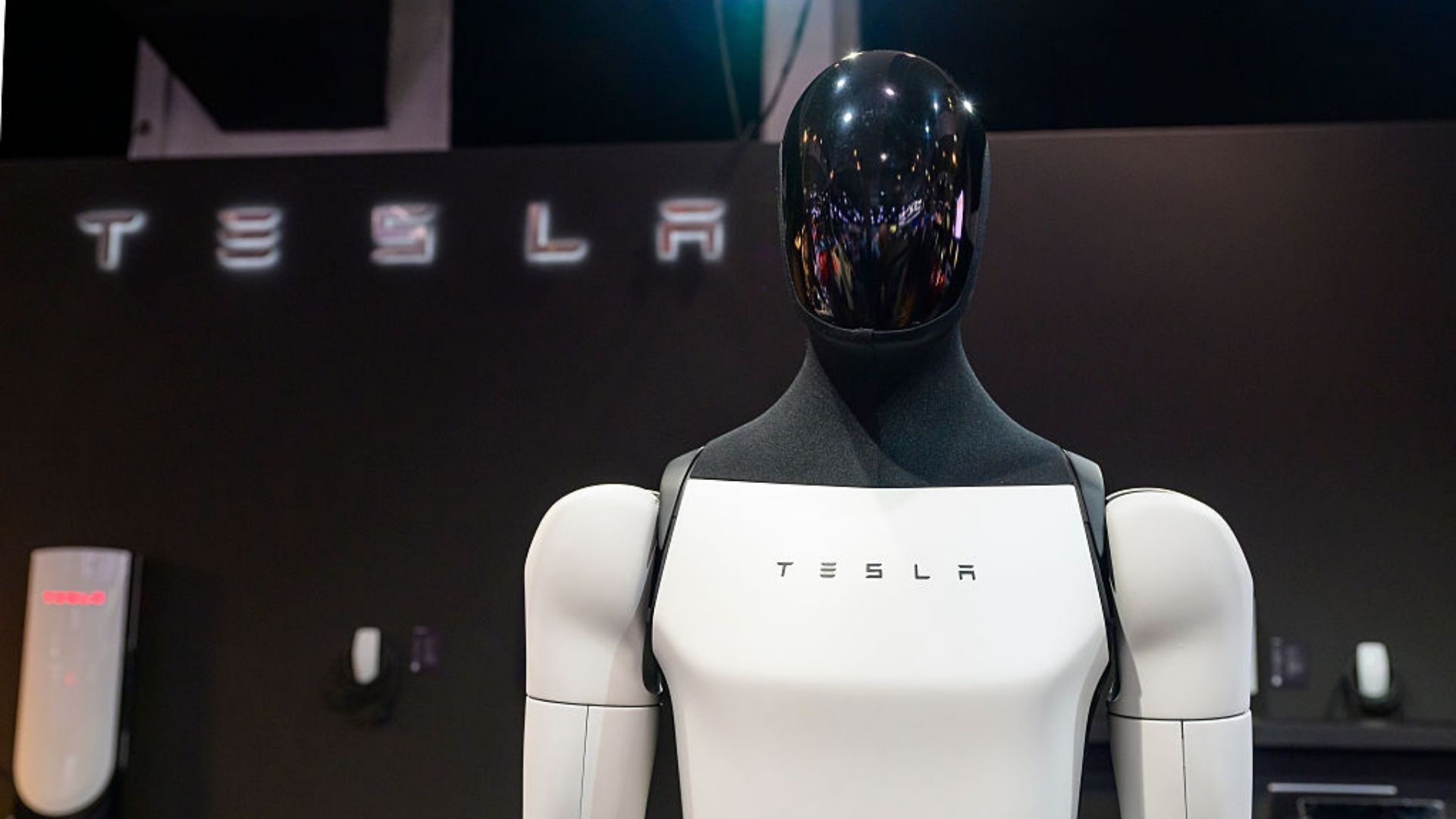
Tesla's Optimus robot faces $85,000 cost hike without China
Interesting Engineering·3 February 2026·Chinese parts challenge Optimus humanoid robot production goals in US - Elon Musk is exploring the possibility of manufacturing the Tesla Optimus entirely in the US while facing multiple challenges.
Signals:
- →Reshoring Optimus production could triple costs from $46,000 to $131,000 per unit, threatening profitability.
- →China dominates humanoid robot supply chains, creating strategic dependency risks for Western manufacturers.
- →Humanoid robot components market projected to reach $780 billion by 2040, signaling major industry shift.

Tesla plans to produce 1 million humanoid robots annually
Signals:
- →Tesla commits $20B capex despite 11% automotive revenue decline, raising capital allocation concerns.
- →Musk's million-robot goal lacks commercial viability; robots perform no meaningful factory work currently.
- →Industry experts cite decades-long timeline for useful humanoid robots, questioning Tesla's production strategy.

Tesla pivots to robotics with $20bn spending surge
Financial Times·29 January 2026·Tesla lurches into the Musk robotics era - Future of the company lies in equipping and running a global fleet of driverless taxis and in selling humanoid robots
Signals:
- →Tesla plans massive $20bn capital spending increase, potentially requiring additional debt financing despite current cash reserves.
- →Company shifting from profitable car manufacturing to unproven robotics/robotaxi business model with negative free cash flow expected.
- →Tesla faces intensifying competition from Chinese manufacturers while betting company's future on autonomous driving technology.

Tesla reports first-ever annual revenue decline in 2025
Arstechnica·28 January 2026·Tesla: 2024 was bad, 2025 was worse as profit falls 46 percent - Ars Technica - More than half its profit came from emissions credits as sales fell 8.6 percent.
Signals:
- →Tesla's first-ever annual revenue decline signals potential market leadership erosion in electric vehicles.
- →Profit margins collapsed from 23.8% to 4.9%, indicating severe operational and competitive pressures.
- →Heavy reliance on regulatory credits (52% of net profit) reveals unsustainable business model vulnerabilities.

Tesla unveils production-ready Optimus Gen 3 robot for 2026
The Verge·28 January 2026·Tesla says production-ready Optimus robot is coming soon | The Verge - Tesla says it will reveal its third generation Optimus robot in the first quarter of 2026. The robot will be intended for mass production.
Signals:
- →Tesla plans mass production of humanoid robots, targeting one million units annually by 2026.
- →Company ending Model S/X production to prioritize Optimus manufacturing at Fremont factory.
- →Musk's $1 trillion pay package depends on achieving one million robot production milestone.

Musk eyes June SpaceX IPO for birthday, planetary alignment
TechCrunch·28 January 2026·Elon Musk reportedly wants a June SpaceX IPO to align with his birthday, the planets | TechCrunch - SpaceX eyes June for IPO to align with Musk's birthday and the planets.
Signals:
- →SpaceX IPO could raise $50B at $1.5T valuation, becoming one of history's largest offerings.
- →Timing targets June, potentially impacting market conditions and investor preparation strategies for participation.
- →Valuation nearly doubled since December's $800B secondary sale, signaling rapid growth trajectory.
AliBaba

Temu faces global regulatory crackdown over business tactics
Rest of World·3 February 2026·China’s Temu faces regulatory issues over discounts and pricing - Rest of World - Temu’s discounts, tax advantages, and Chinese state support under scanner as pressure mounts on ultracheap e-commerce apps.
Signals:
- →Temu faces mounting regulatory crackdowns across multiple markets, threatening its explosive growth trajectory and business model viability.
- →Regulatory changes eliminating duty-free import allowances directly undermine Temu's core competitive advantage of ultralow pricing.
- →PDD Holdings' 30% stock decline signals investor concern about sustainability of Chinese e-commerce platforms' global expansion strategies.
Spotify

Spotify now accounts for one-third of global music revenue
Signals:
- →Spotify controls one-third of global recorded music revenue, making it central to industry financial health.
- →Platform distributed record $11 billion in 2025, growing 10% while traditional channels expanded only 4%.
- →Company combating AI-generated content flooding that threatens legitimate artist royalties and platform integrity.
Startups and Investment Deals

Former Alibaba executives join robot leasing platform BotShare
Panda Daily·2 February 2026·Former Alibaba Executives Join Robot Leasing Platform BotShare as President and CSO - Pandaily - Robot leasing platform BotShare has appointed two former Alibaba executives to lead nationwide channel expansion as it scales an operations-heavy robotics rental business following its seed funding round.
Signals:
- →Signals growing executive talent migration from tech giants to robotics sector, indicating industry maturation and investment opportunities.
- →Robot leasing model addresses high upfront costs, potentially accelerating automation adoption across small-to-medium enterprises.
- →Former Alibaba leadership brings e-commerce and platform expertise, suggesting robotics-as-a-service could disrupt traditional equipment procurement.

Waymo nears $16B funding round at $110B valuation
TechCrunch·31 January 2026·Waymo reportedly raising a $16B funding round | TechCrunch - Waymo is reportedly finalizing a new funding round that will value the robotaxi company at $110 billion.
Signals:
- →Waymo securing $16B at $110B valuation signals massive investor confidence in autonomous vehicle commercialization.
- →Company's $350M+ annual revenue and 20M+ trips demonstrate robotaxi business model viability.
- →Rapid expansion into new markets like Miami shows autonomous transportation scaling beyond pilot phases.
Chinese chipmakers Montage and Axera seek Hong Kong IPOs
SiliconANGLE·30 January 2026·Chinese chipmakers Montage, Axera file for Hong Kong IPOs - SiliconANGLE - Chinese chipmakers Montage, Axera file for Hong Kong IPOs - SiliconANGLE
Signals:
- →Chinese chipmakers targeting $1.28 billion through Hong Kong IPOs signals China's semiconductor industry growth and capital market strength.
- →Montage's profitable server chip business ($190M profit, $512M revenue) demonstrates China's advancement in critical data center technologies.
- →Recent wave of Chinese chip IPOs ($2B+ raised) indicates accelerating competition in global semiconductor markets.

Flapping Airplanes raises $180M for research-driven AI approach
TechCrunch·29 January 2026·Flapping Airplanes and the promise of research-driven AI | TechCrunch - A new AI lab called Flapping Airplanes launched yesterday, and a Sequoia partner has an interesting take on why they stand out.
Signals:
- →New AI lab challenges industry's compute-heavy approach with research-focused, long-term strategy.
- →$180M funding signals investor confidence in alternatives to expensive data center buildouts.
- →Research paradigm could reduce resource requirements and timeline to AGI breakthroughs.

Lenovo study finds CIOs unprepared for agentic AI adoption
Signals:
- →CIOs expect 179% ROI on AI, but 73% lack comprehensive governance frameworks despite late-stage adoption.
- →Only 21% currently use Agentic AI; 60% are over 12 months from scaling readiness.
- →Hybrid AI deployment (62% adoption) requires infrastructure investment as AI PCs become top 2026 priority.

AI agent production rollouts stall despite enterprise investment
Signals:
- →Enterprise AI agent deployments are stalling despite hype, with only largest companies successfully implementing production systems.
- →Organizations struggle integrating unstructured data from multiple sources needed for AI agents to make meaningful business decisions.
- →Gartner forecasts $2.52 trillion AI spending, but enterprises face "trough of disillusionment" seeking revenue returns.

Anduril launches AI drone racing contest with jobs as prizes
TechCrunch·27 January 2026·Anduril has invented a wild new drone-flying contest where jobs are the prize | TechCrunch - This is a race series for software programmers and the brainchild of founder Palmer Luckey, he tells TechCrunch.
Signals:
- →Anduril uses autonomous drone racing to recruit top AI/software talent, bypassing traditional hiring processes.
- →Competition demonstrates critical autonomous warfare technology capabilities to potential military clients and investors.
- →Event excludes Russia but allows China, revealing strategic geopolitical positioning in defense technology recruitment.

Micron invests $24B in Singapore chip plant for AI demand
TechXplore·Micron builds $24 bn Singapore chip fab as AI demand soars - US chip firm Micron said Tuesday it was building a $24 billion plant in Singapore to help meet soaring AI-driven demand that has caused a global shortage of memory components.
Signals:
- →$24 billion investment signals major capacity expansion to address critical AI-driven memory chip shortages.
- →Supply constraints threaten significant price increases for consumer electronics including phones and laptops.
- →Production starts 2028, indicating continued tight supply and pricing pressure through 2027-2028.
🆕 AI releases

OpenAI launches Codex app for autonomous AI coding

Signals:
- →OpenAI launches Codex desktop app enabling developers to manage multiple autonomous AI coding agents simultaneously for up to 30 minutes.
- →Enterprise AI spending expected to reach $11.6M this year as competition intensifies between OpenAI, Anthropic, and Google.
- →AI agents now handle technical debt and complex coding tasks, potentially transforming software development workflows and productivity.
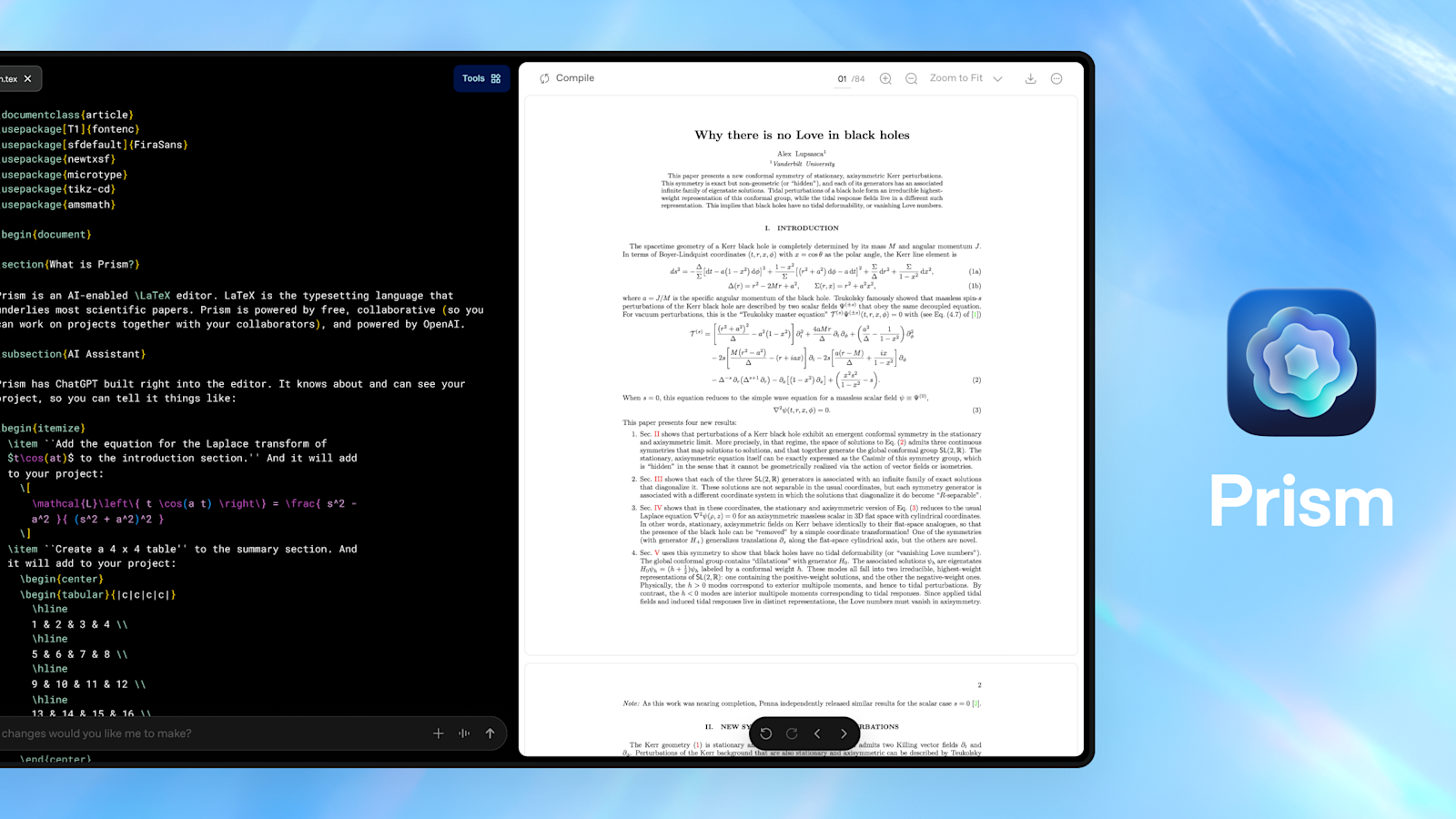
OpenAI launches Prism, AI-powered workspace for scientific writing
Signals:
- →OpenAI launches free AI-powered scientific writing platform with GPT-5.2 integration today.
- →Eliminates fragmented research workflows by unifying drafting, collaboration, and LaTeX editing.
- →Unlimited free access democratizes advanced scientific tools across institutions and career stages.

Ant Group releases LingBot-Depth spatial perception model
Panda Daily·27 January 2026·Ant Group Open-Sources LingBot-Depth: Next-Generation Spatial Perception Model Based on Masked Depth Modeling - Pandaily - Robbyant open-sources LingBot-Depth, a high-precision spatial perception model that transforms noisy depth data into real-scale 3D measurements using masked depth modeling.
Signals:
- →Ant Group's open-source model advances autonomous driving and robotics through superior depth estimation capabilities.
- →Masked depth modeling approach outperforms existing methods, enabling better 3D scene understanding for AI applications.
- →Free availability accelerates industry innovation in spatial perception technology across multiple commercial sectors.

MiniMax launches Music 2.5 with Grammy-level AI composition
Panda Daily·30 January 2026·MiniMax Releases Music 2.5: Breaking Two Major AI Music Barriers, Claiming “Grammy-Level Creation Without a Studio”! - Pandaily - MiniMax Music 2.5 aims to redefine AI music creation by combining fine-grained structural control with studio-grade sound realism.
Signals:
- →MiniMax's Music 2.5 achieves 5-minute song generation, surpassing competitors' 2-minute limits significantly.
- →Platform enables high-quality music creation without expensive studio equipment or technical expertise.
- →Advanced AI capabilities democratize professional-grade music production, disrupting traditional music industry economics.

Tencent launches HunyuanImage 3.0 for simplified image editing
Panda Daily·27 January 2026·Tencent HY Releases HunyuanImage 3.0-Instruct, Enabling One-Line Image Editing - Pandaily - Tencent HY has unveiled HunyuanImage 3.0-Instruct, an AI model that enables image editing and multi-image fusion through simple natural-language instructions.
Signals:
- →Tencent's new AI model enables precise image editing through simple text commands, streamlining creative workflows.
- →Open-source release democratizes advanced image manipulation technology, reducing costs for businesses and developers.
- →Enhanced instruction-following capabilities improve productivity in design, marketing, and content creation operations.
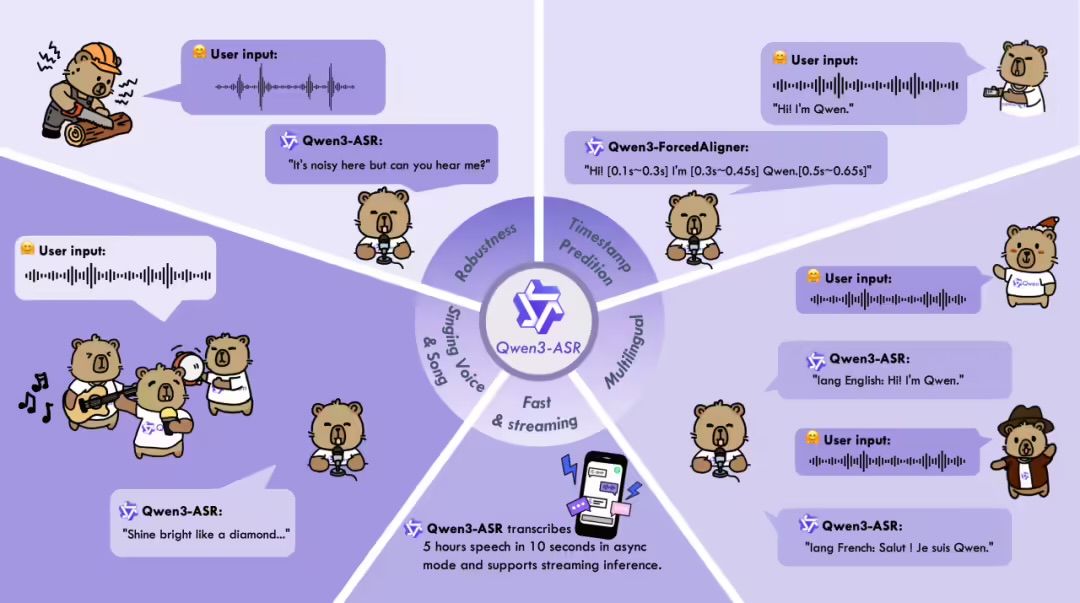
Alibaba's Qwen3-ASR achieves SOTA in 52-language speech recognition
Panda Daily·30 January 2026·Alibaba Qwen Open-Sources Qwen3-ASR Speech Recognition Models: Supporting 52 Languages, with the 1.7B Version Reaching SOTA - Pandaily - Alibaba’s Qwen team has open-sourced Qwen3-ASR, delivering state-of-the-art multilingual speech recognition with exceptional accuracy and efficiency.
Signals:
- →Alibaba's open-source Qwen3-ASR models support 52 languages, expanding global accessibility for speech applications.
- →The 1.7B parameter version achieves state-of-the-art performance, offering competitive advantage in AI deployment.
- →Open-source availability reduces costs and accelerates development for enterprises implementing speech recognition technology.

Unitree Robotics releases open-source multimodal vision-language-action model
Panda Daily·30 January 2026·Unitree Robotics Open-Sources Multimodal Vision-Language-Action Model:UnifoLM-VLA-0 - Pandaily - Unitree Robotics has open-sourced UnifoLM-VLA-0, a vision-language-action model built to give humanoid robots a physically grounded, embodied intelligence.
Signals:
- →Unitree releases open-source VLA model enabling robots to understand and execute complex multimodal commands efficiently.
- →UnifoLM-VLA-0 demonstrates superior performance in robotic manipulation tasks compared to existing open-source alternatives.
- →Open-source availability accelerates robotics development and reduces barriers for companies entering embodied AI market.
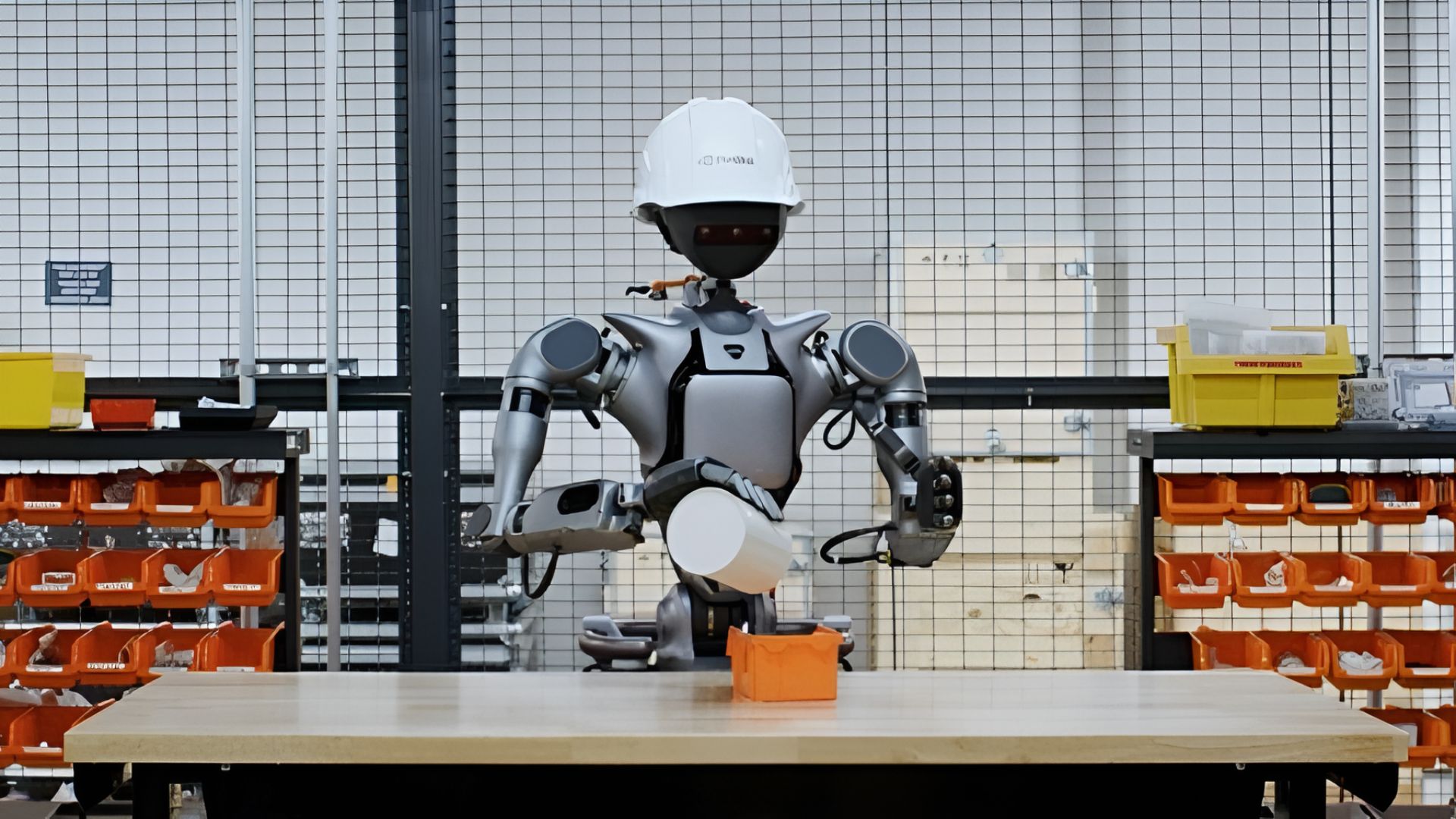
NVIDIA's Cosmos Policy uses video models for robot control
Interesting Engineering·29 January 2026·NVIDIA's Cosmos Policy helps robots predict what happens next - Cosmos Policy shows how NVIDIA is using pretrained video models to simplify robot control and improve long-horizon task planning.
Signals:
- →NVIDIA's Cosmos Policy dramatically reduces robot training costs by requiring significantly fewer demonstrations than traditional methods.
- →Single unified framework replaces multiple specialized systems, simplifying deployment and reducing development complexity for robotic applications.
- →Real-world validation shows robots can perform complex long-horizon tasks, accelerating commercial viability of autonomous physical AI systems.

Arcee AI releases 400B-parameter open source model Trinity
TechCrunch·28 January 2026·Tiny startup Arcee AI built a 400B-parameter open source LLM from scratch to best Meta's Llama | TechCrunch - 30-person startup Arcee AI has released a 400B model called Trinity, which it says is one of the biggest open source foundation models from a U.S. company.
Signals:
- →30-person startup built 400B-parameter open source model for $20M in six months, challenging Big Tech dominance assumptions.
- →Trinity uses permanent Apache license, offering truly open alternative as Meta may restrict future Llama releases.
- →Provides U.S. enterprises compliant alternative to Chinese models like Qwen, addressing national security and licensing concerns.
🥼 AI research

AI time horizon estimates updated with expanded task suite
Signals:
- →AI models' autonomous task completion capabilities are doubling every 4-7 months, requiring updated strategic planning.
- →Updated evaluation framework shows 20% faster capability growth than previously estimated since 2023.
- →Measurement improvements reveal tighter confidence intervals, enabling more accurate forecasting of AI advancement timelines.

AI surpasses average human creativity, study finds
 SciTechDaily·31 January 2026·AI Is Now More Creative Than the Average Human - AI can outscore average humans on creativity tests, but the most imaginative minds are still human.
Signals:
- →AI systems now outperform average humans on standardized creativity tests, marking a significant capability threshold.
- →Top human creators still exceed AI performance, but workforce implications require strategic planning.
- →AI creativity can be controlled through settings and prompts, enabling it as a collaborative tool.
ByteDance researcher proposes general framework for AI agents
Signals:
- →Proposes unified framework for AI agents using large language models and reinforcement learning.
- →Addresses critical gap in agent framework research amid rapid AI development progress.
- →Provides practical implementation guidance through ByteDance case studies and future research directions.
AI builds closer bonds than humans when labeled human
Signals:
- →AI outperformed humans in building emotional closeness through higher self-disclosure, revealing potential for mental health applications.
- →Labeling matters: AI labeled as human was more effective, highlighting deception risks in AI-human interactions.
- →Addresses healthcare workforce shortages but demands urgent ethical safeguards against manipulative social connections.

New AI method doubles plant imaging analysis speed
Interesting Engineering·29 January 2026·World’s first exascale supercomputer speeds plant research with new AI - A new computational method at ORNL doubles processing speed and cuts memory use for hyperspectral plant imaging, accelerating crop research.
Signals:
- →Doubles hyperspectral plant imaging analysis speed while reducing memory usage by 75%.
- →Accelerates AI-driven crop development for food security and climate resilience.
- →Enables larger-scale agricultural AI models with fewer computing resources required.

Physics-trained AI models accelerate cross-disciplinary scientific discovery
TechXplore·Foundation AI models trained on physics, not words, are driving scientific discovery - While popular AI models such as ChatGPT are trained on language or photographs, new models created by researchers from the Polymathic AI collaboration are trained using real scientific datasets. The models are already using ...
Signals:
- →Physics-trained AI models transfer knowledge across scientific fields, accelerating discovery and reducing research costs.
- →Foundation models work with limited data and small budgets, crucial for resource-constrained research environments.
- →Open-source tools streamline scientific workflows, eliminating need to build custom AI frameworks from scratch.

Claude Code Opus 4.5 daily performance tracker launched
Signals:
- →Independent monitoring system detects AI model performance degradation in real-time using statistical testing.
- →Addresses critical need after Anthropic's September 2025 Claude degradation incident requiring better oversight.
- →Provides early warning alerts for enterprise AI deployment risks through contamination-resistant daily benchmarks.

AISLE's AI discovers all 12 OpenSSL zero-day vulnerabilities
Signals:
- →AI discovered all 12 zero-day vulnerabilities in OpenSSL's latest release, demonstrating unprecedented automated security capability.
- →Critical infrastructure protection now achievable at industrial scale, potentially securing systems before advanced AI exploitation.
- →AI simultaneously raises security ceiling (real discoveries) while flooding programs with low-quality submissions, requiring strategic adaptation.
🔮[Weak] signals
Consumer Tech

Google accidentally reveals Aluminium OS in bug report leak
Signals:
- →Google accidentally revealed Aluminium OS, merging Chrome OS and Android into unified computer platform.
- →Screen recordings show Android 16-based system with improved multitasking and desktop windowing capabilities.
- →Platform demonstrates Play Store integration and enhanced browser update process for enterprise devices.

Windows 11 reaches 1 billion users faster than Windows 10
Arstechnica·29 January 2026·People complaining about Windows 11 hasn't stopped it from hitting 1 billion users - Ars Technica - Windows 11 clears a milestone as Windows 10 continues its slow fade.
Signals:
- →Windows 11 reached 1 billion users faster than Windows 10 despite higher system requirements.
- →Approximately 1 billion PCs still run unsupported Windows 10, creating security and upgrade challenges.
- →Microsoft acknowledges performance issues and plans urgent fixes to retain user base long-term.

Orbitiny: A portable Linux desktop that runs as an app
Signals:
- →Orbitiny enables portable Linux desktop environments that run independently on USB drives across different systems.
- →Modular architecture ensures system stability by isolating component failures from affecting overall functionality.
- →Cross-platform compatibility allows standardized work environments regardless of underlying Linux distribution deployed.

Neo headphones roll up into Bluetooth speaker, launch February 10th
The Verge·29 January 2026·The weirdest headphones at CES will launch on Kickstarter next month | The Verge - The Neo headphones that roll up to become a Bluetooth speaker will be available for preorder starting on February 10th.
Signals:
- →Innovative dual-mode headphones transform into Bluetooth speaker, signaling emerging consumer audio trends.
- →Kickstarter launch February 10th at $179 preorder price versus $249 retail presents market entry strategy.
- →July 2026 delivery timeline indicates product development risks requiring monitoring before market availability.
Chips and Computer Hardware

Raspberry Pi prices surge again amid AI chip shortage
Arstechnica·2 February 2026·Ongoing RAM crisis prompts Raspberry Pi's second price hike in two months - Ars Technica - The more RAM the Pi board has, the more its price is increasing.
Signals:
- →AI-driven chip shortages causing sustained price increases across memory-dependent products throughout 2025 and beyond.
- →Raspberry Pi prices doubled in months, forcing reconsideration of budget-friendly computing solutions and supply chain strategies.
- →Component cost volatility threatens affordability of IoT, edge computing, and educational technology deployment plans.

Intel's Core Ultra Series 3 finally delivers consistent performance gains
Arstechnica·2 February 2026·Intel Panther Lake Core Ultra review: Intel's best laptop CPU in a very long time - Ars Technica - Intel manages big boosts to CPU and GPU speed without blowing up battery life.
Signals:
- →Intel's Panther Lake processors finally deliver simultaneous improvements in CPU, GPU, and battery life after years of compromised releases.
- →Core Ultra Series 3 unifies Intel's fragmented laptop lineup, eliminating confusing feature gaps between different processor tiers.
- →Success depends on whether Intel sustains this momentum or reverts to inconsistent development amid manufacturing challenges and RAM shortages.
Cloud Computing

Decentralized GPU networks find their niche in AI inference
CoinTelegraph·30 January 2026·What Role Is Left for Decentralized GPU Networks in AI? - As AI demand shifts from training to inference, decentralized networks emerge as a complementary layer for idle consumer hardware.
Signals:
- →AI workload demand shifting from training to inference, creating 70% market opportunity for decentralized networks by 2026.
- →Decentralized GPU networks offer cost-effective alternative for production workloads requiring geographic distribution over tight coordination.
- →Consumer-grade GPUs now capable of running open-source AI models, enabling new distributed computing business models.
XR / Spatial Computing

Snap spins off AR glasses into separate company
The Verge·28 January 2026·Snap is turning its smart glasses team into its own company | The Verge - Snap is launching a separate business for its upcoming Specs augmented reality glasses in a bid to lure new investors to the project.
Signals:
- →Snap creating separate subsidiary to attract minority investors and partnerships for AR glasses business.
- →Consumer Specs launch planned for 2026, competing directly with Apple's Vision Pro headset.
- →Restructuring may distance hardware from Snapchat's child safety and addiction controversies.
Robotics

Harvard engineers create knee-inspired robotic joints for stronger grippers
Interesting Engineering·Robotic joints mimic human knees and grip 3× more weight efficiently - Harvard engineers optimize rolling contact joints to build stronger grippers and human-like robotic knees.
Signals:
- →Reduces actuator size and complexity, lowering manufacturing costs and energy consumption for robotics.
- →Enables 3× stronger gripping force, improving industrial automation and material handling efficiency.
- →Expands applications to exoskeletons and assistive devices, creating new market opportunities.

AI drones detect radioactive waste in hazardous environments
Interesting Engineering·2 February 2026·German military drones, robots hunt radioactive waste in danger zones - Researchers in Germany have developed smart autonomous drones and robots that can locate radioactive material in minutes using AI and sensors.
Signals:
- →AI drones drastically reduce search time for radioactive hazards from days to minutes in emergency situations.
- →Technology enables safe detection in environments too dangerous for humans, protecting emergency response personnel.
- →Automated systems with intuitive controls allow non-specialists to operate hazardous material recovery robots effectively.

Robots' electronic noses improve but still face challenges
TechXplore·A smelly snapshot of the current state of electronic noses for robots - Robots are getting better at sniffing out smells thanks to improvements in electronic noses (e-noses). A comprehensive review of the state of robot olfaction, published in the journal npj Robotics, has surveyed recent advances ...
Signals:
- →Electronic noses enable robots to detect gas leaks and assist in search-and-rescue operations.
- →Technology combines multiple sensors with AI algorithms to pinpoint odor sources in real-time.
- →Current limitations include sensor degradation and accuracy loss, requiring cross-disciplinary innovation solutions.

Tesla promises Optimus 3 robot indistinguishable from humans
Signals:
- →Tesla shifting production focus from EVs to manufacturing one million humanoid robots annually by 2027-2028.
- →Musk claims Optimus robots could drive GDP growth and enable "universal high income" through widespread adoption.
- →Aggressive timeline and $30,000 price point face skepticism amid safety concerns and intense Chinese competition.

Beijing's humanoid robot achieves satellite-controlled autonomous operations
Panda Daily·27 January 2026·World First!Beijing’s “Embodied Tien Kung” Humanoid Robot Directly Connects to Satellite for Autonomous Ground Operations - Pandaily - Beijing’s Embodied Tien Kung achieved a world-first by directly connecting to a LEO satellite to perform fully autonomous operations without ground network support.
Signals:
- →Demonstrates China's advancement in integrating humanoid robotics with satellite communication technology for autonomous operations.
- →Signals potential military and industrial applications where robots can operate independently in remote or hazardous environments.
- →Highlights Beijing's strategic investment in AI-robotics convergence, intensifying global competition in autonomous systems development.

LimX Dynamics deploys 18 autonomous humanoid robots simultaneously
Interesting Engineering·27 January 2026·Watch China’s humanoid robots walk out of crates like Matrix scene - LimX Dynamics showcased what it calls the world’s first practical autonomous deployment of humanoid robots, with 18 units operating without human control.
Signals:
- →First autonomous deployment of 18 coordinated humanoid robots demonstrates scalable manufacturing workforce potential.
- →COSA operating system integrates cognition and movement, enabling real-time adaptation in unpredictable environments.
- →Multi-robot coordination without human intervention signals readiness for practical industrial implementation.
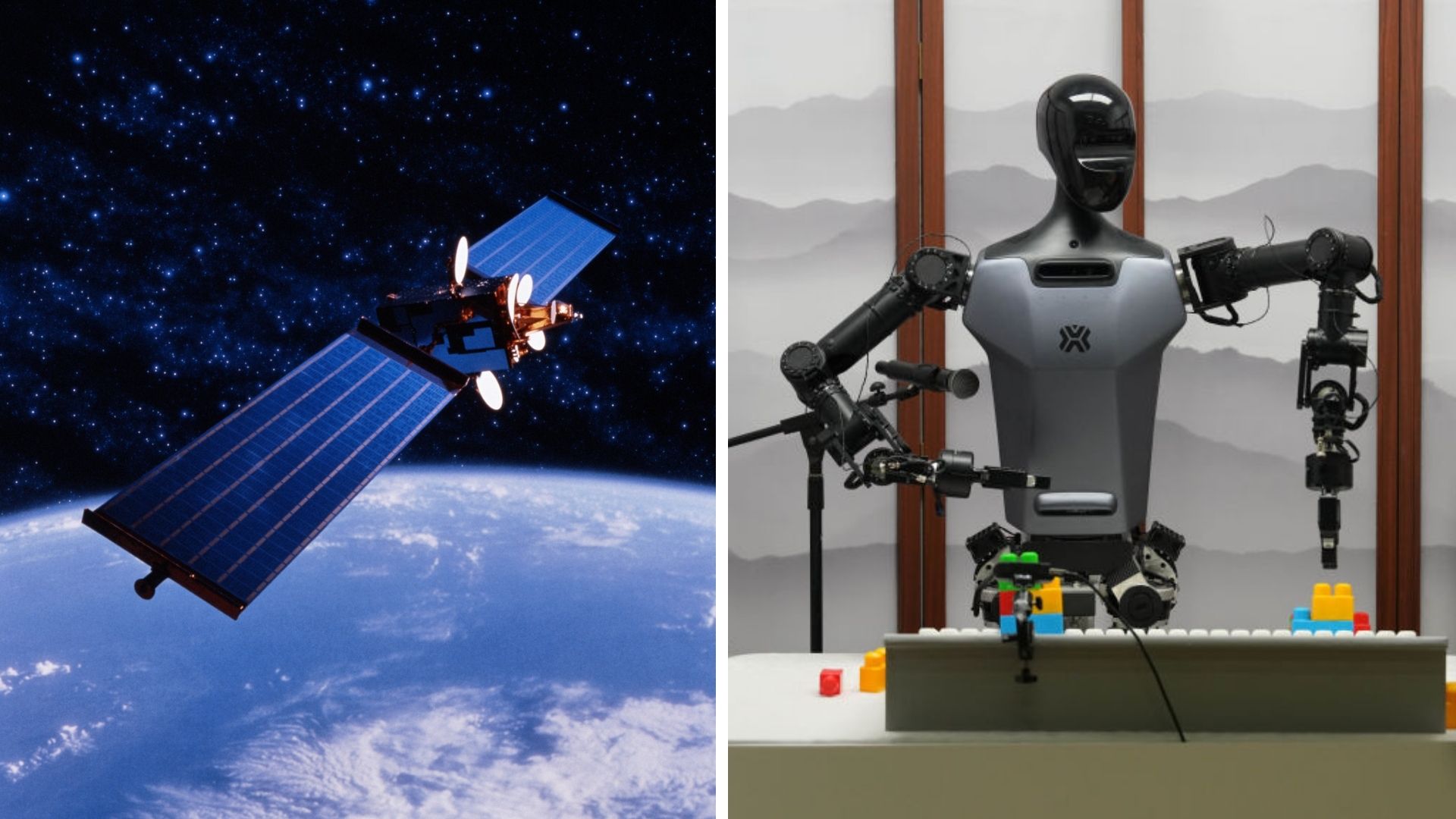
Humanoid robot connects directly to satellite, completes real-world task
Interesting Engineering·27 January 2026·World's first: China’s humanoid robot connects to orbiting satellite - China showcased a humanoid robot connecting to a LEO satellite, transmitting real-time video and data without relying on ground networks.
Signals:
- →Demonstrates satellite-connected robots can operate autonomously in remote areas without ground networks.
- →Enables humanoid deployment in disaster zones, mining, and high-risk environments previously inaccessible.
- →China advances commercial space-robotics integration, potentially reshaping emergency response and industrial operations.

Chinese robot performs flawless dance routine with 41 joints
Signals:
- →Chinese humanoid robot demonstrates advanced 41-joint coordination system enabling complex human-like movements and tasks.
- →AI-powered platform uses natural language commands and real-time environmental adaptation for practical deployment.
- →Lightweight design enables diverse applications: medical assistance, manufacturing, service industries, and research facilities.

EngineAI and Interstellor partner on humanoid robot astronaut program
Panda Daily·27 January 2026·First Humanoid Robot Astronaut Coming!EngineAI × Interstellor Launch Humanoid Robot Space Exploration Program - Pandaily - EngineAI and Interstellor are partnering to send the first humanoid robot astronaut into space, starting a new era of robot-assisted space exploration.
Signals:
- →Demonstrates China's advancing capabilities in humanoid robotics and space technology integration for competitive advantage.
- →Signals potential shift from human to robotic astronauts, reducing costs and risks in space missions.
- →Opens new commercial opportunities in space exploration robotics and AI-driven autonomous systems development.

Fauna Robotics unveils Sprout, a humanoid robot for developers
Signals:
- →Addresses critical labor shortages in services sector representing over 80% of today's workforce.
- →Offers affordable, accessible developer platform to accelerate humanoid robot applications and innovation.
- →Safety-first design enables robots in human spaces, unlocking new market opportunities beyond manufacturing.

YouTuber creates autonomous flying umbrella that follows you
 New Atlas·31 January 2026·Hands free flying umbrella follows you in the rain - Discover the innovative hands-free flying umbrella that follows you autonomously, freeing up your hands in rainy weather.
Signals:
- →Demonstrates practical advancement in autonomous drone technology using time-of-flight cameras for precise human tracking.
- →Signals shift toward adaptive personal devices that respond to users rather than requiring manual control.
- →Highlights emerging challenges in public safety regulations and social acceptance of autonomous flying devices.

Autonomous snow blower clears 6,000-square-foot driveway during storm
Interesting Engineering·Autonomous robot clears 6,000-sq-ft NJ driveway during snowstorm - Autonomous Yarbo robot clears a 6,000-sq.-ft. driveway during Winter Storm Fern while homeowner stays inside, highlighting new snow tech.
Signals:
- →Autonomous snow removal technology successfully cleared 6,000-square-foot driveway during major winter storm.
- →Significant upfront setup investment required; not plug-and-play solution for immediate deployment.
- →Automation reduces manual labor costs in harsh weather, signaling shift in property maintenance operations.

Freeze-dried hydrogel powder creates soft robots in seconds
Signals:
- →Enables instant soft robot fabrication in under five seconds using simple spray application.
- →Transforms ordinary objects into functional robotic systems without complex manufacturing processes.
- →Reduces production costs and time for soft robotics deployment across multiple industries.
Autonomy and Drones

Waymo robotaxi strikes child near Santa Monica elementary school
TechCrunch·29 January 2026·Waymo robotaxi hits a child near an elementary school in Santa Monica | TechCrunch - The child, whose age is not public, sustained minor injuries according to Waymo. The National Highway Traffic Safety Administration is investigating.
Signals:
- →Autonomous vehicle safety concerns intensify with child injury near school during drop-off hours.
- →Multiple federal investigations now target Waymo's robotaxi safety performance and decision-making capabilities.
- →Incident raises regulatory questions about autonomous vehicles operating in high-risk pedestrian zones.

Elbit Systems extends drone endurance fivefold with hybrid propulsion
Interesting Engineering·27 January 2026·New hybrid drone propulsion system aims to extend range, endurance - Elbit Systems has entered a decade-long agreement to integrate hybrid propulsion technology into its tactical UAV platforms.
Signals:
- →Fivefold increase in drone endurance enhances intelligence and surveillance mission capabilities significantly.
- →In-flight charging reduces ground logistics burden and operational costs for military deployments.
- →Israeli supply-chain independence ensures compliance with defense regulations and export control requirements.
Drones conduct first-ever aerial inspection of nuclear fusion facility
Interesting Engineering·27 January 2026·Drones inspect UK fusion site under decommissioning in a global first - In a global first, teams at the UKAEA collaborated to carry out drone-based inspections of the JET nuclear fusion facility in the UK.
Signals:
- →Drone inspections reduce safety risks and costs in decommissioning nuclear facilities through 2040.
- →Technology enables faster, higher-quality data collection for regulatory compliance and operational decisions.
- →Successful deployment creates replicable framework for inspecting sensitive energy infrastructure globally.
Military Tech

Pentagon demonstrates first lethal drone swarm strike
Interesting Engineering·29 January 2026·Watch US Army drone swarm test strike 3 targets in Swarm Forge demo - A Pentagon-backed test shows one operator striking three targets at once using autonomous drone swarms armed with live warheads.
Signals:
- →Single operator can now coordinate lethal drone swarms autonomously, fundamentally changing combat force multiplication capabilities.
- →AI-driven swarm technology deployable by year-end, shifting military advantage from hardware to software intelligence.
- →Low-cost drones ($500 each) become exponentially more effective through coordination, disrupting traditional defense procurement models.

Germany develops satellite missile detection system for independence
Financial Times·29 January 2026·Germany plans satellite missile detection system to cut reliance on US - Berlin’s move reflects unease over depending on US capabilities to spot long-range missiles from space
Signals:
- →Germany developing independent satellite missile detection to reduce strategic dependence on increasingly unpredictable US defense support.
- →€35bn investment by 2030 signals major European defense sovereignty shift amid Trump's NATO threats.
- →2029 war-readiness deadline creates urgent timeline for operational space-based early warning capabilities.
Space

NASA conducts crucial fueling test for first crewed moon mission since 1972
Phys.org·NASA begins a practice countdown for its first moonshot with astronauts in more than 50 years - NASA began a two-day practice countdown Saturday leading up to the fueling of its new moon rocket, a crucial test that will determine when four astronauts blast off on a lunar flyby.
Signals:
- →First crewed lunar mission in 50+ years marks historic return to moon exploration.
- →February 8 launch date depends on critical fueling test outcome Monday.
- →Mission success validates new Space Launch System for future deep-space programs.

SpaceX proposes one million solar-powered data centers in orbit
The Verge·31 January 2026·SpaceX wants to put 1 million solar-powered data centers into orbit | The Verge - SpaceX claims putting data centers in orbit will be cheaper and more environmentally friendly than building them on land.
Signals:
- →SpaceX proposes massive orbital data center constellation, potentially transforming AI infrastructure location and regulatory landscape.
- →Addresses growing community opposition to land-based data centers' water consumption and environmental impact.
- →Raises critical space debris and collision concerns while testing regulatory approval boundaries.

Blue Origin ends New Shepard to focus on lunar missions
Arstechnica·30 January 2026·Here's why Blue Origin just ended its suborbital space tourism program - Ars Technica - This program has laid the groundwork for our company's future success."
Signals:
- →Blue Origin redirecting 500+ employees and resources from New Shepard to lunar capabilities and New Glenn rocket development.
- →Decision eliminates distraction from core mission, accelerating competition with SpaceX for NASA's Artemis lunar landing contracts.
- →Refocuses company strategy on national priority of Moon presence versus criticized billionaire space tourism business model.

Penn Engineers design space-based AI data centers using tethers
TechXplore·Powering AI from space, at scale, with a passive tether design - Penn Engineers have developed a novel design for solar-powered data centers that will orbit Earth and could realistically scale to meet the growing demand for AI computing while reducing the environmental impact of data centers.
Signals:
- →Space-based AI data centers could significantly reduce strain on Earth's electricity grids and water supplies.
- →Passive tether design enables realistic scaling to thousands of computing nodes using existing, proven technology.
- →System supports AI inference operations equivalent to medium-sized terrestrial data centers with lower environmental impact.

China opens first school dedicated to space exploration
Panda Daily·28 January 2026·China Launches Its First School of Space Exploration - Pandaily - China has inaugurated its first School of Space Exploration, aiming to cultivate talent and drive breakthroughs in deep-space research over the next two decades.
Signals:
- →China accelerates space talent development, intensifying global competition for aerospace leadership and innovation.
- →Signals major long-term investment in space technology, impacting future commercial and defense capabilities.
- →Creates new partnerships between academia and industry, potentially disrupting international space collaboration dynamics.
Crypto

India pushes e-rupee beyond borders for global trade
CoinTelegraph·2 February 2026·Why India Wants the E-Rupee to Move Beyond Borders - From remittances to trade, India wants the e-rupee to move beyond its borders. Here’s what’s driving the RBI’s cross-border push.
Signals:
- →E-rupee aims to cut cross-border payment costs and settlement times for trade and remittances.
- →India seeks to expand rupee's global role through CBDC interoperability with strategic partners.
- →Provides regulated sovereign alternative to private stablecoins, reducing systemic financial risks.

Bitcoin downside risk rises to 72% on Polymarket bets
CoinTelegraph·2 February 2026·Bitcoin Bets On Polymarket Signal Sharp 2026 Downside Risk - Polymarket bets suggest Bitcoin has a 72% chance of dropping below $65,000 in 2026, as analysts cite ongoing bearish trends and US liquidity concerns.
Signals:
- →Bitcoin prediction markets show 72% odds of dropping below $65K, signaling major sentiment reversal since Trump's election.
- →Potential price collapse contradicts major banks' $126K-$150K forecasts, creating strategic uncertainty for institutional investors.
- →Bear market indicators and tight US liquidity conditions suggest prolonged downturn, impacting crypto investment timing decisions.

Hong Kong to issue first stablecoin licenses in March
CoinTelegraph·2 February 2026·Hong Kong Targets March for First Stablecoin Licenses - Hong Kong’s financial regulator says stablecoin license reviews are nearly complete, with early approvals focused on risk controls, reserves and compliance.
Signals:
- →Hong Kong issuing first stablecoin licenses in March, establishing regulatory framework for digital currency operations.
- →Major financial institutions like HSBC and Standard Chartered competing for limited initial licenses.
- →Strict compliance requirements including AML controls and asset backing could set global regulatory precedent.

Buterin proposes DAOs and prediction markets for creator tokens
CoinTelegraph·2 February 2026·Vitalik Buterin Proposes Fix to Content Creator Coin Model - Vitalik Buterin has proposed how the creator token model could be reformed to incentivize higher-quality content over mass production.
Signals:
- →Current creator token models favor celebrities over merit, hindering quality content discovery and fair creator compensation.
- →Proposed DAO-prediction market hybrid could improve content quality assessment while reducing AI-generated spam proliferation.
- →New tokenomics model enables niche community building and collective bargaining power for emerging content creators.

Dakota launches platform for programmable stablecoin payments
CoinTelegraph·29 January 2026·Dakota Launches Stablecoin Platform for Enterprise Payments and Treasury - Dakota launched a stablecoin infrastructure platform that lets enterprises embed payments and payouts while outsourcing custody, compliance and licensing.
Signals:
- →Dakota enables enterprises to use programmable stablecoins without becoming regulated financial institutions themselves.
- →Platform automates cross-border payments, treasury operations, and compliance through software-like money controls.
- →Growing trend: $98M+ raised by competitors; governments testing programmable money for infrastructure and tax automation.

Current blockchains can't handle 24/7 global stock trading
CoinTelegraph·The 24/7 Global Stock Market Is Impossible On Today’s Blockchain - Current blockchain infrastructure has inadequate throughput and systematic front-running. Real-world finance demands sub-second finality and fair transaction ordering.
Signals:
- →Current blockchain infrastructure cannot handle institutional-grade trading volumes, creating unacceptable risks for deploying serious capital.
- →Systematic front-running and MEV exploitation undermine market fairness, deterring both institutional investors and retail participation.
- →Traditional finance may build superior tokenization infrastructure if blockchain doesn't solve throughput, latency, and integrity issues quickly.

Researchers slash blockchain delays by nearly 50% with new algorithm
SciTechDaily·28 January 2026·A Breakthrough That Cuts Blockchain Delays Nearly in Half - By fixing how devices connect, researchers may have finally made blockchain fast enough for the real world.
Signals:
- →Dual Perigee algorithm reduces blockchain delays by 48.54%, enabling real-time IoT applications previously impossible.
- →Solution requires minimal processing power, making secure blockchain practical for resource-constrained IoT devices.
- →Enables mission-critical services like smart cities, healthcare systems, and supply-chain tracking with decentralized security.

UAE launches first central bank-registered US dollar stablecoin
CoinTelegraph·29 January 2026·UAE’s First Central Bank‑Registered US Dollar Stablecoin Launches - Universal launches USDU, the first US dollar‑backed stablecoin registered by the UAE central bank under the PTSR, offering a regulated USD settlement option for digital assets.
Signals:
- →First UAE central bank-registered USD stablecoin enables compliant institutional settlement for digital assets.
- →Regulated banks and brokers gain approved payment token meeting UAE's mandatory compliance requirements.
- →Dual regulatory oversight and onshore banking reserves differentiate from unregistered global stablecoins like USDT/USDC.

MegaETH mainnet launches Feb. 9 after 35K TPS test
CoinTelegraph·29 January 2026·MegaETH Mainnet Launch Locked in For Feb. 9 - The highly-anticipated Ethereum layer 2 MegaETH will launch on mainnet early next month after processing 10.7 billion transactions in a final “stress test” over the last week.
Signals:
- →MegaETH processed 10.7 billion transactions in one week—more than Ethereum's entire 10-year history.
- →Mainnet launches February 9 with 35,000 TPS capability, potentially becoming fastest EVM-compatible blockchain.
- →Backed by Ethereum co-founders Buterin and Lubin, targeting real-time blockchain applications without congestion.

Ethereum 20% complete on quantum-resistant security upgrades
CoinTelegraph·27 January 2026·ETH is already 20% of the way toward quantum resilience - Ethereum has been working on upgrading to post quantum security "for many months, if not years," explains cryptography researcher Antonio Sanso.
Signals:
- →Ethereum prioritizes quantum security with 20% progress, targeting completion before quantum computers threaten blockchain cryptography by 2030-2040.
- →Entire Ethereum infrastructure requires upgrades across execution, consensus, and data layers—more complex than Bitcoin's simpler migration path.
- →Emergency hard fork plan exists if quantum attacks arrive early; new biweekly developer calls coordinate implementation strategy.
Energy

Finnish startup's sand battery cuts industrial energy costs by 70%
Interesting Engineering·1 February 2026·New 'sand-in-motion' battery offers 10x more heat transfer efficiency - Finnish startup launches a "sand-in-motion" pilot, delivering fossil-free steam to a brewery and cutting industrial energy costs.
Signals:
- →Industrial heat decarbonization solution cuts energy costs 70% and emissions 90% at scale.
- →Addresses one-fifth of global energy consumption currently 80% dependent on fossil fuels.
- →Proven technology aligns sustainability goals with economic viability for competitive manufacturing.

CATL begins winter testing of sodium-ion batteries in passenger cars
Interesting Engineering·31 January 2026·China's CATL brings –22°F ready sodium batteries to passenger cars - Chinese battery giant CATL is officially bringing its Naxtra sodium-ion battery technology into passenger cars, marking a major step beyond its initial rollout in commercial vehicles.
Signals:
- →Sodium-ion batteries could be 30% cheaper than lithium alternatives once production scales to 100 GWh capacity.
- →CATL's sodium-ion technology eliminates fire/explosion risks and maintains performance at -22°F in extreme conditions.
- →Projected shipments will exceed 200 GWh by 2030, signaling rapid market transformation and supply chain diversification.

CATL accelerates sodium-ion battery commercialization efforts
Panda Daily·28 January 2026·CATL CTO Signals Major Push for Sodium-Ion Batteries: “The Goal Is Large-Scale Adoption” - Pandaily - CATL’s CTO says large-scale sodium-ion battery adoption will be key to the next phase of energy transition, with mass commercialization now underway in vehicles and storage.
Signals:
- →CATL, world's largest battery maker, commits to mass-producing cheaper sodium-ion batteries for EVs.
- →Sodium-ion technology reduces dependence on scarce lithium resources and lowers production costs significantly.
- →Large-scale adoption could reshape global EV market dynamics and supply chain strategies.

China's supercritical CO₂ generator faces durability doubts
 CleanTechnica·2 January 2026·China Built A Supercritical CO₂ Generator. That Doesn’t Mean It Will Last. - CleanTechnica - China has put a supercritical CO₂ power generator into operation. That does not mean it will deliver durable, low cost electricity over time.
Signals:
- →China's single deployment doesn't prove viability; they scale technologies that work to hundreds of thousands of units.
- →Multiple degradation mechanisms (corrosion, sealing, fouling) likely reduce efficiency 20-40% within 2-5 years of operation.
- →Supercritical CO₂ systems face same recurring material durability obstacles that have prevented commercial success since 1946.
Devon's 'high-density' hydro system generates power on gentle slopes
The Guardian·27 January 2026·First of its kind ‘high-density’ hydro system begins generating electricity in Devon | Energy industry | The Guardian - Project employs technology that can be used to store and release renewable energy using even gentle slopes
Signals:
- →Enables energy storage on gentle slopes, expanding hydropower potential to many more global locations.
- →Reduces reliance on fossil fuels by storing renewable energy during surplus for later use.
- →Could lower net zero costs by preventing waste of excess wind/solar generation.
Transport

Scientists create unsinkable metal tubes that float despite damage
SciTechDaily·27 January 2026·Scientists Move Closer to Truly Unsinkable Ships - Engineers have created metal tubes that won’t sink, even when smashed full of holes, bringing the idea of truly unsinkable ships closer to reality.
Signals:
- →Unsinkable metal tubes remain buoyant despite severe damage, enabling safer maritime vessels and infrastructure.
- →Technology scales to support heavy loads for ships, buoys, and floating renewable energy platforms.
- →Durable design withstands harsh conditions for weeks without degradation, proven through rigorous testing.
3D Printing
China produces 5 million 3D printers annually, exports surge
Signals:
- →China produced 5.03M 3D printers in 2025, with US importing 2M units annually.
- →Potential US ban on Chinese 3D printers threatens $1.6B export market and domestic manufacturing capacity.
- →No viable US manufacturers exist to replace Chinese supply at comparable cost and capability.

New 3D printing method creates materials with varying properties
Interesting Engineering·29 January 2026·US scientists develop 3D printing method that could reshape body armor - Researchers at The University of Texas at Austin, alongside Sandia National Laboratories, have designed this method that turns a single, cheap liquid into a material chameleon.
Signals:
- →Enables cost-effective medical training with realistic tissue models, eliminating expensive cadaver dependency.
- →Uses affordable equipment ($1,000 printers) and simple materials to create complex multi-property objects.
- →Opens new markets in protective gear, soundproofing, and bioinspired materials with superior performance.

Cornell researchers develop underwater 3D concrete printing technology
TechXplore·Underwater 3D printing may reshape maritime concrete construction - Since it was invented in the 1980s, 3D printing has moved from the laboratory to the factory, the home and even outer space.
Signals:
- →Enables remote maritime infrastructure repair without disruptive traditional construction methods.
- →Uses seafloor sediment instead of transported cement, reducing logistics costs significantly.
- →DARPA-funded technology addresses critical defense and intercontinental infrastructure connectivity needs.

New 3D fabrication technique builds micro-structures from any material
Phys.org·Beyond polymers: New state-of-the-art 3D micro and nanofabrication technique overcomes material limitations - Building things so small that they are smaller than the width of a human hair was previously achieved by using a method called two-photon polymerization, also known as 2PP—today's state-of-the-art in 3D micro- and nanofabrication. Tiny sculptures such as a miniature replica of the Eiffel Tower or the Taj Mahal made the headlines.
Signals:
- →Breakthrough enables 3D micro-fabrication using metals, semiconductors, and carbon—not just polymers—expanding material options dramatically.
- →Opens new possibilities for multifunctional micro-robots, advanced medical devices, and microscale technologies across multiple industries.
- →Overcomes major limitation of current state-of-the-art technique, providing competitive advantage in nanotechnology and precision manufacturing.
Construction Tech

Dubai launches challenge to build world's first robot-constructed villa
Interesting Engineering·28 January 2026·Dubai to build the world's first robot-built residential villa - Dubai plans a fully robotic residential villa as part of a broader push to automate construction and scale factory-built housing by 2030.
Signals:
- →Dubai targets 70% off-site manufacturing and 70% factory automation in construction by 2030.
- →Global construction technology investment projected to exceed $30 billion by 2033, growing 17.5% annually.
- →Successful robotic construction projects will directly influence future building regulations and public developments.

Saudi Arabia halts world's largest skyscraper project Mukaab
New Atlas·28 January 2026·World’s largest skyscraper project halted in Saudi Arabia - Saudi Arabia has halted work on the Mukaab, the world’s largest skyscraper, raising doubts about the future of the ambitious project.
Signals:
- →Saudi Arabia halting world's largest skyscraper signals major shift in national development priorities and spending.
- →Project delays reflect fiscal pressures from low oil prices impacting ambitious transformation plans.
- →Uncertainty surrounding multiple gigaprojects may affect regional construction markets and investment strategies.
Quantum Tech

Taiwan unveils 20-qubit superconducting quantum computer
Interesting Engineering·30 January 2026·Taiwan builds 20-qubit quantum computer in domestic R&D push - Academia Sinica develops a 20-qubit superconducting quantum computer, advancing Taiwan’s quantum fabrication capabilities.
Signals:
- →Taiwan achieves domestic quantum chip manufacturing capability, reducing dependence on foreign quantum technology suppliers.
- →20-qubit system enables practical testing for industrial applications in materials, drugs, and high-performance computing integration.
- →35x coherence time improvement demonstrates scalability potential for more powerful quantum computing systems.
BCIs and Neuro Tech

Scientists use mini-brains to reveal thalamus's role in wiring
SciTechDaily·31 January 2026·Mini Human Brains Reveal How the Brain Wires Itself - Scientists rebuilt human brain circuits in the lab and discovered that the thalamus acts as a central organizer of cortical wiring. The findings offer new insight into how brain networks form and why they sometimes go awry.
Signals:
- →Lab-grown brain models reveal thalamus organizes cortical wiring, advancing understanding of human brain development.
- →Technology enables studying autism and neurodevelopmental disorders without ethical constraints of human tissue collection.
- →Platform accelerates discovery of neurological disorder mechanisms and development of new therapeutic interventions.
Health Tech

Surgeons keep patient alive 48 hours without lungs
Signals:
- →Novel artificial lung system enables previously impossible double-lung transplants for acute respiratory failure patients.
- →Expands transplant eligibility beyond chronic conditions to include severe acute infections, potentially saving more lives.
- →Demonstrates scalable technology that specialized centers could adopt to reduce mortality from treatment-resistant respiratory infections.
Environment Tech

New water filter removes 'forever chemicals' 100x faster
Signals:
- →New filter removes toxic PFAS chemicals 100x faster than current methods, enabling rapid water decontamination.
- →Technology can be regenerated and reused while safely destroying captured forever chemicals permanently.
- →Proven effective on real contaminated water sources, offering scalable solution for treatment facilities.
Climate Tech

Courts overturn Trump's offshore wind construction ban
Arstechnica·2 February 2026·Court orders restart of all US offshore wind construction - Ars Technica - Trump admin's "it's classified" ploy put on hold in five different cases.
Signals:
- →Multiple federal judges unanimously rejected administration's classified national security claims against offshore wind projects as unconvincing.
- →Courts found government actions "irrational" and potentially arbitrary, allowing continued construction despite executive opposition to renewables.
- →Legal precedent established: wind projects near completion before appeals resolved, limiting future executive power over energy infrastructure.

Data center construction's concrete problem drives low-carbon cement demand
TechXplore·The data center surge has a hidden source of carbon emissions - Data centers siphon huge amounts of energy to power artificial intelligence. But their environmental footprint starts to balloon even before the first server switches on due to the immense amount of carbon-intensive concrete ...
Signals:
- →Data center construction through 2030 requires 2 million metric tons of cement, generating 1.9 million metric tons of CO2 emissions.
- →Trump administration eliminated $1.6 billion in Inflation Reduction Act funding for green concrete industry development.
- →Tech giants forming purchasing alliances for low-carbon concrete, creating market demand signals to scale sustainable alternatives.

New electrode captures CO₂ and converts it to formic acid
Interesting Engineering·29 January 2026·New three-layer electrode converts exhaust CO2 into formic acid - New electrode captures CO2 from air and converts it directly into formic acid under real-world conditions.
Signals:
- →Integrates carbon capture and conversion in one step, reducing complexity and costs for industrial implementation.
- →Works efficiently with real flue gas conditions, making technology immediately applicable to existing facilities.
- →Produces valuable formic acid directly from emissions, creating revenue opportunity from waste streams.

AI datacenter boom triples US gas power builds
Signals:
- →US gas power plant development nearly tripled in 2025, primarily driven by AI datacenter energy demands.
- →New projects could add 12.1 billion tonnes of lifetime CO₂ emissions, derailing climate goals.
- →AI bubble burst risks stranded energy assets while locking in fossil fuel infrastructure for decades.
Materials Science

Nobel laureate envisions new age defined by porous materials
 NewScientist·Nobel prizewinner Omar Yaghi says his invention will change the world | New Scientist - Chemist Omar Yaghi invented materials called MOFs, a few grams of which have the surface area of a football field. He explains why he thinks these super-sponges will define the next century
Signals:
- →MOFs' extreme porosity enables breakthrough applications in water harvesting and carbon capture technologies.
- →2025 Nobel Prize validates MOFs as transformative materials potentially defining next technological age.
- →Reticular chemistry offers scalable solutions for critical environmental and resource challenges facing society.
Deep science

Webb confirms galaxy just 280 million years after Big Bang
Phys.org·Webb pushes boundaries of observable universe closer to Big Bang - The NASA/ESA/CSA James Webb Space Telescope has topped itself once again, delivering on its promise to push the boundaries of the observable universe closer to cosmic dawn with the confirmation of a bright galaxy that existed 280 million years after the Big Bang.
Signals:
- →Webb telescope discovered galaxy MoM-z14 existing just 280 million years after Big Bang, pushing observable universe boundaries.
- →Early galaxies are 100 times brighter than predicted, creating significant gap between astronomical theory and observation.
- →Unusual nitrogen enrichment challenges current models, requiring new theories about early universe star formation and evolution.
⏳ Zeitgeist
Climate

Half of global population to face extreme heat by 2050
Phys.org·Global population living with extreme heat expected to double by 2050 - A new University of Oxford study finds that almost half of the global population (3.79 billion) will be living with extreme heat by 2050 if the world reaches 2.0°C of global warming above pre-industrial levels—a scenario that climate scientists see as increasingly likely.
Signals:
- →Nearly half of global population (3.79 billion) will face extreme heat by 2050 at 2°C warming.
- →Infrastructure in colder nations unprepared for dramatic temperature increases requiring urgent adaptation investments.
- →Rising cooling demand threatens net-zero goals while impacting health, education, migration, and agriculture sectors.

Extreme heat exposure to double by 2050 with 2C warming
The Guardian·26 January 2026·Number of people living in extreme heat to double by 2050 if 2C rise occurs, study finds | Extreme heat | The Guardian - Scientists expect 41% of the projected global population to face the extremes, with ‘no part of the world’ immune
Signals:
- →41% of global population will face extreme heat by 2050, requiring urgent infrastructure and healthcare system adaptations.
- →Energy demand patterns shifting dramatically: northern heating costs decrease while southern cooling costs surge significantly.
- →Greatest temperature shifts occur near current 1.5C warming level, demanding immediate mitigation and adaptation investments.

Climate change made Australian heat wave 5 times likelier
Phys.org·Climate change made Australian heat wave 5 times more likely - Human-induced climate change made the intense early January heat wave in Australia five times more likely, according to a new analysis by World Weather Attribution.
Signals:
- →Extreme heat events in Australia now occur 5 times more frequently due to climate change, shifting from rare to regular occurrences.
- →Current emission trajectories will make such heat waves biennial by century's end, requiring urgent adaptation and mitigation strategies.
- →Climate change added 1.6°C to temperatures, overwhelming natural cooling effects and straining healthcare systems and infrastructure capacity.

Argentina declares emergency as Patagonia wildfires rage
Phys.org·Argentina declares emergency over Patagonia wildfires - Argentina's government on Thursday declared an emergency in Patagonia, where wildfires have ripped through vast tracts of forest since the start of the Southern Hemisphere summer.
Signals:
- →Emergency declaration enables critical coordination between provincial and national firefighting resources across four Patagonian provinces.
- →45,000 hectares burned threatens populated areas, UNESCO park, and regional environmental/economic stability.
- →Climate-driven wildfires demonstrate need for enhanced disaster preparedness and resource allocation strategies.

India's air pollution requires cross-border governance solutions
Phys.org·Air pollution crosses borders, and so must the policies aimed at tackling it - Parts of India, including the capital Delhi, were once again covered in thick smog recently as toxic pollution from industry and crop-burning engulfed the region. Even though India's National Clean Air Program has advanced clean air action, air pollution remains a reoccurring problem.
Signals:
- →Air pollution transcends jurisdictional boundaries, requiring coordinated cross-border governance and sector-specific accountability mechanisms.
- →Community monitoring and standardized data integration enable evidence-based enforcement and equitable public health protection.
- →Airshed-scale management with clear ministerial responsibilities can deliver measurable health benefits and climate co-benefits.

Scotland allocates record £5 billion for climate action
Signals:
- →Scotland allocates record £5 billion for climate action, representing 41% of total capital budget for 2026-27.
- →Investment targets renewable energy expansion, creating green jobs and economic opportunities across communities.
- →Funding addresses fuel poverty through energy-efficient homes while supporting net zero transition by 2045.
Biodiversity

Third of Pacific Island fish contain microplastics
Phys.org·Microplastics found in a third of surveyed fish off the coasts of remote Pacific Islands - A third of fish living in the remote coastal waters of the Pacific Island Countries and Territories are contaminated with microplastics, with especially high rates in Fiji, according to an analysis published in PLOS One by Jasha Dehm at the University of the South Pacific and colleagues.
Signals:
- →Remote Pacific islands show 33% fish contamination, with Fiji at 75%—exceeding global averages despite isolation.
- →Reef and bottom-dwelling fish most contaminated, directly threatening subsistence fishers' primary protein source.
- →Findings demand urgent Global Plastics Treaty action, as current waste management fails even remote ecosystems.
Pollution

Trump administration fast-tracks destructive deep-sea mining despite environmental risks
CleanTechnica·27 January 2026·The Trump Administration Is Racing to Launch the Deep-Sea Mining Industry, Despite Huge Risks and Broad Opposition - CleanTechnica - Support CleanTechnica's work through a Substack subscription or on Stripe. Or support our Kickstarter campaign! This would destroy deep-sea habitats and the ecosystems they support. By Rebecca Loomis, Staff Attorney, Nature, NRDC The Trump administration is supporting a new and highly destructive deep-sea mining (DSM) industry in our ocean, despite ... [continued]
Signals:
- →Trump administration fast-tracking deep-sea mining despite irreparable environmental harm and widespread international opposition.
- →Mining would destroy unique ecosystems, contaminate seafood supplies, and disrupt critical ocean carbon storage.
- →Economic viability questionable while damaging U.S. geopolitical interests and relationships with allies.
Health

Hypothermia risk rises after six days without power
Phys.org·Hypothermia risks increase in Mississippi and Tennessee with next wave of frigid temperatures - With another wave of dangerous cold heading for the U.S. South on Friday, experts say the risk of hypothermia heightens for people in parts of Mississippi and Tennessee who are entering their sixth day trapped at home without power in subfreezing temperatures.
Signals:
- →Prolonged power outages (nearly 6 days) increase hypothermia risk for vulnerable and healthy populations alike.
- →Over 230,000 remain without electricity; restoration timeline unclear, especially in rural areas.
- →At least 85 cold-related deaths reported; additional arctic blast threatens already-affected regions.
Economics

Xi pushes yuan as global reserve currency alternative
Semafor·1 February 2026·Xi spells out yuan reserve currency goal | Semafor - China’s leader called for the yuan to become a global reserve currency, part of Beijing’s efforts to play a larger role in international financial systems.
Signals:
- →Xi explicitly defines yuan reserve currency ambition amid global dollar diversification trends.
- →Yuan's rise requires capital account reforms, impacting international financial system architecture.
- →Currency policy directly affects trade competitiveness and China's record surplus with partners.

'Time inheritance' deepens inequality in education and careers
Phys.org·Another kind of student debt is entrenching inequality: 'Time inheritance' - In November 2012, during my first year as a Ph.D. student, a 23-year-old medical student knocked on my door. Earlier that day, we had been discussing our ages in our shared kitchen. At 30, I had stayed silent, feeling a sharp sting of embarrassment next to my 20-something housemates.
Signals:
- →Educational inequality extends beyond finances to "time inheritance"—privileged students have flexibility while disadvantaged students face immediate earning pressure.
- →Students from poor backgrounds make suboptimal career choices due to time poverty, perpetuating inequality across generations.
- →Current educational support systems ignore time constraints of working/caregiving students, requiring policy redesign for equitable access.

Foreign holdings of U.S. debt hit record $9.4 trillion
Signals:
- →Foreign U.S. Treasury holdings hit record $9.4 trillion, requiring careful debt management strategies.
- →Traditional allies increasing holdings while BRICS nations diversify away signals geopolitical realignment.
- →Growing budget deficits demand more Treasury sales amid shifting international investor appetite.
Geopolitics

China gains as Trump's Arctic strategy backfires globally
Financial Times·2 February 2026·China is the main beneficiary of Trump’s Arctic antics - As the US redeploys its navy and alienates allies, Beijing is filling the void
Signals:
- →Trump's erratic actions toward allies inadvertently strengthen China's global influence and strategic positioning by default.
- →U.S. focus on Greenland/Caribbean diverts military resources from Taiwan, giving China greater freedom in the Pacific.
- →American threats push traditional allies like Canada toward China as a more stable alternative partner.
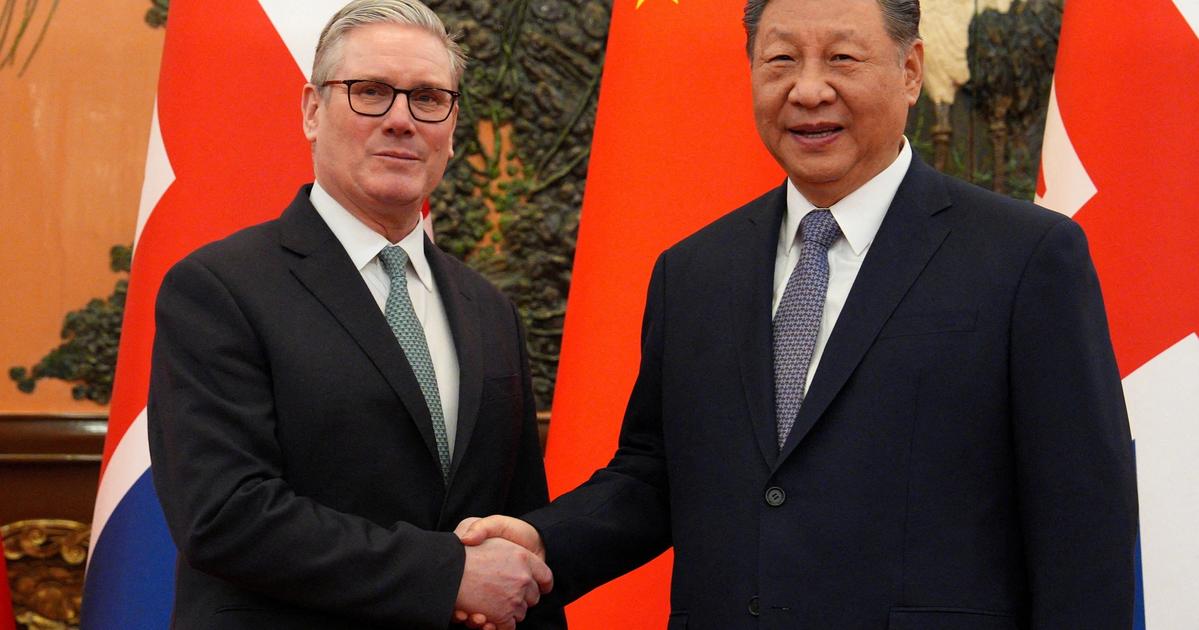
UK PM Starmer pursues closer China trade ties
Semafor·29 January 2026·UK PM Starmer agrees closer trade ties with China on visit | Semafor - Starmer hailed progress on lowering tariffs with China, arguing for a “more sophisticated” relationship after talks with Chinese leader Xi Jinping.
Signals:
- →UK pursuing closer China trade ties despite potential tensions with Washington's protectionist stance.
- →Western allies increasingly engaging Beijing amid concerns about U.S. unpredictability and trade policies.
- →Leaders balancing economic growth needs against geopolitical risks in U.S.-China relations.

Mexico halts Cuba oil shipment under US pressure
Semafor·28 January 2026·Mexico cancels oil shipment to Cuba amid US pressure | Semafor - Mexico has been Havana’s biggest crude supplier since oil shipments from Venezuela plummeted.
Signals:
- →Mexico's oil halt to Cuba signals shifting geopolitical alliances under US pressure, impacting regional energy security dynamics.
- →Cuba's deepening economic crisis may trigger migration surges or political instability affecting Western Hemisphere stability.
- →US leverage over Mexico's energy policy demonstrates Trump administration's expanding influence on hemispheric trade relationships.
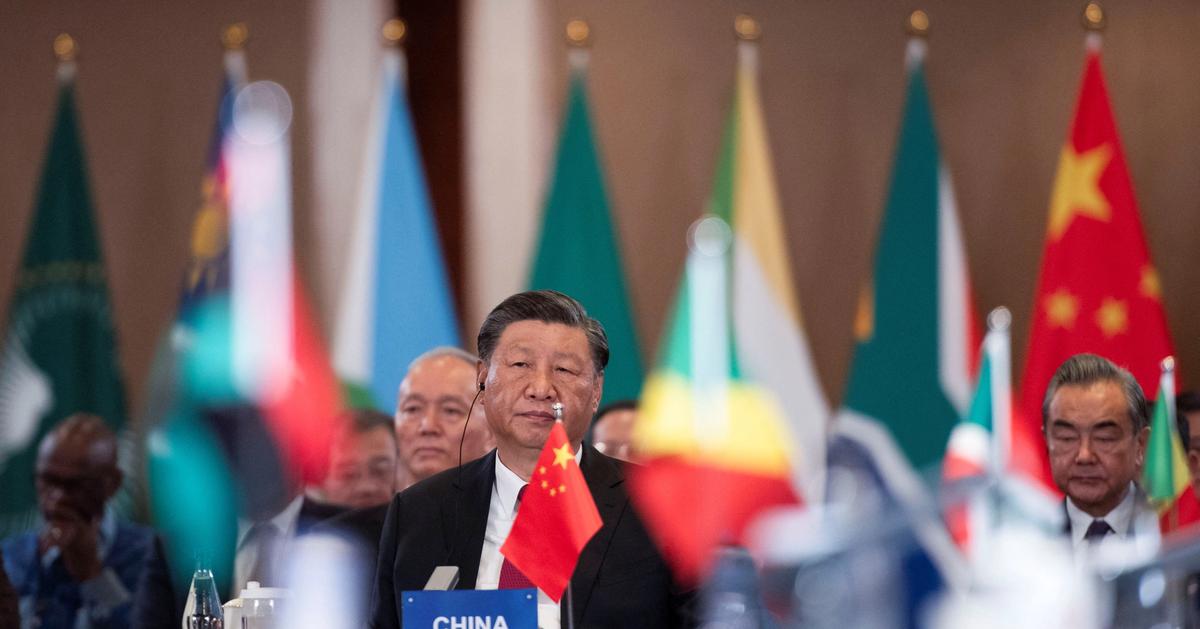
China shifts from African lender to debt collector
Semafor·28 January 2026·China moves from Africa lender to debt collector | Semafor - Under-performing projects and economic mismanagement led several countries to default on their loans.
Signals:
- →African debt repayments to China now exceed new Chinese lending, marking a fundamental shift in economic relations.
- →China pivoting from loans to direct investment to maintain African influence amid U.S. competition for critical resources.
- →Loan defaults and project failures forcing Beijing to restructure its Africa strategy while preserving strategic foothold.

Doomsday Clock moves to 85 seconds to midnight
Signals:
- →Doomsday Clock reaches closest point to midnight ever at 85 seconds, signaling unprecedented global catastrophic risk.
- →Multiple existential threats converging: nuclear arms race escalation, AI risks, climate crisis, and biological security concerns.
- →International cooperation collapsing amid rising nationalism, undermining ability to address threats requiring coordinated global response.
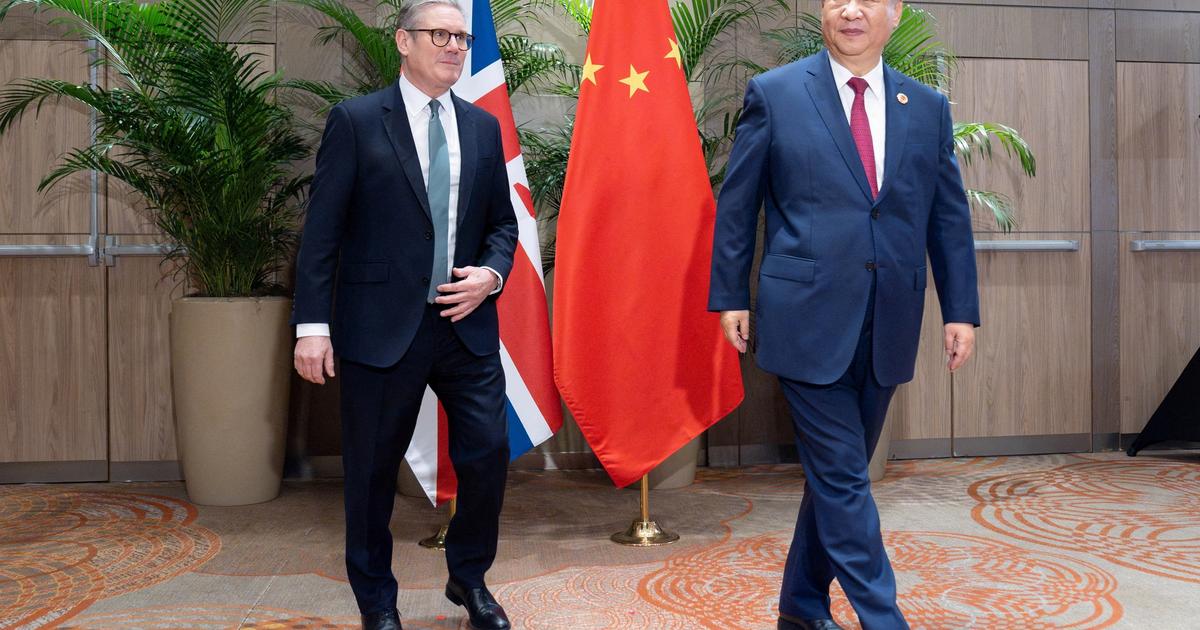
UK PM Starmer visits China amid US uncertainty
Semafor·27 January 2026·British PM Starmer courts China amid US unpredictability | Semafor - UK Prime Minister Keir Starmer headed to China for a visit as he seeks to improve Britain’s flagging economy.
Signals:
- →UK seeks economic partnership with China as US trade policy becomes increasingly uncertain.
- →Western leaders balancing China engagement against security concerns and potential US backlash.
- →Growing tension between economic opportunities and risks of deepening authoritarian state dependencies.

EU and India finalize historic trade deal amid US tariff threats
Semafor·27 January 2026·EU, India sign ‘mother of all deals’ | Semafor - The EU expects to double exports to India by 2032 as part of the deal, while Delhi anticipates EU-bound exports to soar.
Signals:
- →EU-India trade deal doubles EU exports by 2032, creating major new market opportunities amid global trade tensions.
- →US tariff threats accelerate alternative trade partnerships, reshaping global commercial alliances away from Washington.
- →Trump's aggressive tariff strategy risks isolating US economically while competitors strengthen bilateral relationships.
🧠Mind expanding
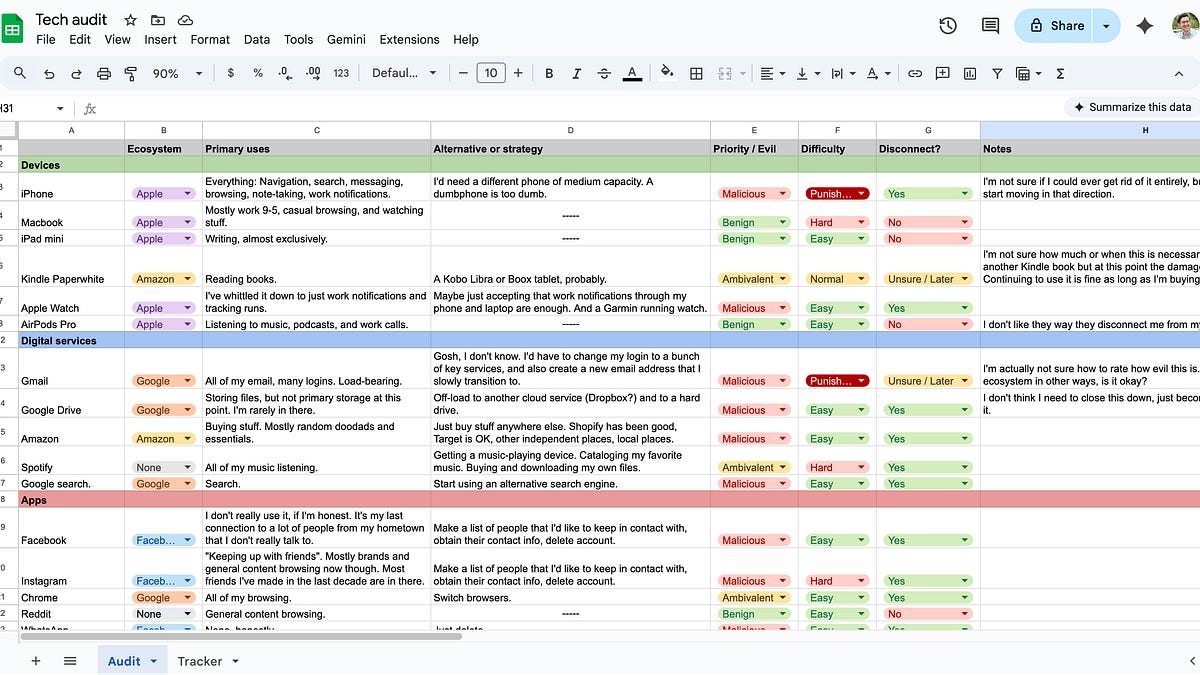
How I disconnected from tech using a simple spreadsheet
Signals:
- →Systematic tech disconnection improved wellbeing and restored sense of reality after years of digital dependence.
- →Practical framework with spreadsheet tool enables organizations to audit and reduce corporate tech dependencies strategically.
- →Demonstrates viable alternatives to dominant platforms, reducing vendor lock-in and data privacy risks for enterprises.

Three weeks offline reveals the cost of constant connectivity
Signals:
- →Gen Z's "analog awakening" signals shifting cultural values away from constant digital connectivity.
- →Screen dependency creates "psychotic" isolation, limiting authentic experiences that inform meaningful creative work.
- →Abandoning social media feeds represents strategic rejection of extractive Web 2.0 business models.

Software that saves AI tokens will survive
Signals:
- →AI agents will preferentially use tools that save computational tokens/energy, creating survival pressure on software that doesn't reduce cognitive costs.
- →Software survives by compressing insights, operating on efficient substrates, or providing broad utility while minimizing agent awareness and friction costs.
- →Traditional SaaS faces existential threat as AI-generated custom solutions become cheaper than buying/maintaining commercial software subscriptions.

Dyson spheres could be gravitationally stable, new study finds
Interesting Engineering·28 January 2026·Dyson spheres: New study assesses the likelihood of alien megastructures existing - By examining the potential existence of Dyson spheres, a University of Glasgow scientist aims to guide the search for alien life.
Signals:
- →Mathematical models prove massive energy-harvesting structures around stars could remain gravitationally stable.
- →Understanding Dyson sphere stability guides search for advanced extraterrestrial civilizations in space.
- →Research reveals engineering configurations enabling unprecedented stellar energy capture for future expansion.

Time may emerge from information, not the other way around
The Conversation·Is time a fundamental part of reality? A quiet revolution in physics suggests not - Physicists long believed time was a basic feature of the universe. But it may just emerge from cosmic information.
Signals:
- →New framework suggests time emerges from information accumulation, potentially unifying relativity and quantum mechanics into single theory.
- →Informational imprinting may explain dark matter and galactic rotation without requiring new particles or substances.
- →Theory makes testable predictions through black hole radiation and quantum computer experiments, offering practical validation pathways.