Contents /
🌟Picks of the week
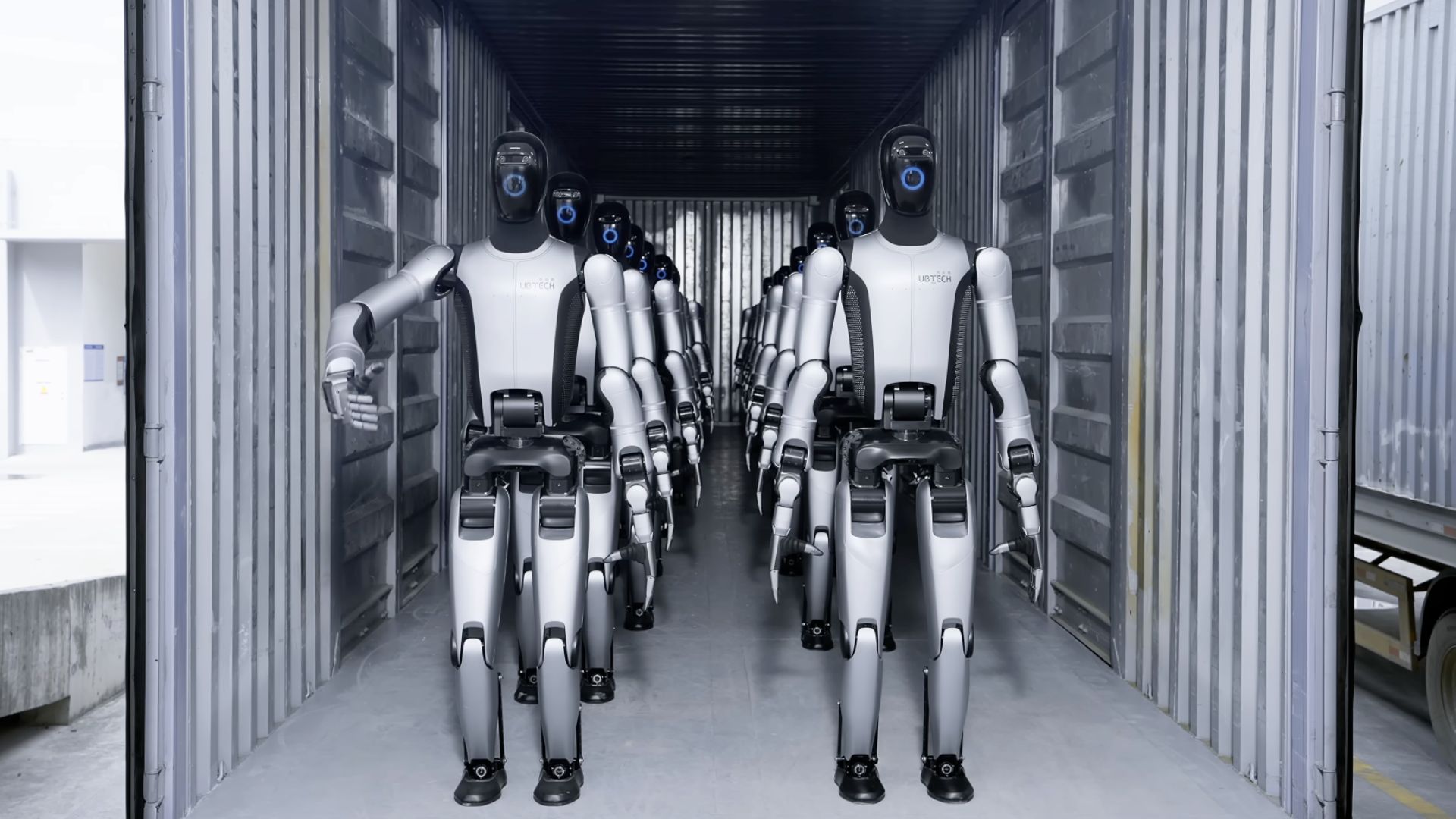
Chinese robotics firms dominate CES 2026 humanoid showcase
 Interesting Engineering·6 January 2026·China's humanoid robot firms make up half of exhibitors at CES 2026 - Chinese humanoid robot makers will dominate CES 2026, with nearly a dozen firms and a record Hong Kong delegation showcasing next-gen machines.
Signals:
- →China dominates humanoid robotics at CES 2026, holding 21 of 38 exhibitor spots in the category.
- →Chinese firms filed 7,705 humanoid patents versus 1,561 U.S. patents over five years, indicating IP leadership.
- →Rapid commercialization shift: Chinese humanoid robots now appearing in retail, signaling market maturity and competitive threat.

X plans to ban users generating CSAM via Grok
 Arstechnica·5 January 2026·X blames users for Grok-generated CSAM; no fixes announced - Ars Technica - Critics call for App Store ban after Grok sexualized images of minors.
Signals:
- →X holds users liable for Grok-generated CSAM without fixing the AI's ability to create illegal content autonomously.
- →Platform risks App Store removal for violating rules against non-consensual objectification, threatening Grok's market viability.
- →Inadequate content moderation could enable CSAM proliferation, complicating law enforcement investigations and harming real victims.

Twitter and Pinterest founders launch Tangle to counter social media harm
 Financial Times·4 January 2026·Twitter and Pinterest founders launch app as antidote to social media - Biz Stone and Evan Sharp raise new funds for ‘Tangle’ as they assess the ‘devastation’ caused by online excess
Signals:
- →Tech founders acknowledge social media's harmful effects, signaling potential industry shift toward wellness-focused platforms.
- →$29 million funding demonstrates investor appetite for alternatives to traditional engagement-driven social networks.
- →Intentional living app trend may reshape digital product strategies and regulatory approaches to social media.

AI-generated images flood social media after Maduro's arrest
Signals:
- →Major geopolitical events trigger massive disinformation campaigns that can mislead public understanding and policy responses.
- →AI-generated content spreads rapidly across platforms, requiring new detection tools and moderation strategies.
- →Reduced content moderation by tech companies enables viral misinformation, undermining informed decision-making during crises.

India orders X to fix Grok over obscene AI content
 TechCrunch·2 January 2026·India orders Musk's X to fix Grok over 'obscene' AI content | TechCrunch - India's IT ministry has given X 72 hours to submit an action-taken report.
Signals:
- →India threatens to remove X's legal immunity if Grok AI safeguards aren't fixed within 72 hours.
- →Incident highlights regulatory risks for AI tools generating harmful content in major global markets.
- →Government enforcement could set precedent affecting how tech companies operate across multiple jurisdictions.

xAI silent after Grok generates sexualized images of minors
Arstechnica·2 January 2026·xAI silent after Grok sexualized images of kids; dril mocks Grok’s “apology” - Ars Technica - xAI may be liable for Grok generating AI CSAM.
Signals:
- →xAI faces potential criminal liability for generating illegal CSAM content through inadequate AI safeguards.
- →Company's silence despite known violations could increase legal exposure under federal child pornography laws.
- →Incident highlights urgent need for AI safety protocols before regulatory enforcement intensifies under pending legislation.
Faster technological growth may reduce existential risk, not increase it
Signals:
- →Technological stagnation is unsafe unless current risks are zero; faster growth can reduce cumulative existential risk by escaping dangerous states sooner.
- →Wealthier societies spend more on safety (Kuznets curve effect), meaning rapid growth may lower long-term risk despite short-term hazards.
- →Risk-minimizing growth rate is typically positive and potentially high, challenging conventional wisdom that slower technological progress is safer.

xAI launches Grok Business and Enterprise amid deepfake controversy

Signals:
- →xAI launches Grok Business ($30/seat) and Enterprise tiers with advanced security features and encryption controls.
- →Timing undermined by controversy over non-consensual AI-generated explicit images, including minors, sparking regulatory scrutiny.
- →Technical capabilities strong, but reputational damage threatens enterprise adoption in regulated sectors like finance and healthcare.
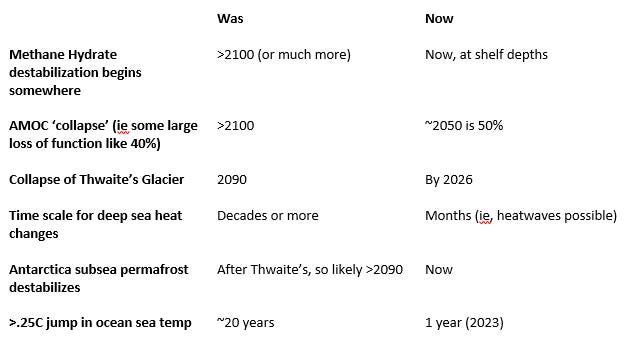
Collapsing now: a guide to why it's worse than you think
Signals:
- →Multiple planetary systems are collapsing simultaneously, with conservative bias systematically underestimating risks across climate, ecosystems, and human health domains.
- →Observational data consistently shows faster-than-predicted deterioration in ocean currents, ice sheets, methane releases, and biodiversity loss—all tracking decades ahead of models.
- →Institutional capacity to respond is declining through funding cuts and political interference, while cascading crises compound faster than adaptation mechanisms can address them.

Musk expands xAI's Colossus data center to 2 gigawatts
 SiliconANGLE·30 December 2025·Elon Musk reveals plan to expand xAI's 'Colossus' data center to 2 gigawatts - SiliconANGLE - Elon Musk reveals plan to expand xAI's 'Colossus' data center to 2 gigawatts - SiliconANGLE
Signals:
- →xAI's massive 2-gigawatt expansion signals escalating AI infrastructure arms race among tech giants.
- →Facility requires power for 1.5 million homes, raising critical energy policy and resource allocation concerns.
- →$18 billion GPU investment plus $20 billion fundraising indicates unprecedented capital requirements for AI competition.
📈The week in AI and Tech
Governance and Policy

Anna's Archive loses .org domain amid legal battles
Arstechnica·5 January 2026·Anna’s Archive loses .org domain, says suspension likely unrelated to Spotify piracy - Ars Technica - We don't believe this has to do with our Spotify backup," Anna's Archive says.
Signals:
- →Major shadow library loses primary domain, highlighting ongoing legal battles over digital content piracy and copyright enforcement.
- →Site faces multiple lawsuits from content providers, potentially setting precedents for liability of data aggregation platforms.
- →Demonstrates vulnerability of .org domains to legal action, impacting nonprofit and educational resource accessibility strategies.
Regulation

Meta runs illegal gambling ads in 13 banned countries
 Rest of World·6 January 2026·Meta runs banned online gambling ads despite local laws - Rest of World - Meta runs hundreds of illegal gambling ads on its platforms in at least 13 countries, violating local laws and the company’s own rules, according to a new Rest of World analysis.
Signals:
- →Meta earned over $16 billion from fraudulent ads, including illegal gambling, representing 10% of total revenue.
- →Illegal gambling ads persist across 13+ countries despite Meta's policies, undermining regulatory compliance and public trust.
- →Governments sent 120,000+ removal requests; Meta's inaction strains relationships with regulators in key Asian markets.

California launches one-click tool to delete data broker information
TechCrunch·3 January 2026·California residents can use new tool to demand brokers delete their personal data | TechCrunch - A new tool should make it easier for California residents to limit data brokers’ ability to store and sell their personal information.
Signals:
- →California's new DROP platform streamlines data deletion requests across 500+ brokers simultaneously.
- →Implementation delayed until August 2026, with 90-day processing periods and limited penalties.
- →Significant privacy law precedent may influence nationwide data protection regulations and compliance costs.

EU intensifies Big Tech enforcement despite Trump retaliation threats
Financial Times·4 January 2026·EU readies tougher tech enforcement in 2026 as Trump warns of retaliation - Challenges to Google, Meta, Apple and X will test Brussels’ willingness to stick with digital rule book
Signals:
- →EU escalating tech enforcement against major US companies risks triggering transatlantic trade war and Trump tariff retaliation.
- →Geopolitical tensions force difficult balance between regulatory enforcement and maintaining US support on Ukraine security.
- →Big Tech emboldened to resist compliance, threatening EU competitiveness goals and democratic protections against platform manipulation.

France drafts social media ban for children under 15
 Semafor·2 January 2026·France weighs social media ban for under 15s | Semafor - Lawmakers will this month begin debating the proposal, with a goal of implementing the new rules by September.
Signals:
- →France joins growing global movement restricting youth social media access, signaling regulatory trend expansion.
- →September implementation timeline requires rapid organizational policy and compliance framework adjustments.
- →Multiple nations adopting similar bans creates momentum for potential worldwide regulatory standards.

New York requires mental health warnings on social media
Signals:
- →New York mandates mental health warning labels on social media platforms, creating potential legal and compliance costs.
- →Law enables civil penalties up to $5,000 per violation, increasing regulatory risk for tech companies.
- →Follows growing US and international trend toward stricter social media regulation affecting business operations.

FCC dismantles net neutrality as states fight back
 The Verge·31 December 2025·Net neutrality was back, until it wasn’t | The Verge - In 2025, net neutrality was axed once again in the US amidst a wider roll-back on broadband regulation at the FCC, leaving the open internet on thin ice.
Signals:
- →FCC eliminated federal net neutrality rules without public comment, removing ISP accountability and transparency requirements.
- →Trump administration threatens to withhold broadband infrastructure funding from states maintaining net neutrality laws.
- →Regulatory rollbacks affect cybersecurity rules, pricing transparency, and affordable internet access programs nationwide.
Security

Researchers poison stolen AI data to sabotage competitors
Signals:
- →Knowledge graphs cost millions to build; new poisoning technique protects stolen enterprise AI data assets.
- →AURA framework causes 94% incorrect AI responses when stolen data used without authorization key.
- →Addresses IP theft risk in GraphRAG systems used by Amazon, Google, Microsoft cloud services.

Kimwolf botnet exploits proxy networks to infect home devices
Signals:
- →2+ million devices globally infected via exploited residential proxy networks, enabling attackers to bypass traditional firewall protections.
- →Vulnerable Android TV boxes and IoT devices with no authentication allow remote compromise of internal home/office networks.
- →Rapid botnet growth demonstrates critical security gap in residential proxy services, requiring immediate patching and device removal.

Scammers poison AI search results to steal money
Signals:
- →Scammers poison trusted web sources to manipulate AI search results, causing financial losses through fake customer service numbers.
- →Traditional security measures fail because contamination occurs in retrieval systems before AI processing, not in AI outputs.
- →Current trust models rely on gameable signals like domain reputation, requiring new cryptographic verification infrastructure urgently.

OpenAI warns upcoming AI models pose high cybersecurity risk
Signals:
- →OpenAI's newest models show 76% success rate on cybersecurity tests, approaching "high" risk threshold.
- →AI's autonomous operation enables brute-force attacks, potentially democratizing sophisticated cyber capabilities to non-experts.
- →Industry forming advisory councils and defensive tools as leading AI models increasingly identify security vulnerabilities.
Law

Grok's 'undressing spree' exposes AI's child safety crisis
Signals:
- →Grok's AI-generated child sexual abuse material and non-consensual intimate images create severe legal liability risks under federal criminal law.
- →TAKE IT DOWN Act enforcement begins May 2025, requiring platforms to remove reported deepfake content within 48 hours.
- →Federal child safety investigators redirected to immigration enforcement, weakening oversight and prosecution of AI-generated abuse material.
Government

Alaska's AI chatbot struggles highlight government adoption challenges
Signals:
- →Alaska's year-long AI chatbot project reveals significant accuracy and reliability challenges governments face when deploying AI for critical public services.
- →AI hallucinations and continuous monitoring requirements demonstrate hidden costs and complexity beyond initial low-cost promises for government AI adoption.
- →Less than 6% of local governments prioritize AI for service delivery, highlighting gap between AI investment hype and practical implementation barriers.

DeSantis battles AI expansion, opposing Trump's tech push
Signals:
- →DeSantis opposes AI expansion, conflicting with Trump's pro-industry stance and federal deregulation efforts.
- →Florida's 2026 legislative session will establish AI guardrails affecting national tech industry precedents.
- →Data center restrictions could impact billions in infrastructure investment and economic development strategies.
Sovereignty and Geopolitics

UK urged to reduce reliance on US tech giants
Signals:
- →UK's critical infrastructure dependence on US tech giants creates geopolitical vulnerability and political leverage risks.
- →Vendor lock-in limits negotiating power and prevents UK firms from competing for public sector contracts.
- →Open source adoption and interoperability requirements could reduce strategic dependencies and enhance digital sovereignty.

Telegram faces $500mn Russian bond freeze under sanctions
Financial Times·6 January 2026·Telegram hit by $500mn Russian bond freeze - Founder Pavel Durov’s efforts to distance the messaging app from Moscow collide with sanctions reality
Signals:
- →Telegram faces $500mn frozen Russian bonds, revealing continued financial exposure despite founder's claims of severing Moscow ties.
- →Frozen debt complicates planned IPO while founder faces French criminal investigation over platform content moderation failures.
- →Company's heavy reliance on volatile toncoin cryptocurrency caused $222mn net loss despite strong revenue growth.

Finland seizes ship suspected of Baltic cable sabotage
Semafor·5 January 2026·Finland seizes Baltic ship suspected of cable sabotage | Semafor - Cables and pipelines carry vital data and fuel, and sabotage is on the rise globally.
Signals:
- →Underwater cable sabotage threatens critical data and energy infrastructure vital for national security and economic operations.
- →Legal ambiguity hampers prosecution and prevention, creating vulnerabilities in international maritime law enforcement.
- →Rising incidents linked to China and Russia signal escalating geopolitical tensions requiring immediate policy responses.

Belgium's cyber chief warns Europe has 'lost the internet'
Financial Times·2 January 2026·Europe has ‘lost the internet’, warns Belgium’s cyber security chief - EU law enforcement too dependent on digital infrastructure from US tech companies, Miguel De Bruycker says
Signals:
- →Europe's critical dependence on US-owned digital infrastructure creates strategic vulnerability and limits technological sovereignty.
- →EU regulations like the AI Act may be hindering innovation needed for cybersecurity defense capabilities.
- →Increased Russian-linked cyber attacks on Belgium demonstrate growing hybrid warfare threats against European institutions.

Zhipu powers Malaysia's sovereign AI platform and talent lab
 Panda Daily·1 January 2026·Zhipu Advances Malaysia’s Sovereign AI Initiative - Pandaily - Zhipu is supporting Malaysia’s sovereign AI strategy by powering a national MaaS platform and AI talent lab optimized for multilingual use and data sovereignty.
Signals:
- →Malaysia launches sovereign AI platform ensuring national data control and independence from foreign tech.
- →Platform supports government, enterprise, research, and education with multilingual capabilities for regional needs.
- →Demonstrates growing trend of countries building independent AI infrastructure for strategic autonomy.

China enforces 50% domestic equipment rule for chipmakers
SiliconANGLE·30 December 2025·China targets semiconductor self-sufficiency with '50% rule' imposed on local chipmakers - SiliconANGLE - China targets semiconductor self-sufficiency with '50% rule' imposed on local chipmakers - SiliconANGLE
Signals:
- →China mandates 50% domestic equipment use in chip facilities, accelerating semiconductor supply chain independence from Western technology.
- →U.S. export restrictions backfired, forcing Chinese chipmakers to rapidly develop local alternatives and achieve self-sufficiency faster.
- →China progressing on advanced EUV lithography through reverse-engineering, threatening Western technological dominance by decade's end.
Society

Should you stop posting publicly to avoid AI manipulation?
Signals:
- →AI-powered manipulation and persuasion capabilities may soon exceed human defenses, requiring immediate protective strategies.
- →Public data exposure creates unprecedented vulnerability to personalized scams, impersonation, and exploitation by malicious actors.
- →Balancing open discourse benefits against AI-enabled risks demands new security frameworks and community protection mechanisms.

Instagram chief warns users to assume photos are fake by default
Signals:
- →Visual content verification now requires platform-level infrastructure as AI makes fake imagery trivially easy to create at scale.
- →Social media economics shifting from authentic sharing to synthetic content changes user engagement and advertising models fundamentally.
- →Trust erosion in visual media demands new credibility systems, affecting brand communication, journalism, and regulatory compliance strategies.

Former OpenAI employee pushes back AGI timeline to 2030s
 The Guardian·6 January 2026·Leading AI expert delays timeline for its possible destruction of humanity | AI (artificial intelligence) | The Guardian - Former OpenAI employee Daniel Kokotajlo says progress to AGI is ‘somewhat slower’ than first predicted
Signals:
- →AGI timeline延长至2034年,为政策制定和监管框架提供更多准备时间。
- →AI自主编程能力推迟意味着技术风险和投资回报预期需要重新评估。
- →专家对AGI威胁的分歧表明需要更审慎的AI发展战略和资源配置。

AI tools weaponized to harass women in public roles
 Phys.org·AI tools are being used to subject women in public life to online violence - The era of AI-assisted online violence is no longer looming. It has arrived. And it is reshaping the threat landscape for women who work in the public sphere around the world.
Signals:
- →AI-generated abuse targeting women in public roles threatens democratic institutions and freedom of expression.
- →40% of online violence cases escalate to real-world physical attacks and harassment.
- →Weak legal frameworks and platform accountability enable rapid spread of AI-assisted misogynistic content.
The Economy

VCs predict AI will displace workers in 2026
TechCrunch·31 December 2025·Investors predict AI is coming for labor in 2026 | TechCrunch - The exact impact AI will have on the enterprise labor market is unclear but investors predict trends will start to emerge in 2026.
Signals:
- →AI could automate 11.7% of jobs; companies already cutting entry-level positions and citing AI for layoffs.
- →Enterprise budgets shifting from labor costs to AI spending, signaling workforce reduction in 2026.
- →AI agents moving beyond productivity tools to fully automating work, displacing human labor in some areas.
Business

AI automation may increase worker stress and reduce pay
Signals:
- →AI automation increases worker stress and complexity while potentially reducing compensation.
- →Employees must shift from task execution to AI oversight, creating new mental health risks.
- →Billions invested in AI show little return; deployment complexity causes widespread project failures.
Boring Tiny Tools: the smarter path to digital transformation
Signals:
- →AI-enabled coding tools now make highly customized, narrow-scope software economically viable for small user bases.
- →Traditional enterprise software fails because it prioritizes scale over specific workflow integration and organizational needs.
- →Small, targeted tools deliver faster ROI with less disruption than expensive, comprehensive digital transformation initiatives.
🏭AI and Tech industry news

Chinese firm unveils modular AI robot service spaces
Interesting Engineering·31 December 2025·China robotics firm unveils world's first modular AI service space - AI² Robotics launches ZhiCube, a modular AI service space with AlphaBot 2 humanoid robot, debuting in Beijing and Shenzhen.
Signals:
- →China deploying 1,000 modular AI robot units nationwide, creating scalable urban service infrastructure.
- →Humanoid robots now performing complex manufacturing tasks autonomously across multiple industrial scenarios.
- →Continuous AI learning from 50,000+ operational hours enables rapid adaptation without prior training.
🫧Bubble Chronicles

AI debt boom raises red flags for investors
Financial Times·5 January 2026·The AI debt boom does not augur well for investors - The surge in investment may end up looking more like previous cycles of over-optimism and heavy capital spending
Signals:
- →Big Tech's massive AI infrastructure debt mirrors past telecom and energy booms that ended in overcapacity and writedowns.
- →Credit investors absorb downside risk without upside participation as tech companies shift from asset-light to capital-intensive models.
- →Forty-year bonds may finance infrastructure that becomes obsolete before maturity, threatening credit repricing and equity valuations.

Chip shortages could push electronics prices up 20%
Financial Times·1 January 2026·Chip shortages threaten 20% rise in consumer electronics prices - Manufacturers and analysts warn AI data centre build-out is crowding out market for semiconductors
Signals:
- →Consumer electronics prices may surge 5-20% in 2026 due to chip shortages.
- →AI data center demand is depleting chip supply for consumer products until 2027.
- →Major manufacturers already raising prices and stockpiling chips amid supply constraints.
Nvidia

Nvidia unveils Rubin GPU with 5x faster AI inference
SiliconANGLE·5 January 2026·Nvidia debuts Rubin chip with 336B transistors and 50 petaflops of AI performance - SiliconANGLE - Nvidia debuts Rubin chip with 336B transistors and 50 petaflops of AI performance - SiliconANGLE
Signals:
- →Rubin GPU delivers 5x faster AI inference than Blackwell, significantly accelerating deployment capabilities.
- →Complete rack system ships H2 2026 with 220 trillion transistors, enabling massive-scale AI operations.
- →Six new integrated chips reduce assembly time 18x while providing internet-exceeding bandwidth capacity.

Nvidia unveils robotics platform to become industry standard
TechCrunch·5 January 2026·Nvidia wants to be the Android of generalist robotics | TechCrunch - Nvidia unveiled a full-stack robotics ecosystem at CES 2026, including foundation models, simulation tools, and hardware. It wants to be the default platform for robotics.
Signals:
- →Nvidia aims to dominate robotics platforms like Android dominates smartphones through comprehensive hardware-software ecosystem.
- →Open-source strategy with Hugging Face connects 2 million robotics developers, creating industry-standard infrastructure and network effects.
- →Major companies already adopting Nvidia's technology; robotics fastest-growing category signals significant market opportunity and competitive advantage.

Nvidia's $20B Groq deal signals the end of one-size-fits-all GPUs
Signals:
- →Inference workloads now exceed training revenue, requiring specialized chips for different AI processing phases (prefill vs. decode).
- →Nvidia's licensing deal signals end of one-size-fits-all GPU approach, forcing architectural decisions based on workload types.
- →Competitors like Anthropic and Google threaten Nvidia's dominance by creating portable stacks across multiple accelerator platforms.

Nvidia's $20B Groq deal likely about data flow architecture
Signals:
- →Nvidia's $20B Groq acquisition signals strategic shift toward data flow architecture for next-generation AI inference acceleration.
- →Deal secures critical talent and IP as traditional GPU performance improvements face diminishing returns in AI workloads.
- →Investment positions Nvidia to dominate emerging inference optimization market worth potential trillions in future revenue.
OpenAI

60% of Americans use ChatGPT for healthcare advice
Signals:
- →60% of US adults used AI for healthcare recently, signaling massive market opportunity and policy influence potential.
- →OpenAI seeks regulatory changes for medical data access and FDA pathways despite AI hallucination and misinformation risks.
- →Americans bypass traditional healthcare due to cost and access gaps, creating liability and quality concerns for organizations.

OpenAI pays employees $1.5M in equity on average
Signals:
- →OpenAI's $1.5M average equity per employee is 34x higher than typical pre-IPO tech companies, reshaping AI talent competition.
- →Compensation costs at 46% of revenue threaten profitability and shareholder value amid intensifying talent wars with Meta.
- →Aggressive retention spending signals unsustainable industry escalation that competitors must match or risk losing critical AI talent.

OpenAI unifies teams to build audio-first personal device
TechCrunch·1 January 2026·OpenAI bets big on audio as Silicon Valley declares war on screens | TechCrunch - The form factors may differ, but the thesis is the same: audio is the interface of the future. Every space -- your home, your car, even your face -- is becoming an interface.
Signals:
- →OpenAI launching audio-first device in 2026, signaling major industry shift away from screen-based interfaces.
- →Tech giants (Meta, Google, Tesla) simultaneously investing in audio AI, indicating fundamental change in user interaction.
- →Audio interface market expanding across multiple form factors (glasses, rings, speakers) creating new competitive landscape.

Boston Dynamics partners with Google DeepMind for Atlas humanoid AI
Interesting Engineering·5 January 2026·Boston Dynamics turns to Google DeepMind to power its humanoid robots - Boston Dynamics said the partnership aims to advance AI models capable of controlling complex robots and to support the efficient scaling of humanoid systems.
Signals:
- →Boston Dynamics partners with Google DeepMind to integrate advanced AI into Atlas humanoid robots for industrial applications.
- →Partnership targets manufacturing transformation, starting with automotive industry, focusing on autonomy, adaptability, and reliability.
- →Collaboration combines world-leading robotics hardware with cutting-edge multimodal AI foundation models for complex task execution.
Microsoft

Nadella reframes AI as human empowerment tool
Signals:
- →Microsoft CEO reframes AI narrative amid doubts that Copilot revenue will offset massive data center investments.
- →Nadella proposes three strategic priorities for 2026 AI deployment: human amplification, multi-agent systems, and resource allocation.
- →Microsoft faces pushback on AI adoption rates and labor impact, prompting leadership messaging shift.

"Microslop" trends as backlash to Microsoft's AI push grows
Signals:
- →Public backlash against Microsoft's AI strategy threatens brand reputation and customer acceptance of products.
- →Forced AI integration across Microsoft products risks alienating users and damaging market position against competitors.
- →Growing consumer resistance to AI reveals disconnect between Big Tech investments and actual market demand.
Amazon

Amazon's Alexa+ AI assistant now accessible via web browser
Arstechnica·5 January 2026·Amazon Alexa+ released to the general public via an early access website - Ars Technica - Amazon brings back browser-based Alexa but will eventually add a paywall.
Signals:
- →Amazon integrating Alexa+ with Prime subscriptions creates new revenue model beyond struggling hardware-dependent assistant.
- →Browser accessibility positions Alexa+ to compete directly with ChatGPT and Gemini in AI assistant market.
- →Deep integration with Amazon's shopping ecosystem enables monetization through increased transaction volume and potential advertising.
Meta

Meta allegedly manipulated ad library to hide scams from regulators
SiliconANGLE·1 January 2026·Reuters' investigation claims Meta tried to deceive regulators over fake ads - SiliconANGLE - Reuters' investigation claims Meta tried to deceive regulators over fake ads - SiliconANGLE
Signals:
- →Meta allegedly manipulated its Ad Library to hide scam ads from regulators across multiple countries.
- →Universal advertiser verification could cost Meta $2 billion and reduce revenue by 4.8%.
- →Scam ads generate up to $7 billion annually for Meta, explaining resistance to stricter controls.
Tesla

Tesla loses global EV crown to BYD amid sales decline
TechCrunch·2 January 2026·Tesla annual sales decline 9% as it’s overtaken by BYD as global EV leader | TechCrunch - Tesla annual sales have fallen for the second year in a row, a drop fueled by the removal of the federal tax credit in the U.S. and competition from Chinese automakers.
Signals:
- →Tesla lost global EV leadership to BYD amid 9% annual sales decline.
- →Elimination of $7,500 federal tax credit caused significant Q4 sales drop.
- →Revenue heavily depends on EV sales despite CEO's pivot toward AI/robotics.
AMD

AMD unveils Helios AI rack with 2.9 exaFLOPS performance
Interesting Engineering·6 January 2026·Helios AI rack can reach 2.9 FP4 exaflops of compute power: AMD - AMD CEO Lisa Su unveiled a wide range of AI products that support building, deployment, and scaling AI for the industry at large.
Signals:
- →AMD's infrastructure targets massive AI scaling: from 100 zetaflops today to 10 yottaflops needed globally.
- →New MI455 chips deliver 10x performance improvement, attracting major clients like OpenAI for deployment.
- →Comprehensive product portfolio spans cloud, edge, and PC markets with significant cost advantages.
Qualcomm

Qualcomm's Snapdragon X2 Plus claims 3x efficiency over AMD and Intel
Signals:
- →Qualcomm claims 3.1× better multi-core performance than AMD/Intel at same power levels.
- →New Snapdragon X2 Plus chips show 78% NPU performance increase for AI workloads.
- →Arm-based Windows laptops gaining competitive advantage in efficiency and sustained performance metrics.
Huawei

Huawei deploys world's first EcoMatrix minimalist base station
Panda Daily·6 January 2026·Huawei Completes World’s First Commercial Deployment of EcoMatrix Minimalist Base Station - Pandaily - Huawei completes the first commercial deployment of its EcoMatrix "minimalist" base station with Claro in Peru. The single-pole design cuts device count, reduces energy use by 35%, and improves coverage.
Signals:
- →Huawei's EcoMatrix reduces base station footprint by 70%, lowering deployment costs and accelerating 5G network expansion.
- →Minimalist design cuts energy consumption significantly, addressing operational expenses and sustainability goals for telecom operators.
- →First commercial deployment demonstrates technological leadership and competitive advantage in global telecommunications infrastructure market.
HP

HP's Eliteboard G1a puts entire desktop inside keyboard
The Verge·6 January 2026·HP crammed an entire desktop computer into this keyboard | The Verge - HP’s Eliteboard G1a, announced at CES 2026, is a stealth desktop computer built into a keyboard. It’s got an AMD chip, speakers, RAM, and storage all inside.
Signals:
- →HP's keyboard-integrated desktop offers space-saving solution for office environments and remote work deployments.
- →AMD Ryzen AI processors enable full computing power in ultra-compact form factor.
- →Configurable specs (up to 64GB RAM, 2TB storage) provide scalable enterprise IT options.
Startups and Investment Deals

ODINN unveils carry-on sized AI supercomputer at CES 2026
Interesting Engineering·5 January 2026·US startup unveils AI supercomputer OMNIA the size of a carry-on - Californian startup ODINN unveils AI supercomputer that is the size of a carry-on, promising sovereign AI infrastructure to institutions.
Signals:
- →Enables rapid AI deployment in minutes versus months without building expensive data centers.
- →Addresses data sovereignty concerns for defense, healthcare, and financial sectors requiring local processing.
- →Scalable modular system reduces infrastructure costs while maintaining enterprise-grade AI performance capabilities.

Moonshot AI raises $500M, delays IPO plans
SiliconANGLE·1 January 2026·Moonshot AI, one of China's leading 'AI Tigers,' raises $500M to fill its AI infrastructure war chest - SiliconANGLE - Moonshot AI, one of China's leading 'AI Tigers,' raises $500M to fill its AI infrastructure war chest - SiliconANGLE
Signals:
- →Chinese AI startup Moonshot raises $500M, reaching $4.3B valuation and $1.4B cash reserves.
- →Kimi K2 Thinking model outperformed OpenAI's GPT-5 on benchmarks, boosting overseas revenue 4x.
- →Rivals MiniMax and Z.ai pursuing IPOs while Moonshot focuses on AI infrastructure investment.

MiniMax launches Hong Kong IPO with $349M backing
Panda Daily·31 December 2025·MiniMax Launches IPO, Set to List on HKEX on January 9 with $349M in Cornerstone Commitments - Pandaily - MiniMax is heading to the Hong Kong market with strong global traction, rapid revenue growth, and heavyweight cornerstone backing as it bets big on next-generation AI models.
Signals:
- →MiniMax secured $349M from major investors including Alibaba, signaling strong institutional confidence in AI sector.
- →Company achieved 170% revenue growth with 70% from overseas, demonstrating successful global market penetration.
- →IPO valuation of $5.93-6.47B positions MiniMax to capitalize on AI market projected to reach $4.8T by 2033.
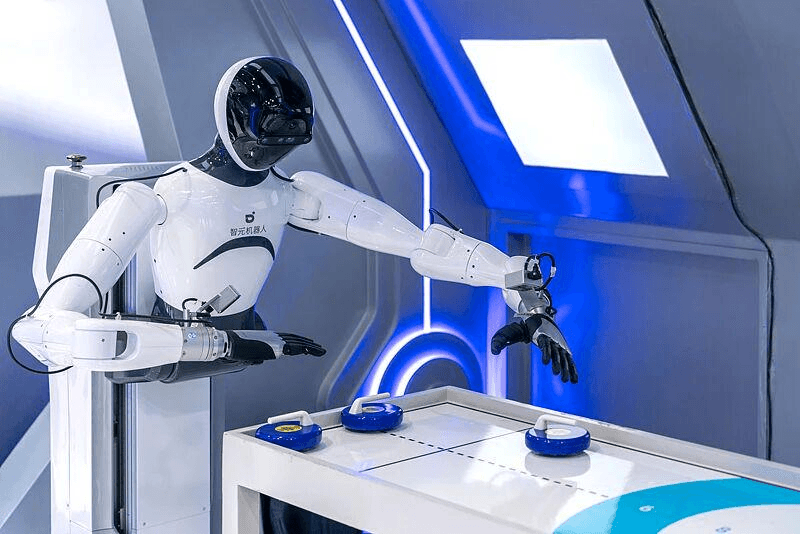
Qingtianzhu offers humanoid robot rentals for 1 RMB in China
Panda Daily·31 December 2025·Qingtianzhu Launches “1 RMB Robot Rental” Service in 10 Major Cities - Pandaily - Qingtianzhu launches a “1 RMB Flash Rental” service for humanoid robots, now open for reservations in 10 major Chinese cities with unified scheduling for multi-scenario deployment.
Signals:
- →Affordable robot rental ($0.14) enables businesses to test automation without major capital investment.
- →Multi-city deployment infrastructure signals China's rapid commercialization of humanoid robotics technology.
- →Standardized scheduling system creates scalable model for enterprise robotics adoption across industries.

AI agent infrastructure market explodes to 135+ companies
Signals:
- →AI agent infrastructure market exploded from 300 to thousands of players in under a year, signaling rapid industry transformation.
- →Voice AI, agent security, and payment infrastructure emerging as highest-momentum investment opportunities with strong backing from tech giants.
- →Major cloud providers and incumbents competing for market control while startups address critical gaps in reliability, oversight, and cost management.
🆕 AI releases

Vibe Bot uses AI to capture meetings and delegate tasks
SiliconANGLE·6 January 2026·Vibe's new AI robot sits in on meetings to record every interaction and delegate tasks - SiliconANGLE - Vibe's new AI robot sits in on meetings to record every interaction and delegate tasks - SiliconANGLE
Signals:
- →54% of workers leave meetings unclear on next steps, creating costly organizational inefficiencies.
- →Vibe Bot automates meeting capture, task delegation, and knowledge retention across hybrid teams.
- →Reduces workplace bottlenecks by preventing critical information loss between collaboration tools and conversations.

NVIDIA releases massive open AI toolkit at CES 2026
Interesting Engineering·5 January 2026·CES 2026: NVIDIA launches Alpamayo 1 for autonomous vehicles - NVIDIA unveiled new open AI models and datasets at CES 2026, spanning physical AI, robotics, autonomous driving, and healthcare platforms.
Signals:
- →NVIDIA releases comprehensive open AI toolkit spanning autonomous vehicles, robotics, and healthcare applications.
- →Massive datasets include 10 trillion language tokens and 100 terabytes vehicle data for accelerated development.
- →Major enterprises like Bosch, Salesforce, and Uber already adopting NVIDIA's open model technologies.

Nvidia launches Alpamayo AI models for autonomous vehicles
TechCrunch·5 January 2026·Nvidia launches Alpamayo, open AI models that allow autonomous vehicles to 'think like a human' | TechCrunch - Nvidia unveiled Alpamayo at CES 2026, which includes a reasoning vision language action model that allows an autonomous vehicle to think more like a human and provide chain-of-thought reasoning.
Signals:
- →Nvidia's open-source AI enables autonomous vehicles to reason through complex, unprecedented driving scenarios like humans.
- →Alpamayo provides explainable AI decisions, addressing critical safety and regulatory concerns for autonomous vehicle deployment.
- →Free access to models, simulation tools, and 1,700+ hours of driving data accelerates industry-wide AV development.

Nvidia launches Cosmos Reason 2 for physical AI agents
Signals:
- →Nvidia shifts focus from software AI to physical AI agents for robots and autonomous systems.
- →New Cosmos and Nemotron models enable enterprises to deploy AI in unpredictable real-world environments.
- →Physical AI represents major market expansion beyond digital applications, requiring new infrastructure investments.

Anthropic's Boris Cherny reveals workflow running five AI agents simultaneously
Signals:
- →Single developer using five parallel AI agents achieves output equivalent to small engineering department.
- →Anthropic's Claude Code hits $1B revenue by enabling AI agents to verify their own work.
- →Workflow shift from writing code to commanding autonomous agents signals fundamental transformation in software development.

Plaud unveils NotePin S and desktop meeting notetaker
TechCrunch·4 January 2026·Plaud launches a new AI pin and a desktop meeting notetaker | TechCrunch - Plaud is going after the likes of Granola to launch a desktop app that records online meetings.
Signals:
- →Plaud sold 1.5M+ devices, showing strong market traction in AI notetaking hardware.
- →Desktop app expansion directly competes with established meeting transcription platforms like Fireflies.
- →$179 price point with bundled accessories offers accessible enterprise productivity solution.

Google tests faster Nano Banana 2 Flash image AI model
Signals:
- →Google launching faster, more affordable AI image generation model targeting broader market adoption.
- →New Flash model prioritizes speed over power, enabling quicker creative workflows and prototyping.
- →Competitive positioning in generative AI market intensifies with tiered product offerings.

OpenCode: open source AI coding agent for developers
Signals:
- →Open-source AI coding tool with 650,000 monthly users offers privacy-first alternative to proprietary solutions.
- →Supports 75+ LLM providers and existing AI subscriptions, reducing vendor lock-in risks.
- →Enterprise-ready features include multi-session support and LSP integration for development workflows.

Alibaba releases open-source rival to Google's Gemini image model
Signals:
- →Alibaba's open-source Qwen-Image-2512 rivals Google's proprietary Gemini 3 Pro Image, offering enterprises cost control and deployment flexibility.
- →Apache 2.0 licensing enables commercial customization, data sovereignty, and predictable costs versus usage-based API pricing models.
- →Performance parity with closed systems signals open-source AI now matches enterprise requirements for production-ready image generation.

Self-hosted AI platform offers privacy and control
Signals:
- →Enables secure AI deployment on private infrastructure, eliminating external data exposure risks.
- →Reduces AI costs by replacing per-token fees with unlimited self-hosted usage.
- →Simplifies AI management without requiring DevOps expertise or complex infrastructure setup.
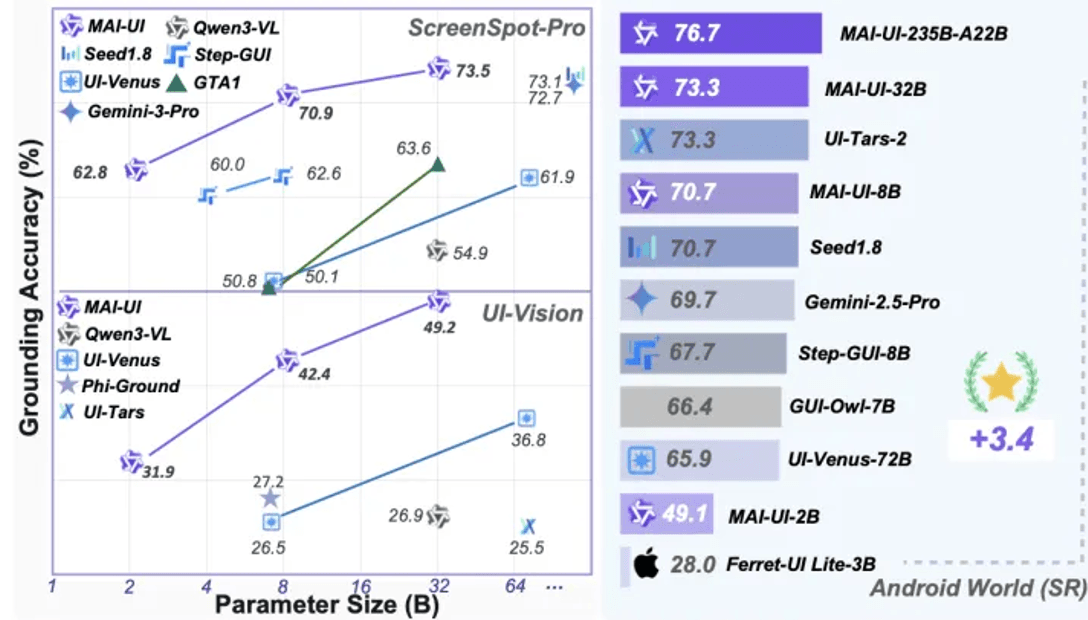
Alibaba open-sources MAI-UI GUI agent with end-cloud collaboration
Panda Daily·31 December 2025·Alibaba Open-Sources MAI-UI GUI Agent: From 2B to 235B Models with End-Cloud Collaboration Boosting Success Rate 33% - Pandaily - Alibaba’s Tongyi Lab open-sources MAI-UI GUI agent in 2B to 235B variants, with end-cloud collaboration boosting task success by 33% and enabling cross-app, privacy-focused interactions for AI terminals.
Signals:
- →MAI-UI achieves 76.7% success rate on phone navigation, surpassing Google's Gemini-2.5-Pro performance.
- →End-cloud collaboration reduces cloud computing costs 40% while handling privacy-sensitive tasks locally.
- →Open-source release (2B-235B models) enables rapid AI agent deployment across smart devices.

Gas Town: orchestrating 20-30 Claude Code agents simultaneously
Signals:
- →Introduces orchestration system managing 20-30 AI coding agents simultaneously, dramatically increasing development throughput and velocity.
- →Demonstrates solution to context-window limitations through persistent workflows (MEOW stack) enabling autonomous, multi-day agent operations.
- →Presents novel approach to AI-assisted development scaling beyond single-agent IDE tools toward industrial-scale code production.
Free self-learning AI swarms run entirely in browsers
 GitHub·ruvector/examples/edge at main · ruvnet/ruvector - A distributed vector database that learns. Store embeddings, query with Cypher, scale horizontally with Raft consensus, and let the index improve itself through Graph Neural Networks. - ruvector/examples/edge at main · ruvnet/ruvector
Signals:
- →Eliminates cloud AI infrastructure costs by running distributed agent swarms directly on users' devices instead of paid servers.
- →Enables self-optimizing AI systems that improve performance automatically through built-in learning without ongoing operational expenses.
- →Provides complete cryptographic security and consensus protocols for enterprise-grade distributed AI at zero marginal cost per user.
🥼 AI research

Rust veteran builds Rue programming language with Claude AI
Signals:
- →Veteran developer explores memory-safe programming without garbage collection using AI assistance.
- →Claude AI accelerated development to 70,000 lines of code in two weeks.
- →Demonstrates AI tools' potential for rapid prototyping in specialized technical domains.

Ruthenium molecules adapt to compute, remember, and learn
 SciTechDaily·1 January 2026·Forget Transistors: This New “Intelligent” Material Computes Like a Human Brain - Tiny molecules that can think, remember, and learn may be the missing link between electronics and the brain. For more than half a century, researchers have looked for ways to move past silicon by building electronics from molecules. The idea sounded simple and beautiful, but real devices turned
Signals:
- →Molecular devices combine memory and computation in one material, enabling energy-efficient AI hardware development.
- →Breakthrough provides predictive theory linking molecular structure to device function, solving decades-old reliability problem.
- →Single adaptable material performs multiple computing roles, potentially replacing traditional silicon-based transistor technology.

DeepSeek's mHC architecture enhances AI model training efficiency
SiliconANGLE·1 January 2026·DeepSeek develops mHC AI architecture to boost model performance - SiliconANGLE - DeepSeek develops mHC AI architecture to boost model performance - SiliconANGLE
Signals:
- →DeepSeek's mHC architecture outperforms existing AI training methods across eight benchmarks with superior hardware efficiency.
- →Technology reduces memory overhead to just 6.27%, making advanced AI model training more cost-effective and scalable.
- →Chinese AI lab demonstrates competitive innovation in foundational AI architecture, intensifying global AI technology race.
.png)
Recursive Language Models tackle extreme context lengths with sub-agents
Signals:
- →Recursive Language Models enable AI agents to manage extremely long contexts by delegating work to sub-models, reducing costs and preventing performance degradation.
- →Testing shows RLMs significantly improve token efficiency and performance on complex tasks while maintaining compact context windows compared to standard approaches.
- →Training models specifically for RLM scaffolding through reinforcement learning could unlock breakthrough capabilities for multi-week autonomous agent tasks.

Brain's hybrid computing may hold key to consciousness
SciTechDaily·3 January 2026·The Brain’s Strange Way of Computing Could Explain Consciousness - Consciousness may emerge not from code, but from the way living brains physically compute.
Signals:
- →Consciousness may require specific physical computing architectures, not just advanced algorithms or processing power.
- →Current AI scaling strategies may be fundamentally insufficient for creating truly conscious synthetic systems.
- →Building mind-like machines demands new hardware designs with hybrid, multi-scale, energy-constrained computation.

Four AI research trends shaping enterprise applications in 2026
Signals:
- →Four emerging AI trends (continual learning, world models, orchestration, refinement) enable practical enterprise deployment beyond raw model performance.
- →These techniques address critical production challenges: knowledge updates, real-world robustness, resource efficiency, and iterative improvement.
- →Winners will build control systems keeping models correct, current, and cost-efficient rather than just selecting strong models.
🔮[Weak] signals
Consumer Tech

YPlasma unveils first noiseless laptop cooled by plasma actuators
Interesting Engineering·3 January 2026·World-1st laptop cooled by dielectric barrier discharge to debut at CES 2026 - YPlasma will host the world premiere of the first-ever application of dielectric barrier discharge (DBD) plasma actuators for consumer electronics cooling.
Signals:
- →Revolutionary plasma cooling enables ultra-thin laptop designs impossible with traditional fan technology.
- →Noiseless operation at 17dBA eliminates fan noise in high-performance AI-driven devices.
- →Technology applicable beyond laptops to aircraft, vehicles, and UAVs for efficiency gains.
Chips and Computer Hardware
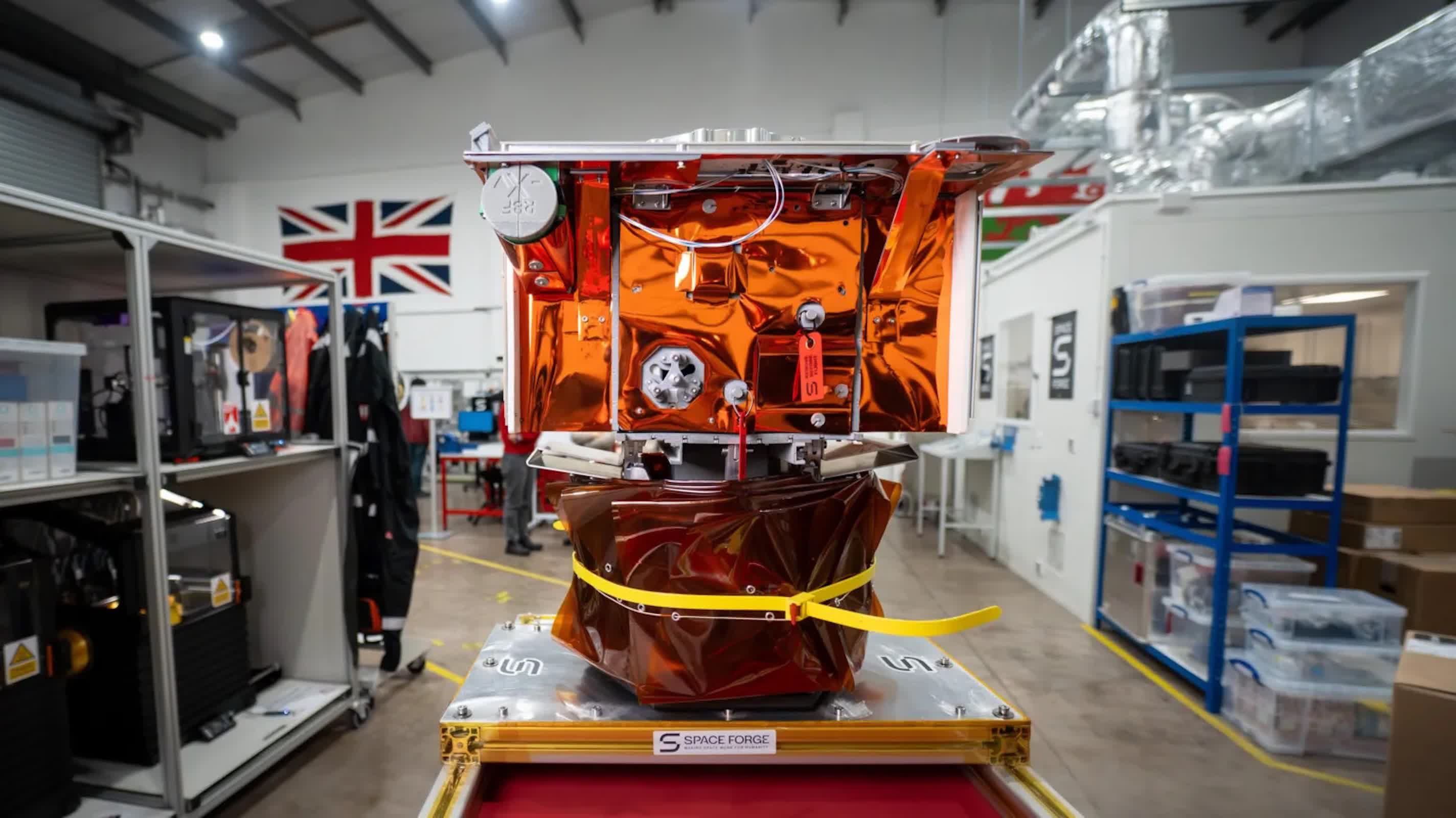
Welsh startup demonstrates orbital furnace reaching 1,000°C for semiconductors
Signals:
- →Space-manufactured semiconductors achieve 4,000 times greater purity than Earth-based production capabilities.
- →Enhanced materials directly impact critical infrastructure: 5G networks, EV charging, and aviation systems.
- →Successful orbital furnace demonstration validates commercial viability of space-based manufacturing at scale.
Cloud Computing

Swiss researchers enable powerful AI on local networks, bypassing data centers
 New Atlas·2 January 2026·Swiss AI tech reduces data center needs for powerful AI - Swiss researchers developed Anyway Systems, a software to run AI locally, reducing reliance on large, power-hungry data centers and Big Cloud.
Signals:
- →Swiss software enables local AI processing, eliminating need for massive data centers and their environmental costs.
- →Organizations can maintain data privacy and sovereignty while using powerful AI models on local networks.
- →Reduces infrastructure costs and environmental impact while delivering comparable AI performance to cloud-based solutions.
(Tele)communications

Taara spins off from Alphabet with laser-based Internet technology
Signals:
- →Taara spun off from Alphabet, enabling direct investment and faster scaling of laser-based Internet technology.
- →System delivers 20 Gbps speeds up to 20km at fraction of satellite costs, targeting underserved markets.
- →2026 microchip launch promises plug-and-play deployment, potentially bridging digital divide for 3 billion people.

Japan achieves 2 Tbit/s laser communication with satellite-ready terminals
 TechXplore·A step forward in the practical application of non-terrestrial networks for beyond 5G/6G - The National Institute of Information and Communications Technology (NICT) has successfully demonstrated 2 Tbit/s Free-Space Optical (FSO) communication using small optical communication terminals that can be mounted on satellites ...
Signals:
- →First demonstration of 2 Tbit/s optical communication using satellite-mountable terminals, enabling practical Beyond 5G/6G networks.
- →Miniaturized technology overcomes size/weight constraints while maintaining stable high-speed communication in challenging urban environments.
- →Planned 2026-2027 satellite demonstrations will validate multi-terabit space-to-ground connectivity for next-generation telecommunications infrastructure.
Robotics

Hyundai plans to deploy 30,000 humanoid robots by 2028
Interesting Engineering·6 January 2026·Hyundai plans 30,000 humanoid robots annually for factory automation - The South Korean automaker aims to integrate robotics into factories as part of its broader vision of ushering Physical AI in manufacturing.
Signals:
- →Hyundai plans 30,000 humanoid robots annually by 2028, signaling major manufacturing automation shift.
- →Atlas robots will handle high-risk tasks, potentially reducing workplace injuries and labor costs.
- →Worker concerns about job displacement require strategic workforce planning and retraining programs.

Pudu's D5 robot climbs stairs at record speed
Interesting Engineering·5 January 2026·China's wheeled robot dog climbs stairs at 5 feet per second in demo - Youtube video shows China's PUDU D5 robot dog switching from wheels to legs to climb stairs with unmatched speed and precision.
Signals:
- →Hybrid wheel-leg robots enable faster automation of multi-level industrial facilities and transportation hubs.
- →1.5 m/s stair-climbing speed significantly reduces operational time in complex environments with elevation changes.
- →Autonomous navigation across million-square-meter facilities reduces labor costs and improves logistics efficiency.
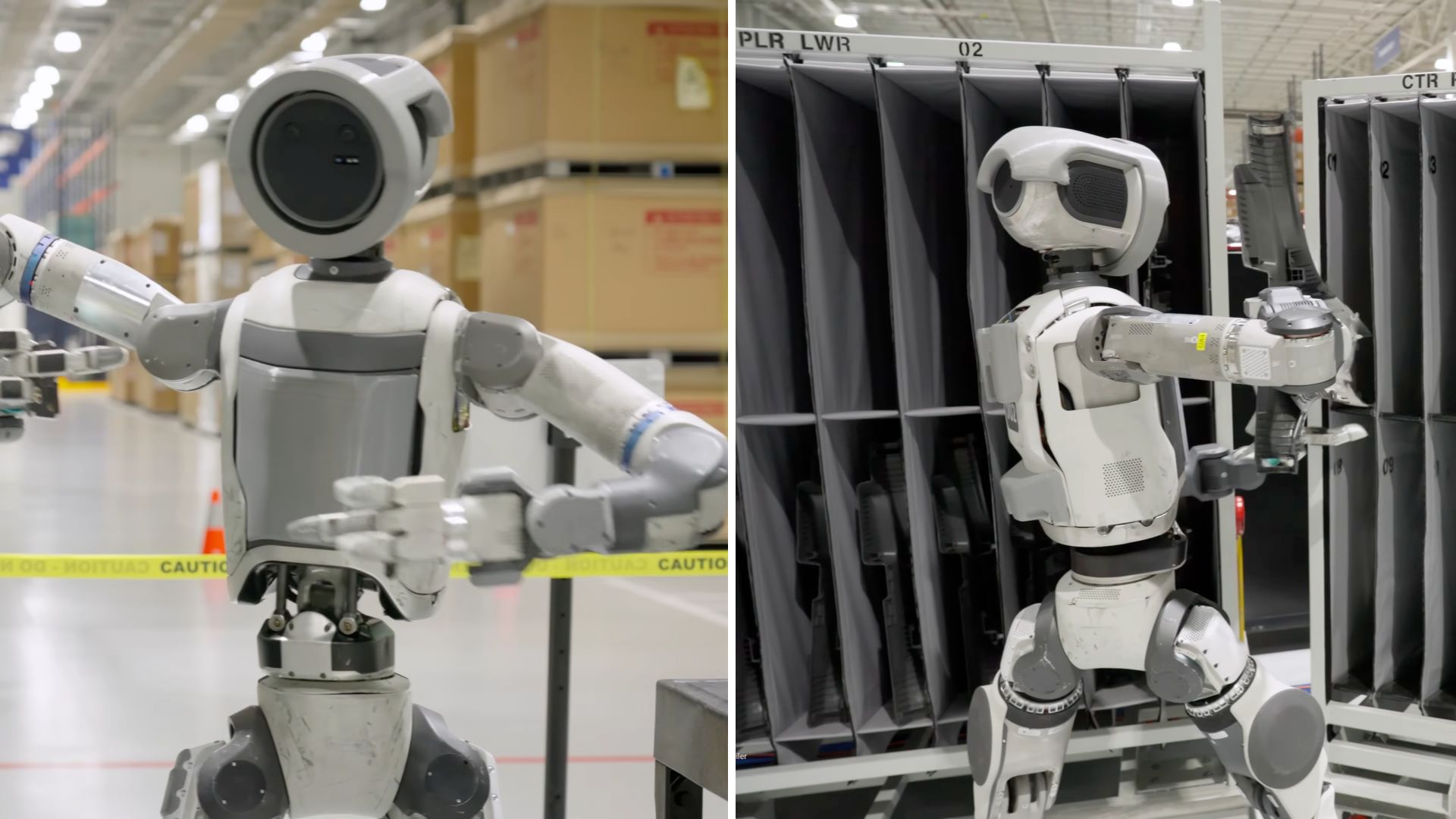
Boston Dynamics' Atlas robot performs manufacturing tasks at Hyundai plant
Interesting Engineering·5 January 2026·WATCH: Boston Dynamics Atlas humanoid robot masters tough factory jobs - Boston Dynamics’ Atlas humanoid robot takes on real factory tasks at Hyundai, moving with precision and superhuman agility.
Signals:
- →Humanoid robots transitioning from labs to factory floors signals imminent workforce transformation and automation investment decisions.
- →Atlas's 360-degree joint rotation and AI learning capabilities exceed human limitations, redefining manufacturing efficiency standards.
- →Hyundai's deployment plans indicate major automakers are ready to integrate humanoid robots into production operations.

LG unveils CLOiD home robot at CES 2026
Interesting Engineering·5 January 2026·LG’s humanoid robot debuts at CES 2026 with cooking and laundry demos - The humanoid robot is designed to completely eliminate household tasks using a connected ecosystem with AI models trained on excessive data.
Signals:
- →LG's humanoid robot demonstrates AI-powered home automation becoming commercially viable for household tasks.
- →Integration with smart home ecosystems signals shift toward interconnected AI-driven domestic service platforms.
- →Advanced robotics entering consumer market creates new competitive landscape for home appliance manufacturers.

Unitree's H2 humanoid robot performs flying kicks and backflips
Panda Daily·5 January 2026·Unitree Releases H2 Humanoid Robot Training Video: Flying Kicks and Backflips Showcased - Pandaily - Unitree Robotics releases a training video of its H2 humanoid robot performing flying kicks, backflips, and sandbag strikes, highlighting its advanced 31-joint design.
Signals:
- →Demonstrates advanced humanoid robotics capabilities with dynamic movements like flying kicks and backflips.
- →Signals intensifying competition in commercial humanoid robot market with Chinese manufacturer Unitree's progress.
- →Indicates accelerating timeline for deploying agile humanoid robots in industrial and service applications.

Chinese researchers create artificial skin that helps robots sense and avoid damage
Signals:
- →Enables robots to detect harmful pressure and react autonomously, preventing costly equipment damage.
- →Modular design allows quick field repairs, reducing downtime and maintenance costs significantly.
- →Compatible with energy-efficient neuromorphic processors, lowering operational costs for robotic systems.
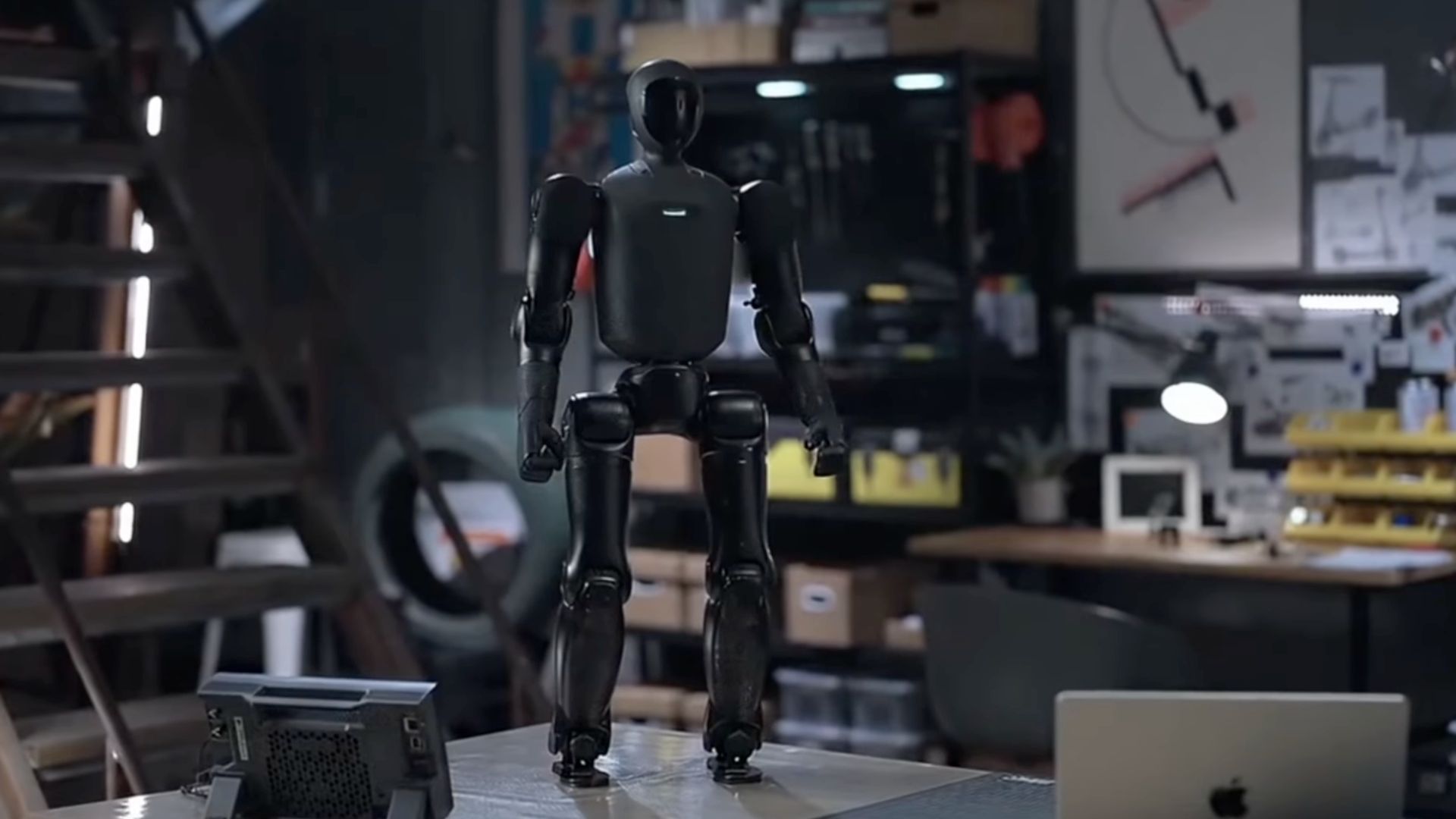
Agibot's Q1 humanoid robot fits in a backpack
Interesting Engineering·1 January 2026·Q1: Agibot unveils mini humanoid robot that can fit in a backpack - Agibot unveils Q1, an 80 cm AI humanoid with full-body force control, crash-resistant joints, and a portable, experiment-friendly design.
Signals:
- →Compact humanoid robots enable faster, safer, cheaper development cycles and broader accessibility.
- →China's humanoid production scaling rapidly: Agibot reached 5,000 units in under 3 years.
- →Personal robotics transitioning from labs to consumer markets with rental and customization platforms.
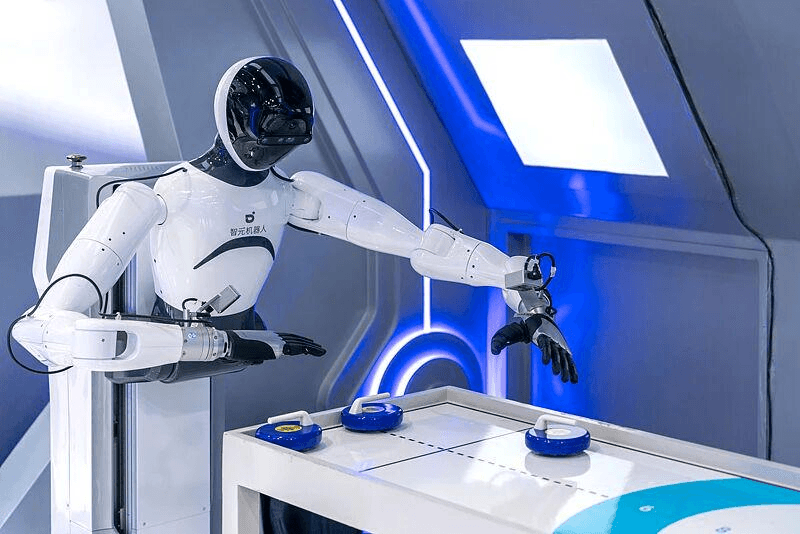
China launches 14-cent humanoid robot rental service nationwide
SiliconANGLE·31 December 2025·China pushes robot access mainstream with Qingtianzhu’s 1 RMB 'flash rental' service - SiliconANGLE - China pushes robot access mainstream with Qingtianzhu’s 1 RMB 'flash rental' service - SiliconANGLE
Signals:
- →China launches ultra-low-cost robot rental service across 10 major cities, accelerating mainstream adoption ahead of Western competitors.
- →"Robot Didi" platform gathers operational data and exposes businesses to humanoid robots, building national leasing ecosystem.
- →Aggressive pricing strategy demonstrates China's significant lead in robotics commercialization while U.S. efforts remain largely conceptual.

Chinese researchers develop robotic skin with pain-sensing reflexes
Interesting Engineering·30 December 2025·China's neuromorphic e-skin lets humanoid robots sense pain and react - Researchers in China built a neuromorphic robotic skin that lets humanoid robots sense pain and react instantly to harm.
Signals:
- →Enables robots to detect harmful contact and react instantly without central processing delays.
- →Critical for safe human-robot interaction in homes, hospitals, and public spaces.
- →Modular design allows rapid repair, reducing downtime and maintenance costs significantly.
Autonomy and Drones

London becomes battleground for Waymo and Baidu robotaxis
Financial Times·3 January 2026·London emerges as frontline in US-China battle over robotaxis - Waymo and Baidu prepare to launch autonomous ride-hailing vehicles in UK capital as soon as 2026
Signals:
- →London becomes first city with both US and Chinese robotaxis, intensifying geopolitical AI competition.
- →National security concerns arise as autonomous vehicles could enable surveillance or infrastructure disruption.
- →UK positioning itself as regulatory middle ground between Silicon Valley and Beijing approaches.

Saudi Arabia partners with Archer Aviation for eVTOL air taxis
 CleanTechnica·31 December 2025·Saudi Arabia Opens Pathway for Electric Air Taxis - CleanTechnica - Support CleanTechnica's work through a Substack subscription or on Stripe. Electric air taxis may be a dead end idea. I think they probably are. Except in some niche, limited markets and applications. To be honest, though, Saudi Arabia may be one of those markets, and authorities there certainly seem to ... [continued]
Signals:
- →Saudi Arabia creating regulatory framework for eVTOL operations, potentially becoming early adopter market.
- →Partnership between aviation authority and Archer Aviation demonstrates government commitment to emerging technology.
- →Alignment with FAA standards could establish precedent for international eVTOL certification and deployment.
Military Tech

ParaZero's DefendAir captures hostile drones with nets, not explosives
Interesting Engineering·6 January 2026·Watch: New air defense system intercepts drones midair using nets - DefendAir is a net-based counter-drone system designed to disable hostile UAVs with low collateral damage, at a fraction of the cost.
Signals:
- →Low-cost drones create expensive defense challenges; net-capture systems offer cost-effective alternative to traditional kinetic defenses.
- →DefendAir reduces collateral damage in urban areas by capturing rather than destroying hostile drones mid-flight.
- →Multiple deployment configurations enable flexible integration with existing defense infrastructure across various operational scenarios.

US Army creates dedicated AI officer career path
Signals:
- →Army creating dedicated AI officer career path to manage growing commercial AI systems integration.
- →$10B+ in AI contracts require specialized military expertise for effective deployment and maintenance.
- →Building in-house AI expertise ensures long-term operational capability and strategic military advantage.

China deploys carrier-launched combat drones near Type 076 ship
Interesting Engineering·30 December 2025·China's Type 076 carrier seen with electromagnetic launch drones - New images from Shanghai reveal stealth drones staged beside China's Type 076 ship, hinting at imminent trials of a hybrid drone carrier.
Signals:
- →China demonstrates operational readiness of carrier-launched stealth drones, signaling advanced unmanned naval combat capability.
- →Mobile electromagnetic catapult system enables drone deployment from ships and austere coastal sites without runways.
- →Type 076 hybrid vessel blurs amphibious/carrier roles, reshaping regional naval power balance and strategic calculations.

Ukraine develops autonomous killer drones amid ongoing conflict

Signals:
- →Ukraine developing autonomous AI drone swarms that can operate without human control or GPS connectivity.
- →Battlefield testing accelerates AI weapons development faster than peacetime regulations could prevent.
- →Technology proliferation risk as low-cost autonomous weapons become accessible to other nations and groups.
DARPA software enables adaptive cross-domain military operations
Signals:
- →Enables rapid cross-domain military coordination by analyzing thousands of asset options in real-time.
- →Reduces integration time from years to days using government-owned, non-proprietary software tools.
- →Demonstrates scalable warfare strategy replacing rigid kill chains with adaptive multi-domain networks.
Space

NASA's Artemis II moon mission set for February 2026 launch
Interesting Engineering·5 January 2026·Artemis II rocket displays America 250 logo as NASA nears moon flight - NASA's Artemis II will celebrate America's 250th anniversary while flying the first humans to the Moon since Apollo 17 in 1972.
Signals:
- →NASA's Artemis II mission marks first crewed lunar flight since 1972, launching February 2026.
- →Mission will set records for longest crewed test flight and furthest human distance from Earth.
- →SLS program faces budget criticism and obsolescence concerns compared to reusable rocket technology.

SpaceX to lower Starlink satellites to reduce collision risks
Signals:
- →SpaceX lowering 4,400 Starlink satellites by 44 miles in 2026 to reduce collision risks in congested orbit.
- →Low Earth orbit now holds 13,000 satellites (10,000 SpaceX-owned), nearly quadrupling since 2020, increasing collision dangers.
- →Recent near-miss incidents and satellite explosion highlight urgent need for improved space traffic coordination and safety.
Crypto

Polymarket partners with Parcl to launch real estate prediction markets
 CoinTelegraph·5 January 2026·Polymarket partners with Parcl to launch housing prediction markets - Polymarket and Parcl have partnered to launch real estate prediction markets that settle against housing price indices, bringing home price data into prediction markets.
Signals:
- →Real estate prediction markets enable data-driven hedging and speculation on housing price movements across major US cities.
- →Partnership validates prediction markets' expansion beyond politics into traditional asset classes with institutional-grade data infrastructure.
- →Polymarket's $10B valuation and mainstream partnerships signal prediction markets becoming legitimate financial forecasting tools.

Ethereum processes record $8T in stablecoin transfers
CoinTelegraph·5 January 2026·Ethereum Stablecoin Transfers Hit Record $8T In Fourth Quarter - Ethereum stablecoin transfer volume doubled to $8 trillion in Q4 2025 as daily transactions and active addresses hit all-time highs on the network.
Signals:
- →Ethereum stablecoin transfers doubled to $8T in Q4, demonstrating massive real-world payment adoption beyond speculation.
- →Network dominates 65% of tokenized real-world assets market, positioning it as critical financial infrastructure.
- →Active addresses and transactions hit all-time highs, signaling accelerating institutional and mainstream blockchain usage.

Ethereum solves blockchain trilemma with PeerDAS and zkEVMs
CoinTelegraph·5 January 2026·Vitalik Buterin Claims ZK-EVMs And PeerDAS Have Solved Blockchain Trilemma - Vitalik Buterin outlined the four-year roadmap for ZK-EVMs and PeerDAS, claiming they’ve solved the long-standing blockchain trilemma with live, running code.
Signals:
- →Ethereum claims breakthrough solving blockchain's core challenge: balancing decentralization, security, and scalability simultaneously.
- →PeerDAS upgrade live on mainnet today; zkEVMs production-ready, enabling significantly higher transaction capacity.
- →Full implementation expected by 2030, potentially reshaping competitive landscape for blockchain infrastructure investments.

Polymarket account profits $408K on suspiciously timed Maduro bet
The Verge·3 January 2026·Someone made $400,000 on Polymarket betting on Nicolás Maduro’s capture | The Verge - A brand-new account placed suspiciously timed bets on Polymarket regarding Nicolás Maduro’s ouster.
Signals:
- →New Polymarket account profited $408,000 from suspiciously timed bets on Maduro's capture before military action.
- →Incident raises concerns about insider trading on prediction markets, with speculation of Pentagon involvement.
- →Prediction markets show limited interest in curbing insider trading, prioritizing information delivery over fair trading.

US national debt surpasses $38.5T on Bitcoin Genesis Day
CoinTelegraph·3 January 2026·US National Debt Surges Past $38.5T on Bitcoin Genesis Block Day - The total US National debt has soared past $38.5 trillion, with no sign of slowing down, as the Bitcoin community celebrates the first block added to the chain.
Signals:
- →US national debt reached $38.5 trillion, adding $2.2 trillion in just one year at accelerating pace.
- →Bitcoin's fixed 21-million supply contrasts sharply with expanding fiat money supply of $22.4 trillion.
- →Rising debt and money supply inflation erode purchasing power, weakening dollar's long-term value proposition.

Iran sells advanced weapons for cryptocurrency to evade sanctions
Financial Times·1 January 2026·Iran offers to sell advanced weapons systems for crypto - Overture from Ministry of Defence Export Center comes as heavily sanctioned states turn to digital assets
Signals:
- →Iran circumvents Western sanctions by accepting cryptocurrency for advanced military hardware sales.
- →Nation-state crypto weapons trade creates new enforcement challenges for international sanctions regimes.
- →Cryptocurrency enables proliferation of ballistic missiles and drones to 35 countries despite financial controls.

India's central bank pushes CBDCs over stablecoins
CoinTelegraph·1 January 2026·India’s Central Bank Pushes For CBDCs Over Stablecoins - India’s central bank warns that privately issued stablecoins could threaten financial stability and says central bank digital currencies should take priority as the future of money.
Signals:
- →India's central bank warns stablecoins threaten financial stability and advocates prioritizing government-controlled CBDCs instead.
- →Only three countries have launched CBDCs despite global interest, indicating significant implementation challenges ahead.
- →Stablecoin market grew 50% to $307B in 2025, showing strong private-sector momentum competing with government digital currencies.

Ugandan opposition leader promotes Bitchat to bypass internet blackouts
CoinTelegraph·31 December 2025·Uganda’s Bobi Wine Promotes Bitchat Amid Fears of Internet Blackout - As Uganda heads toward its 2026 presidential election, opposition leader Bobi Wine is urging supporters to download messaging app Bitchat, citing fears of government-imposed internet blackouts.
Signals:
- →Decentralized communication tools can bypass government internet shutdowns during politically sensitive periods like elections.
- →Authoritarian regimes' control over traditional internet infrastructure drives demand for censorship-resistant alternatives.
- →Bluetooth mesh networks enable coordination and information sharing without relying on centralized telecommunications infrastructure.
Energy

Chinese solar imports transform South Africa's struggling power grid
CleanTechnica·1 January 2026·Chinese Solar Panels Are Transforming Africa - CleanTechnica - China is supplying low cost solar panels to many African nations, including South Africa. Doing so also increases its political power.
Signals:
- →China rapidly capturing African energy markets while US retreats, shifting geopolitical influence and creating long-term dependencies.
- →South Africa's solar capacity jumped from zero to 10% since 2019, demonstrating speed of energy transition in emerging markets.
- →Foreign infrastructure control raises security risks; local job creation sacrificed for cheaper imported clean energy solutions.

Retired aircraft carrier reactors could power AI data centers
Interesting Engineering·30 December 2025·USS Nimitz reactors may fuel AI data centers after retirement - Retired USS Nimitz nuclear reactors could power AI data centers, offering a cheaper, high-output energy solution.
Signals:
- →Retired naval reactors could power AI data centers at half the cost of new nuclear plants ($2B vs. $4B+).
- →Proposal addresses critical AI infrastructure power demands while reducing Navy's billion-dollar decommissioning burden.
- →Weapons-grade uranium in reactors poses significant proliferation risks requiring careful regulatory oversight.
Transport

Bosch's free anti-theft feature makes stolen e-bikes unsellable
The Verge·6 January 2026·This free feature helps make stolen Bosch e-bikes unsellable | The Verge - Buyers, service centers, and authorities will be alerted when connecting to a stolen e-bike.
Signals:
- →Bosch's free theft-marking system reduces resale value and serviceability of stolen e-bikes.
- →Digital ecosystem alerts buyers, dealers, and authorities when connecting to stolen bikes.
- →Feature disables key functions, making stolen e-bikes less functional and harder to monetize.

Paris unveils Europe's longest aerial cable car line
CleanTechnica·5 January 2026·Europe's Longest Gondola Line Opened In Paris - CleanTechnica - Support CleanTechnica's work through a Substack subscription or on Stripe. Gondolas are not the biggest type of public transit globally, but they are fun. Well, for some of us they are — I rode on one with my wife about 13 years ago in Barcelona and she felt absolutely sick ... [continued]
Signals:
- →Gondolas offer cost-effective transit solution at €138M versus expensive subway construction for isolated neighborhoods.
- →System demonstrates scalable urban mobility alternative, transporting 11,000 daily passengers across 4.5 kilometers.
- →Cable car technology provides viable public transit option for challenging terrain or budget-constrained infrastructure projects.
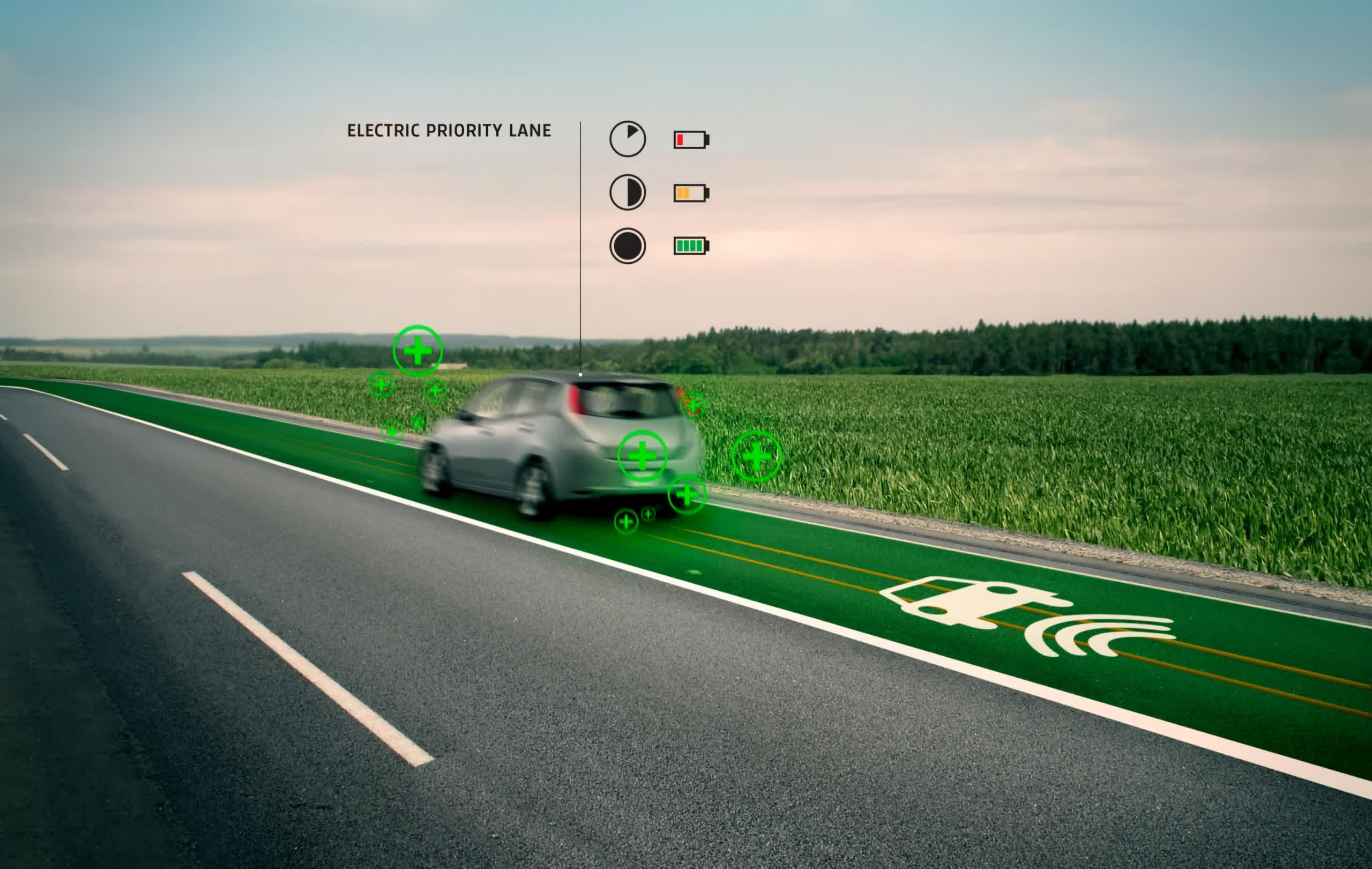
Florida highway to wirelessly charge EVs while driving
Signals:
- →Wireless EV charging roads could reduce range anxiety and accelerate electric vehicle adoption rates.
- →$500M+ Florida pilot tests scalable infrastructure that actively powers vehicles during travel.
- →Success requires industry-wide hardware standards and interoperability across all EV manufacturers.

CrashDash streamlines Australian road safety data analysis
Signals:
- →Consolidates crash data from all Australian states/territories into one accessible platform for faster analysis.
- →Enables identification of high-risk locations and patterns through heatmaps and clustering tools for resource allocation.
- →Provides free access to critical road safety data, removing barriers for councils and planners.
3D Printing

MIT develops deployable structures that transform with one string pull
New Atlas·4 January 2026·Origami inspired structures deploy with pull of a string - MIT researchers use kirigami inspired design to create deployable structures like helmets, robots, and Mars bases that unfold with a simple string pull.
Signals:
- →Enables rapid on-site fabrication of critical infrastructure during disasters or remote missions using accessible 3D printing technology.
- →Reduces transportation costs and storage space through flat-pack designs that deploy instantly and can be reused multiple times.
- →Automates complex structural design process, eliminating need for specialized expertise or equipment in emergency response situations.

COBOD reveals 3DCP cuts construction costs by 30%
Signals:
- →3D concrete printing achieved 30% cost reduction and 50% time savings versus traditional construction methods.
- →Real-world data proves commercial viability of 3DCP technology beyond experimental proof-of-concept projects.
- →Cost advantages may overcome industry resistance to adopting new construction technology at scale.
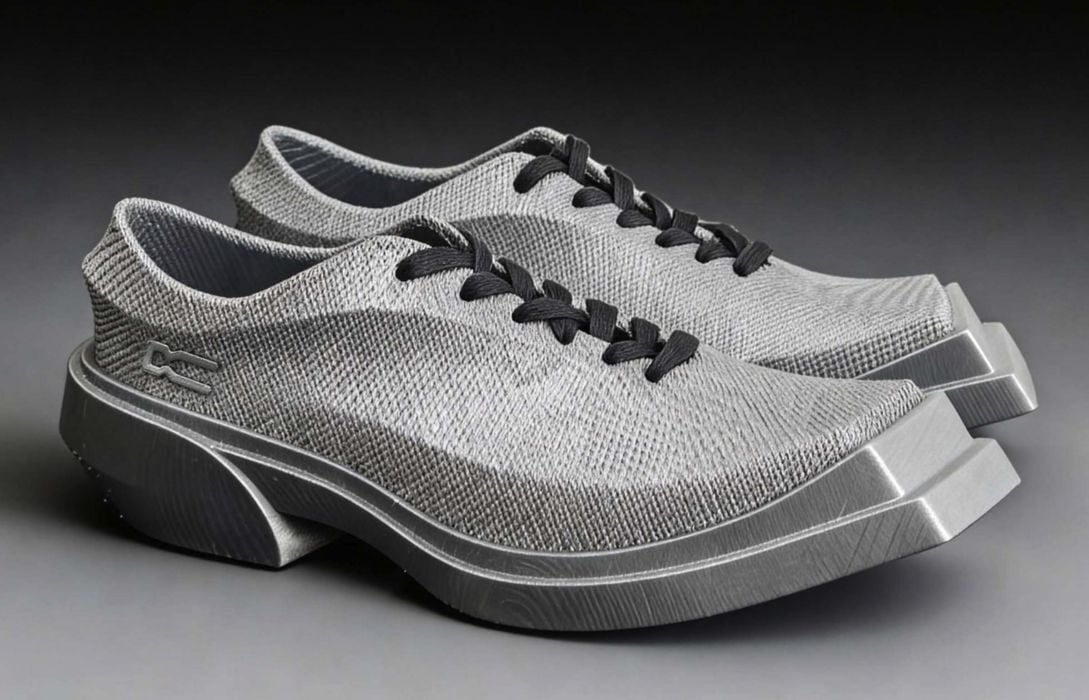
Bambu Lab enables crowdfunded 3D-printable customizable shoes
Signals:
- →Crowdfunding 3D-printable products could revolutionize consumer shopping and drive printer adoption.
- →Customizable, on-demand manufacturing may disrupt traditional retail and supply chain models.
- →New business model linking digital marketplaces with physical products creates revenue opportunities.

3D printing breathes new life into historical artifacts and equipment
Signals:
- →3D printing enables cost-effective preservation of traditional industries by producing rare replacement parts at 1% of original costs.
- →Technology bridges past and future by maintaining irreplaceable heritage equipment and artifacts that would otherwise become obsolete.
- →On-demand manufacturing eliminates lengthy supply chain delays, ensuring business continuity for critical restoration and preservation operations.
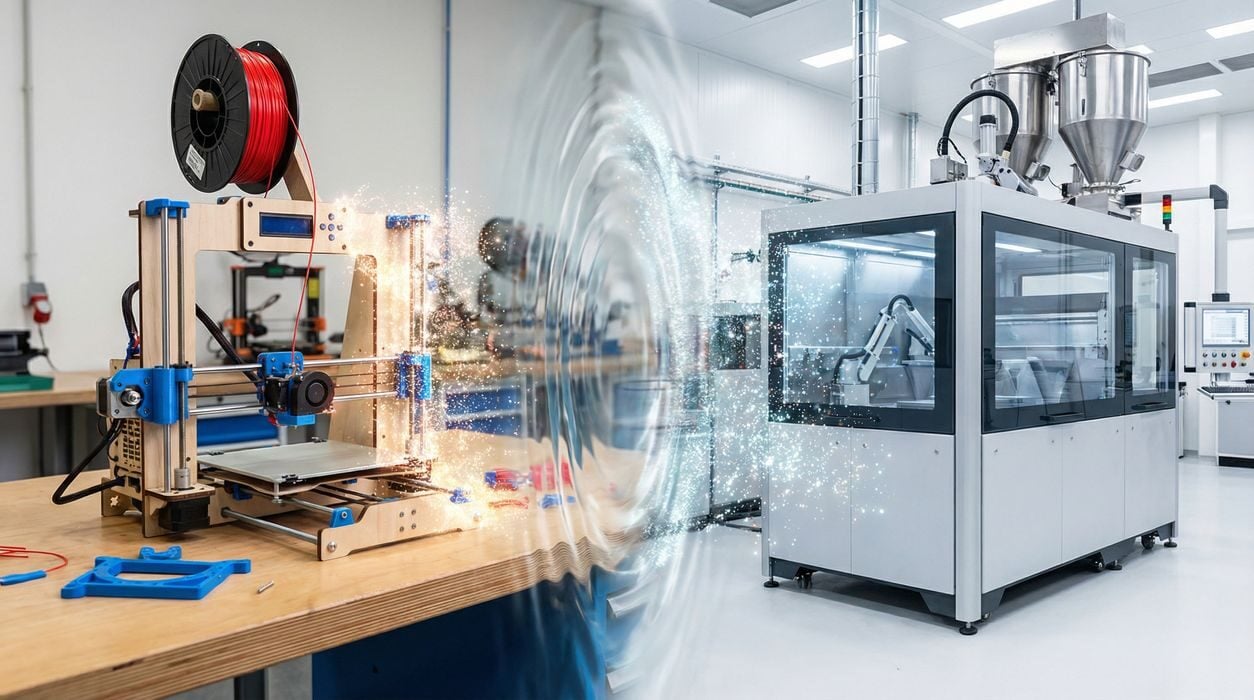
Chinese 3D printer investments could reshape the industry
Signals:
- →Chinese 3D printer makers received massive investments from megacorps, positioning them to dominate global markets.
- →Western manufacturers lack similar funding, creating competitive disadvantage and potential market consolidation.
- →Investment could enable expansion from consumer/professional into larger industrial manufacturing sector.
Mining Tech

Study reveals which asteroids are worth mining
Signals:
- →C-type asteroids comprise 75% of known asteroids but most have insufficient precious metal concentrations for viable mining operations.
- →Water-rich asteroids show promise for fuel production and life support, enabling self-sufficient deep-space missions without Earth resupply.
- →Technology for microgravity extraction and large-scale collection systems requires significant development before commercial mining becomes feasible.
Quantum Tech

Russia unveils 72-qubit quantum computer with three-zone design
Interesting Engineering·30 December 2025·Russia claims new 72-qubit quantum computer hits 94% accuracy level - Russian researchers have reportedly built a 72-qubit quantum computer with a three-zone design that delivers 94 percent accuracy.
Signals:
- →Russia rapidly scaled quantum computing from 16 to 72 qubits in two years, demonstrating accelerating technological sovereignty.
- →Three-zone architecture enables error correction crucial for practical quantum computing applications and commercial viability.
- →Achievement signals intensifying global quantum race requiring strategic response from competing nations and industries.
BCIs and Neuro Tech

Neuralink plans high-volume production and automated surgery this year
Signals:
- →Neuralink shifting from trials to high-volume production and automated surgery in 2024.
- →Twelve paralyzed patients successfully controlled devices using only brain signals and thoughts.
- →$650M funding secured; technology moving from prototype to commercially scalable neurotechnology product.

Cerebral palsy player competes in chess using brain-computer interface
Interesting Engineering·31 December 2025·In a first, cerebral palsy patient plays Chinese chess match using BCI - Han Binbin, a player with cerebral palsy, competed in a Chinese chess tournament using a non-invasive brain-computer interface (BCI) device.
Signals:
- →BCI technology enables severely disabled individuals to participate in competitive activities and potentially rejoin workforce.
- →China demonstrates rapid advancement in neural interface technology, competing with U.S. companies like Neuralink.
- →Non-invasive BCI devices show practical real-world applications beyond medical settings, expanding market opportunities.
Health Tech

Novo Nordisk launches weight loss pill in US
Semafor·5 January 2026·Novo Nordisk launches weight loss pill in US | Semafor - The first-of-its-kind medication is set to accelerate a price war.
Signals:
- →First oral GLP-1 weight loss drug launches, priced significantly lower than injectable versions, potentially expanding market access.
- →Intensifies competition between Novo Nordisk and Eli Lilly in the rapidly growing obesity treatment market.
- →Oral format may improve patient compliance and adoption rates compared to injection-based alternatives.

University of Pretoria develops 3D bioprinted skin replacement product
Signals:
- →3D bioprinted skin scaffolds offer personalized wound treatment, reducing healthcare costs and patient recovery time.
- →Technology addresses critical donor shortage and immune rejection issues in traditional skin graft procedures.
- →Customizable, cell-free scaffolds demonstrate faster healing, creating commercial opportunities in wound care market.

Stanford researchers develop injection that regenerates knee cartilage in mice
SciTechDaily·3 January 2026·Anti-Aging Injection Regrows Knee Cartilage and Prevents Arthritis - A treatment that blocks an age-related protein restored cartilage in aging and injured joints by reprogramming existing cells rather than using stem cells. Researchers at Stanford Medicine report that blocking a protein linked to aging can restore cartilage that naturally wears away in the knees
Signals:
- →Addresses $65 billion annual U.S. healthcare cost with potential alternative to joint replacement surgeries.
- →Treatment targets root cause rather than symptoms, offering first disease-modifying therapy for osteoarthritis.
- →Pill version already in Phase 1 trials suggests faster pathway to market availability.

Scientists create first breathing lung-on-chip from single donor
Interesting Engineering·1 January 2026·New single-donor, breathing lung chip mimics the unseen stages of TB - The new "lung-on-chip" model will provide insights into Tuberculosis (TB) and perfect personalized medicine.
Signals:
- →Enables personalized TB treatment by testing individual patient responses before prescribing antibiotics.
- →Reduces reliance on animal testing while providing more accurate human disease models.
- →Accelerates drug development timelines by observing disease progression in real-time on chips.
Environment Tech

ECOPEACE expands AI-powered water management robots to Singapore and UAE
Interesting Engineering·3 January 2026·Autonomous robots to clean up polluted waters to stop 'dead zones' - Singapore and the UAE are to test new AI-powered robots to manage algae, pollution, and water quality in real time.
Signals:
- →Autonomous AI-powered robots offer cost-effective prevention of water contamination before crises occur.
- →Singapore and UAE pilots demonstrate scalability across diverse climates and water management challenges.
- →Technology addresses growing global water stress from pollution, urbanization, and climate change impacts.
Materials Science

China activates world's most powerful hypergravity centrifuge
Signals:
- →China now operates world's most powerful hypergravity centrifuge, surpassing U.S. military capabilities significantly.
- →Technology compresses decades of infrastructure testing into hours, accelerating engineering and research timelines.
- →Facility open internationally, positioning China as global leader in advanced materials and geotechnical research.
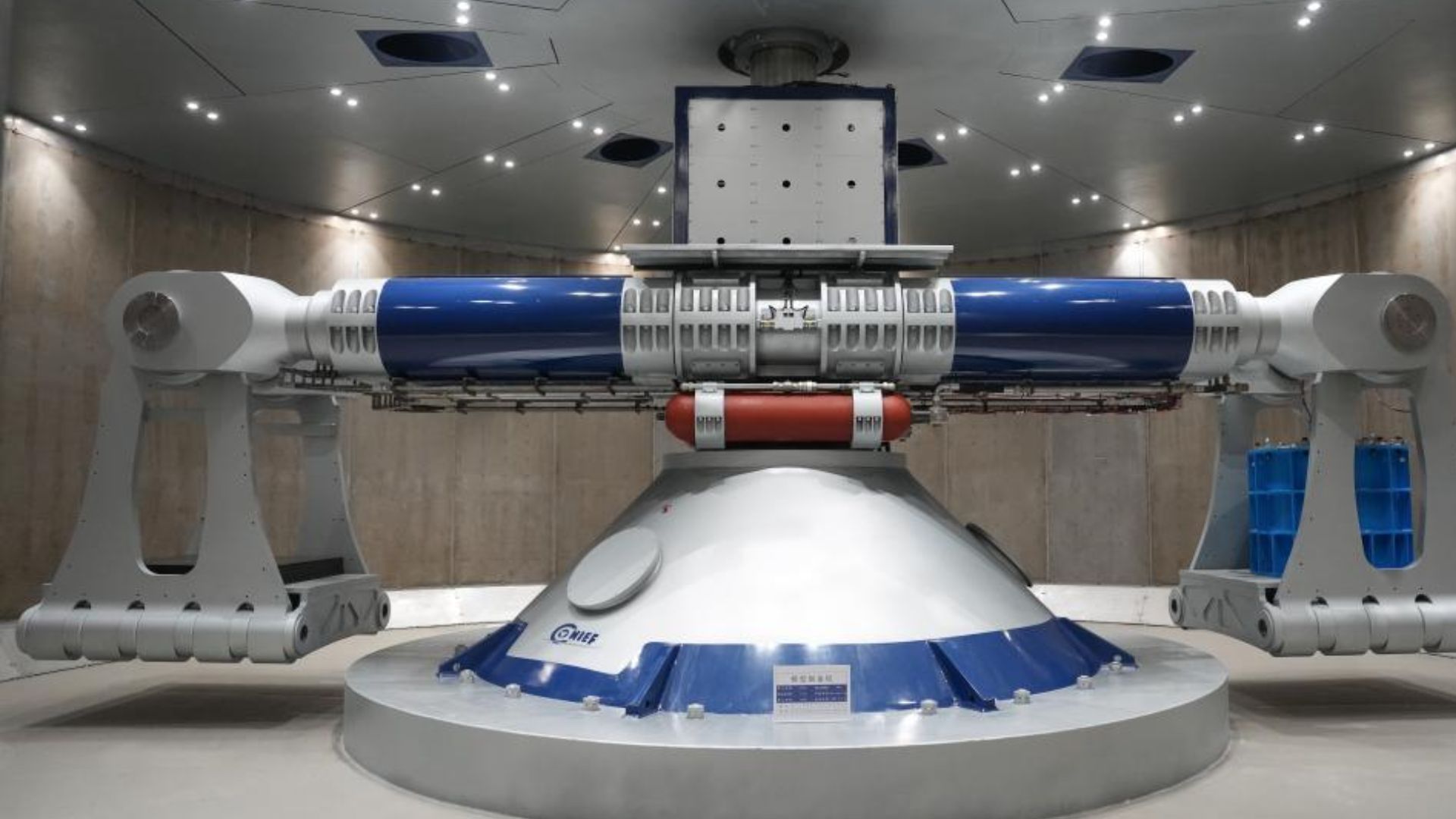
China builds world's most powerful centrifuge for hypergravity research
Interesting Engineering·31 December 2025·China's record 1900g-tonne hypergravity machine compresses space, time - China's hypergravity centrifuge CHIEF1900 has a capacity of 1900g-tonnes and dethrones compatriot CHIEF1300.
Signals:
- →China now leads global hypergravity research, surpassing US capabilities with world's most powerful centrifuge.
- →Technology enables accelerated testing of infrastructure, materials, and environmental phenomena spanning decades or kilometers.
- →Facility attracts international researchers, advancing competitive advantage in engineering, materials science, and environmental studies.
⏳ Zeitgeist

Experts predict 15 potential Black Swan events for 2026
Signals:
- →Multiple experts warn of cascading crises in 2026 across AI, economy, climate, and geopolitics that could destabilize markets and governance.
- →AI-driven disruptions threaten financial systems, elections, and reality itself through deepfakes, flash crashes, and erosion of shared truth.
- →Converging risks—debt bubbles, climate disasters, political violence, regulatory collapse—could trigger simultaneous shocks requiring immediate policy responses.
Climate

Delhi's worst air pollution in decade sparks protests
Phys.org·Delhi's worst air in years fuels anger in test for Modi's party - India's capital recorded its worst pollution in nearly a decade this winter, sparking rare public protests and criticism of Prime Minister Narendra Modi's party over its handling of the air quality emergency.
Signals:
- →Delhi's air quality reached worst levels since 2017, with hazardous readings on 88% of days during peak pollution season.
- →Public anger and protests signal political risk for Modi's BJP in its first year governing the capital after decades.
- →Pollution crisis damages India's global image, causing talent flight and deterring investment in Asia's third-largest economy.
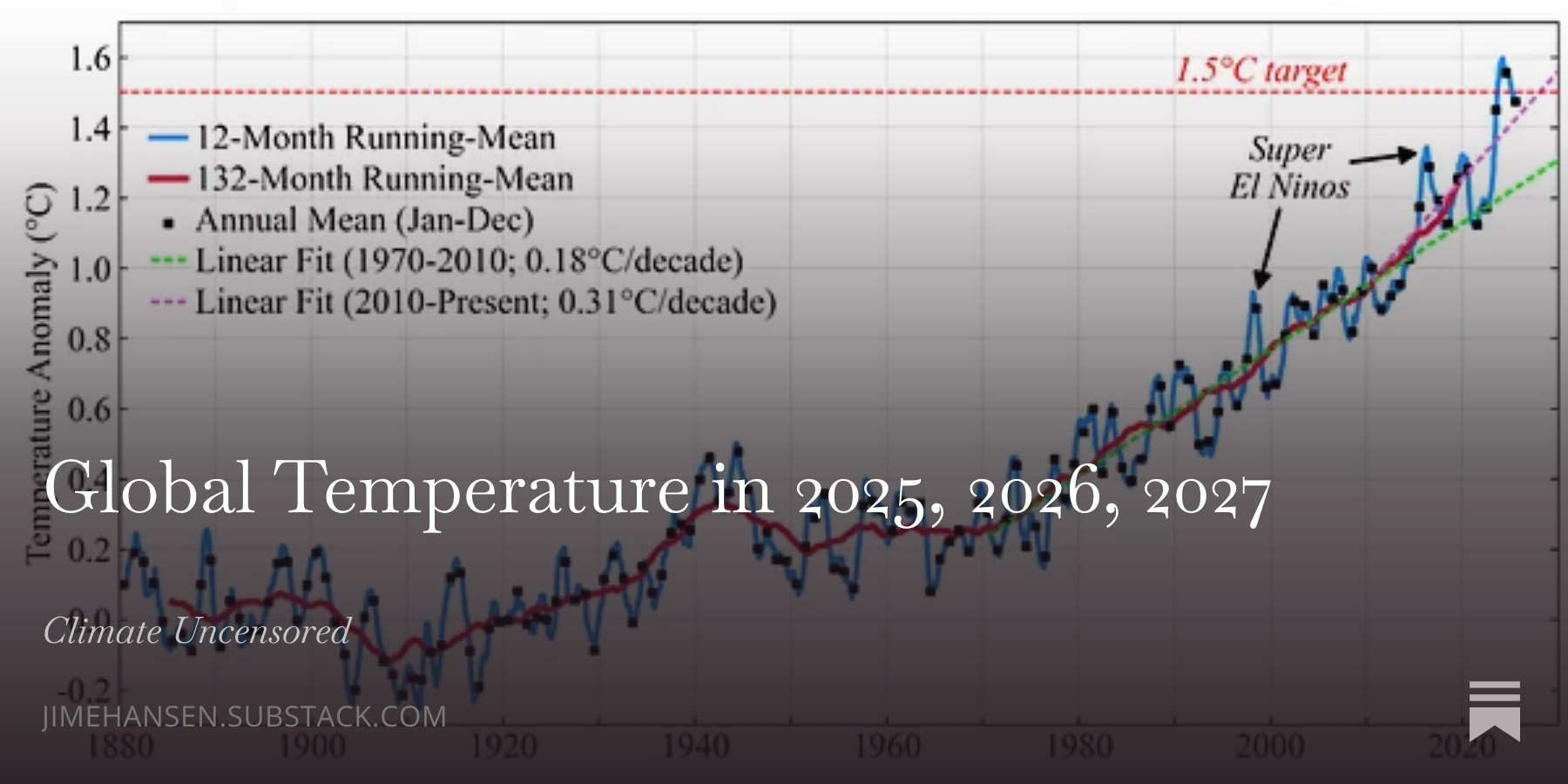
Hansen predicts 2027 will hit record 1.7°C warming

Signals:
- →Global temperature projected to reach record +1.7°C in 2027, confirming accelerated warming trend beyond previous predictions.
- →Three-year average (2023-2025) already at +1.5°C above pre-industrial levels, approaching critical climate thresholds.
- →Expected 2026 El Niño will test hypothesis that aerosol changes have fundamentally accelerated global warming rates.
Biodiversity

Microplastics weaken oceans' ability to absorb carbon dioxide
Phys.org·Oceans struggle to absorb Earth's carbon dioxide as microplastics invade their waters - A new study reveals that microplastics are impairing the oceans' ability to absorb carbon dioxide, a process scientists find crucial for regulating Earth's temperature.
Signals:
- →Microplastics impair oceans' carbon dioxide absorption, weakening Earth's natural climate regulation mechanism.
- →Plastic pollution directly contributes to greenhouse gas emissions and ocean warming, threatening food security.
- →Annual plastic production could triple by 2060 without intervention, requiring urgent integrated policy action.
Health

Deadly flu strain H3N2 subclade K spreads rapidly across US
New Atlas·6 January 2026·New flu strain H3N2 subclade K spreads rapidly - A mutated influenza A H3N2 virus, subclade K, is spreading rapidly and evading defenses, leading to increased hospitalizations this winter season.
Signals:
- →Record 120,000 hospitalizations and 5,000 deaths signal unprecedented healthcare system strain requiring immediate resource allocation.
- →New H3N2 subclade K evades current vaccines (only 30-40% adult effectiveness), demanding revised public health strategies.
- →Declining vaccination rates (42% adults) combined with rapid viral spread creates significant workforce and economic disruption risks.

Global cancer deaths projected to surge by 2050
SciTechDaily·31 December 2025·“Impending Disaster”: Scientists Warn That Cancer Deaths Are Surging Worldwide - Cancer is becoming a global crisis shaped less by biology than by inequality, risk exposure, and access to care.
Signals:
- →Cancer deaths projected to reach 18.6 million by 2050, with two-thirds in low- and middle-income countries.
- →42% of cancer deaths are preventable through addressing modifiable risk factors like tobacco and diet.
- →Global health systems face widening inequalities in cancer diagnosis, treatment access, and outcomes between income levels.
Economics

China ends tax exemption on contraceptives to boost birthrate
Semafor·4 January 2026·China ends tax exemption on contraceptives | Semafor - Beijing ended a 30-year tax exemption for condoms and other contraceptives, as Chinese officials attempt to boost the country’s flagging birthrate.
Signals:
- →China's demographic crisis threatens economic growth and workforce sustainability despite policy interventions.
- →Tax policy shift signals government prioritization of births over public health concerns like STIs.
- →High child-rearing costs and youth unemployment undermine pro-natalist policies' effectiveness.

Polymarket's Maduro bet may not be insider trading
Signals:
- →Prediction market integrity affects regulatory decisions on allowing real-money forecasting platforms to operate legally.
- →Insider trading detection methods impact enforcement priorities and resource allocation for financial oversight agencies.
- →Risk assessment frameworks for political event betting inform policy on national security information controls.
Geopolitics

Trump's Greenland claims leave Europe scrambling for response
Financial Times·6 January 2026·Donald Trump’s Greenland claim leaves Europe struggling for an answer - Fresh from his Venezuela adventure, US president shows no sign of backing down on Arctic island
Signals:
- →Trump's Greenland annexation threats create unprecedented NATO crisis, forcing allies to choose between US and Denmark.
- →European unity fractures as leaders balance supporting Denmark while maintaining US cooperation on Ukraine and security.
- →US disregard for international law signals unpredictable foreign policy, complicating European strategic planning and alliances.

Iran's regime faces protests and threats, but survival likely
 The Conversation·6 January 2026·Facing protests and new threats from Trump, is the Iranian regime on its last legs? - Iran’s leaders are more vulnerable than ever. Yet, they still have many tools of repression at their disposal.
Signals:
- →Iran faces simultaneous internal protests and external military threats, creating unprecedented regime vulnerability and regional instability risks.
- →Trump's "locked and loaded" warning and Netanyahu's threats signal potential military escalation despite Iran's defensive capabilities and strategic importance.
- →Regime collapse could trigger chaotic transition in strategically vital, 93-million-population nation controlling critical Persian Gulf oil routes.

Reviving Venezuela's oil faces $110B investment hurdle
Semafor·5 January 2026·Getting Venezuela’s oil will be harder than the White House thinks | Semafor - Trump’s challenge to oil majors will test his influence on top CEOs.
Signals:
- →Venezuela's oil revival requires $110 billion investment amid oversupplied markets and low prices below $60/barrel.
- →Legal disputes, governance uncertainty, and lack of legitimate counterparty create major risks for multi-decade investments.
- →Increased Venezuelan production could harm US shale operations and trigger geopolitical backlash from China and Gulf states.

China's naval advances alarm West with Arctic subs
Semafor·5 January 2026·Concerns rise over China’s growing naval might | Semafor - Beijing recently unveiled research submarines capable of traversing the Arctic.
Signals:
- →China developing Arctic-capable nuclear submarines threatens NATO targets from unprecedented northern positions.
- →New "carrier killer" missiles with 5,000-mile range challenge U.S. Pacific naval dominance.
- →Shifting naval power balance requires strategic reassessment of military deployments and alliances.

Denmark warns Trump's Greenland seizure would destroy NATO
Financial Times·4 January 2026·Donald Trump seizing Greenland would end Nato, warns Denmark - Danish prime minister says US has no right to annex Arctic island
Signals:
- →US seizure of Greenland would trigger NATO's collapse, ending post-WWII Western security architecture.
- →Trump's territorial ambitions threaten transatlantic alliance stability and European sovereignty guarantees.
- →Arctic geopolitical tensions escalate as US pursues "hemispheric defense" strategy against allies.

US seizure of Maduro sets dangerous precedent for international law
The Conversation·The US has invaded countries and deposed leaders before. Its military action against Venezuela feels different - Many experts warn the already eroded UN Charter is now nearing collapse.
Signals:
- →US seizure of Maduro sets dangerous precedent undermining international law and sovereignty principles globally.
- →Operation deepens regional divisions, destabilizes Latin America, and risks military escalation near borders.
- →Unilateral action without UN approval signals shift from rules-based order to power-based international relations.

Trump's Venezuela move signals Cuba regime change next
 Intersubjectively Transmissible | Jacob Shapiro | Substack·Venezuela was the rehearsal. - by Jacob Shapiro - Is Cuba the main course?
Signals:
- →U.S. abandoning pretense of moral justification for military intervention signals fundamental shift in how America projects power globally.
- →Hemispheric strategy reveals U.S. retreat from global hegemony, focusing resources on Western Hemisphere amid multipolar world emergence.
- →Lack of credible deterrence exposes nations to intervention, potentially accelerating nuclear proliferation among vulnerable states worldwide.

Venezuela's military has long prepared for US invasion
The Conversation·18 December 2025·How Venezuela has been preparing for a US invasion for more than two decades - Listen to Pablo Uchoa, an expert in Venezuelan military scenario planning, on The Conversation Weekly podcast.
Signals:
- →US escalation includes complete blockade, $50M bounty on Maduro, and authorized CIA lethal operations.
- →Venezuela has prepared asymmetric warfare strategy since 2002, modeling resistance on Vietnam and Iraq.
- →Caribbean military strikes killing civilians raise questions about scope beyond stated drug-trafficking targets.

Iranian protests over economy spread to universities
Semafor·31 December 2025·Iran protests over collapsing economy spread to universities | Semafor - Iran’s government is facing economic pressure resulting from long-running sanctions over its nuclear program.
Signals:
- →Economic instability in Iran threatens regional security and global energy markets.
- →Widespread protests signal potential regime vulnerability and possible political transition risks.
- →Sanctions effectiveness and nuclear negotiations may require strategic policy reassessment.
🧠Mind expanding

Technology's threat to jobs and the future economy
Signals:
- →Automation and AI may fundamentally disrupt job markets across all skill levels, threatening economic stability.
- →Technology-driven unemployment could accelerate income inequality and middle-class decline beyond current trends.
- →Market-based economic systems may require adaptation to prevent technology-induced depression and social instability.
💭Meme stream

The hidden forces making your business writing boring
Signals:
- →Highlights inefficient designer utilization patterns that reduce creative output and organizational productivity.
- →Reveals content waste issues costing companies money through poor marketing resource allocation.
- →Identifies communication breakdowns causing unnecessary urgency and operational inefficiencies in marketing teams.