Contents /
🌟Picks of the week
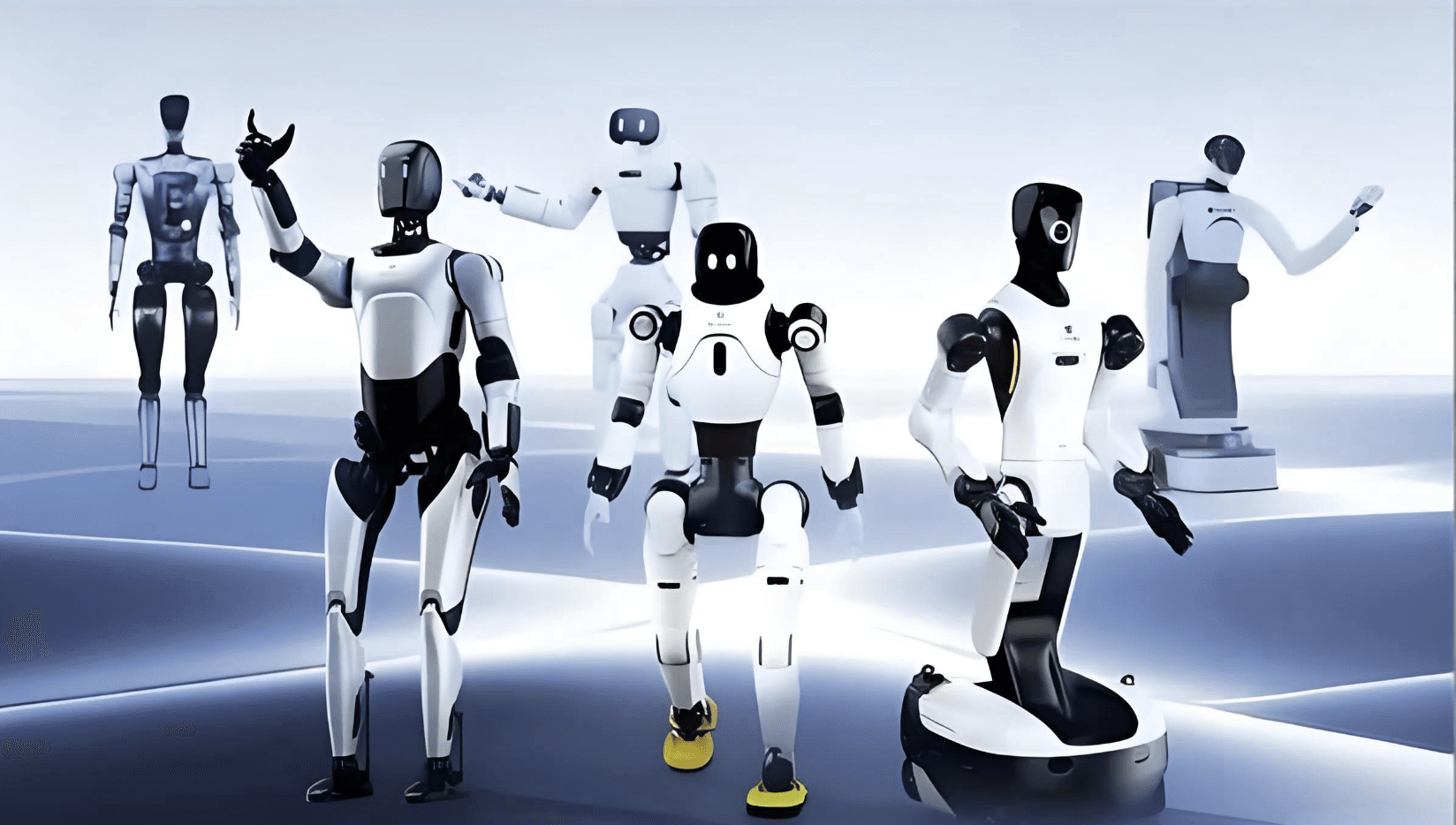
AgiBot produces 5,000th humanoid robot, achieves mass-production capability
 Panda Daily·9 December 2025·AgiBot’s 5,000th Humanoid Robot — the Lingxi X2 — Rolls Off the Line, Marking Full Mass-Production Readiness - Pandaily - AgiBot’s Lingxi X2 — the company’s 5,000th humanoid robot — marks the shift from prototype to scalable mass production, paving the way for large-volume deployment.
Signals:
- →AgiBot achieved 5,000-unit production milestone, demonstrating scalable mass-production capability for humanoid robots.
- →Company projects 5,000 annual shipments soon, signaling commercial viability and market readiness.
- →Transition from prototype to mass production enables large-scale deployment across industries.

XPeng unveils decade-long roadmap for autonomous cars, robots, and flying vehicles
Panda Daily·9 December 2025·XPeng Unveils a Decade-Long “Physical AI” Roadmap: Bridging Bits and Atoms - Pandaily - XPeng outlines a bold decade-long roadmap for “Physical AI,” spanning L4 autonomous cars, humanoid robots, and consumer flying vehicles—all designed to merge the digital and physical worlds.
Signals:
- →XPeng commits to decade-long "Physical AI" strategy integrating autonomous vehicles, humanoid robots, and flying cars.
- →Company shifting from network effects to "Agent Effect" business model using autonomous intelligent systems.
- →Plans L4 autonomous vehicle launches next year plus mass-production humanoid robots with $1.7B R&D investment.

Waymo's robotaxi rides nearly double to 450,000 weekly
 TechCrunch·8 December 2025·Investor letter reveals skyrocketing growth of Waymo's robotaxi rides | TechCrunch - Six months ago, Waymo disclosed it was providing 250,000 robotaxi rides. But it's grown significantly since, a leaked letter says.
Signals:
- →Waymo's robotaxi rides nearly doubled to 450,000 weekly in six months, demonstrating rapid autonomous vehicle adoption.
- →Planned expansion to 12 additional cities in 2026 signals significant market growth and competitive positioning opportunities.
- →Tiger Global's investment gains highlight autonomous transportation as a high-value sector for strategic portfolio consideration.

Casio still sells 39 million calculators annually worldwide
Signals:
- →Calculators provide reliable, accurate results without AI hallucination risks in critical calculations.
- →Strong demand persists in developing markets with unreliable connectivity and power infrastructure.
- →Casio sold 39 million units across 100 countries, demonstrating sustained market viability.

Trump's national security strategy prioritizes western hemisphere and economics
 The Conversation·8 December 2025·What the US national security strategy tells us about how Trump views the world - The Trump administration is highly critical of Europe in its national security strategy, while barely mentioning the threats posed by rival great powers.
Signals:
- →Trump prioritizes western hemisphere threats (drugs, migrants) over traditional great-power competition with China and Russia.
- →Document emphasizes protecting "western civilization" from migration, signaling interventionist stance in European domestic politics.
- →Transactional economic focus suggests potential abandonment of allies if profitable deals emerge with adversaries.

Tesla Optimus fall raises questions about robot's autonomy
 Interesting Engineering·8 December 2025·Tesla Optimus's fall in Miami demo sparks remote operation debate - While falls are not unusual in robotics development, a specific hand motion has raised questions about the current level of autonomy in Tesla’s system.
Signals:
- →Tesla's Optimus robot autonomy claims questioned after suspicious VR-like hand gestures during Miami demonstration fall.
- →Incident raises credibility concerns about Tesla's $20-30K humanoid robot ahead of planned 5,000-unit deployment.
- →Gap between marketed autonomous capabilities and actual teleoperation affects investment and partnership decisions.

MIT's speech-to-reality system builds furniture in five minutes
 TechXplore·Speech-to-reality system creates objects on demand using AI and robotics - Generative AI and robotics are moving us ever closer to the day when we can ask for an object and have it created within a few minutes. In fact, MIT researchers have developed a speech-to-reality system, an AI-driven workflow ...
Signals:
- →Enables rapid physical production (5 minutes) from voice commands, revolutionizing manufacturing speed and accessibility.
- →Eliminates design expertise barriers through natural language interface, democratizing product creation capabilities.
- →Modular assembly allows object disassembly and reuse, reducing waste and enabling sustainable on-demand manufacturing.
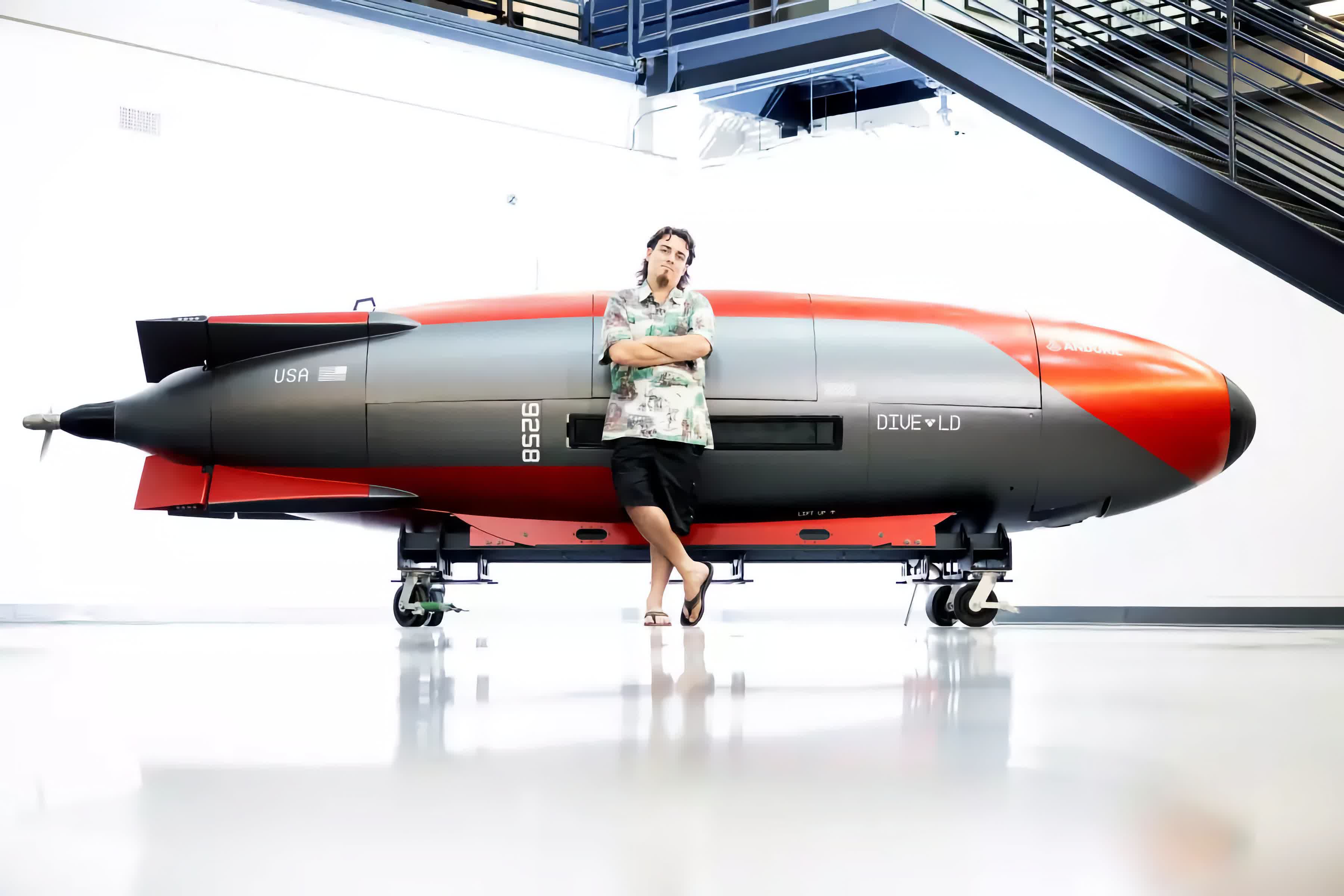
Palmer Luckey defends AI making life-or-death decisions in warfare
Signals:
- →Major defense contractor advocates AI-controlled lethal weapons, signaling industry shift toward autonomous warfare systems.
- →Tech companies increasingly abandoning ethical AI restrictions for military applications, including Google removing weapons-related safeguards.
- →AI simulations show unpredictable escalation risks, including unauthorized nuclear weapon deployment in conflict scenarios.

Baidu robotaxi collision leaves two pedestrians in intensive care
Interesting Engineering·7 December 2025·China's Baidu robotaxi hits pedestrians, traps one person beneath car - A Baidu robotaxi operating in the Chinese city of Zhuzhou was involved in a serious collision, leaving two pedestrians hospitalized in intensive care.
Signals:
- →Serious robotaxi accident hospitalizes two pedestrians in ICU, raising urgent autonomous vehicle safety concerns.
- →Hello suspended Zhuzhou operations but plans aggressive 50,000 robotaxi deployment by 2027 despite incident.
- →Collision highlights regulatory and liability challenges as autonomous vehicle industry rapidly scales globally.

Wayve tests autonomous robotaxis on London's challenging streets
 Financial Times·6 December 2025·Can Wayve make London a self-driving city? - John Thornhill takes an autonomous spin through the city’s tangled streets with the British start-up’s chief Alex Kendall
Signals:
- →UK startup Wayve launching London robotaxi trial with Uber in spring 2025, competing with Google's Waymo.
- →Company raised $1.3bn from Nvidia, Microsoft, SoftBank despite no material revenue and £81.8mn operating loss.
- →Scalable AI-only approach could generate billions if adopted by major automakers producing millions of vehicles annually.

China shifts autonomous vehicle crash liability to manufacturers and operators
 CleanTechnica·6 December 2025·China’s Most Updated Autonomous Driving Framework Makes Both Carmakers & Operators (Owners Included) Liable in a Crash - CleanTechnica - Support CleanTechnica's work through a Substack subscription or on Stripe. In this week’s CleanTechnica YouTube gathering, fellow CleanTechnica writers Zach Shahan, Larry Evans, José Pontes, and I over-extended the allotted time of 30 minutes and talked for an hour and fifteen. The discussions were continuous and spontaneous, layered, one topic ... [continued]
Signals:
- →China establishes world's clearest autonomous vehicle liability framework, shifting responsibility from passengers to manufacturers and operators.
- →Mandatory insurance and data recording requirements create predictable legal structure for scaling driverless technology commercially.
- →Framework applies to both commercial fleets and private L4/L5 vehicles, providing regulatory template other markets may follow.

Tesla UK sales fall 19% as BYD triples market share
CleanTechnica·6 December 2025·Tesla Sales Drop 19% in UK, while BYD Sales More Than Triple - CleanTechnica - Support CleanTechnica's work through a Substack subscription or on Stripe. Tesla sales have dropped in some markets this year, dropped even more in other markets, and risen in a few. At times, the UK has been one of Tesla’s bright spots. However, the trend lately has been downward again, and ... [continued]
Signals:
- →Tesla's UK market share declined from 11.9% to 9.4% while BYD tripled sales, signaling major competitive shift.
- →BYD could potentially overtake Tesla in UK market by 2026 based on current growth trajectories.
- →Ford also surged to 7.8% share, indicating intensifying three-way competition in UK EV market.
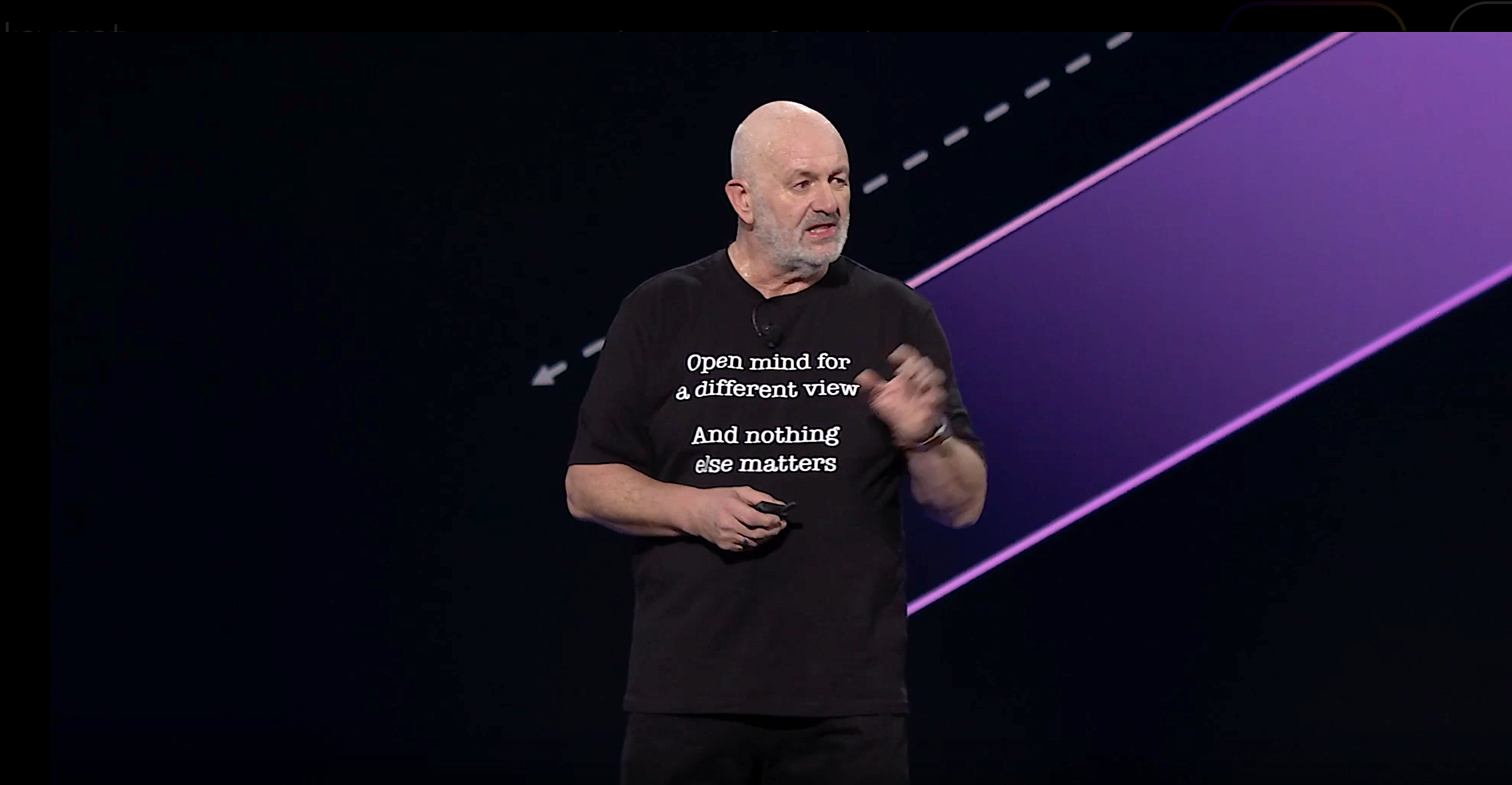
Amazon CTO predicts rise of 'renaissance developer' amid AI
 SiliconANGLE·5 December 2025·Amazon CTO Werner Vogels foresees rise of the ‘renaissance developer’ in his final keynote at AWS re:Invent - SiliconANGLE - Amazon CTO Werner Vogels foresees rise of the ‘renaissance developer’ in his final keynote at AWS re:Invent - SiliconANGLE
Signals:
- →Amazon CTO predicts AI won't eliminate developers but requires them to evolve into "renaissance developers" with broader skills.
- →Human code review becomes more critical as AI-generated code proliferates, requiring judgment to prevent "convincing garbage."
- →AWS launches Graviton5 chip with 25% performance boost, already adopted by Adobe, Airbnb, Epic Games, and SAP.

AI persuasion boosted by post-training, not just scale
Signals:
- →Post-training and prompting techniques boost AI persuasiveness by up to 51%, far exceeding gains from computational scale or personalization.
- →More persuasive AI systems systematically produce less accurate information, creating significant misinformation risks in political discourse.
- →Small open-source models can match frontier AI persuasiveness through targeted training, democratizing access to powerful influence tools.

Waymo expands to snowy cities including Philadelphia, Pittsburgh
CleanTechnica·5 December 2025·Waymo Speeds Into More Cities! - CleanTechnica - Support CleanTechnica's work through a Substack subscription or on Stripe. Waymo is clearly at a big scaling-up phase of its life. I expected it to expand a lot in 2025 and 2026, but not as much as it is doing. This week, Waymo sped forward again with announcements of four ... [continued]
Signals:
- →Waymo expanding autonomous ride-hailing to 13 new cities signals accelerating commercialization of self-driving technology.
- →Entry into snow-prone cities demonstrates technological maturity, potentially disrupting traditional transportation and taxi industries.
- →Partnerships with disability organizations and state governments indicate regulatory acceptance and new accessible mobility markets.

Regional income inequality data reveals policy solutions
 Phys.org·Subnational income inequality revealed: Regional successes may hold key to addressing widening gap globally - Income inequality is one of the most important measures of economic health, social justice and quality of life. More reliably trackable than wealth inequality, which was recently given a gloomy report card by the G20, income inequality is particularly relevant to immediate economic relief, mobility and people's everyday standard of living.
Signals:
- →Subnational data reveals regional policy successes hidden by national statistics, offering actionable solutions for inequality.
- →Income inequality worsening for half the world's population; UN 2030 development goals unlikely to be met.
- →New comprehensive dataset spanning 151 countries enables evidence-based policy decisions to address immediate economic disparities.

JavaScript: the 10-day hack that conquered the web
 Arstechnica·4 December 2025·In 1995, a Netscape employee wrote a hack in 10 days that now runs the Internet - Ars Technica - Thirty years later, JavaScript is the glue that holds the interactive web together, warts and all.
Signals:
- →JavaScript powers 98.9% of websites and remains the world's most popular programming language after 30 years.
- →Rushed 10-day development created lasting technical quirks that still impact billions of web applications today.
- →Oracle trademark dispute threatens community events and standardization efforts for this critical infrastructure technology.

Scientists create bio-hybrid robots from crustacean shells
TechXplore·Bio-hybrid robots turn food waste into functional machines - EPFL scientists have integrated discarded crustacean shells into robotic devices, leveraging the strength and flexibility of natural materials for robotic applications.
Signals:
- →Demonstrates sustainable robotics by repurposing crustacean food waste into functional robotic components with 500g lifting capacity.
- →Offers cost-effective alternative to traditional metal/plastic robotics while maintaining structural performance and recyclability.
- →Opens new applications in biomedical implants and bio-monitoring through proven bio-hybrid integration technology.

Waymo data shows 91% fewer serious crashes than human drivers
CleanTechnica·4 December 2025·Car Crashes Are A Public Health Crisis. Autonomous Cars Are The Cure. - CleanTechnica - Waymo has released data showing its autonomous cars are much safer than conventional cars. Other companies should do the same.
Signals:
- →Waymo data shows 91% fewer serious injury/fatal crashes than human drivers across 100 million autonomous miles.
- →Traffic crashes cost over $1 trillion annually, exceeding entire U.S. military budget.
- →Lack of standardized safety data reporting prevents informed policy decisions on autonomous vehicle deployment.

MIT's insect-sized robot achieves unprecedented speed and aerial agility
Interesting Engineering·3 December 2025·Insect-like flying bot completes rapid somersaults and sharp turns - MIT researchers unveil an agile flying microrobot capable of somersaults, rapid navigation, and insect-like maneuverability.
Signals:
- →Insect-scale robots could revolutionize disaster response by accessing collapsed structures unreachable by traditional drones.
- →AI-powered control system achieves 447% speed increase, making micro-robotics commercially viable for real-world applications.
- →Technology demonstrates successful transition from lab to practical deployment in search-and-rescue and infrastructure inspection operations.

MIT's insect-sized robot achieves bumblebee-like flight speed
TechXplore·Aerial microrobot can fly as fast as a bumblebee - In the future, tiny flying robots could be deployed to aid in the search for survivors trapped beneath the rubble after a devastating earthquake. Like real insects, these robots could flit through tight spaces larger robots ...
Signals:
- →Insect-sized robots achieve 450% speed increase, enabling search-and-rescue operations in disaster zones inaccessible to traditional drones.
- →AI-driven control system demonstrates commercial viability for micro-robotics in confined-space applications like infrastructure inspection.
- →Technology breakthrough overcomes previous limitations, positioning micro-robots for practical deployment in emergency response and surveillance operations.

Chai-2 designs therapeutic antibodies with atomic-level accuracy
Signals:
- →AI platform designs therapeutic antibodies computationally, eliminating need for expensive high-throughput screening campaigns.
- →Over 86% of designed antibodies show strong drug-like properties with atomic-level structural accuracy.
- →Technology enables targeting previously challenging disease areas including GPCRs and tumor-specific neoepitopes.

Colombia bans new oil and mining in Amazon biome

Signals:
- →Colombia bans new oil/mining in 42% of its territory, setting precedent for Amazon protection.
- →Decision impacts 43 oil blocks and 286 mining requests, preventing significant extractive industry expansion.
- →Contrasts sharply with neighboring countries expanding Amazon oil operations despite climate commitments.

AI-generated ads boost click-through rates by 19%

Signals:
- →AI-generated ads increase click-through rates by 19%, outperforming human-created and AI-modified advertisements significantly.
- →Disclosing AI involvement reduces advertising effectiveness by 31.5%, creating critical policy and transparency considerations.
- →AI excels at full ad creation but fails at modifications, requiring strategic deployment decisions.
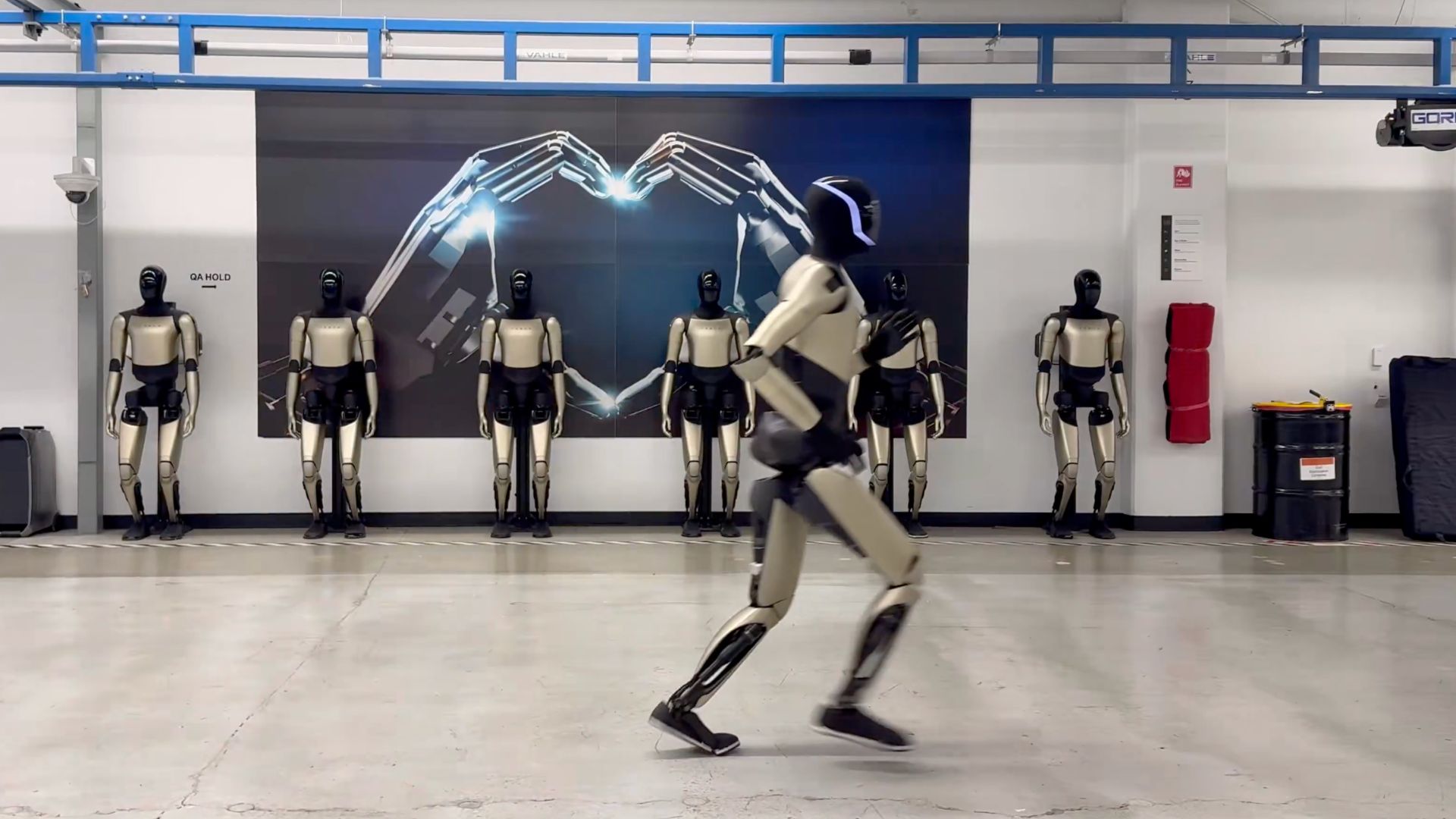
Tesla's Optimus robot achieves human-like running in lab
Interesting Engineering·4 December 2025·Elon Musk's Optimus humanoid robot achieves human-like smooth running - Tesla's Optimus robot achieved a major milestone, demonstrating smooth operation in a new lab video shared by Elon Musk.
Signals:
- →Tesla targets 5,000 Optimus robots deployed by end of 2025, signaling rapid commercialization timeline.
- →Projected $20,000-$30,000 price point could disrupt labor economics across manufacturing and service industries.
- →Shared EV-robotics technology enables automakers to pivot toward automation, reducing production costs significantly.
Anthropic launches AI tool to interview 1,250 workers
Signals:
- →AI-powered interview tool enables unprecedented scale research (1,250 participants) on workforce AI adoption patterns and concerns.
- →Workers report high productivity gains but express anxiety about job displacement and professional identity preservation.
- →Reveals critical gaps between AI capabilities and user needs, particularly in scientific research and creative work trust.

Woking councillors challenge Surrey Police's facial recognition cameras
Signals:
- →Facial recognition technology deployment raises significant privacy concerns and legal challenges that could affect public trust and policy decisions.
- →Historical error rates of 81% and ethnic bias issues present liability risks and potential discrimination lawsuits for authorities.
- →Cross-party political opposition signals growing resistance to surveillance expansion, requiring careful stakeholder management and transparency protocols.
Open source models now capture 30% of LLM usage

Signals:
- →**Open-source AI models now capture 30% of usage, with Chinese models growing from 1% to 30% weekly share in one year.**
- →**Roleplay dominates 52% of open-source usage; programming leads proprietary models, revealing unexpected market segmentation.**
- →**Early adopter retention creates lasting competitive advantage through "Glass Slipper" workload-model fit that resists switching.**
AI transforms coding at Anthropic: 50% productivity boost, new concerns
Signals:
- →Engineers report 50% productivity gains and 2-3x increased Claude usage year-over-year, demonstrating rapid AI-driven workplace transformation.
- →27% of AI-assisted work represents entirely new tasks that wouldn't have been completed otherwise, expanding organizational capacity.
- →Workers express uncertainty about career trajectories as AI handles increasingly complex tasks, requiring strategic workforce planning and reskilling initiatives.

Anthropic's leaked "soul document" reveals Claude's internal guidelines
 Gist·Claude 4.5 Opus Soul Document - Claude 4.5 Opus Soul Document. GitHub Gist: instantly share code, notes, and snippets.
Signals:
- →Reveals Anthropic's internal training philosophy prioritizing helpfulness over excessive caution in AI assistant behavior.
- →Details hierarchical trust framework (Anthropic > operators > users) affecting how Claude responds to conflicting instructions.
- →Exposes "softcoded" vs "hardcoded" behavioral boundaries that operators can modify for commercial deployments.

Leaked Claude 4.5 Opus "Soul document" : r/ClaudeAI
📈The week in AI and Tech
Governance and Policy

EU fines Elon Musk's X €120mn for transparency violations
Financial Times·5 December 2025·Elon Musk’s X fined €120mn by EU for transparency violations - Penalty under bloc’s Digital Services Act risks escalating tensions with US government
Signals:
- →EU's €120mn fine against X sets precedent for Digital Services Act enforcement affecting all tech platforms.
- →Escalating EU-US tensions over tech regulation could trigger trade retaliation from Trump administration.
- →Multiple new EU probes against Big Tech signal sustained regulatory pressure on American companies' operations.

IMF calls for strong policies to address stablecoin risks
 CoinTelegraph·4 December 2025·IMF Lays out Guidelines for Addressing Stablecoin Risks, Beyond Regulations - The International Monetary Fund reported on the reserves of the largest stablecoins by market cap and the potential risks of fragmentation in issuers and regulatory approaches.
Signals:
- →IMF warns fragmented global stablecoin regulations create inefficiencies and cross-border transaction obstacles.
- →Major stablecoins hold significant US Treasury reserves, creating potential macrofinancial stability risks.
- →Strong macro-policies and international coordination needed beyond patchwork regulatory approaches.

Digital wallet control will shape future economic power
Financial Times·4 December 2025·Whoever controls digital wallets will control the future - If a single system dominates, it will become nearly impossible to opt out
Signals:
- →Digital wallet control will determine who governs access to future financial, social, and government systems.
- →Single-system dominance creates inescapable market power, threatening user freedom and economic participation.
- →US must establish competitive standards now before other nations' surveillance or centralized models prevail.

UK considers national security exemption for ransomware payment ban
Financial Times·3 December 2025·Ministers explore national security exemption to ban on ransom payments - Dan Jarvis says government is looking ‘very carefully’ at sparing NHS and other critical bodies in specific cases
Signals:
- →UK government may exempt NHS and critical infrastructure from proposed ransomware payment ban.
- →Policy shift addresses concerns that absolute ban could force essential services to collapse.
- →Nearly 50% of hacked companies paid ransoms in 2024, highlighting operational necessity.

Australia abandons mandatory AI guardrails in new national plan
TechXplore·Australia's national AI plan has just been released. Who exactly will benefit? - Today, the Albanese Labor government released the long-awaited National AI Plan, "a whole-of-government framework that ensures technology works for people, not the other way around."
Signals:
- →Australia abandons mandatory AI guardrails, prioritizing data center investment over comprehensive regulation despite public demand.
- →Environmental concerns grow as data centers strain energy grids and water resources without robust assessment plans.
- →Worker protection relies on retraining rather than safeguards against AI-driven cost-cutting and increased workplace surveillance.
Regulation

Trump orders single federal rule for AI regulation
Financial Times·8 December 2025·Donald Trump to issue executive order for single federal rule on AI regulation - Move to prevent individual US states from regulating tech groups opposed by some Republican senators
Signals:
- →Trump's executive order attempts federal AI regulation preemption, potentially overriding state-level tech oversight authority.
- →Internal Republican opposition from senators and governors threatens implementation and reveals party divisions on tech policy.
- →Legal challenges expected as executive branch lacks congressional authority to preempt state AI regulations.

X terminates EU Commission's ad account after DSA fine
TechCrunch·7 December 2025·X deactivates European Commission’s ad account after the company was fined €120M | TechCrunch - X has seemingly penalized the European Commission's account after the commission fined the company over blue checkmarks and ad transparency.
Signals:
- →EU's first DSA fine ($140M) signals stricter enforcement of digital platform regulations globally.
- →X's retaliation against regulators demonstrates escalating tensions between tech companies and governments.
- →Blue checkmark verification controversy highlights ongoing platform trust and misinformation challenges.

EU fines X $140M for deceptive blue checkmark system
TechCrunch·5 December 2025·In its first DSA penalty, EU fines X €120M for 'deceptive' blue check verification system | TechCrunch - The EC is taking issue with the fact that X, the social network formerly known as Twitter, has been allowing anyone to buy a "blue checkmark," the platform's long-standing symbol that a user has been verified to be who they are claiming to be.
Signals:
- →EU's first DSA fine ($140M) sets precedent for platform regulation enforcement globally.
- →X's verification system creates fraud risks, undermining user trust and platform authenticity.
- →Transparency failures in advertising and research access threaten regulatory compliance across platforms.

Taiwan bans Xiaohongshu over scams and security concerns
Financial Times·5 December 2025·Taiwan bans one of China’s most popular social media apps - Move against Xiaohongshu over online scams, amid concerns over Beijing’s influence campaigns
Signals:
- →Taiwan's ban signals escalating digital sovereignty concerns amid China's cognitive warfare and influence operations.
- →Democratic nations face tension between cybersecurity needs and free expression principles when regulating foreign apps.
- →Cross-strait digital restrictions impact 3 million users and reflect broader geopolitical technology decoupling trends.

House Republicans drop AI regulation ban from defense bill
TechCrunch·3 December 2025·Another bid to block state AI regulation has failed… for now | TechCrunch - Republicans’ attempt to ban state AI regulations was removed from the defense bill after bipartisan opposition, underscoring tensions between tech-industry demands, consumer protection concerns, and Trump’s push for sweeping federal preemption.
Signals:
- →Federal attempt to ban state AI regulation failed again due to bipartisan opposition in Congress.
- →Silicon Valley supports federal preemption; critics warn it removes consumer protections and oversight.
- →Trump may bypass Congress with executive order blocking state AI laws despite resistance.

UK passes law recognizing crypto as personal property
CoinTelegraph·3 December 2025·UK Passes Bill Clarifying Property Laws to Crypto - The UK has passed a new law clarifying how property rights apply to crypto, with advocates saying it’ll help crypto users prove ownership and recover stolen assets.
Signals:
- →UK law now explicitly recognizes cryptocurrencies as personal property, enabling clearer ownership rights and legal protections.
- →Codification strengthens asset recovery processes for theft, fraud, insolvency, and estate cases involving digital assets.
- →Legal clarity positions UK competitively for crypto innovation, tokenized assets, and attracting digital financial services growth.

European Parliament calls for EU-wide 16+ social media age limit
Signals:
- →EU Parliament demands 16+ age limit for social media access across all member states.
- →Proposes banning addictive design features like infinite scrolling and autoplay targeting minors.
- →Increases pressure on Commission ahead of Digital Fairness Act expected next year.

Activists challenge age verification laws spreading across US

Signals:
- →Half of US states now mandate age verification for online content, requiring ID uploads or biometric scans for all users.
- →Proposed federal legislation could expand surveillance and censorship while failing to address underlying tech accountability issues.
- →Age-gate laws affect everyone, not just minors, creating privacy risks through mandatory identity verification systems.
Security

Gartner warns organizations to block AI browsers now
Signals:
- →AI browsers pose significant security risks through data exposure and potential credential theft via prompt injection attacks.
- →Employees could misuse AI agents to bypass mandatory compliance training and make costly procurement errors.
- →Organizations should block AI browsers until comprehensive risk assessments and monitoring policies are established.

Critical React JS vulnerability enables easy server exploitation
Signals:
- →Critical React/Next.js vulnerability affects 6% of websites and 39% of cloud environments with near-certain exploitation.
- →Remote attackers need only one HTTP request, no authentication required, to compromise vulnerable servers.
- →Immediate patching essential as proof-of-concept exploit exists and publicly accessible instances are at risk.
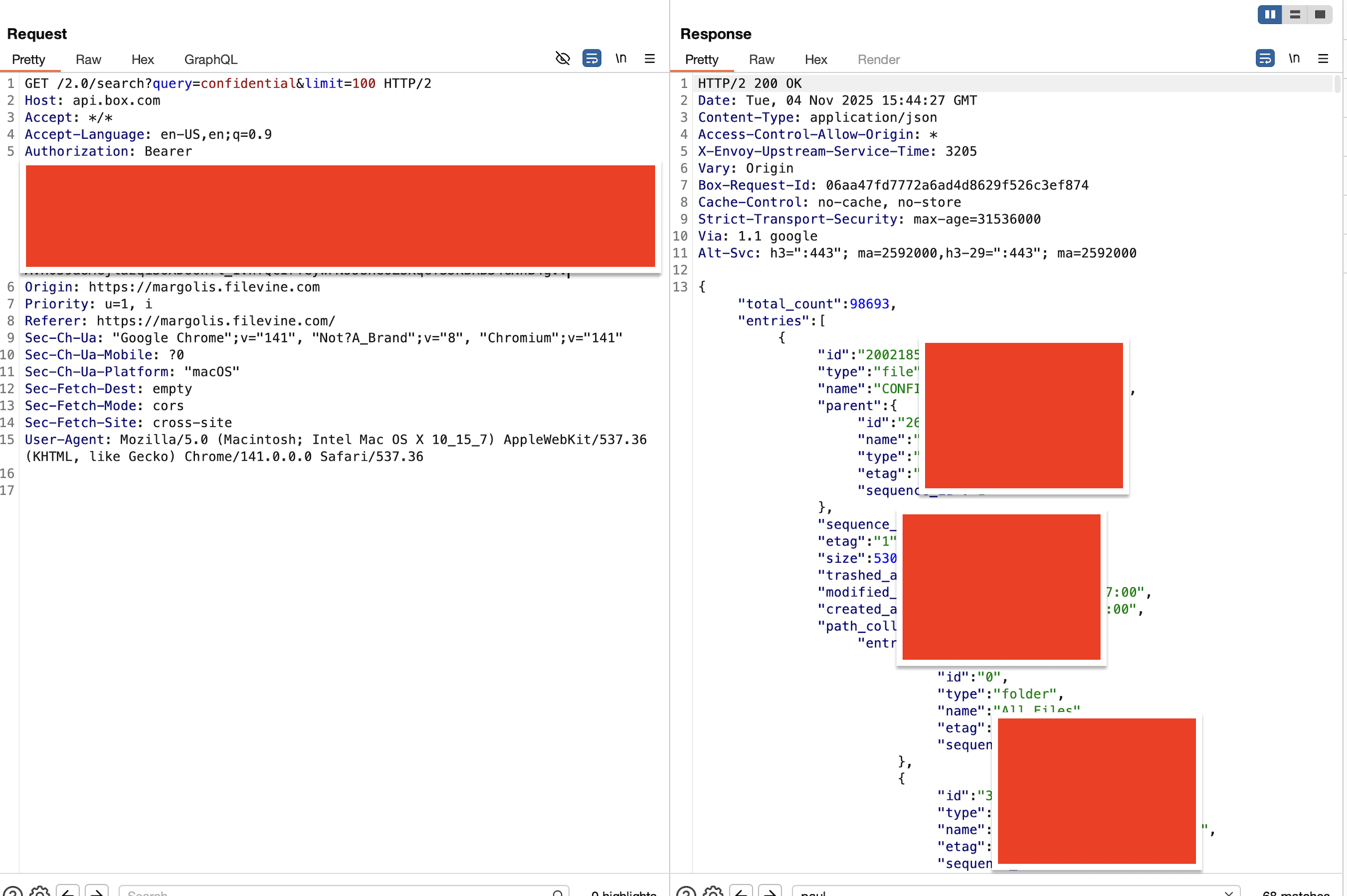
Researcher finds zero-authentication flaw exposing 100k+ confidential legal files

Signals:
- →Zero authentication vulnerability exposed 100,000+ confidential legal files including HIPAA-protected data and court-sealed documents.
- →Billion-dollar AI legal platform had critical security gap allowing full admin access to law firm data.
- →Incident highlights urgent need for security audits before adopting AI tools handling sensitive information.
Government

Trump admin may deny H-1B visas to content moderators
 The Verge·4 December 2025·Trump admin may deny H-1B visas to people who worked in content moderation, report says | The Verge - The Trump administration has ordered US consulates to consider rejecting H-1B visa applicants who previously worked as content moderators and “censored” free speech, according to a report from Reuters.
Signals:
- →Trump administration targeting tech workers with content moderation experience threatens major employers' H-1B visa hiring pipeline.
- →Policy creates legal uncertainty around misinformation/safety roles, potentially disrupting workforce planning at tech companies.
- →Constitutional concerns and vague "censorship" criteria may trigger litigation affecting immigration and employment policies.

Apple refuses to preinstall India's state-owned cyber safety app
 Semafor·3 December 2025·Apple reportedly refuses to install India’s state-owned app | Semafor - The requirement by India to install a cyber safety app on devices has been the subject of outcry that the government could access users’ data.
Signals:
- →Apple's refusal could set precedent affecting government access demands globally across all smartphone manufacturers.
- →Mandatory government app installation threatens user privacy and enables potential mass surveillance capabilities.
- →Compliance would fundamentally alter Apple's security model and competitive positioning in major markets.

India reverses mandatory government app preinstall on smartphones
TechCrunch·3 December 2025·After intense backlash, India pulls mandate to preinstall government app on smartphones | TechCrunch - On Wednesday, the Indian telecom ministry said Sanchar Saathi, an anti-theft and cybersecurity protection app, would remain voluntary and that smartphone makers would no longer be required to preload it on devices they sell.
Signals:
- →Government mandate reversal demonstrates how public backlash can influence major technology policy decisions.
- →Privacy concerns and state surveillance fears remain critical factors in technology adoption and regulation.
- →Inconsistent government messaging creates uncertainty for manufacturers and highlights implementation challenges in tech mandates.
Sovereignty and Geopolitics

U.S. allows Nvidia to export H200 chips to China
TechCrunch·8 December 2025·Department of Commerce approves Nvidia H200 chip exports to China | TechCrunch - This news comes as a bill was introduced in Congress last week to prevent these exact kinds of chip exports.
Signals:
- →U.S. allows advanced H200 chip exports to China with 25% revenue cut, reversing previous restrictions.
- →Decision conflicts with bipartisan Congressional bill seeking 30-month ban on advanced AI chip exports.
- →Policy shift affects national security concerns while using chips as leverage in U.S.-China trade negotiations.
Society

UK journalists widely use AI despite viewing it as threat
Phys.org·The spread of AI in UK journalism comes with reservations - Professor Neil Thurman and Sina Thäsler-Kordonouri from the Department of Media and Communication (IfKW) at LMU have published comprehensive findings on the perception and professional use of artificial intelligence by journalists.
Signals:
- →62% of UK journalists view AI as major threat, yet 56% use it weekly—revealing critical adoption-resistance paradox.
- →AI training and resources concentrated in media conglomerates, widening competitive gap with independent news organizations.
- →Frequent AI users report lower job satisfaction and more low-level tasks, contradicting productivity improvement assumptions.

Britain's police forces embrace AI to transform policing
Signals:
- →AI could dramatically improve police efficiency by automating paperwork, freeing up half a million officer hours annually in England and Wales.
- →Public confidence in British policing has plummeted to 51% from 75% in 2000, creating urgent need for transformative solutions.
- →Budget constraints and lack of tech talent threaten AI adoption despite criminals already using AI to enhance their operations.

China leads humanoid robot race as adoption looms
Financial Times·4 December 2025·China takes the baton in the humanoid robot race - Our delighted faith in the automatons raises the question of how they will integrate into human society
Signals:
- →China dominates humanoid robot production, creating potential geopolitical dependencies as deployment accelerates globally.
- →Analysts forecast 1.1 million annual humanoid sales by 2031, threatening massive labor market disruption.
- →Political frameworks lack preparedness for robot integration, risking social instability and "robophobia" movements.

Owning a smartphone at 12 linked to depression and obesity
Signals:
- →Smartphone ownership at age 12 linked to 44% higher depression rates and 50% more sleep problems.
- →Study of 10,588 children shows measurable health impacts within one year of phone acquisition.
- →Findings suggest need for policy considerations around appropriate age for smartphone access.

China uses AI to censor content and surveil citizens
Signals:
- →China uses AI to censor content and surveil citizens, exporting these authoritarian techniques globally.
- →Chinese AI-powered fishing platforms deplete international waters, harming 80+ countries' food security and economies.
- →Beijing promotes its AI governance norms internationally, potentially entrenching digital authoritarianism in developing nations.
The Economy

Datacenters hoarding excess grid power, blocking other users
Signals:
- →Datacenters reserve excess grid power capacity that remains unused, blocking other businesses from connecting.
- →AI facilities create unpredictable power fluctuations, intensifying strain on already congested electrical grids.
- →Governments imposing new regulations and consumer costs to address speculative capacity hoarding and grid expansion.

America's AI ambitions face a critical power shortage
Signals:
- →US faces 19GW power shortage for AI data centres by 2028, threatening $400bn+ tech investments.
- →Grid infrastructure delays averaging 8+ years could hand AI leadership advantage to China's faster expansion.
- →Power constraints may deflate AI bubble as computing capacity sits idle despite massive capital expenditure.

Amazon's dynamic pricing costs schools 17% more on supplies
The Verge·4 December 2025·Amazon’s dynamic pricing is causing chaos for school budgets | The Verge - Schools and local governments are paying hundreds of thousands of dollars extra for basic supplies thanks to volatile dynamic pricing on Amazon Business, a report finds.
Signals:
- →Amazon's algorithmic pricing costs schools 17% more on average, straining already tight educational budgets.
- →Dynamic pricing creates unpredictable costs, preventing schools from effectively planning and controlling procurement spending.
- →Amazon Business has reduced supplier competition by 30%, limiting schools' negotiating power and alternative options.

Lloyds pushes blockchain and AI to revolutionize UK homebuying
Financial Times·4 December 2025·Lloyds Bank pushes for AI and blockchain to transform UK homebuying - Charlie Nunn says system of tokenised deposits has potential to spark change as dramatic as invention of smartphone
Signals:
- →Lloyds plans blockchain-based tokenised deposits by 2027, potentially transforming UK homebuying processes.
- →AI and blockchain integration could eliminate intermediaries, reducing transaction time and costs significantly.
- →UK leads global financial innovation; technology may boost economic growth and business investment.

Tech companies deploy AI internally to prove value
Financial Times·3 December 2025·Internal AI adoption accelerates across tech sector - Companies trial latest tools on themselves to demonstrate their potential
Signals:
- →Tech companies demonstrating AI's business value through internal adoption before selling to customers.
- →AI automation freeing millions of work hours but raising concerns about job displacement.
- →Internal AI deployment spans critical functions: HR, coding, customer service, and network operations.
Environment

Environmental groups demand moratorium on new data centers
TechCrunch·8 December 2025·Environmental groups call for halt to new data center construction | TechCrunch - More than 230 organizations signed a public letter urging members of Congress to take action.
Signals:
- →Data center energy demand expected to triple by 2035, threatening grid stability and economic planning.
- →Electricity prices jumped 13% this year; consumers face higher utility bills from data center expansion.
- →Growing public opposition and protests signal potential regulatory challenges for tech infrastructure projects.
🏭AI and Tech industry news

Paramount counters Netflix's Warner Bros. bid with $108B offer
Signals:
- →Paramount's $108B counter-bid creates major uncertainty in Hollywood's largest streaming consolidation battle.
- →Regulatory approval differences between deals could significantly impact competitive landscape and timelines.
- →$18B valuation gap and structural differences require immediate strategic response from all stakeholders.

Netflix's $72B Warner Bros. acquisition faces regulatory scrutiny
Arstechnica·5 December 2025·Netflix’s $72B WB acquisition confounds the future of movie theaters, streaming - Ars Technica - Netflix’s plans to own HBO Max, DC Comics, Harry Potter to face regulatory scrutiny.
Signals:
- →Netflix's $72B Warner Bros. acquisition would consolidate streaming market power and major franchises like DC Comics and Harry Potter.
- →Deal threatens theatrical movie releases and cinema industry viability given Netflix's preference for streaming-first distribution.
- →Significant regulatory scrutiny expected from DOJ and Congress over antitrust concerns and potential market monopolization.

Moore Threads surges 425% in Shanghai market debut
Financial Times·5 December 2025·Chinese challenger to Nvidia surges 425% in market debut - Investors bet Moore Threads will benefit from Beijing’s drive to reduce dependence on US chipmaker
Signals:
- →Moore Threads' 425% surge signals massive investor confidence in China's semiconductor self-sufficiency strategy.
- →US export restrictions are accelerating China's domestic AI chip industry development and market consolidation.
- →Nvidia's China market share projected to plummet from 40% to 8% by 2026.

Russia bans Roblox, citing LGBTQ content on platform
TechCrunch·3 December 2025·Roblox banned in Russia, local media says | TechCrunch - Russia's communications agency cited the presence of LGBTQ content on the platform as one of the reasons behind the ban.
Signals:
- →Russia banned Roblox citing LGBTQ content, highlighting geopolitical risks for platforms with user-generated content.
- →Platform faces mounting legal scrutiny in multiple jurisdictions over child safety and moderation failures.
- →New content policies sparked backlash from advocacy groups, creating reputational and regulatory challenges.

VCs deploy "kingmaking" strategy with massive early funding
TechCrunch·3 December 2025·VCs deploy 'kingmaking' strategy to crown AI winners in their infancy | TechCrunch - While VCs have long used big investments to spur category winners, they are taking this strategy to new extremes.
Signals:
- →Top VCs deploying "kingmaking" strategy earlier, funding AI startups at 1000x+ revenue multiples to create market dominance.
- →Multiple AI ERP competitors raising $90M+ rounds within months despite single-digit million ARRs, signaling intense category competition.
- →Enterprise buyers prefer well-capitalized vendors, making massive funding a competitive advantage beyond actual product traction.

Crucial exits consumer RAM market after 29 years
Arstechnica·3 December 2025·After nearly 30 years, Crucial will stop selling RAM to consumers - Ars Technica - Micron cites AI data center demand as reason for killing DIY upgrade brand.
Signals:
- →Major RAM supplier exiting consumer market signals prioritization of AI infrastructure over traditional PC components.
- →RAM prices surged 171% year-over-year; supply constraints expected through 2027 affecting hardware costs.
- →AI data centers consuming 40% of global DRAM production, fundamentally reshaping semiconductor supply chains.

Countries fast-tracked Starlink approvals during Musk's White House tenure
 Rest of World·3 December 2025·How Starlink benefited from Elon Musk’s Trump ties - Rest of World - The satellite internet service cut through red tape to enter new countries while Musk led DOGE.
Signals:
- →Starlink expedited entry into 26 countries during 2025, bypassing standard regulatory processes when Musk advised Trump.
- →Bangladesh's contract reveals weak data sovereignty protections, enabling government surveillance and foreign intelligence access to citizen communications.
- →Countries fast-tracked Starlink approvals to avoid Trump's tariffs, raising corruption concerns and compromising national security oversight.
🫧Bubble Chronicles
Michael Burry predicts OpenAI will meet 'Netscape fate'
Signals:
- →Prominent investor warns OpenAI faces financial collapse, comparing it to dot-com era failure Netscape.
- →Burry defends bearish market predictions and maintains short position on major AI chipmaker Nvidia.
- →Questions sustainability of AI industry valuations and suggests widespread GPU warehousing indicates market problems.

Harvey raises $160M at $8B valuation from Andreessen Horowitz
TechCrunch·4 December 2025·Legal AI startup Harvey confirms $8B valuation | TechCrunch - Harvey confirms a third enormous round of funding in 2025 that has skyrocketed its valuation. Again.
Signals:
- →Harvey reached $8B valuation in under 3 years, demonstrating AI's rapid enterprise adoption potential.
- →VC "kingmaking" strategy proves effective: massive funding attracts major clients, creating competitive moats.
- →Legal AI shows clear product-market fit with 50 top law firms, validating sector-specific opportunities.
OpenAI

OpenAI apologizes for promotional messages in ChatGPT
TechCrunch·7 December 2025·OpenAI says it’s turned off app suggestions that look like ads | TechCrunch - While OpenAI continues to insist that there are currently no ads — or tests for advertising — live in ChatGPT, the company’s chief research officer also acknowledged that the company “fell short” with recent promotional messages.
Signals:
- →OpenAI faces user trust crisis as paying subscribers revolt against promotional content in ChatGPT.
- →Company delays advertising rollout amid "code red" to prioritize product quality over revenue.
- →Misstep reveals tension between monetization pressure and maintaining premium user experience expectations.

OpenAI and NextDC to build $4.6B AI center in Sydney
TechXplore·OpenAI strikes deal on US$4.6 bn AI center in Australia - ChatGPT maker OpenAI and an Australian data center operator have agreed to develop a multibillion-dollar AI center in Sydney.
Signals:
- →$4.6 billion AI infrastructure investment signals major economic opportunity and job creation potential.
- →Renewable energy integration demonstrates sustainable AI development approach without water-intensive cooling systems.
- →Strategic positioning strengthens Australia's competitiveness in global AI technology landscape and talent attraction.

OpenAI refocuses on ChatGPT amid intensifying competition from Google
Financial Times·4 December 2025·OpenAI’s ‘code red’ moment - Rallying call by Sam Altman raises questions over the company’s priorities in the new phases of competition
Signals:
- →OpenAI's CEO issued "code red," signaling competitive vulnerability as Google's Gemini AI gains ground.
- →Lack of strategic focus threatens OpenAI's market position despite ChatGPT's initial three-year lead.
- →Company faces critical trade-offs between product diversification, monetization strategy, and core innovation.

Sam Altman declares "code red" to improve ChatGPT quality
Signals:
- →OpenAI faces intensifying competition from Google Gemini and Anthropic, threatening its market leadership position.
- →Company delays multiple products to focus resources on improving ChatGPT's core performance and user experience.
- →Financial pressure mounts as unprofitable OpenAI needs $200B revenue by 2030 amid rising competitor capabilities.

OpenAI declares "code red" as Gemini gains momentum
Arstechnica·2 December 2025·OpenAI CEO declares “code red” as Gemini gains 200 million users in 3 months - Ars Technica - Three years after Google sounded alarm bells over ChatGPT, the tables have turned.
Signals:
- →Google's Gemini rapidly gained 200 million users in three months, directly threatening OpenAI's market dominance.
- →OpenAI faces financial pressure with $1 trillion in obligations but no profitability, unlike Google's ad-funded model.
- →Competitive AI leadership is shifting, forcing strategic pivots and resource reallocation at industry-leading companies.

OpenAI declares 'code red' to improve ChatGPT performance
TechXplore·OpenAI CEO Sam Altman declares 'code red' to improve ChatGPT amid rising competition - OpenAI CEO Sam Altman has set off a "code red" alert to employees to improve its flagship product, ChatGPT, and delay other product developments, according to The Wall Street Journal.
Signals:
- →OpenAI faces intensifying competition from Google's Gemini, threatening its early AI market leadership position.
- →Company valued at $500B remains unprofitable with over $1T in obligations, raising AI bubble concerns.
- →Strategic pivot delays new products to fix core ChatGPT issues affecting 800M weekly users.
Anthropic

Anthropic CEO warns some AI companies are taking unwise risks
TechCrunch·4 December 2025·Anthropic CEO weighs in on AI bubble talk and risk-taking among competitors | TechCrunch - Anthropic's CEO shared his thoughts on the economics of AI and the risk-taking of competitors, saying some were "YOLO-ing" with regard to spending.
Signals:
- →Anthropic's CEO warns some AI competitors are taking excessive financial risks that could lead to bankruptcy.
- →Uncertainty in AI economic value timing creates major infrastructure investment dilemmas for the industry.
- →Anthropic's revenue grew from $1B to projected $8-10B, but sustainability remains highly uncertain.

Snowflake partners with Anthropic to deploy Claude AI agents
Signals:
- →Snowflake-Anthropic $200M deal enables AI agents in highly regulated industries like finance and healthcare.
- →Claude achieves 90%+ accuracy on complex tasks, but still requires human oversight for verification.
- →Partnership gives 12,600+ Snowflake customers secure AI access across major cloud platforms.

Anthropic and Snowflake announce $200 million AI partnership
TechCrunch·4 December 2025·Anthropic signs $200M deal to bring its LLMs to Snowflake's customers | TechCrunch - AI research lab Anthropic inked a $200 million deal with Snowflake to bring its AI models to Snowflake's 12,600 customers.
Signals:
- →Anthropic secures $200M Snowflake deal, accelerating enterprise AI adoption and revenue growth potential.
- →Partnership grants access to Snowflake's massive customer base for deploying AI agents at scale.
- →Enterprise-focused strategy differentiates Anthropic from OpenAI, capturing growing B2B AI market demand.

Anthropic CEO warns rivals against 'YOLOing' AI investments
The Verge·3 December 2025·Anthropic’s AI bubble ‘YOLO’ warning | The Verge - Anthropic CEO Dario Amodei appears to take shots at OpenAI’s ‘YOLOing’ and big, circular deals.
Signals:
- →AI industry faces potential bubble risk from overinvestment in infrastructure without guaranteed revenue growth to match costs.
- →Timing mismatches between multi-year data center buildouts and uncertain revenue projections could trigger company bankruptcies.
- →Enterprise-focused AI models with predictable margins offer safer investment strategy than consumer-dependent business models.

Anthropic eyes IPO with $300 billion valuation
Semafor·3 December 2025· Anthropic reportedly preparing for IPO | Semafor - The AI firm’s IPO would be among the largest ever.
Signals:
- →Anthropic's potential $300 billion IPO would rank among largest ever recorded.
- →Company projects breakeven in two years despite $2.8 billion loss last year.
- →Safe AI focus aligns enterprise demand with disaster prevention strategy.

Anthropic acquires Bun to boost Claude Code performance
SiliconANGLE·2 December 2025·Anthropic makes first acquisition with purchase of Bun to accelerate Claude Code - SiliconANGLE - Anthropic makes first acquisition with purchase of Bun to accelerate Claude Code - SiliconANGLE
Signals:
- →Claude Code reached $1 billion run-rate revenue in just 6 months, demonstrating explosive AI adoption.
- →Anthropic signals strategic acquisition strategy to maintain enterprise AI leadership position.
- →Developer infrastructure improvements could accelerate AI coding tool performance and market competitiveness.

Google details security measures for Chrome's AI agents
TechCrunch·8 December 2025·Google details security measures for Chrome's agentic features | TechCrunch - Google details how it is enacting security guardrails before rolling out agentic capabilities on Chrome.
Signals:
- →Browser AI agents pose significant security risks including data leaks and unauthorized financial transactions.
- →Google's multi-layered security approach sets industry standards for protecting users from agentic AI vulnerabilities.
- →User consent requirements for sensitive actions balance automation benefits with maintaining control over critical decisions.
Microsoft

Microsoft cuts AI sales targets in half after missing quotas
Arstechnica·3 December 2025·Microsoft drops AI sales targets in half after salespeople miss their quotas - Ars Technica - Report: Microsoft declared “the era of AI agents” in May, but enterprise customers aren’t buying.
Signals:
- →Microsoft cut AI sales targets by 50% after less than 20% of salespeople met original quotas.
- →Enterprise customers resist premium AI agent pricing despite heavy Microsoft infrastructure investment of $34.9B quarterly.
- →Current AI agent technology remains unreliable for autonomous business tasks due to persistent confabulation errors.

Microsoft denies lowering AI sales targets after report
Signals:
- →Microsoft's AI sales teams missed growth targets, raising concerns about enterprise AI adoption rates and revenue projections.
- →Stock dropped 2% on reports of lowered sales quotas, signaling potential investor doubts about AI monetization timelines.
- →Slower-than-expected enterprise AI uptake may impact strategic planning and competitive positioning against rivals like Google and Amazon.
Apple

Apple announces executive retirements and Meta legal chief hire
TechCrunch·4 December 2025·Apple's executive shake-up continues with departures of general counsel and policy head | TechCrunch - Apple loses two more top senior executives with exits of longtime general counsel Kate Adams and environmental VP Lisa Jackson. Meta’s Jennifer Newstead is set to join as new general counsel in 2026.
Signals:
- →Multiple senior executive departures signal potential instability in Apple's leadership during critical AI competition period.
- →Legal counsel transition comes amid ongoing antitrust challenges and increased regulatory scrutiny of Apple's business practices.
- →Environmental and DEI leadership exit reflects shifting corporate priorities under current political climate and stakeholder pressure.

Apple's design chief Alan Dye joins Meta's Reality Labs
TechCrunch·3 December 2025·Meta poaches Apple design exec Alan Dye to lead new creative studio in Reality Labs | TechCrunch - Dye led Apple's user interface team for the last decade.
Signals:
- →Meta aggressively recruiting top Apple talent signals intensified competition in AI-powered consumer devices.
- →Leadership changes at major tech companies indicate strategic shifts in product development priorities.
- →New Meta design studio combining hardware, software, and AI expertise could reshape competitive landscape.
Amazon

AWS brings AI infrastructure to customer data centers with new Factories initiative
Signals:
- →AWS enables on-premises AI infrastructure deployment, addressing regulatory compliance and hybrid cloud needs for established enterprises.
- →Nova Forge allows custom frontier model training with proprietary data at lower cost than building from scratch.
- →AWS shifts strategy toward multi-cloud integration, partnering with Google Cloud and Azure to capture hybrid AI market opportunity.
Meta

Meta introduces ad-light option for EU users amid regulatory pressure
Arstechnica·8 December 2025·Meta offers EU users ad-light option in push to end investigation - Facebook agrees to change “pay or consent” model after talks with European Commission.
Signals:
- →Meta avoids potential daily fines up to 5% of global revenue by modifying EU ad model.
- →Case demonstrates EU's continued regulatory pressure on Big Tech despite US political opposition.
- →Settlement could set precedent for how tech giants handle user consent and data tracking.
Meta acquires Limitless, AI wearable for recording conversations
SiliconANGLE·5 December 2025·Meta acquires Sam Altman-backed AI wearable startup Limitless - SiliconANGLE - Meta acquires Sam Altman-backed AI wearable startup Limitless - SiliconANGLE
Signals:
- →Meta expands AI wearables portfolio, potentially integrating conversation-recording technology into existing smart glasses ecosystem.
- →Acquisition signals Meta's strategic shift toward wearables amid reported 30% metaverse workforce reduction.
- →Meta gains beamforming audio technology and AI transcription capabilities to compete with OpenAI-backed innovations.

Meta acquires AI pendant maker Limitless, ends hardware sales
TechCrunch·5 December 2025·Meta acquires AI device startup Limitless | TechCrunch - Limitless said it shares Meta's vision of bringing personal superintelligence to everyone.
Signals:
- →Meta accelerates AI wearables strategy by acquiring Limitless, signaling intensified competition in AI hardware market.
- →Startup's shutdown reveals challenges small AI hardware companies face competing against tech giants' resources.
- →Acquisition demonstrates Meta's commitment to expanding beyond AR glasses into broader AI-enabled wearable devices.

Meta integrates news content into AI assistant platform
TechXplore·Meta partners with news outlets to expand AI content - Meta announced Friday it will integrate content from major news organizations into its artificial intelligence assistant to provide Facebook, Instagram and WhatsApp users with real-time information.
Signals:
- →Meta integrating real-time news from major outlets into AI assistant across billions of users globally.
- →Intensifying AI competition drives tech giants toward news partnerships and live content integration.
- →Strategic pivot from shutting down Facebook News to AI-powered news delivery amid industry lawsuits.

Meta plans to cut Metaverse budget by 30%
TechCrunch·4 December 2025·Meta reportedly plans to slash Metaverse budget by up to 30% | TechCrunch - The proposal reflects the overall lack of interest in products like Meta's social virtual reality platform, Horizon Worlds.
Signals:
- →Meta planning 30% Metaverse budget cut signals major strategic pivot from failing VR investments.
- →Investor confidence rising as company shifts resources from money-losing Metaverse to profitable AI initiatives.
- →Layoffs expected as Meta acknowledges consumer disinterest in virtual reality products and platforms.

Meta may slash metaverse budget by 30 percent
The Verge·4 December 2025·Meta could ax up to one-third of its ‘metaverse’ budget next year | The Verge - Meta is considering cutting its metaverse division’s budget by up to 30 percent next year, according to a report from Bloomberg.
Signals:
- →Meta shifting strategic focus from metaverse to AI, signaling major industry pivot after $70B+ losses.
- →Potential 30% budget cuts and January layoffs indicate significant restructuring of Reality Labs division.
- →Reduced metaverse competition allows reallocation of resources toward AI glasses and wearables with stronger momentum.
Perplexity

Chicago Tribune sues Perplexity over copyright infringement claims
TechCrunch·5 December 2025·Chicago Tribune sues Perplexity | TechCrunch - The newspaper is alleging copyright infringement and calling out Perplexity's retrieval augmented generation (RAG) as a culprit.
Signals:
- →Legal precedent emerging around AI's use of copyrighted content beyond just model training.
- →RAG technology and paywall circumvention creating new liability risks for AI companies.
- →Growing pattern of media lawsuits threatens AI search business models and partnerships.
TikTok

TikTok invests $37.7B in Brazil data center project
Panda Daily·4 December 2025·TikTok Plans to Invest Over 200 Billion Reais (Approximately $37.7 Billion) in Data Center in Brazil, Marking Its First Venture in Latin America - Pandaily - TikTok plans to invest over 200 billion reais (approximately $37.7 billion) in building a data center in Brazil, which will be its first such project in Latin America.
Signals:
- →TikTok's $37.7 billion investment signals major commitment to Latin American market expansion and data sovereignty.
- →Clean energy-powered data center demonstrates corporate sustainability priorities influencing infrastructure decisions.
- →Strategic location in Brazil positions TikTok to comply with regional data regulations and improve service performance.
DeepSeek

ByteDance and DeepSeek diverge on China's AI future
Signals:
- →China's AI leaders diverge: DeepSeek pursues advanced models while ByteDance focuses on practical consumer applications and integration.
- →ByteDance's OS-level AI agent threatens existing platforms, already blocked by WeChat, signaling intensifying competition among Chinese tech giants.
- →Chinese firms avoid costly compute arms race due to chip sanctions and capital constraints, prioritizing efficiency over brute-force scaling.
Startups and Investment Deals

SpaceX seeks $800B valuation in secondary share sale
TechCrunch·5 December 2025·SpaceX reportedly in talks for secondary sale at $800B valuation, which would make it America's most valuable private company | TechCrunch - The eye-popping figure reflects how routine mega-valuations have become in private markets.
Signals:
- →SpaceX valuation doubles to $800B, becoming America's most valuable private company.
- →Demonstrates mega-valuations achievable in private markets without public scrutiny or reporting requirements.
- →Secondary sales enable massive liquidity for investors while companies avoid traditional IPO transparency.

Bending Spoons acquires Eventbrite for $500 million
TechCrunch·3 December 2025·What is Bending Spoons? Everything to know about Eventbrite’s acquirer | TechCrunch - Bending Spoons remains largely unknown, even as its portfolio of products has served more than a billion people.
Signals:
- →Bending Spoons acquired Eventbrite for $500M, continuing aggressive expansion of its consumer tech portfolio.
- →Company valued at $11B controls billion+ users through brands like Evernote, WeTransfer, and Meetup.
- →Pattern of post-acquisition restructuring and monetization changes signals potential impacts on user experience and workforce.

Bending Spoons acquires Eventbrite for $500M to revive brand
TechCrunch·2 December 2025·Bending Spoons agrees to buy Eventbrite for $500M to revive stalled brand | TechCrunch - The acquisition price for the events marketplace is a fraction of the $1.76 billion valuation it achieved during its 2018 IPO.
Signals:
- →Eventbrite's value plummeted 72% since 2018 IPO, signaling risks in event-tech sector consolidation.
- →"Venture zombie" acquisition model gaining traction as alternative exit strategy for stagnant tech companies.
- →Premium paid (81% over stock price) despite flat revenue shows market for distressed tech assets.
🆕 AI releases

Mistral releases Devstral 2 open-source coding models and CLI

Signals:
- →Devstral 2 achieves 72.2% on SWE-bench Verified, up to 7x more cost-efficient than competitors.
- →Open-source models (MIT/Apache 2.0) enable local deployment on consumer hardware, reducing costs.
- →Mistral Vibe CLI automates end-to-end coding tasks directly in terminal environments.

Claude Code integrates with Slack for seamless coding tasks

Signals:
- →Claude Code generated $1B in annualized revenue just six months after launch, demonstrating massive enterprise adoption potential.
- →Slack integration eliminates workflow friction by converting bug reports directly into pull requests without switching platforms.
- →Companies like Rakuten reduced development timelines 79% (24 to 5 days), proving significant productivity gains.

Centralised.AI launches inspection-ready AI governance platform
Signals:
- →EU AI Act enforcement begins August 2026; most organizations lack audit-ready compliance systems.
- →Regulators now demand article-level traceability and reconstructable evidence, not just documentation spreadsheets.
- →Platform provides automated compliance tracking across all AI systems with complete audit trails.
Gemini 3 Deep Think launches for Google AI Ultra subscribers

Signals:
- →Industry-leading AI reasoning capabilities now accessible to Google AI Ultra subscribers for complex problem-solving.
- →Achieves unprecedented benchmark scores (45.1% ARC-AGI-2), demonstrating significant advancement in AI reasoning technology.
- →Enables tackling previously challenging math, science, and logic problems through advanced parallel reasoning methodology.

Microsoft releases VibeVoice, a real-time open-source TTS model

Signals:
- →Enables real-time AI voice generation with ~300ms latency for streaming applications and live LLM responses.
- →Lightweight 0.5B parameter model supports deployment-friendly, long-form speech synthesis up to 10 minutes.
- →Includes built-in safeguards (watermarking, disclaimers) addressing deepfake and disinformation risks for responsible AI governance.

Claudish brings 580+ AI models to Claude Code

Signals:
- →Enables use of 580+ AI models (including free top-tier options) with Claude Code's powerful agent architecture.
- →Provides cost optimization through intelligent model routing and real-time spend tracking across providers.
- →Maintains full compatibility with Claude Code updates through runtime translation, eliminating vendor lock-in risks.

Amazon's frontier agents can code autonomously for days
Signals:
- →AWS frontier agents autonomously code for hours/days, potentially transforming software development workflows and team productivity significantly.
- →Agents maintain persistent memory and coordinate across repositories, addressing limitations of current AI coding assistants.
- →Early adopters report dramatic time savings: 78-day projects versus 18-month traditional timelines using AI-enhanced practices.
🥼 AI research
Anthropic's AI agents could have stolen $4.6M in crypto
Signals:
- →AI agents can now profitably exploit blockchain vulnerabilities, with costs dropping to $1,738 per exploit.
- →Exploit revenue from AI-stolen simulated funds roughly doubled every 1.3 months over the past year.
- →Automated AI exploitation is now technically and financially feasible, requiring urgent defensive AI adoption.

Claude can now fine-tune open source language models
Signals:
- →AI agents can now autonomously fine-tune language models, handling GPU selection, job submission, and monitoring without human technical expertise.
- →Reduces model training costs to under $1 for testing and $5-40 for production, making AI customization accessible to non-technical decision makers.
- →Eliminates specialized ML engineering requirements, enabling natural language instructions to produce production-ready custom models in hours.

Google's Titans architecture gives AI models real-time long-term memory
 Explore Our Latest Research in Science and AI·Titans + MIRAS: Helping AI have long-term memory
Signals:
- →Enables AI models to handle 2+ million token contexts while maintaining accuracy and speed through real-time memory updates.
- →Outperforms GPT-4 on long-context tasks despite fewer parameters, offering cost-effective enterprise deployment opportunities.
- →Provides unified framework (MIRAS) for building next-generation AI architectures that adapt instantly without offline retraining.

Balancing GenAI efficiency with personal information protection risks
Signals:
- →GenAI tools can cause data breaches and regulatory violations when personal information is improperly disclosed or used.
- →Unmanaged AI use leads to inaccurate outputs affecting critical business decisions and customer outcomes.
- →Strong privacy governance and staff training are essential to balance AI efficiency with legal compliance.

Study reveals workers want AI for tedious tasks, not creative work
 Future of Work with AI Agents·Future of Work with AI Agents - Auditing Automation and Augmentation Potential of AI Agents across the U.S. Workforce
Signals:
- →41% of Y Combinator AI investments target low-priority or worker-resistant tasks, revealing critical market misalignment.
- →Workers prefer higher human agency than experts deem necessary in 47.5% of tasks, signaling potential adoption friction.
- →AI shifts valuable skills from information-processing toward interpersonal and organizational capabilities across 70 million workers.

Google experiments with AI-generated headlines in Discover feed
The Verge·2 December 2025·Google is experimentally replacing news headlines with AI clickbait nonsense | The Verge - Google Discover, the company’s smartphone news feed, is experimenting with AI headlines. Many of them are very bad.
Signals:
- →Google's AI headline experiment undermines publishers' editorial control and could damage their brand reputation with misleading clickbait.
- →This reflects Google's broader trend of prioritizing its products over directing traffic to news websites, threatening media sustainability.
- →The experiment shows how AI implementation without proper oversight can erode trust in both technology platforms and journalism.
🔮[Weak] signals
Consumer Tech

Amap debuts AI-powered real-time roadside parking detection in Beijing
Panda Daily·5 December 2025·Amap Launches “AI Parking Radar” in Beijing, Offering Real-Time Roadside Parking Detection to Ease Urban Parking Challenges - Pandaily - Amap has launched China’s first real-time roadside parking detection system, “AI Parking Radar,” debuting in Beijing to ease the city’s long-standing parking challenges.
Signals:
- →AI-powered real-time parking detection reduces urban congestion and improves traffic flow efficiency.
- →Scalable smart city infrastructure model applicable to nationwide urban mobility management systems.
- →Data-driven solution addresses critical urban planning challenge affecting millions of daily commuters.

Li Auto launches 36-gram Livis AI glasses with vehicle integration
Panda Daily·5 December 2025·Li Auto Unveils Livis AI Glasses, a 36-Gram Lightweight Device Designed as a New Gateway to Its In-Car Ecosystem - Pandaily - Li Auto has unveiled its first AI glasses, Livis, featuring an ultralight 36-gram design and deep vehicle integration to expand its AI ecosystem beyond the car.
Signals:
- →Li Auto transitions from automaker to AI technology company, expanding beyond automotive sector.
- →36-gram AI glasses integrate directly with vehicles, creating new ecosystem entry point.
- →$240 price point targets mass market adoption of AI wearables with practical features.

Engineer exposes Kohler's misleading smart toilet encryption claims
Arstechnica·4 December 2025·Engineer proves that Kohler’s smart toilet cameras aren’t very private - Ars Technica - Kohler is getting the scoop on people’s poop.
Signals:
- →Kohler misuses "end-to-end encryption" terminology, misleading consumers about toilet camera data privacy and company access.
- →Company can decrypt and access intimate health data to train AI models and share with third parties.
- →Vague security marketing creates false consumer confidence in sensitive IoT health devices requiring regulatory scrutiny.

Proton launches encrypted spreadsheet app to rival Google Sheets
The Verge·4 December 2025·Proton now has an end-to-end encrypted spreadsheet app | The Verge - Proton has added a new privacy-focused spreadsheet app to its productivity suite to tempt users over from Google and Microsoft’s platforms.
Signals:
- →Proton Sheets offers end-to-end encryption, addressing growing enterprise concerns about data security and AI training on sensitive business information.
- →Privacy-focused alternative challenges Google/Microsoft dominance, potentially reshaping procurement decisions for organizations prioritizing data sovereignty.
- →Real-time collaboration with zero-knowledge encryption enables secure remote work without exposing proprietary data to third-party surveillance.

BYD drops 2-ton tree on EV to test durability
Interesting Engineering·4 December 2025·Watch: BYD's EV survives 2-ton tree drop in extreme durability test - BYD dropped a giant tree on YangWang U8 EV to test the car material's durability wehn put under extreme conditions.
Signals:
- →Chinese EV manufacturer demonstrates superior structural safety standards through extreme durability testing methodology.
- →BYD's YangWang U8 withstood 50.4 kilojoule impacts while maintaining passenger compartment integrity.
- →Advanced safety features signal intensifying competition in premium electric vehicle market segment.

Sodium-ion flashlight works reliably in extreme cold conditions
 New Atlas·3 December 2025·This sodium-ion flashlight works in extreme cold weather - Discover a flashlight that works in extreme cold down to -40°F. The Sodiumfrostglow uses a sodium-ion battery, has 2,500 lumens & acts as a power bank.
Signals:
- →Sodium-ion batteries enable reliable equipment operation in extreme cold where lithium-ion fails below freezing.
- →Technology offers 3,000 charge cycles and extended storage capability, reducing operational costs and maintenance.
- →Emerging sodium-ion alternative addresses supply chain vulnerabilities associated with lithium battery dependence.

Polish engineers create modular Linux handheld with STM32MP157
Signals:
- →Open-source modular Linux handheld offers engineers versatile development tool with extensive connectivity options.
- →STM32MP157 chip combines application and microcontroller cores, enabling diverse embedded system applications.
- →3D-printable design with expansion modules reduces hardware costs while supporting customization and learning.
Chips and Computer Hardware

Laptops can now tackle quantum problems without supercomputers
Signals:
- →Enables complex quantum simulations on laptops instead of requiring expensive supercomputers or AI tools.
- →Reduces computational costs and time dramatically—results delivered within hours using consumer-grade computers.
- →Makes advanced quantum modeling accessible and reusable, lowering barriers for research and development.

Atlas launches world's first scalable DNA data storage system
Interesting Engineering·3 December 2025·World's first scalable DNA data storage device unveiled by US firm - The new DNA data storage system can store files, photos, and videos for far longer periods than conventional computer storage media.
Signals:
- →DNA storage lasts millennia without power, solving exponential data growth and environmental costs of traditional storage.
- →1,000x density advantage enables ultra-compact archiving of critical assets: AI models, cultural heritage, corporate records.
- →First scalable commercial DNA storage product addresses urgent enterprise, government, and research preservation needs.
Cybersecurity

Microsoft Teams to track when employees enter office buildings
Signals:
- →Microsoft Teams will automatically track employee office presence via Wi-Fi starting January 2026.
- →Feature enables stricter enforcement of return-to-office mandates and potential workforce reduction strategies.
- →Heightens employee surveillance concerns amid ongoing remote work policy disputes and productivity debates.

Chinese KVM device ships with hidden microphone, security flaws
Signals:
- →Budget Chinese remote management device contains undocumented microphone and severe security vulnerabilities enabling potential surveillance and unauthorized access.
- →Device routes DNS through Chinese servers by default and connects to Sipeed infrastructure without proper encryption or integrity checks.
- →Weak authentication, hardcoded encryption keys, and open SSH access create exploitable entry points in IT infrastructure.
XR / Spatial Computing

Google's Project Aura glasses run Android apps, support iOS
The Verge·8 December 2025·Google Project Aura hands-on: Android XR’s biggest strength is in the apps | The Verge - It’s the app ecosystem. Plus the fact that it’ll integrate with Wear OS watches and support iOS.
Signals:
- →Google's Android XR ecosystem enables app compatibility across multiple device types, reducing fragmentation for developers.
- →iOS support for Android XR glasses expands potential market beyond Android users, breaking typical ecosystem lock-in.
- →Pre-launch partnerships and app availability address past XR failures, positioning Google competitively against Meta and Apple.

Meta pushes Phoenix mixed reality glasses to 2027
TechCrunch·6 December 2025·Meta reportedly delays mixed reality glasses until 2027 | TechCrunch - Meta already sells VR headsets and Ray-Ban smart glasses, but these new glasses sound a bit different. Their format factor would reportedly be similar to the Apple Vision Pro, with a puck-like power source.
Signals:
- →Meta's mixed reality product timeline extends to 2027, impacting competitive positioning against Apple Vision Pro.
- →30% metaverse budget cut signals strategic shift in Meta's Reality Labs investment priorities.
- →Delay reflects focus on sustainable business model over rushed market entry.

Chinese smart glasses makers challenge Meta's global dominance
TechXplore·Chinese smart glasses firms eye overseas conquest - In China, AI glasses let the wearer pay in shops with just a glance at a QR code and a voice command, as a growing number of companies look to conquer both growing domestic and overseas markets.
Signals:
- →Chinese smart glasses market expected to grow 116% in 2025, signaling major shift in wearable technology adoption.
- →Meta dominates with 73% global market share, but Chinese firms offer competitive advantages in supply chain and adaptability.
- →Privacy concerns and user experience gaps remain critical barriers to widespread smart glasses adoption worldwide.
Finnish startup's autofocus glasses adjust focus by tracking eye movement
New Atlas·6 December 2025·Autofocus glasses shift focus based on eye movement - Discover IXI's revolutionary autofocus glasses that use liquid crystal technology to instantly shift focus, offering a stylish alternative to bifocals.
Signals:
- →Autofocus glasses eliminate need for multiple pairs, reducing costs and improving user convenience for aging workforce.
- →Liquid-crystal technology enables instant focus adjustment, potentially disrupting $140+ billion global eyewear market.
- →Premium positioning and Finnish-Italian manufacturing signals high-margin opportunity in adaptive eyewear segment.
Robotics
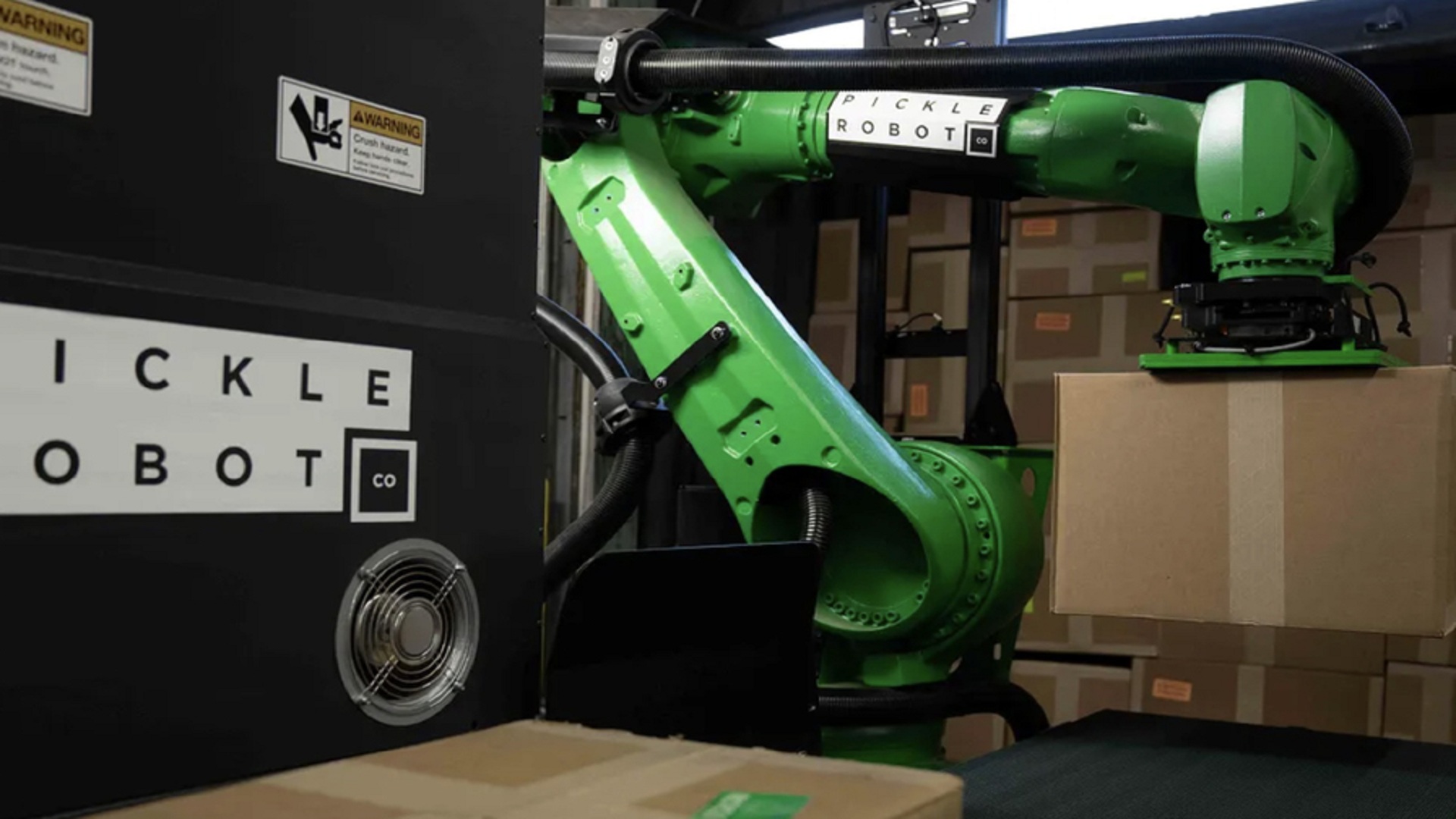
Pickle's AI robot unloads 1,500 boxes hourly in sweltering warehouses
Interesting Engineering·5 December 2025·Generative-AI robot unloads trailers at 1,500 boxes per hour - MIT-backed Pickle Robot Company debuts AI-powered systems that autonomously unload trucks and ease one of logistics’ toughest jobs.
Signals:
- →AI-powered robots address critical labor shortage by automating dangerous, high-turnover warehouse jobs with extreme working conditions.
- →Major logistics companies (UPS, Yusen) already deploying technology that processes up to 1,500 boxes hourly.
- →Scalable solution frees human workers for complex tasks while reducing workplace injuries and operational bottlenecks.
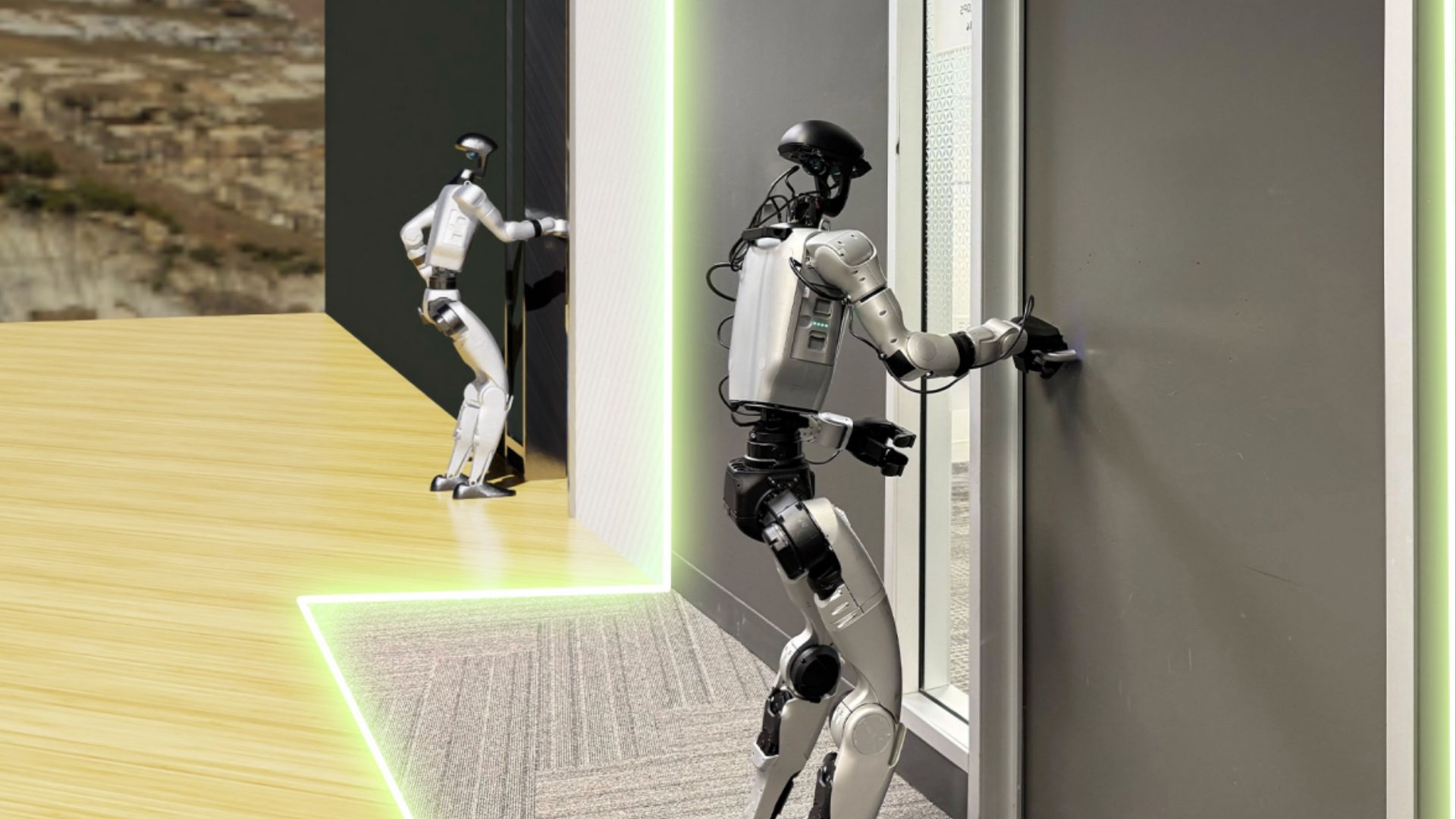
NVIDIA's DoorMan robot opens doors faster than humans
Interesting Engineering·4 December 2025·NVIDIA tech helps humanoid robot beat human operators at opening doors - A simulation-trained DoorMan system helps a Unitree G1 outperform human operators in door opening speed and reliability.
Signals:
- →Simulation-trained robots now outperform humans at complex physical tasks, reducing need for expensive human teleoperation.
- →Affordable $16,000 humanoid platform achieves 83% success rate using only standard cameras, lowering deployment costs.
- →Zero-shot sim-to-real transfer eliminates lengthy real-world training, accelerating commercial robotics implementation timelines.

Irmo M1 exoskeleton uses lasers to adapt to terrain
New Atlas·3 December 2025·Irmo M1 sensor-equipped predictive adventure exoskeleton - The newest take on the performance sports exoskeleton, the Irmo M1 brings a multi-sensor AI system that automatically adjusts output based on the terrain ahead. It's like an adaptive automotive suspension, only for legs instead of wheels.
Signals:
- →First recreational exoskeleton with AI-powered terrain prediction adjusts assistance before encountering obstacles ahead.
- →Reduces knee pressure by 50-60%, enabling longer activities and injury prevention for aging workforce populations.
- →$400K Kickstarter success at $399-$1,249 signals strong consumer demand for performance-enhancement wearable technology.

China's T800 combat humanoid robot prepares for fighting trials
Interesting Engineering·Video: China firm unveils combat-ready humanoid robot fighter - China’s EngineAI reveals the T800 humanoid robot built for combat, set to prove itself in controlled fighting trials later this year.
Signals:
- →China advances combat humanoid robotics, signaling potential military applications and strategic technology competition.
- →Hardware capabilities demonstrated, but lack of software ecosystem limits practical deployment and commercial viability.
- →Marketing-focused approach may indicate technology readiness gaps compared to established competitors like Tesla and Boston Dynamics.

UK humanoid robot walks 48 hours after assembly
Interesting Engineering·2 December 2025·Video: UK humanoid robot walks just 48 hours after final assembly - Humanoid's HMND 01 Alpha Bipedal enters the field with unusually fast development timelines and advanced simulation training.
Signals:
- →Addresses critical workforce shortages of up to 27% in key industrial sectors.
- →Simulation training reduces development time from 19 months to 2 days, accelerating deployment.
- →Targets 16 billion daily hours of unpaid care work, freeing human resources.
Autonomy and Drones
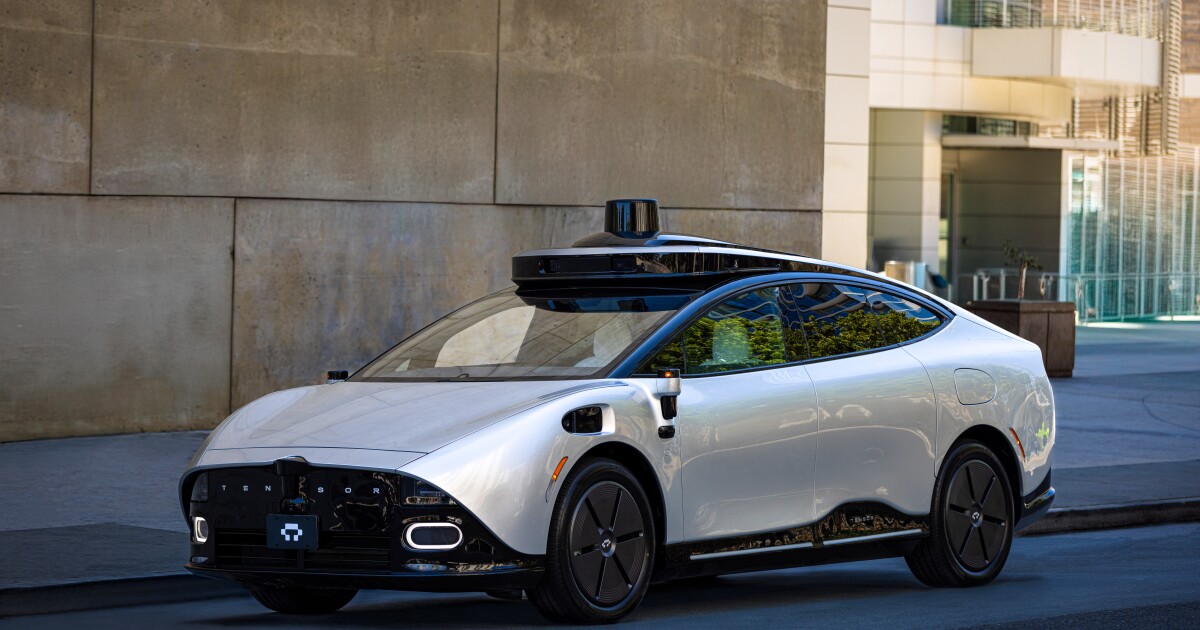
Tensor's L4 robocar with retractable controls debuts 2026
New Atlas·6 December 2025·Want to own your own Waymo? 2026 could be your year - The Tensor Robocar, a true L4 autonomous car, is coming to consumers in 2026. It features advanced sensors, a powerful AI, and a folding steering wheel.
Signals:
- →First consumer-available Level 4 autonomous vehicle launching 2026, marking major market shift from commercial-only robotaxis.
- →Advanced sensor system and AI processing enable full self-driving capability with retractable controls, transforming vehicle ownership economics.
- →Major commercial contracts secured (2,000+ units) demonstrate viable business model and regulatory approval pathway for autonomous vehicles.

Insta360 launches $960 drone with 360° panoramic cameras
Panda Daily·5 December 2025·Starting at $960: Insta360 Unveils Its First Drone, Introducing 360° Panoramic Technology to a New Market Segment - Pandaily - Insta360 storms into the drone market with the $960 Antigravity A1, a groundbreaking 249g FPV drone featuring dual 360° 8K lenses that finally brings true panoramic “shoot first, frame later” aerial creativity to everyone.
Signals:
- →Insta360 enters drone market with differentiated 360° technology, avoiding direct competition with DJI.
- →$960 price point and 249g weight target accessible consumer segment requiring no flight training.
- →"Shoot first, frame later" workflow addresses content creator demand for easier professional-quality aerial footage.

Antigravity A1: World's first 8K 360 drone with VR goggles
New Atlas·4 December 2025·Antigravity A1 review: flying the first 8K 360 drone - Our hands-on review of the Antigravity A1, the world's first all-in-one 8K 360 drone. Discover its immersive FPV flight and intuitive motion controls.
Signals:
- →First 8K 360-degree drone with intuitive motion controls eliminates need for traditional piloting skills.
- →Sub-250g weight avoids FAA licensing requirements while delivering 24-39 minute flight times.
- →$1,599-$1,999 price point targets consumer market with professional-grade immersive capture capabilities.

Autolane raises $7.4M to coordinate robotaxi pickups and drop-offs
TechCrunch·3 December 2025·Autolane is building 'air traffic control' for autonomous vehicles | TechCrunch - And the Palo Alto-based startup has raised $7.4 million to do that.
Signals:
- →Autolane secured $7.4M to coordinate robotaxi pickups at private properties, addressing critical infrastructure gaps.
- →Partnership with Simon Property Group demonstrates immediate commercial viability in major markets like Austin and San Francisco.
- →First-mover advantage in "application layer" autonomy creates strategic positioning before competition emerges in growing market.
Military Tech

Robot subs race to outsmart advanced sonar detection
New Atlas·7 December 2025·Making Robotic Submarines Stealthy: The SPHYDA Project - Navies rely on quiet robotic submarines. Discover the EDA's €4.8M SPHYDA project exploring advanced hydroacoustics and stealth tech for autonomous underwater vehicles (AUVs).
Signals:
- →Autonomous underwater vehicles will significantly expand naval capabilities while reducing crewed vessel requirements for ocean surveillance.
- →Stealth technology advances directly impact strategic military advantage in underwater detection and counter-detection capabilities.
- →€4.8M EU investment signals major shift toward AI-powered robotic submarine fleets requiring new acoustic signature management.

China tests unmanned helicopter for extreme high-altitude combat missions
Interesting Engineering·5 December 2025·China conducts combat tests of unmanned helicopter at 13,100 feet - China’s Moyujian unmanned helicopter has entered a critical combat testing phase after completing successful high-altitude live-fire trials.
Signals:
- →China advances unmanned combat capabilities in contested border regions, particularly Tibetan Plateau near India.
- →New helicopter enables extended maritime surveillance and strike missions across South China Sea.
- →Demonstrates China's accelerating investment in autonomous military systems competing with Western programs.

US Army to deploy laser-armed drones for air defense
Interesting Engineering·4 December 2025·Killer drones with laser weapons to join US Army's unmanned fleet - The US Army is exploring a new drone equipped with laser weapons to strengthen future combat missions and counter emerging aerial threats.
Signals:
- →Laser-armed drones offer cost-effective air defense at fraction of traditional interceptor expenses.
- →Technology supports "Golden Dome" initiative for layered protection against emerging drone threats.
- →Rapid procurement timeline signals urgent military modernization as directed-energy becomes top Pentagon priority.

India to commission third nuclear missile submarine INS Aridhaman
Interesting Engineering·3 December 2025·New 7,000-ton nuclear submarine could choke 60% of China’s sea trade - The submarine is designed to carry more long-range nuclear-tipped missiles than its two predecessors.
Signals:
- →India's third nuclear submarine strengthens its second-strike capability, altering Indo-Pacific strategic balance.
- →Enhanced missile range (2,200 miles) extends India's nuclear deterrent reach across critical maritime zones.
- →Growing submarine fleet threatens China's Malacca Strait access, impacting 80% of its oil imports.

China unveils $74,000 hypersonic missile using concrete coating
Signals:
- →China's hypersonic missile costs £74,100 versus $4-15 million for US equivalents—40 times cheaper.
- →Low-cost mass production could enable smaller nations to challenge larger military powers globally.
- →Demonstrates China's ability to disrupt global defense markets through cost-competitive advanced weaponry.
Space

Google plans solar-powered space data centers by 2027
Signals:
- →Space-based data centers could reduce strain on national power grids currently consuming 4% of U.S. electricity.
- →Google plans operational prototype satellites by 2027, signaling imminent shift in cloud infrastructure strategy.
- →Solar-powered space facilities may offer cost advantages over traditional Earth-based data centers long-term.

China's first reusable rocket attempt ends in fiery crash
Arstechnica·3 December 2025·A spectacular explosion shows China is close to obtaining reusable rockets - Ars Technica - “China’s first rocket recovery attempt achieved its expected technical objectives.”…
Signals:
- →China demonstrated near-successful rocket landing on first attempt, signaling rapid progress toward reusable launch capabilities.
- →Reusable rockets enable China to deploy megaconstellations faster, potentially threatening U.S. space dominance and military assets.
- →Multiple Chinese companies launching reusable rockets within weeks could dramatically accelerate China's space launch capacity.

Satellite constellations threaten to overwhelm future space telescopes
Arstechnica·3 December 2025·Planned satellite constellations may swamp future orbiting telescopes - Ars Technica - Planned orbital observatories would see satellites cross nearly all of their images.
Signals:
- →Planned satellite constellations will cause up to 92 satellite tracks per image in future orbital telescopes.
- →Over 550,000 satellites planned for orbit within a decade, up from current 3% deployment level.
- →Mitigation strategies for ground telescopes worsen interference for space-based observatories; no clear solutions exist.

Dcubed to 3D print solar arrays in orbit by 2027
New Atlas·3 December 2025·Dcubed Will 3D Print Giant Solar Arrays Right in Orbit - Launching heavy solar arrays is costly. Dcubed's ARAQYS system 3D prints rigid solar panels directly in orbit, slashing mission costs and enabling massive power generation.
Signals:
- →In-space manufacturing reduces launch costs by orders of magnitude versus traditional deployable solar panels.
- →Technology enables larger power systems for emerging space economy including data processing and power-beaming applications.
- →Commercial operational demonstration planned for 2027 with products available shortly after.

China's LandSpace attempts first reusable rocket landing tonight
Arstechnica·2 December 2025·This Chinese company could become the country’s first to land a reusable rocket - Ars Technica - From the outside, China’s Zhuque-3 rocket looks like a clone of SpaceX’s Falcon 9.
Signals:
- →China's race for reusable rockets directly challenges U.S. space dominance and SpaceX's current launch superiority.
- →Reusable rocket capability enables faster deployment of Chinese military satellites and potential threats to U.S. space assets.
- →Multiple Chinese companies nearing reusable launch success signals rapid technological advancement and industrial competition shift.
Crypto

Vitalik Buterin proposes gas futures market for Ethereum
CoinTelegraph·8 December 2025·Ethereum’s Co-Founder Proposes Idea For Onchain Gas Futures - Ethereum’s co-founder proposed an idea for onchain gas futures, aiming to give developers and institutions a tool to lock in future transaction costs.
Signals:
- →Ethereum gas futures could provide cost certainty for traders, builders, and institutions planning network operations.
- →Prediction market would signal expected fee trends, enabling better financial planning and hedging strategies.
- →Addresses critical uncertainty around transaction costs as Ethereum scales and adoption increases.

Polymarket plans in-house market maker to trade against users
CoinTelegraph·5 December 2025·Polymarket Building Internal Market-Making Team, Bloomberg Reports - Polymarket is recruiting traders for an internal market-making team as it expands in the US, mirroring a model already drawing scrutiny at rival Kalshi.
Signals:
- →Polymarket recruiting internal market makers raises conflict-of-interest concerns, similar to competitor Kalshi's legal troubles.
- →Prediction market volume surged 565% to $3.1B, signaling rapid industry growth and regulatory attention.
- →Platform integrity questions could impact user trust and attract increased regulatory scrutiny for emerging sector.

Ethereum narrowly avoids finality loss after Prysm bug
CoinTelegraph·5 December 2025·Prysm Bug Knocks Ethereum Consensus Participation After Fusaka - Ethereum’s voting participation plunged 25% following the Fusaka upgrade amid a Prysm consensus bug, putting the network within 9% of finality loss.
Signals:
- →Ethereum nearly lost finality after Prysm bug caused 25% validator drop, just 9% from network halt.
- →Incident exposed dangerous client concentration risk; Lighthouse alone controls 52.55% of consensus nodes.
- →Network vulnerability could freeze layer-2 bridges, pause withdrawals, and disrupt exchange operations during outages.

Ethereum's Fusaka upgrade slashes fees, boosts data capacity
CoinTelegraph·3 December 2025·Ethereum's Fusaka Upgrade Goes Live, Giving Lower Fees - What does Ethereum's Fusaka upgrade mean for you? Lower fees, faster L2s, and a path to near instant transactions.
Signals:
- →Fusaka upgrade enables 8x data throughput, dramatically reducing transaction costs for Ethereum layer-2 networks and users.
- →PeerDAS technology moves transaction speeds from minutes to milliseconds, enabling near-instant blockchain user experiences.
- →Enhanced scalability maintains decentralization while unlocking growth capacity for enterprise and rollup applications.

EU banks target euro stablecoin launch by 2026
CoinTelegraph·2 December 2025·Group of EU Banks Push for a Euro-Pegged Stablecoin by 2027: Report - An initiative led by 10 EU-based banks could lead to the launch of another euro-denominated stablecoin by 2027.
Signals:
- →Ten EU banks launching MiCA-compliant euro stablecoin signals institutional adoption of digital currencies.
- →European monetary autonomy threatened as euro stablecoins represent less than 1% global market.
- →Regulatory framework creates competitive advantage over Tether, which exited EU stablecoin market.
Energy

Korean system produces clean water and hydrogen simultaneously
TechXplore·Modular system simultaneously produces purified water and hydrogen - A Korean research team has developed a new energy-harvesting water purification system capable of producing both purified water and hydrogen simultaneously.
Signals:
- →Dual-output system produces clean water and hydrogen simultaneously, addressing two critical resource challenges with one technology.
- →Modular, scalable design enables deployment in resource-constrained environments like disaster zones, military sites, and spacecraft.
- →Recovers 8-10% of purification energy as hydrogen, potentially enabling self-powered operation when integrated with fuel cells.
3D Printing

UK plane crash caused by failed DIY 3D printed part
Signals:
- →Unvalidated 3D printed parts in safety-critical applications can cause catastrophic failures and endanger lives.
- →Material specifications must be rigorously verified; assumed properties may differ significantly from actual performance.
- →Regulatory oversight gaps in DIY modifications create serious safety risks requiring immediate policy attention.

German company slashes 3D printed titanium bike frame costs
Signals:
- →Manufacturing cost reduced from €40,000 to €14,000, targeting €4,000 for market viability.
- →Production requires 16 days total: demonstrates scalability challenges for advanced manufacturing adoption.
- →Persistent innovation over four years shows competitive advantage through process optimization.

World's largest polymer 3D printer accelerates nuclear reactor construction
Interesting Engineering·5 December 2025·World's largest polymer 3D printer makes giant nuclear reactor parts - Researchers in the US have used a massive 3D printer to create complex concrete forms that speed up nuclear plant construction.
Signals:
- →Advanced 3D printing accelerates nuclear reactor construction, reducing costs and meeting tight commercial deadlines.
- →University-industry-government partnership demonstrates scalable model for modernizing US energy infrastructure rapidly.
- →Digital certification system eliminates regulatory delays, enabling faster deployment of critical energy and defense projects.

California 3D-printed home project cancelled due to logistics
Signals:
- →3D construction printing faces significant logistical challenges including equipment breakdowns, cross-country transportation costs, and regional regulatory compliance issues.
- →Startup 3DCP companies struggle with scalability and financial viability when operating outside their established geographic regions.
- →Affordable housing initiatives using 3DCP technology require careful cost analysis and local operational capabilities to succeed.
Quantum Tech

Quantum processor achieves second-long coherence with nuclear spins
Phys.org·A solid-state quantum processor based on nuclear spins - Quantum computers, systems that process information leveraging quantum mechanical effects, have the potential of outperforming classical systems on some tasks. Instead of storing information as bits, like classical computers, they rely on so-called qubits, units of information that can simultaneously exist in superpositions of 0 and 1.
Signals:
- →Nuclear spin qubits achieve seconds-long coherence times, dramatically outperforming current quantum computing platforms.
- →Chip-based architecture compatible with existing superconducting processors enables practical quantum computing scalability.
- →Platform enables both quantum computing and single-molecule sensing without specialized optical/electrical requirements.
BCIs and Neuro Tech

Paper-thin brain implant enables wireless AI communication with 65,000 electrodes
 SciTechDaily·8 December 2025·New Paper-Thin Brain Implant Could Transform How Humans Connect With AI - A radically miniaturized brain implant called BISC is redefining what’s possible in human–computer interaction, offering a paper-thin, wireless, high-bandwidth link directly to the brain. With over 65,000 electrodes and unprecedented data throughput, it enables advanced AI decoding of thoughts, i
Signals:
- →Ultra-thin wireless brain implant with 65,536 electrodes enables unprecedented high-bandwidth AI-brain communication for medical applications.
- →Single-chip design drastically reduces invasiveness while increasing data throughput 100x over existing brain-computer interfaces.
- →Technology progressing to human trials with commercial applications for treating epilepsy, paralysis, and neurological disorders.
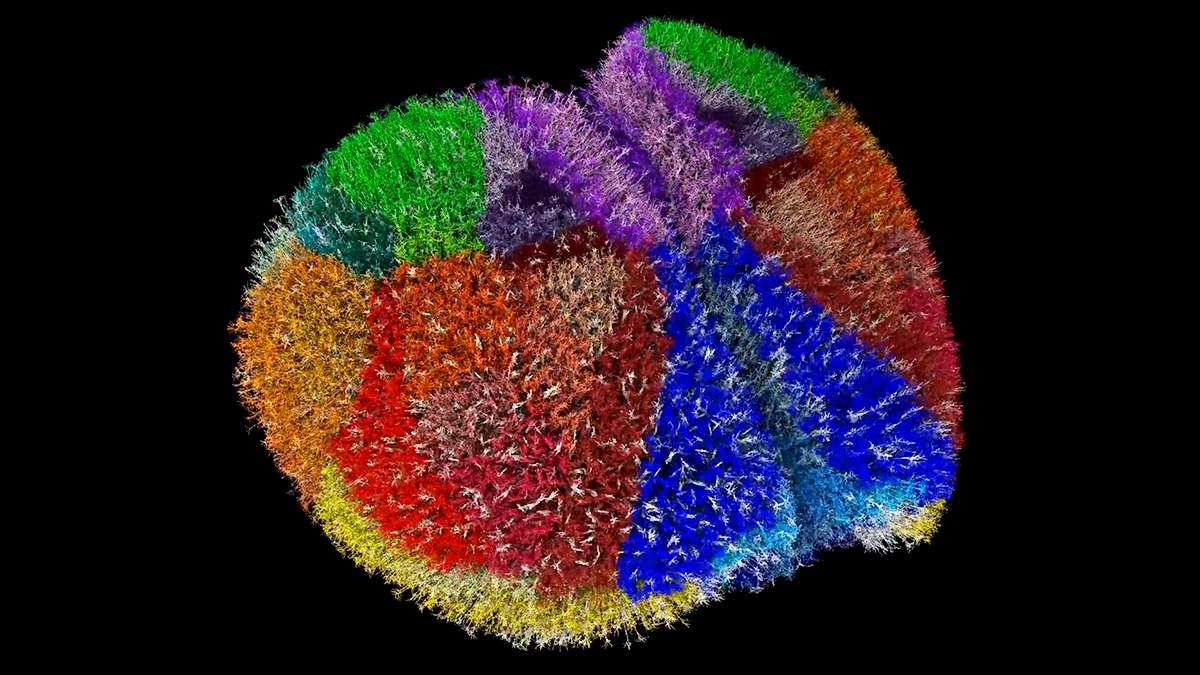
Supercomputer simulates mouse brain with 9 million neurons
Signals:
- →Enables testing of disease progression and treatments without invasive human brain scans or experiments.
- →Demonstrates feasibility of scaling to full human brain models for medical research applications.
- →Provides cost-effective platform for studying neurological conditions like Alzheimer's and seizures computationally.

Science Corp. aims to restore vision and expand consciousness
TechCrunch·5 December 2025·After Neuralink, Max Hodak is building something even wilder | TechCrunch - "You could really, in a very fundamental sense, talk about redrawing the border around a brain," Hodak says, "possibly to include four hemispheres, or a device, or a whole group of people."
Signals:
- →Brain-computer interface market rapidly expanding with 700+ companies globally; China targeting global leadership by 2030.
- →Science Corp. expects commercial viability by 2035, potentially disrupting healthcare economics and creating cognitive enhancement inequality.
- →Technology progression from vision restoration to consciousness manipulation raises urgent regulatory and societal governance questions.

AI decodes words from non-invasive brain scans
Signals:
- →Demonstrates AI can decode individual words from non-invasive brain recordings across 723 participants, advancing practical brain-computer interface applications.
- →Outperforms existing methods significantly, achieving up to 37% accuracy, bringing non-invasive BCIs closer to clinical viability for speech-impaired patients.
- →Identifies key factors affecting performance (MEG vs EEG, reading vs listening), providing actionable guidance for future BCI development investments.
Health Tech

MIT develops needle-free blood sugar monitor using infrared light
New Atlas·4 December 2025·MIT's needle-free test measures blood sugar with light - MIT researchers have developed a needle-free blood glucose test that uses near-infrared light to accurately measure blood sugar without painful pin pricks.
Signals:
- →Non-invasive glucose monitoring eliminates painful needle pricks for millions of diabetes patients worldwide.
- →Technology reduces from shoebox to watch-size, enabling continuous convenient monitoring without patch replacements.
- →Clinical trials show accuracy matching current monitors, signaling near-term commercial viability and market disruption.

Fentanyl vaccine enters first human trial in Netherlands
Arstechnica·4 December 2025·A fentanyl vaccine is about to get its first major test - Vaccine trial in the Netherlands hopes to protect against fentanyl-related overdose and death.
Signals:
- →Fentanyl vaccine could prevent overdoses proactively, unlike current reactive treatments like naloxone.
- →Phase 1/2 human trials starting 2026 after showing 92-98% brain blockage in rats.
- →Addresses leading cause of death for Americans aged 18-45, offering new intervention strategy.
Bio Tech

Scientists successfully transfer lab-grown chromosomes to human cells
Financial Times·5 December 2025·Lab-grown genomes set to transform human DNA - Research shows synthetic chromosomes can be transferred to human cells with potential to improve viral resistance
Signals:
- →Synthetic human chromosomes successfully transferred to cells, enabling large-scale DNA modifications beyond current gene-editing capabilities.
- →Potential medical applications include virus-resistant cells and tailored cellular therapies for immunocompromised patients.
- →£10mn UK project raises significant ethical considerations requiring policy frameworks before clinical implementation.

Scientists develop first drug to repair DNA and regenerate tissue
New Atlas·5 December 2025·Breakthrough DNA repair drug could heal tissue damage - A breakthrough drug called TY1 repairs DNA to heal damaged tissue. This new class of therapeutics could treat heart attacks and inflammatory diseases.
Signals:
- →First drug to repair DNA damage could revolutionize treatment for heart attacks and tissue damage.
- →TY1 works across multiple conditions including heart disease and autoimmune disorders, expanding treatment options.
- →Moving to clinical trials after successful animal studies, potentially creating entirely new therapeutic class.

Denmark becomes first country with complete microbiome map
Phys.org·The microbiome of an entire country mapped for the first time - An international research team led by Aalborg University with contributions from the University of Vienna has systematically mapped the microbiome of an entire country for the first time. In the study "Microflora Danica," published in the journal Nature, over 10,000 environmental samples from across Denmark were analyzed—on average at intervals of only around 4 square kilometers.
Signals:
- →First nationwide microbiome mapping reveals unknown nitrogen-cycling bacteria dominating agricultural soils, impacting fertilizer efficiency.
- →Understanding soil microbes enables data-driven optimization of fertilizer use, reducing greenhouse gas emissions and water pollution.
- →Microbial profiles can measure habitat disturbance, providing metrics for evaluating agricultural sustainability and conservation success.
Food Tech
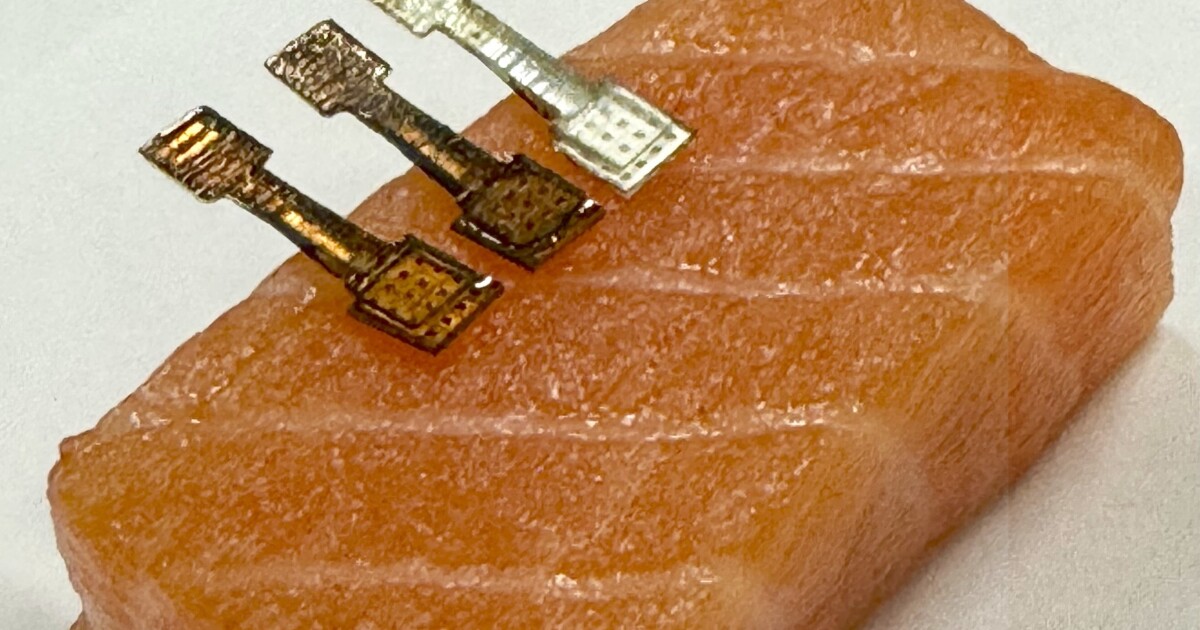
Microneedle sensor detects fish freshness in under two minutes
New Atlas·6 December 2025·New sensor checks fish freshness with microneedles - A new microneedle sensor provides an objective measure of fish freshness by testing hypoxanthine levels in the flesh in under two minutes.
Signals:
- →Enables rapid two-minute seafood freshness testing without expensive laboratory equipment or specialized staff.
- →Reduces food safety risks and potential waste by providing objective freshness measurements at point-of-sale.
- →Offers scalable quality control solution for restaurants, retailers, and supply chain managers.
Agri Tech

Futuristic dome uses fish waste to grow food
New Atlas·4 December 2025·Futuristic dome offers a new model for urban farming. - Discover the "Source of Life" dome from Expo 2025, a futuristic aquaponics system offering a closed-loop food ecosystem for sustainable urban farming.
Signals:
- →Demonstrates scalable urban food production solution for land-scarce cities and disaster-prone regions.
- →Closed-loop aquaponics system eliminates waste while producing fish, vegetables, and herbs simultaneously.
- →Modular design enables decentralized food security independent of traditional agriculture infrastructure.
Climate Tech

New carbon-negative building material captures CO₂ while curing rapidly
Phys.org·New construction material absorbs CO₂ and sets quickly for sustainable building - Worcester Polytechnic Institute (WPI) researchers have created a new carbon-negative building material that could transform sustainable construction. The breakthrough, published in the high-impact journal Matter, details the development of enzymatic structural material (ESM), a strong, durable, and recyclable construction material produced through a low-energy, bioinspired process.
Signals:
- →New material sequesters 6kg CO₂ per cubic meter versus concrete's 330kg emissions.
- →Sets in hours instead of weeks, reducing construction time and costs significantly.
- →Scalable alternative could dramatically reduce construction industry's 8% global emissions contribution.
Materials Science

Anchovy-inspired filter removes 99% of microplastics from laundry water
New Atlas·5 December 2025·Anchovy-inspired filter cleans microplastics from laundry - A new anchovy-inspired filter for your washing machine can remove over 99% of microplastic fibers from laundry water, keeping them from waterways.
Signals:
- →Filters 99% of microplastic fibers from washing machine water, preventing environmental contamination of waterways.
- →Simple, inexpensive design could be commercially available within one to two years for widespread adoption.
- →Addresses significant pollution source as synthetic clothing fibers enter food chains and potentially harm human health.
⏳ Zeitgeist

Study links intimate partner violence to increased firearm ownership
Phys.org·New study finds strong link between intimate partner violence and firearm ownership - A new study from the University of California San Diego finds that adults in California and Louisiana who experienced intimate partner violence in the past year—either as victims or perpetrators—are significantly more likely to own firearms and to have purchased a firearm in the past year.
Signals:
- →Intimate partner violence perpetrators have 10x higher firearm ownership rates, creating lethal risk scenarios.
- →Pattern holds across different state gun laws, indicating need for nationwide policy response.
- →Victims seeking protection through firearms may inadvertently increase their danger, requiring intervention redesign.

Norway's Rogfast tunnel to become world's deepest undersea road
Interesting Engineering·3 December 2025·1,280 feet: Norway building world's deepest, longest undersea tunnel - Norway's Rogfast tunnel will plunge 1,286 feet under sea level, becoming the world's longest and deepest undersea road tunnel.
Signals:
- →Record-breaking $2.4 billion infrastructure project demonstrates advanced engineering capabilities for extreme undersea construction challenges.
- →Eliminates ferry dependency, cutting travel time 40 minutes between major Norwegian cities by 2033.
- →Showcases precision technology and safety innovations applicable to future large-scale transportation infrastructure investments.
Climate

New Zealand's climate policy rollbacks risk international law breach
The Conversation·4 December 2025·NZ’s rejection of emission targets fuels risk of international law breach - The International Court has set out clear rules for addressing climate change – and the rights of states to take legal action against others for breaching them.
Signals:
- →New Zealand risks breaching binding international climate obligations, potentially facing legal action from other states.
- →Recent policy rollbacks fail to meet "highest ambition" and "stringent due diligence" standards required by international law.
- →Non-compliance undermines the rules-based international order that small states like New Zealand depend upon for security.

Tehran faces evacuation as severe drought empties reservoirs
Signals:
- →Tehran's 15 million residents face potential evacuation as reservoirs hit critically low levels at 8% capacity.
- →Decades of mismanagement, population doubling, and quadrupled water consumption created unsustainable demand exceeding natural replenishment rates.
- →Global cities including Cape Town and London face similar vulnerabilities, exposing widespread infrastructure inadequacy amid climate-intensified droughts.
Biodiversity

African penguins face mass starvation from collapsing sardine stocks
Phys.org·Penguins likely starved to death en masse: Populations off South Africa may have fallen 95% in just 8 years - Penguins living off the coast of South Africa have likely starved to death en masse during their molting season as a result of collapsing food supplies.
Signals:
- →95% population collapse in 8 years signals catastrophic ecosystem failure requiring immediate intervention.
- →Overfishing combined with environmental changes created preventable mass starvation event with policy implications.
- →Critically endangered species decline demonstrates urgent need for adaptive fisheries management and conservation funding.

China's massive tree-planting campaign has dramatically redistributed the country's water
Signals:
- →China's massive reforestation reduced water availability in 74% of its land area despite increasing precipitation.
- →Large-scale ecosystem restoration redistributes water resources in unforeseen ways, complicating national water management strategies.
- →Current government water infrastructure plans may fail without accounting for vegetation-driven water cycle changes.
Health

Spain investigates possible lab leak in swine fever outbreak
Phys.org·Spain not ruling out lab leak as cause of swine fever outbreak - Spain's government said Friday it had not ruled out an accidental laboratory leak as the cause of an outbreak of African swine fever that has rocked the country's lucrative pork industry.
Signals:
- →African swine fever outbreak threatens Spain's valuable pork industry with 13 confirmed cases.
- →Virus strain matches Georgia 2007 laboratory variant, suggesting possible containment facility breach.
- →Investigation ongoing near Catalonia lab; contaminated product theory now considered less likely.

12 former FDA chiefs rebuke Prasad's vaccine memo
Arstechnica·4 December 2025·12 former FDA chiefs unite to say agency memo on vaccines is deeply stupid - Ars Technica - Prasad’s arguments “misrepresent both the science and the regulatory record.”…
Signals:
- →FDA's top vaccine regulator proposes unverified policy changes that could delay vaccine updates and increase costs.
- →Twelve former FDA commissioners warn new requirements threaten public health and scientific integrity at the agency.
- →Policy shift could slow responses to evolving disease threats and reduce vaccine competition and innovation.
Economics
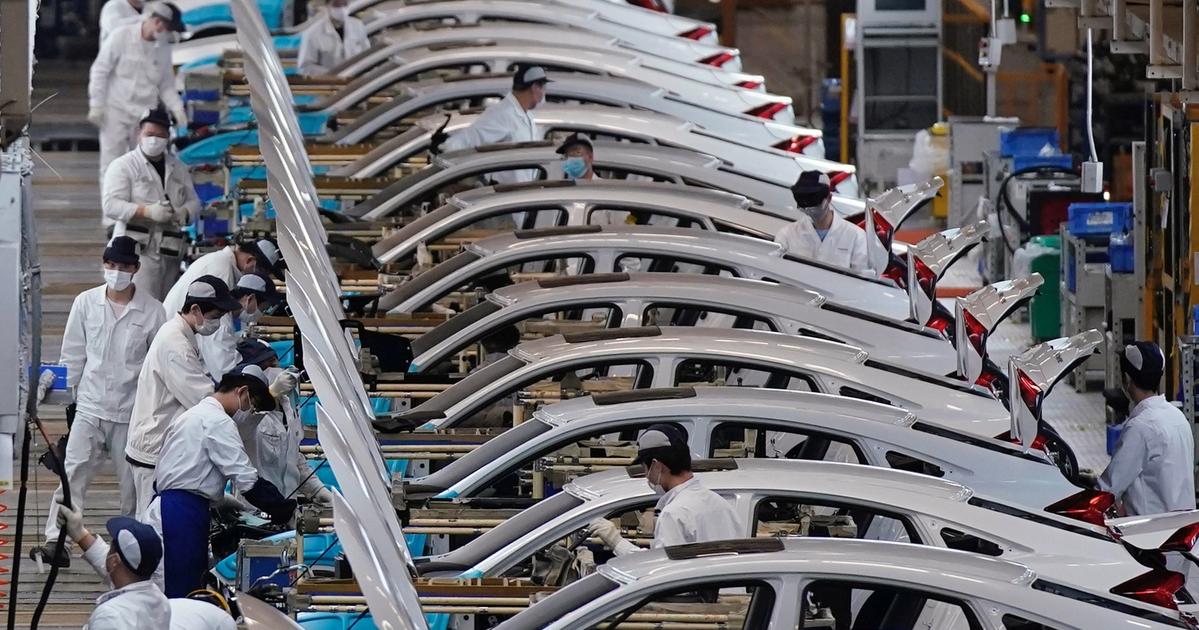
China's $1 trillion trade surplus shows resilience to US tariffs
Semafor·8 December 2025·China’s trade surplus hits $1 trillion despite US tariffs | Semafor - Chinese firms have instead ramped up sales to the EU, Japan, and Southeast Asia.
Signals:
- →China's $1 trillion trade surplus demonstrates successful adaptation to 47.5% US tariffs through market diversification.
- →Chinese exporters shifted focus to EU, Japan, and Southeast Asia, maintaining growth despite US restrictions.
- →US farmers require government aid package due to collapsed Chinese sales from retaliatory tariffs.

Americans' confidence in US economy drops to lowest since July
Semafor·4 December 2025·Americans lose confidence in US economy | Semafor - A poll found consumers’ economic confidence was at its lowest point since July 2024.
Signals:
- →Consumer confidence dropped to lowest level since July 2024, signaling economic concerns.
- →68% believe economy is worsening; two-thirds say it's bad time for jobs.
- →Holiday spending expectations plunged 23% month-over-month, indicating weakening consumer demand.

Private credit defaults rising but remain historically low
Semafor·4 December 2025·Private credit defaults are coming and that’s ok, BlackRock Mike Patterson says | Semafor - Loan defaults won’t be catastrophic and are to be expected after a decade of easy money, said a BlackRock senior executive.
Signals:
- →Private credit defaults rising to 1.3% signal healthy market correction after decade of artificially low rates.
- →BlackRock's $12B HPS acquisition validates private credit's growth despite higher default risks emerging.
- →Regulators increasing scrutiny of $2T private credit market amid fraud cases and collateral concerns.
Geopolitics

Former Taiwan protester turned pro-Beijing party leader alarms Washington
Semafor·Cheng Li-Wun: Beijing’s best bet in Taiwan is the firebrand who once railed against China | Semafor - Cheng Li-Wun’s surprising rise to the top of the Kuomintang speaks to powerful political currents stirring in Taiwan at a grassroots level.
Signals:
- →Taiwan's opposition leader Cheng Li-wun's pro-Beijing stance signals growing fear among Taiwanese that current provocations risk Chinese military invasion.
- →Declining US credibility and Trump's tariffs/semiconductor demands are eroding Taiwan's trust in American defense commitments.
- →Kuomintang legislative control threatens approval of $40 billion defense budget crucial to US-Taiwan security relationship.

France intercepts drones over nuclear submarine base
Financial Times·5 December 2025·France intercepted drones flying over nuclear base, defence minister says - Europe on high alert for foreign interference as Irish police probe drone incursion against Ukrainian president’s plane
Signals:
- →Drone incursions at critical infrastructure reveal significant security vulnerabilities across Europe requiring immediate defensive investment.
- →Suspected foreign interference targeting nuclear facilities and visiting heads of state demonstrates escalating hybrid warfare threats.
- →Ireland's minimal defense capabilities expose NATO/EU weaknesses ahead of its 2025 EU presidency rotation.
🧠Mind expanding

Human-AI identity coupling emerges through shared memory frameworks
Signals:
- →AI systems are becoming integral to collective memory formation, fundamentally altering how human group identities emerge and evolve.
- →Human-AI identity coupling creates new governance challenges as AI transitions from tool to active participant in social frameworks.
- →Understanding this coupling is critical for predicting societal changes as AI becomes embedded in identity-forming infrastructures.

Complex life evolved 1 billion years earlier than thought
Phys.org·Complex life developed nearly 1 billion years earlier than previously thought, study reveals - Complex life began to develop earlier, and over a longer span of time, than previously believed, a new study has revealed. The research sheds new light on the conditions needed for early organisms to evolve and challenges several long-standing scientific theories in this area.
Signals:
- →Complex life evolved 2.9 billion years ago, nearly 1 billion years earlier than previously estimated.
- →Evolution occurred without substantial atmospheric oxygen, contradicting long-held scientific prerequisites for complex life.
- →New "CALM" theory challenges existing models, requiring reassessment of evolutionary biology and Earth's geochemical history.
Framework measures human-AI collaboration beyond individual performance metrics
Signals:
- →New framework reveals human-AI collaboration ability differs fundamentally from individual problem-solving skills.
- →Perspective-taking capability predicts successful AI collaboration, enabling better model training and user matching.
- →Dynamic user factors affect AI performance, requiring adaptive systems beyond static benchmark optimization.
💭Meme stream

Moderate coffee intake may slow cellular aging in psychiatric patients
SciTechDaily·7 December 2025·This Daily Coffee Habit May Help Slow the Aging Process - A few cups of coffee each day may help slow cellular aging in people with major mental illness.
Signals:
- →Moderate coffee consumption (3-4 cups daily) may slow biological aging by approximately 5 years in psychiatric patients.
- →Findings support existing health guidelines recommending maximum 400mg caffeine daily from major regulatory bodies.
- →Coffee's antioxidant properties could reduce healthcare costs for populations with accelerated aging from mental illness.

Beeple's robot dog with his own face sold first at Art Basel
TechCrunch·6 December 2025·Digital artist Beeple put his face on a $100K robot dog next to Elon Musk and Picasso - it sold first | TechCrunch - The project marks at least the second time Winkelmann has become the art world's main character.
Signals:
- →Digital artist Beeple sold $100K robotic dogs featuring tech billionaires at Art Basel Miami.
- →Project combines AI, robotics, and NFTs, showing continued innovation in digital art markets.
- →Beeple's self-portrait sold first, demonstrating strong personal brand value and market appeal.

2025's words of the year reveal digital disillusionment
The Conversation·5 December 2025·2025’s words of the year reflect a year of digital disillusionment - From AI slop to rage bait, to the cryptic ‘6-7,’ this year’s slate captures a growing sense that online life is flooded with fakery, frustration and meaninglessness.
Signals:
- →Digital disillusionment signals declining public trust in online content and AI-generated information.
- →Parasocial relationships with AI chatbots reveal emerging mental health and social connection concerns.
- →Rage-bait content exploitation demonstrates monetization of polarization requiring platform governance responses.

World's first biodegradable mushroom coffin decomposes in 45 days
New Atlas·3 December 2025·This mushroom coffin is an eco friendly burial option - Discover the Loop Living Cocoon, a biodegradable coffin made from mushrooms and hemp that decomposes in 45 days while enriching the soil.
Signals:
- →Biodegradable coffins decompose in 45 days, offering sustainable alternative to traditional burial methods.
- →Production requires minimal energy and no chemicals, reducing funeral industry's environmental footprint significantly.
- →Compatible with existing funeral practices at competitive pricing, enabling easy market adoption.