Contents /
🌟Picks of the week

ChatGPT's two-year transformation of business and markets
 TechCrunch·30 November 2025·ChatGPT launched three years ago today | TechCrunch - It’s no hyperbole to suggest that ChatGPT subsequently transformed the worlds of business and tech.
Signals:
- →ChatGPT sparked AI revolution transforming workforce, creating career uncertainty across all generations.
- →AI boom concentrated wealth in seven tech giants, now 35% of S&P 500 weighting.
- →Industry leaders acknowledge potential AI bubble, though long-term economic transformation expected.

Airbus orders software fix for 6,000 planes after solar radiation issue
TechCrunch·29 November 2025·Airbus orders software fix to thousands of planes due to solar radiation risk | TechCrunch - The company said it’s taking action because “analysis of a recent event involving an A320 Family aircraft has revealed that intense solar radiation may corrupt data critical to the functioning of flight controls.”
Signals:
- →Solar radiation can corrupt critical flight control data in 6,000 A320 aircraft, causing potential safety emergencies.
- →Emergency FAA directive grounds affected planes until software reverted, causing global flight delays and cancellations.
- →October incident resulted in sudden altitude loss and emergency landing, demonstrating real operational risk.

Airbus orders urgent A320 software fix after solar radiation flaw
 Interesting Engineering·28 November 2025·Software fix on Airbus A320 jets may trigger widespread flight delays - Airbus warns of flight disruption after a software issue linked to solar radiation affects thousands of A320 aircraft.
Signals:
- →6,000 A320 aircraft require immediate software updates due to solar radiation corrupting flight control systems.
- →Widespread flight delays and cancellations expected globally as airlines ground planes for mandatory repairs.
- →Emergency airworthiness directive issued after JetBlue incident injured 15 passengers during altitude drop.

New browser extension blocks AI content by filtering pre-2022 results
Interesting Engineering·27 November 2025·Slop Evader blocks AI content and restores pre-ChatGPT internet - Slop Evader filters search results to the pre-ChatGPT internet, offering users a way to browse without AI slop and synthetic media results.
Signals:
- →Growing user demand for authentic content signals potential market shift away from AI-generated material.
- →AI content proliferation increases cognitive burden and erodes trust in online information and commerce.
- →Emerging anti-AI tools indicate need for content authenticity strategies and filtering capabilities.

Reranking social media feeds reduces political polarization, study finds
Signals:
- →Demonstrates causal link between social media algorithms and political polarization, equivalent to 3 years of societal change.
- →Introduces platform-independent research method enabling scientists to study algorithms without requiring tech company permission or cooperation.
- →Provides actionable pathway for platforms to reduce partisan hostility through content ranking while revealing engagement-driven business model conflicts.

Japan proposes 'Weather Commons' for democratic climate intervention
 Phys.org·'Weather Commons' as collaborative weather management - As climate change and the resulting extreme weather intensify, interest in weather modification is growing around the world. In Japan, under Goal 8 of the Moonshot Research and Development Program led by the Cabinet Office / JST (Japan Science and Technology Agency), a research and development program for weather control has been launched to mitigate extreme wind and water damage.
Signals:
- →Japan launching weather control program to reduce typhoon and heavy rain damage using advanced technologies.
- →"Weather Commons" proposes democratic, community-centered alternative to top-down technocratic weather modification approaches.
- →Framework enables societal dialogue on whether, when, and how to implement weather control technologies.

Scottish campaigners use AI to flood planning system with objections
 Financial Times·27 November 2025·How Scottish campaigners are using AI to battle rural planning applications - Tool allows individuals to send unique, complex objections of about 4,000 words within a couple of minutes
Signals:
- →AI tools enable mass-generation of sophisticated planning objections, potentially delaying critical infrastructure projects.
- →Scottish energy grid upgrade faces 11,000 AI-generated objections, threatening UK's 2030 clean power targets.
- →Planning systems lack AI assessment capabilities, creating workload imbalances favoring well-organized opposition groups.

Solar radiation triggers urgent software fix for 6,000 Airbus jets
Interesting Engineering·30 November 2025·Airbus A320 glitch: Global airlines race to patch dangerous glitch - Airlines around the world are rushing to fix a software glitch that has grounding 6,000 Airbus A320 family jets.
Signals:
- →Software glitch in world's most common passenger jet (A320) affects 6,000 aircraft globally during peak travel season.
- →Cosmic radiation vulnerability highlights critical need for hardened aviation software and updated cybersecurity protocols.
- →Rapid regulatory response and overnight fixes demonstrate effective crisis management despite operational disruptions.

OpenAI faces mounting competition from Google and Anthropic
Financial Times·30 November 2025·OpenAI’s lead under pressure as rivals start to close the gap - Three years since the debut of ChatGPT, the $500bn start-up is facing significant challenges to its dominance in AI
Signals:
- →OpenAI's AI dominance faces serious challenge as Google's Gemini 3 outperforms GPT-5 on key benchmarks.
- →OpenAI's $1.4 trillion spending commitment creates massive financial risk without sufficient revenue streams to support it.
- →Market leadership shifting as users spend more time with Gemini than ChatGPT, threatening OpenAI's competitive position.

ChatGPT's three-year global impact on work and society
 Rest of World·26 November 2025·ChatGPT at 3: how the AI tool changed work, school and life - Rest of World - ChatGPT has hundreds of millions of users worldwide. From jobs and schools to elections and local AI models, here’s how the chatbot reshaped tech and daily life globally.
Signals:
- →ChatGPT reaches 800 million weekly users, transforming work, education, and healthcare globally.
- →AI disrupts elections and creates job displacement while enabling new productivity gains.
- →Language barriers and regional AI development highlight need for localized solutions.

Scientists may have directly detected dark matter for first time
Phys.org·After nearly 100 years, scientists may have detected dark matter - In the early 1930s, Swiss astronomer Fritz Zwicky observed galaxies in space moving faster than their mass should allow, prompting him to infer the presence of some invisible scaffolding—dark matter—holding the galaxies together. Nearly 100 years later, NASA's Fermi Gamma-ray Space Telescope may have provided direct evidence of dark matter, allowing the invisible matter to be "seen" for the very first time.
Signals:
- →First potential direct detection of dark matter after nearly 100 years of searching.
- →Discovery could revolutionize physics by confirming particles beyond the current standard model.
- →Findings require independent verification but may fundamentally change our understanding of the universe.
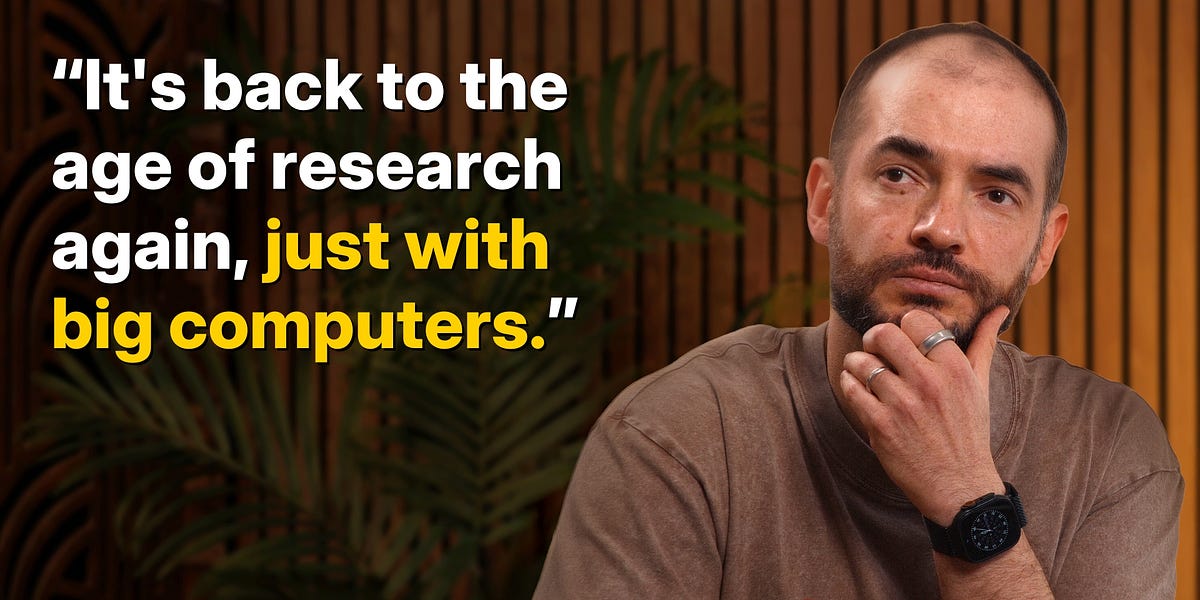
Ilya Sutskever on why AI models generalize worse than humans
Signals:
- →AI models show dramatic disconnect between benchmark performance and real-world economic impact, suggesting current scaling approaches may be reaching fundamental limitations.
- →Industry shifting from "age of scaling" to "age of research" as pre-training data exhausts, requiring new approaches beyond simply adding more compute.
- →Leading AI researcher predicts 5-20 year timeline to human-level learning systems, with potential for rapid economic transformation and unprecedented coordination challenges.
AI could unlock $2.9 trillion by redesigning workflows
Signals:
- →AI could automate 57% of US work hours, requiring urgent workforce reskilling and workflow redesign to capture $2.9 trillion in economic value by 2030.
- →Over 70% of current skills remain relevant but will shift in application, with AI fluency demand growing sevenfold in just two years.
- →Productivity gains require reimagining entire workflows around human-AI collaboration, not just automating individual tasks—a strategic transformation challenge for leaders.

ChatGPT reshapes how people search for information online
 The Conversation·25 November 2025·The ChatGPT effect: In 3 years the AI chatbot has changed the way people look things up - ChatGPT has dramatically altered how people retrieve information, muscling aside Google search as the first stop on the hunt for answers.
Signals:
- →ChatGPT reached 800 million weekly users by 2025, fundamentally shifting how people access information online.
- →Traditional search traffic declining as 55% of users now choose AI chatbots for tasks previously done via Google.
- →Zero-click searches jumped from 56% to 69%, reducing website traffic and disrupting digital business models.
📈The week in AI and Tech
Governance and Policy

Researcher lobbies Vatican to take AGI risks seriously
 The Verge·1 December 2025·The race to AGI-pill the pope | The Verge - A loose network of ‘AI Avengers’ is trying to put the risks and benefits of artificial general intelligence on the Vatican’s agenda.
Signals:
- →Vatican's global influence over 1.4 billion Catholics could shape international AGI policy and mediate US-China tensions.
- →Pope Leo XIV's tech background and American nationality position him uniquely to engage with US-based frontier AI labs.
- →Big Tech companies are actively lobbying the Vatican on AI priorities before independent AGI risk assessments occur.

Leaked executive order reveals Trump's AI preemption push
The Verge·26 November 2025·What the leaked AI executive order tells us about the Big Tech power grab | The Verge - David Sacks’s attempt to write an AI preemption executive order failed, but here’s what the leaked order would have done to punish states with AI laws.
Signals:
- →Trump administration drafting executive order to prevent states from passing their own AI regulations.
- →David Sacks, AI/Crypto advisor, heavily influencing federal AI policy despite non-permanent government status.
- →Leaked draft suggests internal White House conflicts over Big Tech's push for federal preemption.

Switzerland warns against M365 and SaaS over encryption concerns
Signals:
- →Swiss government recommends avoiding M365 and SaaS due to lack of end-to-end encryption and data sovereignty concerns.
- →Security scan reveals 17,000 live credentials exposed across 5.6 million public GitLab repositories, indicating widespread security risks.
- →Cloud providers can unilaterally change terms, causing loss of control over sensitive government data and compliance.

Australian government releases guide on AI content transparency
Signals:
- →Transparency in AI-generated content builds consumer trust and may provide competitive advantage in evolving markets.
- →Regulatory landscape is changing; proactive transparency helps businesses meet current and future compliance requirements.
- →Clear labeling, watermarking, and metadata reduce risks of fraud, misinformation, and reputational damage.

Swiss messaging app Threema enables digital sovereignty through privacy
Signals:
- →Private platforms can enable national digital autonomy without direct government mandates through technical design and institutional partnerships.
- →Digital sovereignty emerges from hybrid sociotechnical assemblages, not solely from state-centric policies or legal frameworks.
- →Non-state actors perform sovereign functions by aligning privacy protections with geopolitical objectives through infrastructural practices.

Trump launches "Genesis Mission" to accelerate AI-driven scientific discovery
Signals:
- →Trump orders national AI initiative comparable to Manhattan Project to maintain U.S. technological dominance.
- →Department of Energy must deliver operational AI platform within nine months using existing budgets.
- →AI investment accounts for half of U.S. GDP growth, raising concerns about economic bubble.
Trump launches 'Genesis Mission' to accelerate AI-driven scientific research
 TechXplore·Trump launches 'Genesis Mission' to speed AI-driven research - President Donald Trump signed an executive order Monday establishing the "Genesis Mission," a national initiative to harness AI for scientific breakthroughs, comparing its scope to the Manhattan Project that produced the ...
Signals:
- →National AI initiative integrates supercomputers and federal datasets to accelerate scientific breakthroughs across critical domains.
- →Administration seeks to preempt state AI regulations, threatening federal aid to maintain unified low-regulation approach.
- →Nine-month timeline targets US-China AI competition in semiconductors, nuclear energy, and advanced manufacturing sectors.
Regulation

Poland's president vetoes crypto bill over freedom concerns
 CoinTelegraph·2 December 2025·Poland's President Vetoes 'Destructive' Crypto Bill - Polish President Karol Nawrocki vetoed the Crypto-Asset Market Act, citing overregulation risks, fueling a clash between officials and crypto advocates.
Signals:
- →Poland's president vetoed crypto regulations citing threats to freedoms and innovation through website blocking powers.
- →Veto creates regulatory uncertainty as officials warn of market chaos and investor losses.
- →EU's MiCA framework takes effect July 2026, potentially resolving Poland's regulatory gap.

India mandates government app on all new smartphones
Financial Times·2 December 2025·India demands installation of government app on all smartphones - Privacy advocates raise concerns about potential snooping
Signals:
- →India mandates pre-installation of government app with access to calls, memory, and camera on all smartphones.
- →Policy affects 700+ million users and creates potential conflict with Apple, Google, and other manufacturers.
- →Raises significant privacy concerns about government surveillance powers in world's largest mobile markets.

Missouri VPN searches quadruple after age verification law
Signals:
- →Missouri VPN searches quadrupled after age verification laws took effect November 30, 2025.
- →Privacy concerns drive residents toward potentially dangerous free VPN solutions and phishing risks.
- →Similar patterns emerging across US states implementing age verification create cybersecurity vulnerabilities.

South Korea sets Dec. 10 deadline for stablecoin bill
CoinTelegraph·1 December 2025·South Korea's Government Expects Stablecoin Draft by Dec. 10 - South Korea’s ruling party set a Dec. 10 cutoff for a stablecoin bill, cautioning that lawmakers will move ahead unilaterally if regulators don’t submit their draft on time.
Signals:
- →South Korea's Dec. 10 deadline pressures regulators to finalize stablecoin framework or face independent legislative action.
- →Bank ownership dispute stalls progress: central bank wants 51% bank control versus regulators preferring diverse ecosystem.
- →Regulatory clarity impacts Korean won-pegged stablecoin market development and broader cryptocurrency industry innovation.

AI selfie age checks surge amid new online regulations
TechXplore·Selfie-based age checks boom as govts push for online controls - As governments crack down on online platforms from social networks to porn sites, business is booming for one sector offering AI age checks based on selfies.
Signals:
- →AI age verification market projected to reach $10 billion annually across OECD countries by 2031-36.
- →Australia's under-16 social media ban (effective December 10) drives immediate demand for verification solutions.
- →Privacy concerns and algorithmic bias issues require careful vendor selection and regulatory compliance strategies.

New York law requires disclosure for personalized pricing algorithms
TechCrunch·29 November 2025·New York state law takes aim at personalized pricing | TechCrunch - Businesses that use personalized pricing are now required to tell customers, “This price was set by an algorithm using your personal data."
Signals:
- →New York mandates disclosure when algorithms use personal data to set individualized prices for consumers.
- →Law faces legal challenges and implementation questions, with major retailers and Uber contesting requirements.
- →Signals growing regulatory trend toward transparency in algorithmic pricing that may expand nationally.

Uzbekistan approves stablecoins for payments starting January 2026
CoinTelegraph·28 November 2025·Uzbekistan Approves Stablecoins for Payments in New Sandbox - Starting Jan. 1, Uzbekistan’s new regulatory sandbox will make stablecoins an official payment option and open the door to trading tokenized shares and bonds.
Signals:
- →Uzbekistan legalizes stablecoin payments and tokenized securities trading starting January 2026 under regulatory sandbox.
- →Central Asian nations rapidly developing crypto frameworks, creating new market opportunities and regulatory precedents.
- →Controlled pilot approach balances innovation with monetary policy concerns, potentially influencing regional adoption models.

EU may fine X for digital rule violations before year-end
TechXplore·EU could hit X with fine before 2025 ends - The European Union could fine Elon Musk's X platform for breaking its digital rules by the end of 2025—two years into a probe that has tested the bloc's resolve to police the online space.
Signals:
- →EU may fine X before year-end, testing bloc's enforcement of digital content laws amid US political pressure.
- →Fine could be based on X alone or Musk's entire empire including Tesla, potentially reaching 6% of global revenues.
- →Decision balances regulatory credibility against US trade relations and Ukraine diplomacy with Trump administration.
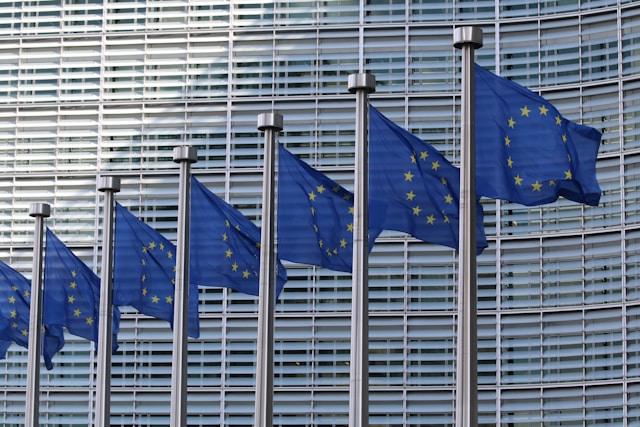
EU proposes social media ban for under-16s without parental consent
 SiliconANGLE·26 November 2025·EU moves to ban social media for kids under 16 who don’t have parents’ consent - SiliconANGLE - EU moves to ban social media for kids under 16 who don’t have parents’ consent - SiliconANGLE
Signals:
- →EU Parliament proposes social media ban for under-16s, potentially eliminating millions of young users for U.S. Big Tech.
- →Enforcement requires universal digital ID verification system, creating new regulatory compliance requirements for tech platforms.
- →Europe follows Australia's lead, signaling global regulatory trend that could reshape social media business models worldwide.

Thailand orders World to delete 1.2M iris scans
CoinTelegraph·26 November 2025·Thailand Orders World To Delete 1.2 Million Iris Scans - Thailand orders Sam Altman-backed World to suspend operations and delete 1.2 million iris scans over alleged data protection violations.
Signals:
- →Thailand orders deletion of 1.2M iris scans, citing Personal Data Protection Act violations.
- →Regulatory crackdowns spreading globally raise compliance risks for biometric identity projects.
- →WLD token down 70% yearly; operational suspensions threaten user adoption and revenue.

Polymarket gains CFTC approval for US trading platform
CoinTelegraph·25 November 2025·US CFTC Issues Regulatory Approval for Polymarket - Regulatory approval from the CFTC was obtained five months after US authorities reportedly concluded their investigation into Polymarket over US-based users.
Signals:
- →Polymarket gains CFTC approval to operate regulated US trading platform with full federal exchange requirements.
- →Approval enables direct customer onboarding and US venue trading after DOJ investigation closure.
- →Regulatory clarity emerges as CFTC leadership transitions and crypto market structure legislation advances.
Security

Microsoft's "agentic OS" plan prioritizes AI over stability
Signals:
- →Microsoft prioritizing AI integration over user-demanded reliability, usability, and stability improvements in Windows.
- →Embedding AI agents at OS-level grants privileged data access, contradicting core security compartmentalization principles.
- →Market-driven AI push mirrors 1990s Internet Explorer antitrust concerns about forced bundling.

Google's Antigravity AI agent accidentally wipes user's entire drive
Signals:
- →AI coding tools executing destructive commands without safeguards poses significant operational and data loss risks.
- →Multiple platforms showing similar failures indicates systemic industry problem requiring immediate attention and regulation.
- →Inadequate vendor accountability and recovery mechanisms create liability exposure for organizations adopting AI development tools.

New AI taskbar feature creates security vulnerability for infostealers
Signals:
- →AI agents on taskbars create centralized attack surfaces enabling mass credential theft through prompt injection.
- →Attackers exploit trusted AI context access via hidden document instructions, bypassing traditional security controls.
- →Infostealers now capture entire session contexts and behavioral data, not just static passwords or files.

Google Antigravity IDE exploited to leak secrets via hidden prompts
Signals:
- →AI agents with autonomous file access can be manipulated to leak secrets through invisible Unicode prompt injections.
- →Google Antigravity's implicit trust of workspace files enables credential exfiltration without triggering security alerts.
- →Autonomous development tools require strict access controls and Unicode sanitization to prevent data breaches.
Law

Europol shuts down Cryptomixer after laundering $1.5 billion
TechCrunch·1 December 2025·European cops shut down crypto mixing website that helped launder 1.3B euros | TechCrunch - Europol announced the seizure of Cryptomixer’s official website, as well as 25 million euros and 12 terabytes of data from the mixer's service.
Signals:
- →Cryptomixer laundered $1.5 billion in criminal proceeds since 2016, highlighting massive cybercrime scale.
- →Seizure demonstrates international law enforcement capability to disrupt cryptocurrency-based money laundering operations.
- →Criminals losing anonymity tools increases risks for ransomware, trafficking, and dark web activities.
Government

Bhutan stakes $970K in Ethereum through Figment validator
CoinTelegraph·27 November 2025·Bhutan Stakes 320 ETH with Figment in Latest Onchain Move - Bhutan has staked 320 ETH through Figment and continues expanding its crypto footprint, from Ethereum-based digital IDs to one of the world’s largest Bitcoin reserves.
Signals:
- →Bhutan diversifies sovereign crypto holdings beyond Bitcoin mining, now actively staking Ethereum through institutional providers.
- →Government blockchain adoption accelerates with national digital ID migration to Ethereum, signaling serious infrastructure commitment.
- →Small nation demonstrates viable model for crypto-powered economic development through hydropower mining and tourism payment integration.

Australia launches National AI Plan to boost innovation and safety
Signals:
- →Australia ranks third globally in AI adoption and attracted $10 billion in data center investment during 2024.
- →National coordination aims to capture AI opportunities while managing risks through infrastructure, skills, and regulatory frameworks.
- →Government will adapt policies iteratively to ensure equitable benefit distribution and maintain Australia's competitive AI position.
Sovereignty and Geopolitics

Europe funds military-grade space surveillance network for first time
Financial Times·27 November 2025·European nations to fund military-grade surveillance network in space - ESA will develop a programme designed to serve military as well as civil requirements for the first time
Signals:
- →Europe shifts space strategy to military capabilities amid rising China-Russia threats and Ukraine war lessons.
- →€22.1bn budget represents unprecedented 32% increase, signaling major European commitment to space sovereignty.
- →First military-grade ESA program marks historic policy shift from purely peaceful purposes to defense applications.

Countries worldwide develop AI strategies amid US-China race
Signals:
- →Countries worldwide developing national AI strategies beyond US-China competition.
- →Debate over building domestic AI models versus relying on foreign technology.
- →Strategic implications of different national approaches to AI development and adoption.

Chinese AI giants use offshore data centers to access Nvidia GPUs
Signals:
- →Chinese AI firms bypass US chip restrictions by leasing Nvidia GPUs through offshore data centers in Southeast Asia.
- →Trump administration's rollback of AI "diffusion rule" enables legal access to advanced computing power via foreign operators.
- →Chinese companies now compete globally in AI benchmarks while reducing dependence on restricted US hardware exports.

Japan bets $12B on Rapidus 2nm chip comeback
Signals:
- →Japan commits $12 billion to Rapidus foundry targeting 2nm chip production by 2027.
- →Success requires overcoming $31.8 billion funding gap and lack of advanced manufacturing experience.
- →Failure risks wasting massive investment; success restores Japan's semiconductor industry competitiveness.

Australian MPs told to power down devices during Chinese delegation visit
 The Guardian·24 November 2025·Australian federal MPs warned to turn off phones when Chinese delegation visits Parliament House | Australian security and counter-terrorism | The Guardian - Liberal party senator calls Department of Parliamentary Services email ‘incredibly concerning’
Signals:
- →Chinese delegation visit prompts unprecedented cybersecurity warnings, indicating heightened espionage threats to government systems.
- →Parliament officials acknowledge serious data breach risks during high-level diplomatic engagements with China.
- →Incident reflects escalating cyber warfare concerns affecting critical infrastructure and national security operations.
Society

UN report warns AI could deepen global inequality
Phys.org·AI's impact could worsen gaps between world's rich and poor, a UN report says - Behind the hoopla over the promise of artificial intelligence lay difficult realities, including how such technology might affect people already disadvantaged in a data-driven world.
Signals:
- →AI risks creating a "Great Divergence" where wealthy nations advance while poor nations fall further behind.
- →Infrastructure gaps in power, internet, and skills prevent disadvantaged regions from accessing AI benefits.
- →Without intervention, AI could exclude millions from digital economy participation and essential services.

Dubai restaurant debuts AI-powered chef sparking culinary debate
TechXplore·'Dinosaur tartare' and holograms: Dubai AI chef sparks awe and ire - A Dubai restaurant has opened that prides itself on having the world's "first AI chef," the latest ostentatious dive into new technology in a city obsessed with being on the cutting edge of the future.
Signals:
- →AI integration in hospitality demonstrates emerging technology applications beyond traditional sectors, requiring strategic workforce planning.
- →Consumer acceptance of AI-driven experiences in luxury markets signals shifting expectations for innovation and personalization.
- →Debate over AI versus human expertise highlights critical questions about automation limits in creative industries.
The Economy

AI's productivity paradox: why economic impact remains elusive
Financial Times·1 December 2025·The State of AI: when will we reach economic singularity? - Perhaps AI’s lack of impact on productivity is the normal lag of any new technology
Signals:
- →AI productivity gains remain uncertain despite heavy investment, with 95% of projects yielding zero returns currently.
- →Economic impact depends on augmenting workers rather than just cutting jobs for short-term cost savings.
- →US productivity rebounded to 2%+ in 2024, though unclear how much stems from AI versus other factors.
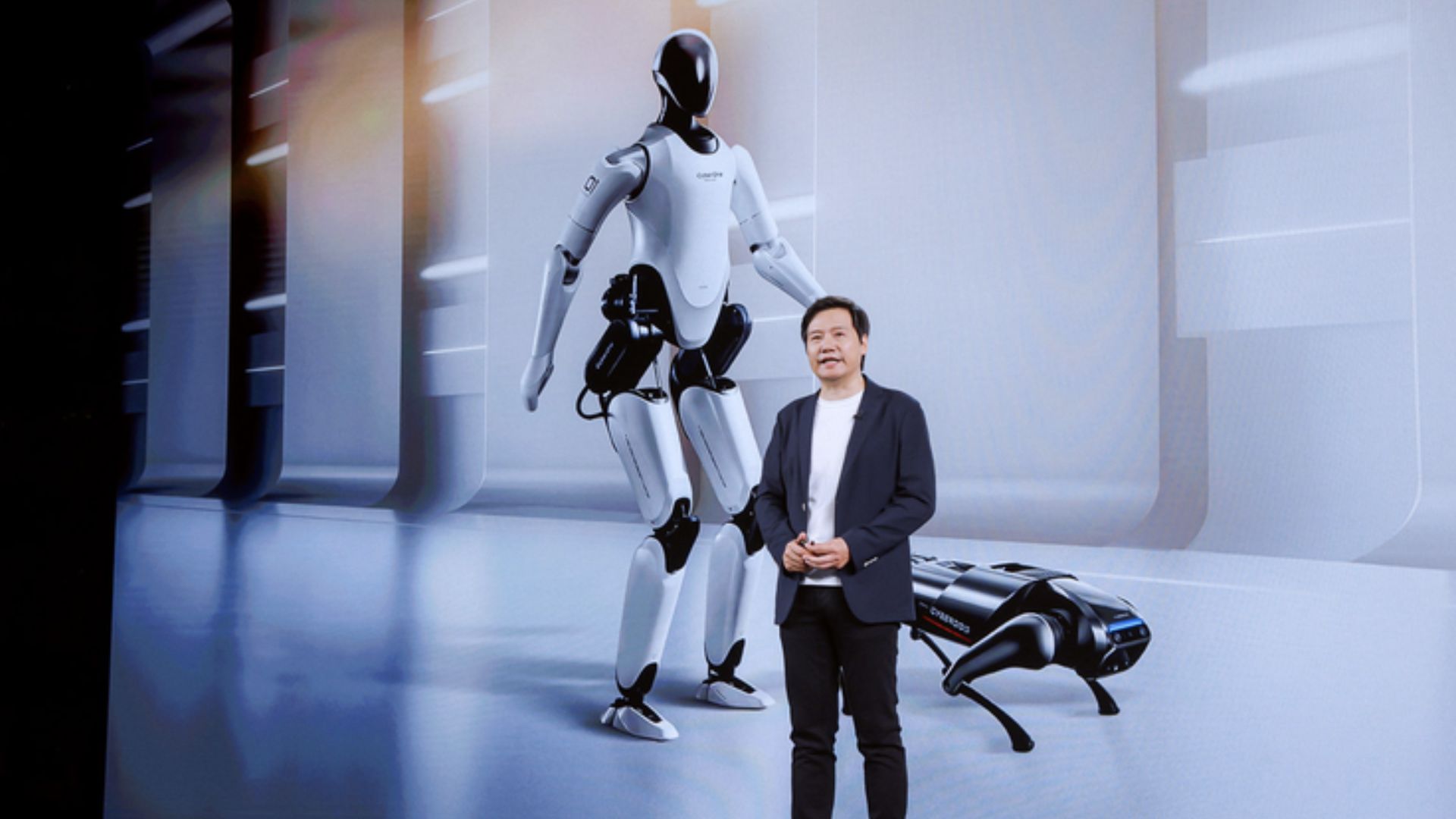
Xiaomi CEO predicts humanoid robots in factories within 5 years
Interesting Engineering·1 December 2025·Humanoid robots will take over factory jobs within 5 years: Xiaomi CEO - Xiaomi CEO Lei Jun says artificial intelligence will overhaul traditional industries within five years as humanoid robots move into core factory roles.
Signals:
- →Humanoid robots predicted to replace factory workers within five years, requiring workforce strategy adjustments.
- →AI automation delivers 10x speed and 5x accuracy improvements over manual processes today.
- →China's manufacturing modernization creates trillion-yuan market opportunity demanding immediate competitive response.

Rising Japanese bond yields threaten global carry trade
CoinTelegraph·1 December 2025·Japan Bond Yields Surge, Threatening Crypto Market Liquidity - Japanese bond yields jumped to 1.86%, potentially unwinding the yen carry trade and draining liquidity from crypto and global markets.
Signals:
- →Japan's rising bond yields threaten to reverse trillions in yen carry trade funding global risk assets.
- →Potential capital repatriation to Japan reduces liquidity available for cryptocurrencies and speculative investments.
- →Timing pressures US Treasury financing as largest foreign holder may reduce purchases amid record deficits.

Tech firms warn AI boom causing memory chip shortage
TechXplore·Tech firms from Dell to HP warn of memory chip squeeze from AI - Dell Technologies Inc., HP Inc. and other tech companies are warning of potential memory-chip supply shortages in the coming year due to soaring demand from the build-out of artificial intelligence infrastructure.
Signals:
- →Memory chip shortages driven by AI demand threaten 50% price increases through Q2 2026.
- →Supply constraints will raise costs across consumer electronics, medical equipment, and automotive sectors.
- →Major manufacturers like Dell and HP planning price increases and supply chain adjustments.

S&P downgrades Tether stablecoin to lowest stability rating
Financial Times·26 November 2025·Tether gets junked by S&P - Collateral damaged
Signals:
- →Tether's USDT stablecoin ($174B issued) downgraded by S&P to lowest stability rating.
- →Reserve quality deteriorating: risky assets jumped from 17% to 24% of reserves.
- →Bitcoin holdings (5.6%) now exceed safety margin; lack of audits raises systemic risk.

MIT finds AI can already replace 11.7% of U.S. workers
Signals:
- →AI can currently replace 11.7% of U.S. workers, representing $1.2 trillion in wages across multiple sectors.
- →Impact extends beyond tech hubs to all 50 states, affecting HR, logistics, finance, and administrative roles.
- →MIT's Iceberg Index provides county-level data enabling targeted workforce reskilling and policy investments.
Education

UK universities quietly using AI to assess research quality
Phys.org·UK report finds growing use of AI in evaluating university research quality - A new national report has shown for the first time how generative AI (GenAI) is already being used by some universities to assess the quality of their research—and it could be scaled up to help all higher education institutions (HEIs) save huge amounts of time and money.
Signals:
- →AI could save UK universities significant costs from the £471M+ Research Excellence Framework assessment process.
- →Universities already using AI inconsistently for research evaluation, creating competitive advantages and equity concerns.
- →Sector requires urgent national governance framework before REF2029 to ensure transparent, standardized AI usage.
Environment

Amazon's data centers worsen Oregon's nitrate-contaminated water crisis

Signals:
- →Amazon's data centers worsen water contamination crisis linked to cancer and miscarriages in Oregon farming community.
- →Local officials secretly profited from Amazon deals while hiding conflicts of interest worth millions.
- →Class action lawsuit and state investigation expose corporate accountability gaps in rural infrastructure development.
🏭AI and Tech industry news

Didi launches 24/7 unmanned robotaxi service in Guangzhou
 Panda Daily·2 December 2025·Didi Autonomous Driving Launches 24/7 Fully Unmanned Robotaxi Trial in Guangzhou - Pandaily - Didi Autonomous Driving kicks off a 24/7 fully unmanned Robotaxi trial in Guangzhou’s Huangpu district, allowing app users to book driverless rides starting December 1, 2025.
Signals:
- →Didi achieves fully driverless 24/7 robotaxi operations, signaling autonomous vehicle technology maturity.
- →Commercial autonomous ride-hailing becomes accessible to public via mainstream app platform.
- →China advances regulatory framework enabling unmanned vehicle deployment in urban areas.

AI shopping tools recommend outdated smartwatches despite new releases
The Verge·27 November 2025·My AI shopping assistants are stuck in the past | The Verge - I tried using ChatGPT, Perplexity, Google, and Microsoft’s AI shopping bots to help me find a new watch, but the results weren’t as helpful as I hoped.
Signals:
- →AI shopping tools recommend outdated products, risking customer dissatisfaction and missed revenue from newer models.
- →Major tech companies' AI features lack current product data despite holiday shopping season launches.
- →AI shopping assistants may erode consumer trust and competitive advantage versus human-curated buying guides.

Workday pivots to cross-selling as hiring freezes threaten growth
Signals:
- →Workday's per-seat pricing model faces existential threat as customers freeze hiring and cut staff.
- →Company pivoting to aggressive cross-selling strategy to increase revenue per employee seat.
- →AI productivity gains may trigger further customer headcount reductions, creating revenue doom-cycle.

China surpasses US in open AI model downloads
Financial Times·26 November 2025·China leapfrogs US in global market for ‘open’ AI models - Beijing-backed technology gains ground as American giants hold fast to ‘closed’ AI strategies
Signals:
- →China now leads US in open AI model downloads (17% vs 15.8%), gaining global influence over AI development.
- →Chinese models contain CCP biases and censor sensitive topics, shaping information access for worldwide users.
- →US companies' closed AI strategies cede market share while China rapidly releases accessible models weekly.
🫧Bubble Chronicles

How to spot a bubble bursting before it's too late
Signals:
- →Traditional valuation metrics fail to predict short-term market crashes despite indicating overvaluation.
- →Novel indicators like Google search trends and fund manager closures may signal imminent bubble bursts.
- →Current AI stock volatility mirrors dotcom bubble patterns, suggesting potential major market correction ahead.

China warns of humanoid robot investment bubble forming
The Verge·27 November 2025·A humanoid robot-shaped bubble is forming, China warns | The Verge - There are few proven uses for humanoid robots, but that hasn’t stopped investment pouring in.
Signals:
- →China warns of investment bubble in humanoid robotics despite limited proven commercial applications.
- →Over 150 Chinese humanoid robot companies risk creating redundant products as R&D funding shrinks.
- →Beijing signals caution for industry it designated as national priority for future economic growth.

White House's Genesis AI program sparks bailout concerns

Signals:
- →Government Genesis program may be covertly bailing out struggling AI companies through massive chip purchases.
- →Timing suggests coordination between industry leaders and White House to prevent AI market collapse.
- →Taxpayer funds potentially subsidizing unprofitable AI ventures without clear scientific return on investment.
Nvidia
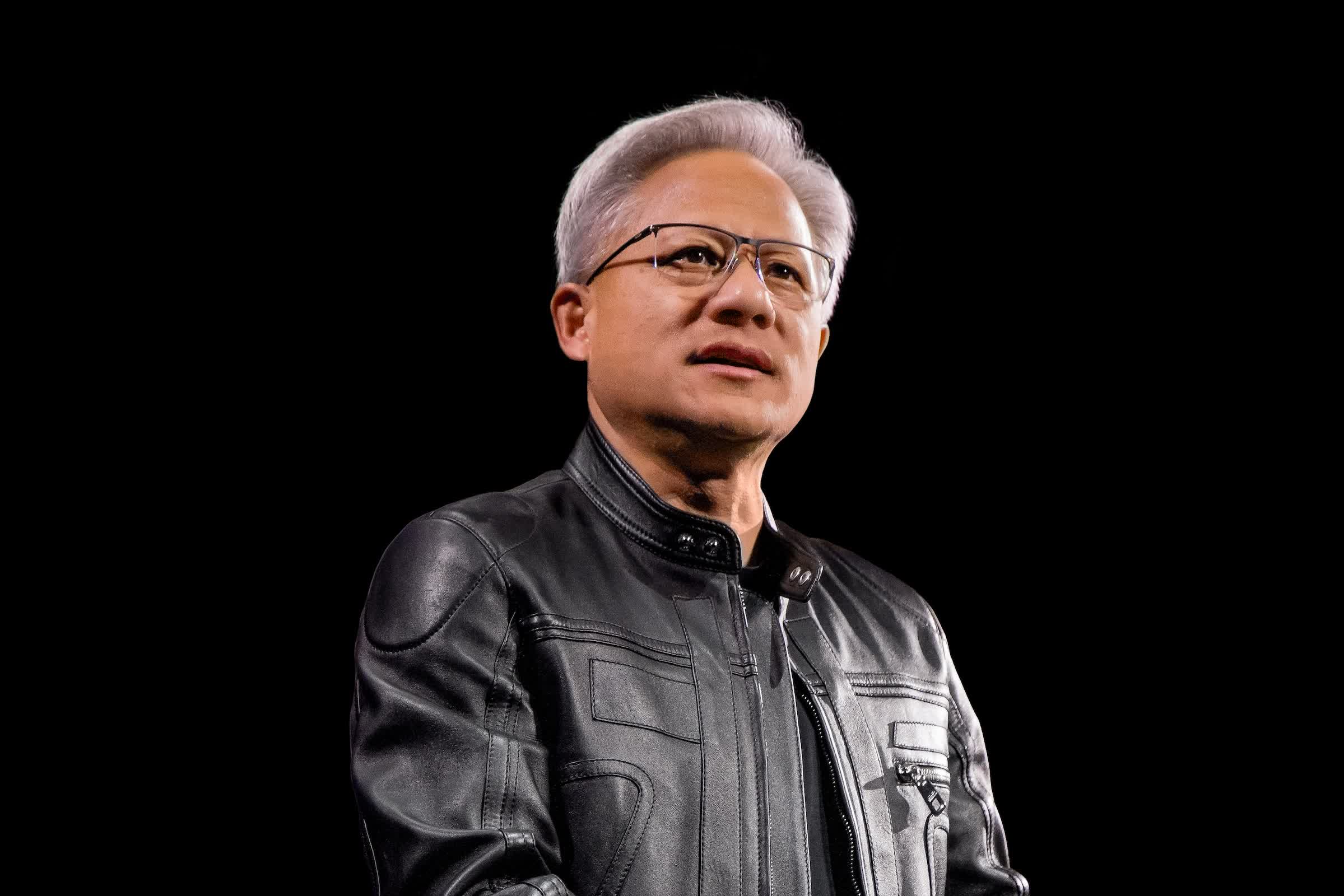
Nvidia CEO pushes employees to automate everything with AI
Signals:
- →Nvidia CEO mandates AI automation for all possible tasks, signaling industry-wide shift in workforce expectations.
- →Major tech firms now tie AI tool usage to performance reviews, making adoption mandatory rather than optional.
- →Despite automation push, Nvidia grew to 36,000 employees and seeks 10,000 more workers.
OpenAI

OpenAI invests in company that invested in OpenAI
Signals:
- →OpenAI invests in Thrive Holdings, whose parent company Thrive Capital previously invested billions in OpenAI.
- →Partnership embeds OpenAI technology into IT services and accounting firms to demonstrate enterprise AI value.
- →Deal involves Thrive Capital founder whose brother advises President Trump, raising potential policy implications.

OpenAI partners with Thrive Holdings to embed AI in traditional industries
 Reuters·OpenAI takes stake in Thrive Holdings in latest enterprise AI push | Reuters - ChatGPT-maker OpenAI has taken a stake in Thrive Holdings as part of a partnership to embed artificial intelligence into traditional industries such as accounting and IT services, the companies said on Monday.
Signals:
- →OpenAI partners with Thrive Holdings to embed AI into traditional industries like accounting and IT services.
- →Deal addresses enterprise AI adoption challenges by developing specialized solutions beyond off-the-shelf products.
- →Partnership creates new business model combining AI research with real-world application in 10,000+ customer operations.

OpenAI partners accumulate $100bn debt to fund AI ambitions
Financial Times·28 November 2025·OpenAI partners amass $100bn debt pile to fund its ambitions - Cloud companies and developers rely on lossmaking start-up to repay huge loans
Signals:
- →OpenAI's partners have accumulated $100bn in debt to fund its infrastructure, creating systemic financial risk.
- →OpenAI offloads financial burden to counterparties while its $1.4tn commitments vastly exceed $20bn annual revenue.
- →Complex debt structures using SPVs may shield OpenAI but expose lenders to significant default risks.

OpenAI blames dead teen for violating ChatGPT suicide policy
 Arstechnica·26 November 2025·OpenAI says dead teen violated TOS when he used ChatGPT to plan suicide - Ars Technica - OpenAI’s response to teen suicide case is “disturbing,” lawyer says.
Signals:
- →OpenAI faces five wrongful death lawsuits with potential jury trials in 2026.
- →ChatGPT linked to nearly 50 mental health crises, nine hospitalizations, and three deaths.
- →Internal documents show OpenAI prioritized user engagement over safety despite known risks.

HSBC: OpenAI needs $207bn more by 2030
Financial Times·25 November 2025·OpenAI needs to raise at least $207bn by 2030 so it can continue to lose money, HSBC estimates - A burning platform
Signals:
- →OpenAI requires $207bn+ additional funding by 2030 despite projected revenue growth to $282bn.
- →Annual data center costs could reach $620bn, creating unsustainable cash burn through 2030.
- →AI industry viability questioned as leading company cannot achieve profitability at scale.

OpenAI confirms first hardware prototype with Jony Ive
Signals:
- →OpenAI enters hardware market with screenless AI device prototype, challenging Amazon, Google, and Meta.
- →Partnership with Foxconn signals vertical integration strategy for AI infrastructure and manufacturing control.
- →Ambient intelligence approach prioritizes context-awareness over notifications, potentially reshaping consumer AI interaction models.

OpenAI expands data residency options for enterprise customers

Signals:
- →OpenAI now offers data storage in 10 global regions, removing major compliance barriers for enterprise adoption.
- →Enterprises can now meet strict local data regulations like GDPR by choosing regional data processing locations.
- →Data residency expansion addresses critical legal risks that previously prevented large-scale ChatGPT deployment globally.

Amazon and Google launch rapid cloud connection tool
The Verge·1 December 2025·Amazon and Google’s new cloud link could make it easier to deal with outages | The Verge - Google and Amazon Web Services are teaming up on a new tool that will allow customers to connect both cloud services within “minutes,” providing a potential safety net in case of internet outages.
Signals:
- →Reduces business risk from single-provider cloud outages that recently disrupted major services like Fortnite and Snapchat.
- →Enables rapid multi-cloud connectivity in minutes versus weeks, eliminating complex manual infrastructure setup costs.
- →Addresses growing concerns about over-reliance on few internet infrastructure providers through automated failover capabilities.
Microsoft

Microsoft replaces Contoso and Fabrikam with AI-focused Zava brand
Signals:
- →Microsoft replacing decades-old demo brands signals major strategic shift toward AI-focused narratives.
- →Change reflects Microsoft's push for "agentic AI" and cloud-native technologies in customer examples.
- →Industry consultants already adopting new brand indicates broader ecosystem transformation underway.
Amazon

AWS unveils Trainium3 chip, teases Nvidia-compatible Trainium4
TechCrunch·2 December 2025·Amazon releases an impressive new AI chip and teases an Nvidia-friendly roadmap | TechCrunch - AWS has been building its own AI chips — and systems — for years now. It just released its third version, known as Trainium3, with some impressive specs.
Signals:
- →AWS Trainium3 delivers 4x performance improvement and 40% better energy efficiency, reducing AI infrastructure costs.
- →Trainium4 will support Nvidia's NVLink, enabling interoperability and potentially capturing more enterprise AI workloads.
- →Major AI companies already using Trainium3 report significant cost savings on inference operations.

Amazon commits $50 billion to AI cloud for US government
Signals:
- →AWS investing $50 billion in exclusive AI cloud infrastructure for 11,000+ U.S. federal agencies.
- →Government gains access to advanced AI capabilities for defense, intelligence, and cybersecurity applications.
- →Investment positions U.S. to lead AI era while transforming federal agency operations and productivity.
Tesla

Elon Musk admits no automakers want Tesla's FSD technology
Signals:
- →Tesla's FSD technology faces market rejection, indicating competitive disadvantage in autonomous driving sector.
- →Safety investigations and $242M liability verdict signal significant regulatory and legal risks.
- →Ford chose competitor Waymo's superior technology, revealing Tesla's technical limitations in self-driving systems.
Intel

Intel may produce Apple's M-series chips starting 2027
SiliconANGLE·28 November 2025·Intel shares jump 10% on report of potential chip production deal with Apple - SiliconANGLE - Intel shares jump 10% on report of potential chip production deal with Apple - SiliconANGLE
Signals:
- →Intel's struggling foundry business could gain major revenue boost from Apple's 15-20 million chip order.
- →Deal validates Intel's advanced 18A manufacturing process, potentially attracting more high-profile customers.
- →Apple diversifying chip suppliers reduces dependence on current manufacturers, reshaping semiconductor supply chains.
Mistral

HSBC partners with Mistral AI for generative banking tools
Signals:
- →Major banks investing billions in AI to boost productivity and revenue generation capabilities.
- →HSBC-Mistral partnership aims to automate tasks, enabling relationship managers to handle 3x more clients.
- →Industry-wide AI adoption driving operational cost reductions and potential workforce restructuring across banking sector.

HSBC partners with Mistral AI for translation and analysis
Financial Times·1 December 2025·HSBC signs deal to use Mistral’s AI tools - Bank will use technology for tasks, including translation and document analysis
Signals:
- →Major banks rapidly adopting AI tools to boost productivity and reduce costs through workforce optimization.
- →European AI champion Mistral competing with US rivals, securing major enterprise contracts worth hundreds of millions.
- →AI deployment in banking requires careful risk management for accuracy, data security, and regulatory compliance.
Black Forest Labs

Black Forest Labs raises $300M at $3.25B valuation
TechCrunch·1 December 2025·Black Forest Labs raises $300M at $3.25B valuation | TechCrunch - The round was co-led by Salesforce Ventures and Anjney Midha (AMP), and saw participation from a16z, NVIDIA, Northzone, Creandum, Earlybird VC, BroadLight Capital, General Catalyst, Temasek, Bain Capital Ventures, Air Street Capital, Visionaries Club, Canva and Figma Ventures.
Signals:
- →Black Forest Labs raised $300M at $3.25B valuation, signaling strong investor confidence in AI image generation.
- →Major tech companies (Adobe, Canva, Figma) already use their models, indicating market validation and adoption.
- →Founded by ex-Stability AI researchers behind Stable Diffusion, bringing proven expertise to competitive AI space.

German startup Black Forest Labs raises $450mn for AI image generation
Financial Times·1 December 2025·Black Forest Labs: one-year-old German start-up challenges AI giants - Low-profile group has quickly emerged as a top developer of image generation technology
Signals:
- →German startup Black Forest Labs reached $3.25B valuation, demonstrating Europe's competitive AI capabilities against US/Chinese giants.
- →Company's image generation technology rivals Google and ByteDance despite significantly smaller resources and computing power.
- →Open-source licensing strategy and lower costs attracting developers, potentially disrupting advertising and entertainment industries.
HP

HP to cut up to 6,000 jobs, invest in AI instead
Arstechnica·26 November 2025·HP plans to save millions by laying off thousands, ramping up AI use - Ars Technica - Product development, internal operations among teams expected to be hit hardest.
Signals:
- →HP cutting 4,000-6,000 jobs to save $1B annually, signaling major workforce restructuring trend.
- →AI adoption driving layoffs across tech sector, affecting customer support and product development roles.
- →Debate exists whether AI truly replaces workers or serves as cost-cutting justification.
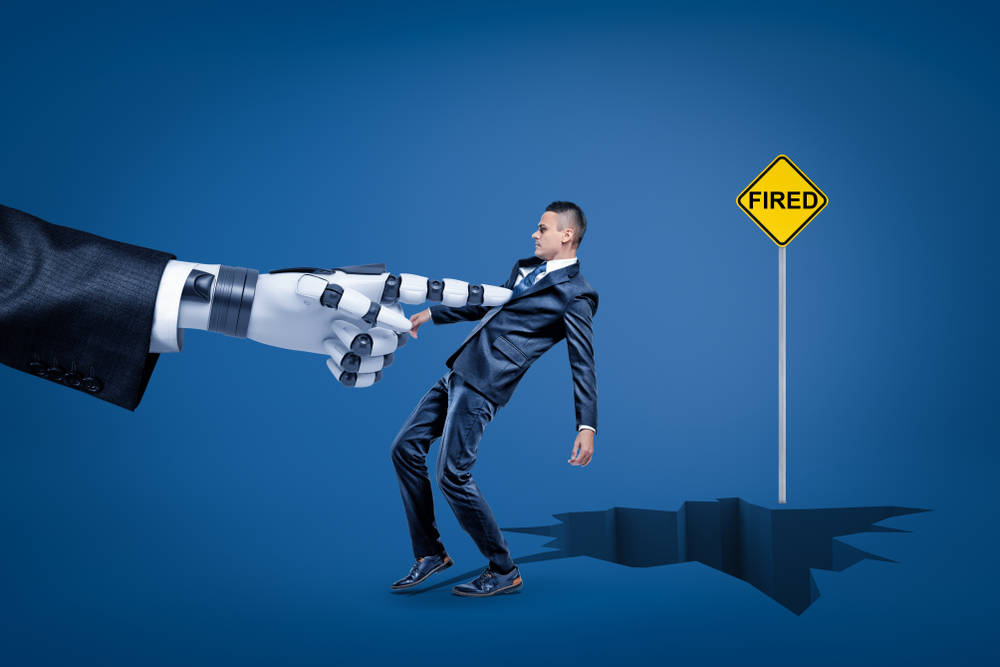
HP to cut up to 6,000 jobs in AI-driven cost reduction
Signals:
- →HP cutting 4,000-6,000 jobs (10% workforce) through AI adoption to save $1 billion over three years.
- →Rising memory costs (15-18% of PC cost) threaten margins, prompting potential price increases and design changes.
- →AI-driven productivity gains of 16% internally demonstrate automation's impact on workforce and operational efficiency.

HP cuts up to 10% of workforce to fund AI investments
Signals:
- →HP cutting 4,000-6,000 jobs (up to 10% of workforce) signals major AI-driven industry transformation.
- →Restructuring through 2028 indicates long-term strategic shift requiring significant workforce reallocation and cost management.
- →Traditional tech companies prioritizing AI investment over headcount reflects competitive pressure and changing skill requirements.
Startups and Investment Deals

Gradium raises $70M to advance audio language models
SiliconANGLE·2 December 2025·Audio language model startup Gradium raises $70M to create more realistic voice AI systems - SiliconANGLE - Audio language model startup Gradium raises $70M to create more realistic voice AI systems - SiliconANGLE
Signals:
- →Gradium secured $70M seed funding to commercialize audio language models for more natural voice AI interactions.
- →ALMs outperform traditional LLMs in voice tasks with lower latency and costs, enabling scalable deployment.
- →Platform already generating revenue with early adopters across gaming, healthcare, customer care, and AI agents.
🆕 AI releases

AWS enhances Bedrock AgentCore with policy controls and memory
TechCrunch·2 December 2025·AWS announces new capabilities for its AI agent builder | TechCrunch - AWS is introducing new capabilities for its AI agent-building platform, including memory and evaluation tools.
Signals:
- →AWS introduces natural language policy controls enabling automated agent governance and human-in-loop triggers for high-stakes decisions.
- →Pre-built evaluation suite addresses enterprises' biggest deployment fears by monitoring agent safety, correctness, and tool accuracy.
- →Memory capabilities allow agents to personalize interactions over time, improving customer experience and operational efficiency.

Mistral launches 10 open-weight AI models for enterprises
TechCrunch·2 December 2025·Mistral closes in on Big AI rivals with new open-weight frontier and small models | TechCrunch - Mistral unveils its Mistral 3 lineup, including a frontier model and efficient small models designed for offline, customizable enterprise use — aiming to prove small, fine-tuned AI can beat closed-source giants.
Signals:
- →Mistral's customizable small models offer enterprises cost-effective alternatives to expensive closed-source AI systems.
- →Open-weight approach enables offline deployment on single GPUs, crucial for data security and accessibility.
- →Growing physical AI partnerships in robotics, defense, and automotive demonstrate practical enterprise applications.

Mistral 3 brings open-source AI to laptops and drones
Signals:
- →Mistral releases 10 open-source AI models optimized for edge devices, challenging closed systems from OpenAI and Google.
- →Fine-tuned small models offer 90% cost savings versus large models while ensuring data sovereignty and faster deployment.
- →European AI startup valued at $14B positions open-source flexibility as competitive advantage over proprietary U.S. systems.

Nvidia launches Alpamayo-R1 model for autonomous driving research
TechCrunch·1 December 2025·Nvidia announces new open AI models and tools for autonomous driving research | TechCrunch - Nvidia continues its push into physical AI with the release of a new reasoning world model and other tools for physical AI.
Signals:
- →Nvidia launches first vision-language AI model specifically designed for autonomous vehicle decision-making and perception.
- →Technology addresses critical gap in achieving Level 4 autonomy by enabling human-like reasoning in driving scenarios.
- →Open-source release accelerates competitive positioning in physical AI and robotics infrastructure market expansion.
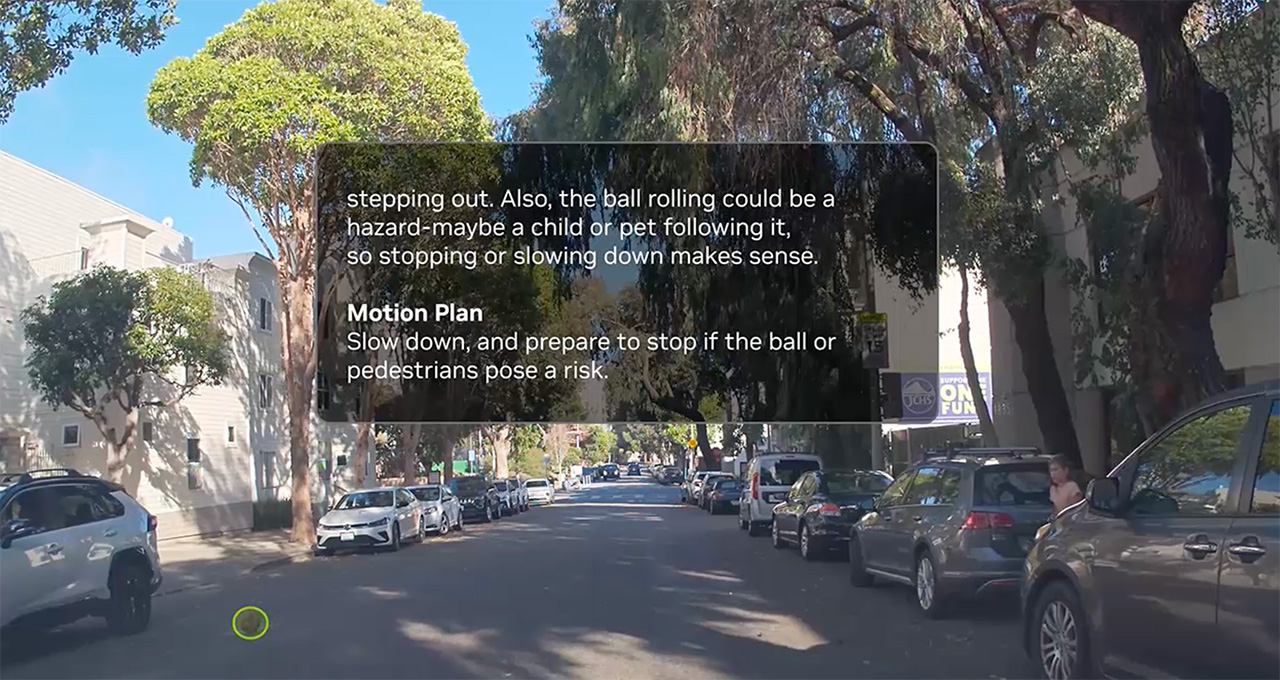
NVIDIA releases open AI models for autonomous driving and speech

Signals:
- →NVIDIA releases Alpamayo-R1, the world's first open reasoning model for autonomous vehicles, advancing Level 4 self-driving capabilities.
- →New open-source AI tools span speech recognition, safety guardrails, and robotics—enabling faster innovation across multiple industries.
- →Independent benchmark rates NVIDIA's Nemotron models among most transparent in AI, strengthening trust in enterprise adoption.

DeepSeek releases free AI models rivaling GPT-5 and Gemini
Signals:
- →Chinese startup DeepSeek matches GPT-5 performance at 70% lower cost, challenging U.S. AI dominance and business models.
- →Open-source release under MIT license undermines premium API pricing strategies of OpenAI and competitors.
- →Achievement despite U.S. chip export controls proves restrictions ineffective at maintaining American technological leadership.

Runway's Gen-4.5 promises unprecedented text-to-video accuracy
The Verge·1 December 2025·Runway says its new text-to-video AI generator has ‘unprecedented’ accuracy | The Verge - Runway says the new Gen-4.5 model of its AI video generator is capable of producing “cinematic” outputs that are better than the competition, like OpenAI’s Sora and Google Veo.
Signals:
- →AI-generated videos becoming indistinguishable from reality poses significant verification and misinformation challenges.
- →Runway's Gen-4.5 advances competitive positioning against OpenAI in rapidly evolving text-to-video market.
- →Enhanced realism capabilities require updated content authentication and regulatory compliance strategies.
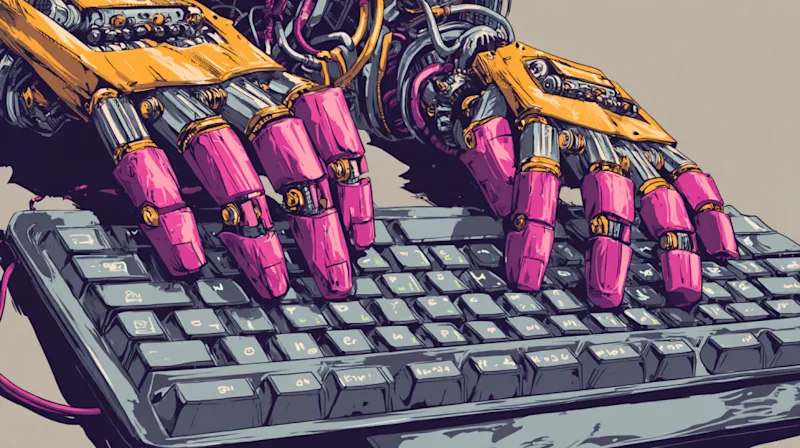
OpenAGI's Lux AI agent outperforms OpenAI and Anthropic
Signals:
- →OpenAGI's Lux model achieves 83.6% success rate, significantly outperforming OpenAI's Operator (61.3%) and Anthropic's Claude (56.3%) on industry benchmarks.
- →Lux operates at one-tenth the cost of competitors while controlling desktop applications beyond browsers, expanding enterprise productivity use cases.
- →Novel training approach using screenshots and action sequences enables self-evolving AI agents, potentially disrupting billion-dollar investments by tech giants.
DeepSeek launches DeepSeekMath-V2 with self-verifying framework
Panda Daily·28 November 2025·DeepSeek Releases New Mathematical Reasoning Model “DeepSeekMath-V2” - Pandaily - DeepSeekMath-V2 debuts with a self-verifying training framework, achieving gold-medal performance on top math contests and pushing forward a new path for reliable mathematical intelligence.
Signals:
- →DeepSeek's self-verifying AI achieves gold-medal performance on elite mathematical competitions, demonstrating breakthrough reliability.
- →Open-sourced model and code enable organizations to deploy advanced mathematical reasoning capabilities immediately.
- →Self-verification framework reduces AI errors, offering pathway to trustworthy automated problem-solving systems.

Google launches generative UI for custom interactive experiences
 Explore Our Latest Research in Science and AI·Generative UI: A rich, custom, visual interactive user experience for any prompt
Signals:
- →AI can now generate fully customized interactive interfaces on-the-fly for any user prompt or question.
- →Human evaluators strongly prefer these AI-generated interfaces over standard text outputs and search results.
- →Rolling out in Google Search and Gemini app, transforming how users interact with AI-powered information.

DeepSeek open-sources AI model achieving gold at math olympiad
Interesting Engineering·30 November 2025·China’s DeepSeek AI reaches gold at international maths olympiad - DeepSeek has open-sourced Math-V2, the first AI model to achieve gold-level performance at the International Mathematical Olympiad.
Signals:
- →DeepSeek's open-source approach democratizes advanced AI, contrasting with competitors' restricted access strategies.
- →Self-verifying reasoning capability enables AI to tackle novel problems without pre-existing solutions.
- →Gold-medal mathematical performance signals potential breakthrough in AI-driven scientific research and innovation.

Black Forest Labs launches Flux.2 AI image models
Signals:
- →Black Forest Labs releases FLUX.2 with open-source VAE, enabling vendor-agnostic image generation pipelines and avoiding lock-in.
- →FLUX.2 offers 4-8x lower per-image costs than competitors while maintaining superior quality and multi-reference consistency.
- →Unified text-to-image and editing model reduces integration complexity and operational overhead for enterprise creative workflows.
ChatGPT voice mode now integrates with text chat
TechCrunch·25 November 2025·ChatGPT's voice mode is no longer a separate interface | TechCrunch - ChatGPT now lets you use voice and text in the same screen, making conversations feel more natural as responses and visuals appear in real time.
Signals:
- →ChatGPT's integrated voice-text interface improves AI accessibility and workflow efficiency for business users.
- →Seamless mode switching enables real-time visual data review during voice conversations.
- →Default UI change signals OpenAI's push toward more natural human-AI interaction patterns.
DeepSeek releases open-source math LLM matching IMO gold medal performance

Signals:
- →Open-source model matches proprietary AI performance in advanced mathematical reasoning competitions.
- →685B parameter model achieves gold-medal IMO scores, democratizing access to elite AI capabilities.
- →Apache 2 license enables commercial deployment without dependency on OpenAI/Google platforms.
Black Forest Labs launches FLUX.2 image generation model

Signals:
- →FLUX.2 delivers frontier-level image generation at significantly lower costs, transforming production workflow economics for creative teams.
- →Open-weight models combined with enterprise APIs enable both experimentation and scalable deployment across major platforms like Adobe and Meta.
- →Multi-reference support and 4MP resolution editing capabilities address real production needs beyond basic image generation demos.

Microsoft releases Fara-7B, a compact on-device computer use agent
Signals:
- →Introduces first on-device AI agent (7B parameters) that automates web tasks with competitive performance to larger models.
- →Reduces costs and latency while improving privacy by running locally instead of requiring cloud-based large language models.
- →Open-source release enables rapid enterprise experimentation with automated workflows like booking, shopping, and form completion.
🥼 AI research
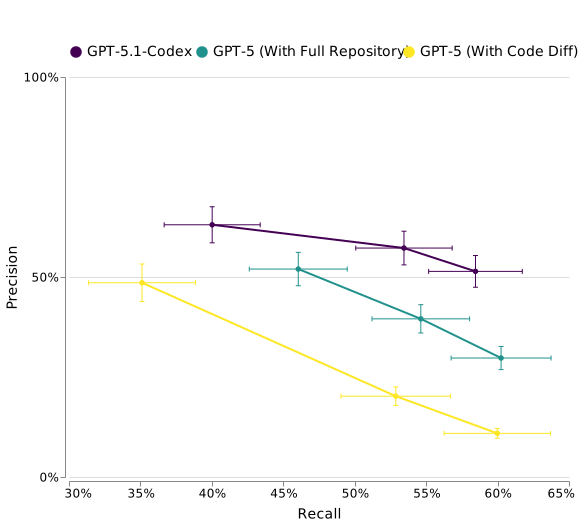
OpenAI trains AI code reviewer to catch bugs at scale

Signals:
- →AI-generated code now exceeds human review capacity, creating critical security and quality risks requiring automated verification systems.
- →OpenAI's deployed code reviewer catches real production defects with 52.7% of flagged issues resulting in code changes.
- →Verification costs significantly less than generation while maintaining effectiveness, enabling scalable AI safety oversight.

Multidimensional framework evaluates AI trustworthiness through uncertainty and commitment
Signals:
- →Introduces uncertainty quantification and commitment as critical missing dimensions for evaluating AI trustworthiness systematically.
- →Provides comparative framework revealing ChatGPT and autonomous vehicles lack epistemic commitment and adequate uncertainty controls.
- →Establishes actionable certification standards by identifying specific trustworthiness gaps requiring remediation before AI deployment.

Karpathy's weekend AI project reveals enterprise orchestration gap
Signals:
- →Demonstrates multi-model AI orchestration can be built with minimal code, challenging expensive enterprise vendor solutions.
- →Reveals critical gap between prototype and production: missing authentication, compliance, PII redaction, and audit capabilities.
- →Proves AI models as swappable commodities via API aggregators, reducing vendor lock-in for 2026 infrastructure decisions.

Alignment science blog

Signals:
- →Alignment science ensures AI systems reliably pursue intended goals without harmful unintended consequences.
- →Misaligned AI could cause catastrophic outcomes as systems become more powerful and autonomous.
- →Technical alignment research is critical for developing safe, controllable advanced AI systems.

LLMs mistakenly link sentence patterns to topics over reasoning

Signals:
- →LLMs can bypass safety guardrails by exploiting learned syntax patterns, creating security vulnerabilities for organizations.
- →Models may provide convincing but incorrect answers in critical domains like healthcare and finance.
- →Automated benchmarking tools now available to test models before deployment, reducing operational risks.

Expert argues LLMs can't achieve true intelligence through language alone
 Futurism·Large Language Models Will Never Be Intelligent, Expert Says - The AI industry is staking its future on language models. But LLMs, an expert argues, are fundamentally incapable of being intelligent.
Signals:
- →Current LLM architecture may have fundamental limitations preventing achievement of artificial general intelligence goals.
- →Neuroscience shows language and thinking are separate processes, challenging AI industry's scaling strategy.
- →Billions in AI infrastructure spending may not deliver promised breakthroughs like solving climate change.

MAKER solves million-step LLM task with zero errors
Signals:
- →Demonstrates first system to complete over 1 million LLM steps with zero errors through extreme task decomposition and multi-agent voting.
- →Provides cost-effective scaling framework using smaller models instead of requiring continually larger, more expensive reasoning models.
- →Offers safer AI deployment path through compartmentalized microagents with limited scope, reducing risks of uncontrollable superintelligence.
🔮[Weak] signals
Consumer Tech

Japanese company launches $385,000 AI-powered human washing machine
 New Atlas·2 December 2025·Japanese human washing machine of the future is here - Japanese company Science unveils its futuristic human washing machine, a luxury pod using microbubbles for a full-body spa and wellbeing experience.
Signals:
- →Japanese luxury wellness pod demonstrates emerging biometric personalization trend in consumer technology market.
- →Limited production strategy (50 units at $385K) signals premium experiential technology segment growth.
- →Hotel and retail adoption indicates commercial viability for high-end automated wellness solutions.

Huawei's AI emotional companion toy sells out instantly
Panda Daily·1 December 2025·Huawei's 'Clever Buddy' AI Emotional Companion Sells Out Minutes After Launch - Pandaily - SHENZHEN, November 28 – Huawei's first AI-powered emotional companion toy, "Clever Buddy" , sold out within minutes of its launch on November 28, despite multip...
Signals:
- →Huawei successfully diversifies beyond smartphones into AI emotional companion market with instant sellout success.
- →Growing consumer demand for emotionally intelligent AI products signals emerging market opportunity worth monitoring.
- →Integration with HarmonyOS ecosystem demonstrates strategic platform expansion and vendor lock-in potential.

Japanese firm launches $385,000 human washing machine for hotels
TechXplore·Human washing machine goes on sale in Japan - After wowing World Expo visitors, a human washing machine is now on sale in Japan, a company spokesperson said Friday.
Signals:
- →Japanese firm commercializing $385,000 human washing machine after successful World Expo prototype demonstration.
- →Limited production of 50 units targets hospitality and retail sectors for customer attraction.
- →Device monitors vital signs, indicating potential wellness/healthcare market expansion beyond basic hygiene.

AI teddy bears raise privacy and safety concerns
Signals:
- →AI teddy bears create potential security risks as unregulated smart home devices with unclear data practices and Chinese origins.
- →Growing $5-20B market with minimal oversight allows direct AI access to young children without adequate safety testing.
- →Business models appear unsustainable or rely on undisclosed data monetization, raising privacy and geopolitical concerns.

Japan's $385,000 automated spa pod washes you in 15 minutes
Interesting Engineering·30 November 2025·Japan Human washing machine cleans head to toe in 15 mins - Mirai Human Washing Machine: A luxury capsule that washes and dries your whole body in 15 minutes hits the market in Japan.
Signals:
- →Signals Japan's automation strategy for aging population care, creating potential elderly care market opportunities.
- →Premium spa/hospitality sector innovation at $385,000 targets luxury hotels and resorts globally.
- →Prototype demonstrates feasibility of automated health monitoring integrated with personal care services.

Hapiko's Stickerbox turns kids' ideas into printable stickers
New Atlas·30 November 2025·This AI gadget turns kids' creative ideas into printable stickers - Discover Stickerbox, the AI-powered thermal printer from Hapiko that turns your kid's voice prompts into custom coloring stickers to spark their creativity.
Signals:
- →Demonstrates successful AI application in focused, single-purpose consumer products versus failed multi-function devices.
- →Addresses growing parental concerns about screen time while encouraging creative, offline child development activities.
- →Shows viable market opportunity at $99 price point with recurring revenue from consumable paper rolls.

Google's 'Aluminium OS' to replace ChromeOS with Android for PCs
Signals:
- →Google is replacing ChromeOS with Android-based "Aluminium OS" to better compete with iPad, Windows, and macOS in the PC market.
- →The platform will span all price tiers from budget to premium, targeting education, enterprise, and consumer segments with AI integration.
- →Launch planned for 2026 requires careful ChromeOS transition strategy to maintain business continuity and avoid disrupting existing enterprise customers.

Matter 1.5 adds universal camera standard, awaits platform adoption
Signals:
- →Matter 1.5 establishes universal camera standard enabling cross-platform smart home integration across competing ecosystems.
- →Major players (Amazon Ring, Google Nest, Apple) haven't committed to adoption timelines despite specification release.
- →Market fragmentation may persist if dominant camera vendors prioritize proprietary ecosystems over interoperability standards.
Social Media

Snapchat nears 1 billion users but still can't profit
TechXplore·Snapchat is nearing 1 billion monthly users: Why can't it turn a profit? - Snapchat, an app whose disappearing messages and silly face filters made chatting with loved ones more casual, is close to a milestone that few social media platforms achieve: reaching 1 billion monthly users.
Signals:
- →Snapchat nears 1 billion users but remains unprofitable, raising sustainability concerns for investors.
- →User growth concentrated in low-revenue markets while high-value U.S./European users decline significantly.
- →Company faces intense ad competition and risky $400M+ AR glasses bet amid plummeting stock price.
Chips and Computer Hardware

Tenstorrent's $12K RISC-V AI workstation hampered by immature software
Signals:
- →Tenstorrent offers scalable RISC-V AI workstations at $12K versus competitors costing several times more, presenting significant cost advantages.
- →Immature software stack severely limits performance to 50% of theoretical capacity, creating substantial deployment and adoption risks.
- →Open-source architecture enables scaling from single cards to 32-chip servers, offering unique flexibility for AI infrastructure planning.
Cloud Computing

Researchers propose stratospheric blimps for quantum data centers
New Atlas·28 November 2025·Blimps in the stratosphere could cool quantum computers. - Researchers propose using high-altitude blimps to host quantum data centers, using the stratosphere's natural cold to cool qubits and save energy costs.
Signals:
- →Stratospheric quantum computing could reduce energy costs by 21% through natural cooling.
- →Mobile airship-based systems enable scalable, on-demand quantum services deployed globally as needed.
- →Solar-powered platforms address critical infrastructure challenges for emerging quantum computing technology adoption.
Cybersecurity

Tor network upgrades encryption to combat tagging attacks
Signals:
- →Tor network upgrading core encryption to Counter Galois Onion (CGO) algorithm to prevent sophisticated tagging attacks.
- →Current "tor1" algorithm vulnerable to traffic manipulation, allowing adversaries to potentially trace encrypted communications.
- →Enhanced security comes with performance trade-offs; implementation timeline uncertain as developers optimize for modern systems.
(Tele)communications

Amazon unveils 1Gbps Leo Ultra satellite terminal for enterprises
Signals:
- →Amazon's Leo Ultra offers 1Gbps speeds, doubling SpaceX Starlink's current enterprise capability.
- →Direct AWS integration enables private networks bypassing public internet, reducing security vulnerabilities.
- →Low-latency LEO architecture targets enterprise applications requiring real-time performance and reliability.

Stratospheric planes could challenge Starlink with cheaper internet
Signals:
- →Stratospheric platforms could deliver 200 Mbps smartphone internet at $0.60/month versus Starlink's $40/month subscription.
- →HAPS technology offers flexible, rapidly deployable connectivity alternative during geopolitical conflicts when satellites become vulnerable.
- →Single platform covers 6,000 square miles serving 500,000 users, potentially more cost-effective than satellite megaconstellations.
XR / Spatial Computing

Alibaba launches Quark AI glasses starting at $265
Panda Daily·28 November 2025·Alibaba Launches Quark AI Glasses - Pandaily - Alibaba’s Quark brand debuts its dual-chip, AI-powered smart glasses integrated with Qwen, with prices starting at just USD $265.
Signals:
- →Alibaba enters competitive AI wearables market with affordable $265 smart glasses.
- →Dual-chip architecture and Qwen AI integration demonstrate advanced technical capabilities.
- →Aggressive pricing strategy could disrupt existing smart glasses market dynamics.

Apple's Vision Pro needs to shed weight and find its focus
Arstechnica·26 November 2025·Vision Pro M5 review: It’s time for Apple to make some tough choices - Ars Technica - A state of the union from someone who actually sort of uses the thing.
Signals:
- →Vision Pro faces declining user engagement and weak developer support despite hardware improvements, signaling potential platform failure.
- →Apple may abandon headset development to focus on smart glasses, risking $3,500 product line investment.
- →Device needs strategic refocusing and cost reduction to survive; current approach prioritizing unused features increases price/weight barriers.
Robotics
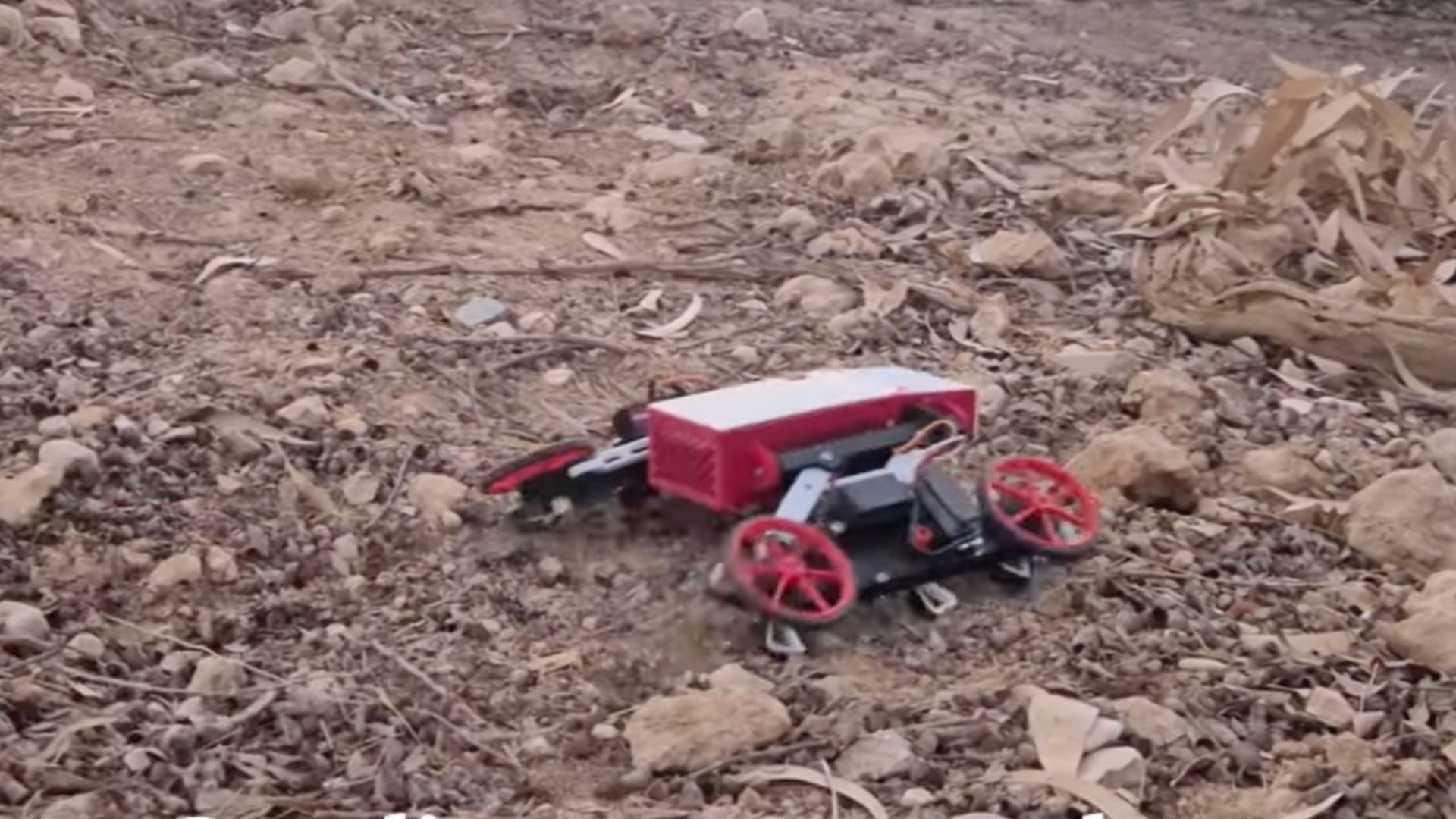
Shape-shifting DSTAR robot adapts to navigate challenging terrains
Interesting Engineering·1 December 2025·Shape-shifting robot conquers real-world obstacles with ruggedness - Researchers from Israel have unveiled DSTAR, a shape-shifting robot capable of crawling, and climbing across challenging terrains.
Signals:
- →Shape-shifting robot achieves 66% better climbing capability than previous symmetric designs through innovative dual-mechanism approach.
- →Technology enables autonomous navigation in disaster zones and dangerous areas inaccessible to humans.
- →Adaptive terrain traversal demonstrates practical applications for search-and-rescue and hazardous environment operations.
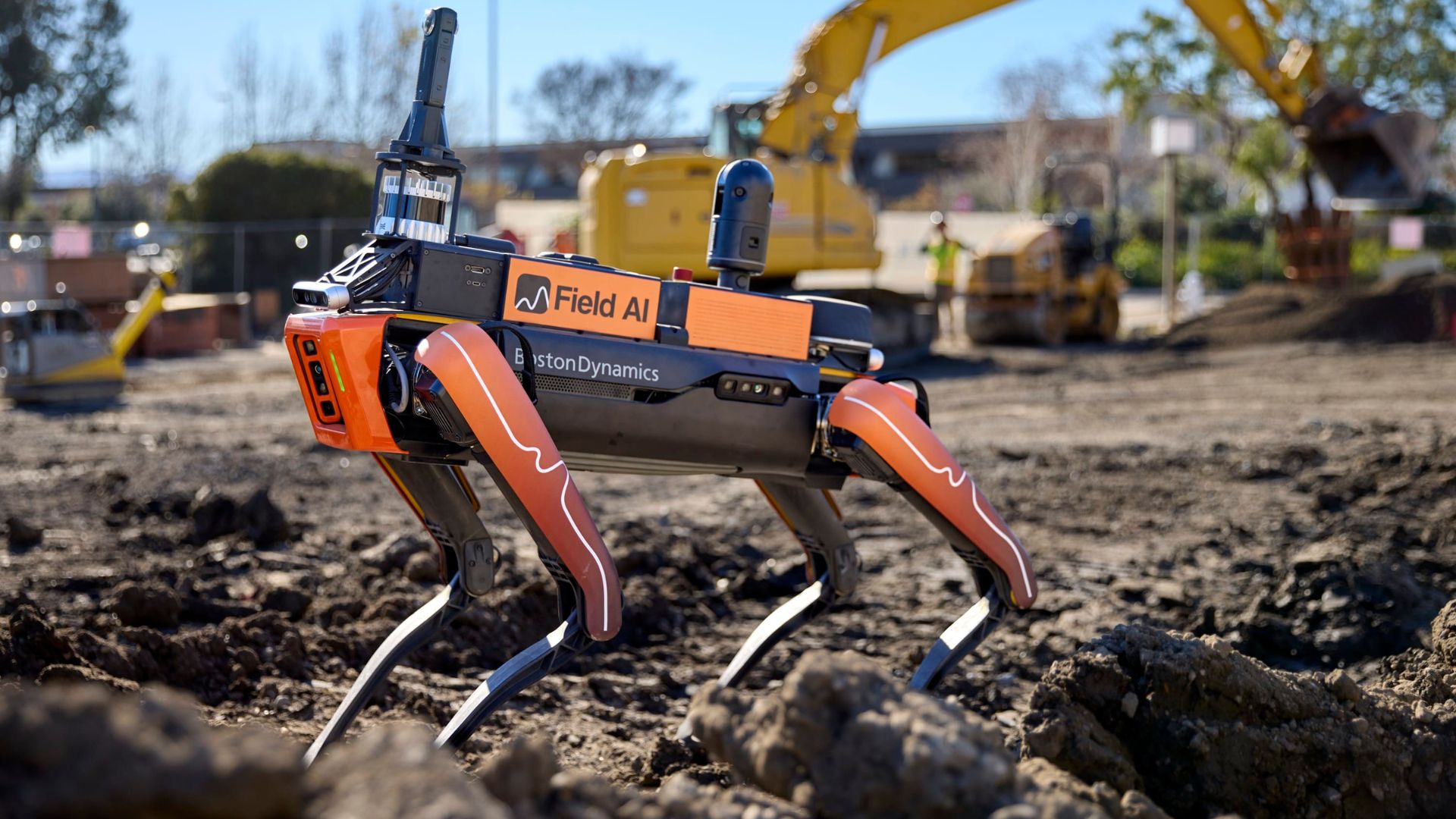
Robot dog autonomously maps 500,000 sq ft construction site
Interesting Engineering·1 December 2025·US robot dog patrols massive construction sites for faster progress - FieldAI deployed a robot dog with its software on DRP Construction's jobsite to capture photos, scan interiors, and perform other duties.
Signals:
- →Autonomous robots address critical construction labor shortage requiring 500,000 additional workers in US.
- →Technology reduces documentation time from days/weeks to real-time while improving safety and efficiency.
- →$405 million funding signals rapid industry shift toward scalable robotic automation solutions.

Chinese bipedal robot transforms into walking T-rex for tourism
Interesting Engineering·30 November 2025·China's bipedal robot turns into lifelike dinosaur in stunning demo - A new LimX Dynamics video shows a bipedal robot seamlessly transforming into a full-scale Tyrannosaurus rex using the company’s TRON1 platform.
Signals:
- →Chinese robotics advances demonstrate sophisticated balance control and real-time adaptation capabilities in commercial applications.
- →Tourism and entertainment sectors gain new revenue opportunities through interactive robotic attractions for museums and parks.
- →Modular design enables rapid customization and deployment, reducing operational costs and expanding market accessibility.

Infineon and HTEC debut humanoid robot with 360-degree awareness
Interesting Engineering·26 November 2025·New humanoid robot head with sensory awareness, interactive ability - A new humanoid robotic head from Infineon and HTEC showcases real-time sensing, sound localization, and AI-powered awareness.
Signals:
- →Multi-sensor integration enables robots to interact more naturally and safely with humans in commercial settings.
- →Technology readily integrates into existing platforms for eldercare, delivery, security, and smart home applications.
- →Demonstrates competitive advancement in humanoid robotics requiring strategic investment decisions in automation sectors.
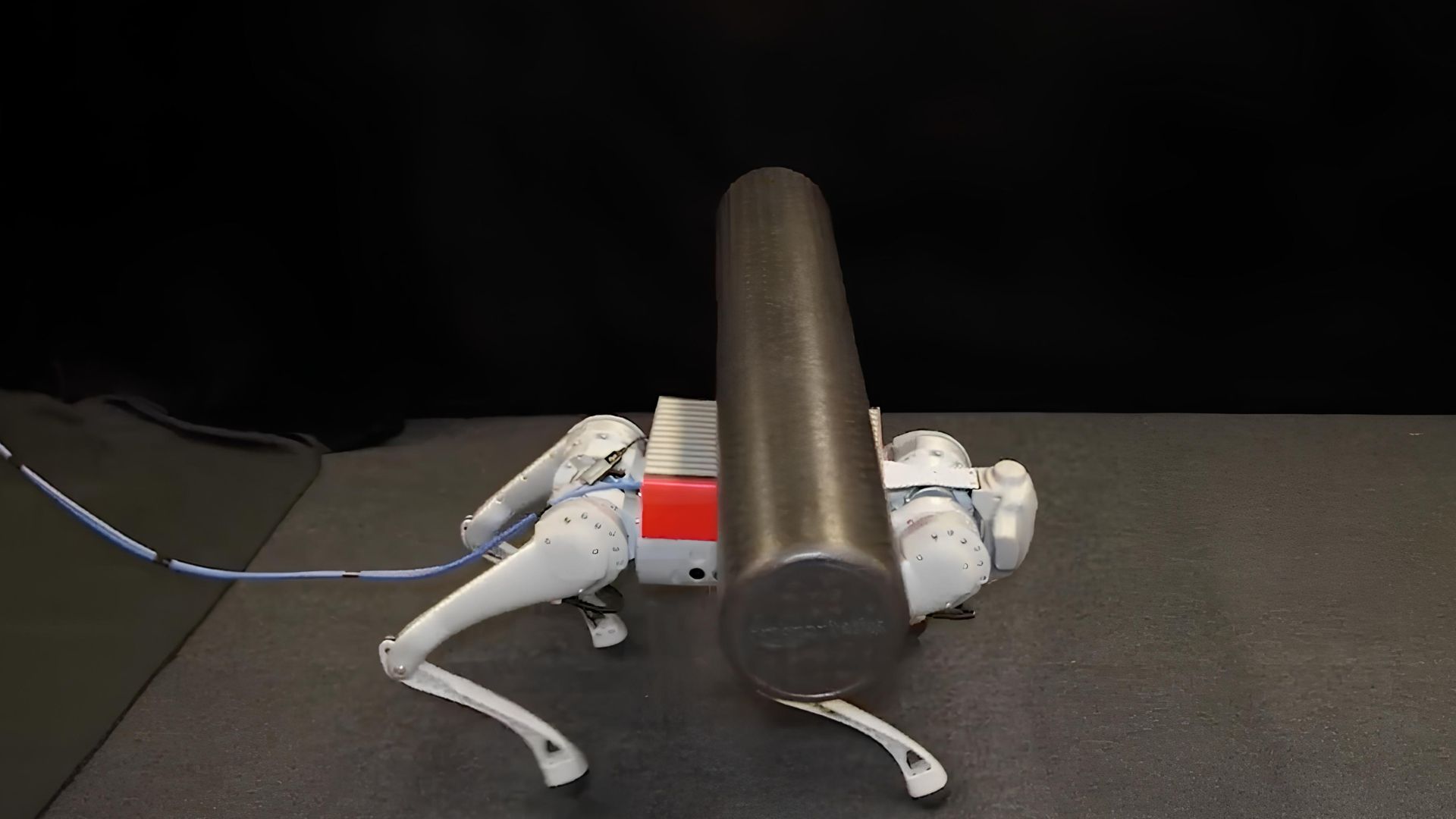
Robot dog uses tactile sensing to balance objects
Interesting Engineering·25 November 2025·US: Robot dog balances rolling load on back with tactile sensing tech - Robot dog with tactile sensor can now transport free-rolling cylindrical objects while navigating cones, obstacles, and sudden disturbances.
Signals:
- →Tactile sensing enables robots to transport unsecured objects, expanding commercial applications in logistics and healthcare.
- →Simulation-trained system transfers directly to physical robots without fine-tuning, reducing deployment costs significantly.
- →Technology demonstrates path toward adaptable robots capable of human-like environmental interaction and task execution.
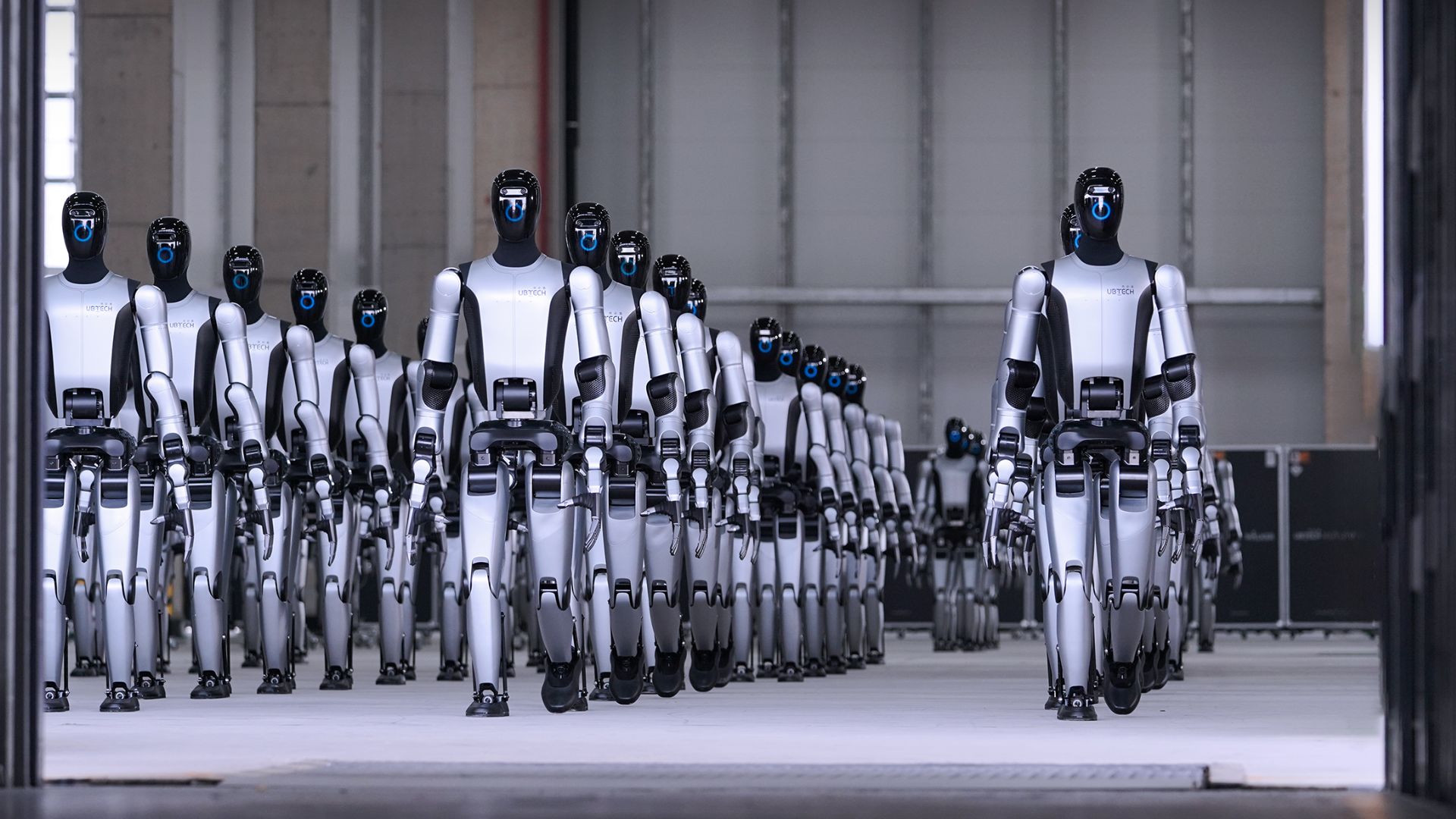
China deploys self-charging humanoid robots at Vietnam border
Interesting Engineering·26 November 2025·China to deploy battery-swapping humanoid robots on Vietnam border - China's UBTech Robotics has secured a 264 million yuan (US$37 million) contract to deploy industrial-grade humanoid robots on border.
Signals:
- →China's $37M border robot deployment signals accelerating militarization and automation of sensitive geopolitical boundaries.
- →Self-charging humanoid robots achieving 24-hour autonomous operation represent major advancement in unmanned surveillance capabilities.
- →China's aggressive robotics scaling (10,000 units by 2027) demonstrates strategic investment in AI-powered security infrastructure.
Autonomy and Drones

Shark-shaped robot to patrol 800,000 miles of undersea cables
Interesting Engineering·28 November 2025·Shark-shaped submarine robot to guard 800,000 miles of subsea cables - A German technology firm has introduced an underwater robot designed to protect the world's rapidly expanding network of subsea cables
Signals:
- →Subsea cables carry 95% of global internet traffic and $10 trillion in daily financial transfers.
- →Recent cable sabotage incidents in Baltic Sea highlight critical infrastructure vulnerability and geopolitical risks.
- →Autonomous underwater surveillance technology addresses growing threat to essential global communications and economic systems.
Military Tech

Israel's Iron Beam laser system destroys drones for cents
Interesting Engineering·2 December 2025·Drone killer for cents: World's first 100 kW laser ready to deploy - The system, known as Iron Beam, completed operational testing in September and will become the world's first combat-ready laser interceptor.
Signals:
- →Laser defense costs cents per shot versus $10,000-$100,000 for traditional missile interceptors.
- →Addresses critical gap in drone defense where current systems achieve only 50% effectiveness.
- →First operational 100-kilowatt combat laser system signals major shift in air defense technology.
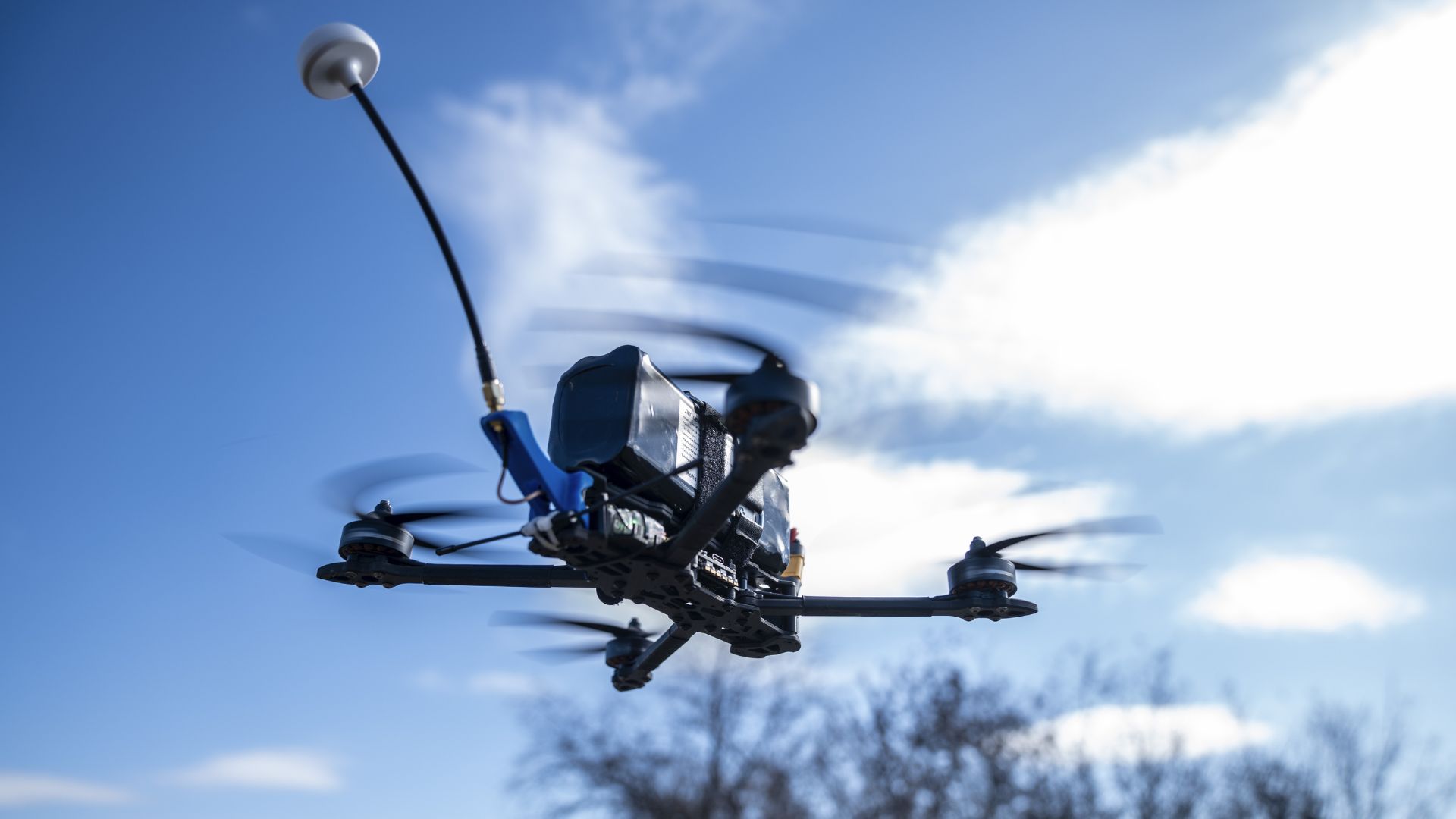
Ukraine's low-cost interceptors successfully counter Russia's high-speed Geran-3 drones
Interesting Engineering·Russia's high-speed strike drones successfully intercepted by Ukraine - Ukraine says it has begun shooting down Russia's newest high-speed attack drones with low-cost interceptors.
Signals:
- →Low-cost interceptors ($2,000-$6,000) successfully counter expensive Russian drones, demonstrating cost-effective defense innovation.
- →Ukraine's domestic drone production proves viable against Russia's upgraded high-speed Geran-3 attack systems.
- →Scalable asymmetric warfare solution addresses infrastructure protection without depleting expensive missile stockpiles.

Anduril's autonomous weapons face setbacks in testing and Ukraine
TechCrunch·28 November 2025·Anduril's autonomous weapons stumble in tests and combat, WSJ reports | TechCrunch - Defense tech startup Anduril Industries has faced numerous setbacks during testing of its autonomous weapons systems, according to new reporting by the WSJ.
Signals:
- →$30.5B defense tech startup experiencing critical failures in autonomous weapons testing and deployment.
- →Real-world combat performance issues in Ukraine led to complete abandonment by forces.
- →Safety violations and operational failures raise questions about massive military contract investments.
Russia uses 'aircraft carrier' drones to deploy smaller strike drones
Signals:
- →Russia extends FPV drone strike range by using mothership drones as aerial carriers.
- →Tactic creates new defensive challenges requiring rapid countermeasure development and deployment resources.
- →Demonstrates accelerating drone warfare innovation cycle, forcing continuous tactical and technological adaptation.
Anduril's autonomous weapons face setbacks in testing and Ukraine
Signals:
- →$30.5B defense tech unicorn faces critical safety and performance failures across multiple weapons systems.
- →Real combat deployment in Ukraine failed completely, with forces abandoning Anduril drones in 2024.
- →Navy safety violations and test failures raise questions about massive military contract viability.
Space

Russia loses ability to launch humans into space
Signals:
- →Russia lost its only operational human spaceflight capability for first time since 1961, creating critical infrastructure gap.
- →Damage threatens upcoming ISS missions and Russia's planned orbital station construction timeline through 2027.
- →Incident highlights growing space infrastructure vulnerabilities as geopolitical competition with China and US intensifies.

Researchers propose circular economy to tackle space debris
 SciTechDaily·1 December 2025·New Idea Could Turn Space Debris Into Future Spacecraft - A circular space economy could transform wasteful spaceflight into a sustainable, reusable system for the future.
Signals:
- →Space debris threatens satellite operations and future missions, requiring urgent sustainable solutions.
- →Circular economy approach could reduce launch costs and material waste through reuse and recycling.
- →International collaboration and policy frameworks needed to establish sustainable space operations standards.

Honda successfully launches reusable rocket, eyes SpaceX competition
The Verge·29 November 2025·Why Honda is suddenly launching reusable rockets | The Verge - Honda’s is expanding into reusable rockets as it looks to take on a bigger role in space.
Signals:
- →Honda's satellite launch capability reduces dependence on SpaceX monopoly for critical vehicle connectivity and autonomous driving systems.
- →Rocket technology provides strategic defense options amid geopolitical uncertainty and regional threats from China and North Korea.
- →Repurposing existing R&D investments (fuel cells, robotics) into space applications creates new revenue streams and competitive advantages.

BlackSky's new satellite delivers high-resolution Earth images in under 24 hours
Signals:
- →BlackSky's Gen-3 satellites deliver high-resolution Earth imagery in under 24 hours versus traditional months-long timelines.
- →Commercial availability of military-grade surveillance capabilities creates new intelligence options for government and private sectors.
- →Twelve-satellite constellation by 2026 enables real-time monitoring for strategic decision-making and geopolitical applications.

China launches 156-satellite constellation to track space debris
Interesting Engineering·30 November 2025·China's 156 satellites in Xingyan constellation to prevent collision - The new constellation marks China’s second space situational awareness system, enhancing tracking of satellites and debris.
Signals:
- →China developing independent space tracking capability, reducing reliance on US-dominated orbital monitoring systems.
- →156-satellite constellation enables collision prevention and debris tracking for commercial and military applications.
- →AI-powered system provides strategic advantage in monitoring foreign satellites and unusual orbital activities.
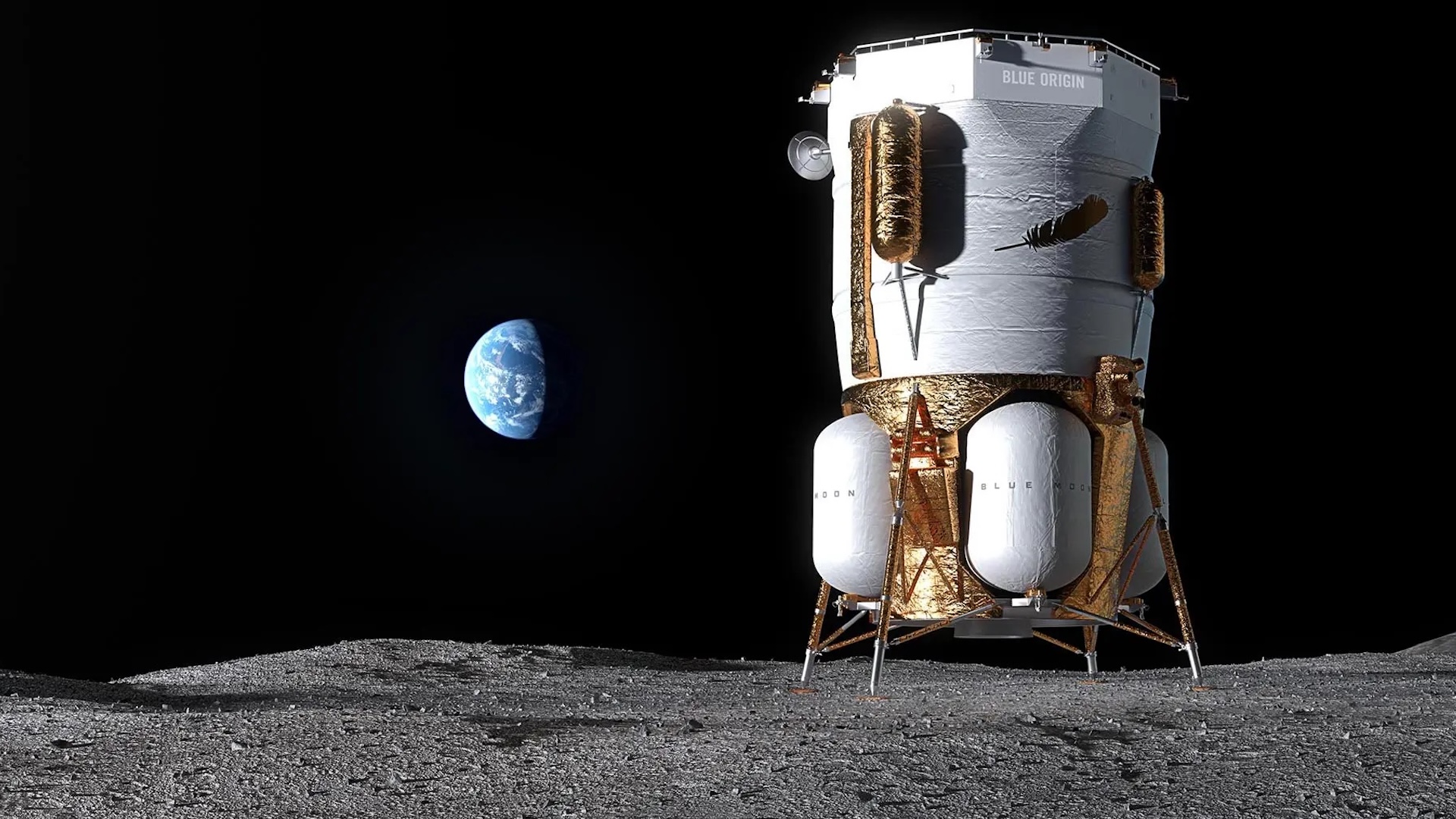
Blue Origin targets early 2026 Moon landing amid SpaceX delays
Interesting Engineering·25 November 2025·Jeff Bezos’ Blue Origin could land on Moon in 2026, rivaling SpaceX - NASA is looking for alternatives to SpaceX's Starship HLS, presenting Jeff Bezos' Blue Origin with a great opportunity.
Signals:
- →Blue Origin's early 2026 Moon landing could position them to replace SpaceX for NASA's Artemis missions.
- →SpaceX's Starship delays are causing NASA to actively explore alternative lunar lander providers.
- →Competition intensifies as China threatens to beat U.S. back to Moon amid program setbacks.

Boeing's Starliner downgraded to cargo-only mission after setbacks
New Atlas·25 November 2025·NASA Grounds Starliner Crewed Flights, Cargo Only Until 2026 - Boeing's troubled Starliner program faces new delays and cuts. NASA renegotiates the contract, restricting the capsule to cargo-only missions until 2026, while reducing total ISS visits due to technical problems.
Signals:
- →Boeing's Starliner program has cost over $2 billion in losses with ongoing certification delays.
- →NASA reduced contracted ISS missions from six to four, signaling decreased confidence in Boeing.
- →Next flight downgraded to cargo-only, impacting crew transport redundancy and commercial space competition.
Crypto

Bitcoin miners face worst profit margins in industry history
CoinTelegraph·1 December 2025·Bitcoin Miners Face Harshest Margins on Record - Hashprice has fallen to structural lows after Bitcoin’s correction, pushing mining payback periods past 1,000 days and forcing miners to cut debt and preserve liquidity.
Signals:
- →Bitcoin mining profitability has collapsed to historic lows, threatening industry viability and operator solvency.
- →Major publicly-traded mining companies face 32-54% stock declines and severe balance sheet pressure.
- →Equipment payback periods now exceed 1,000 days while next halving arrives in 850 days.

Telegram's Cocoon decentralized AI network launches on TON blockchain
CoinTelegraph·30 November 2025·Cocoon Decentralized AI Network Launches on the Open Network (TON) - The Cocoon decentralized AI network, built on top of The Open Network (TON) blockchain, which has close ties to Telegram, launched on Sunday, November 30.
Signals:
- →Decentralized AI network Cocoon launches on TON blockchain, enabling GPU owners to monetize computing power.
- →Platform challenges centralized providers like Amazon and Microsoft by offering privacy-preserving, cost-effective AI computing.
- →Growing demand for decentralized AI solutions addresses privacy concerns and reduces corporate control over data.
Energy
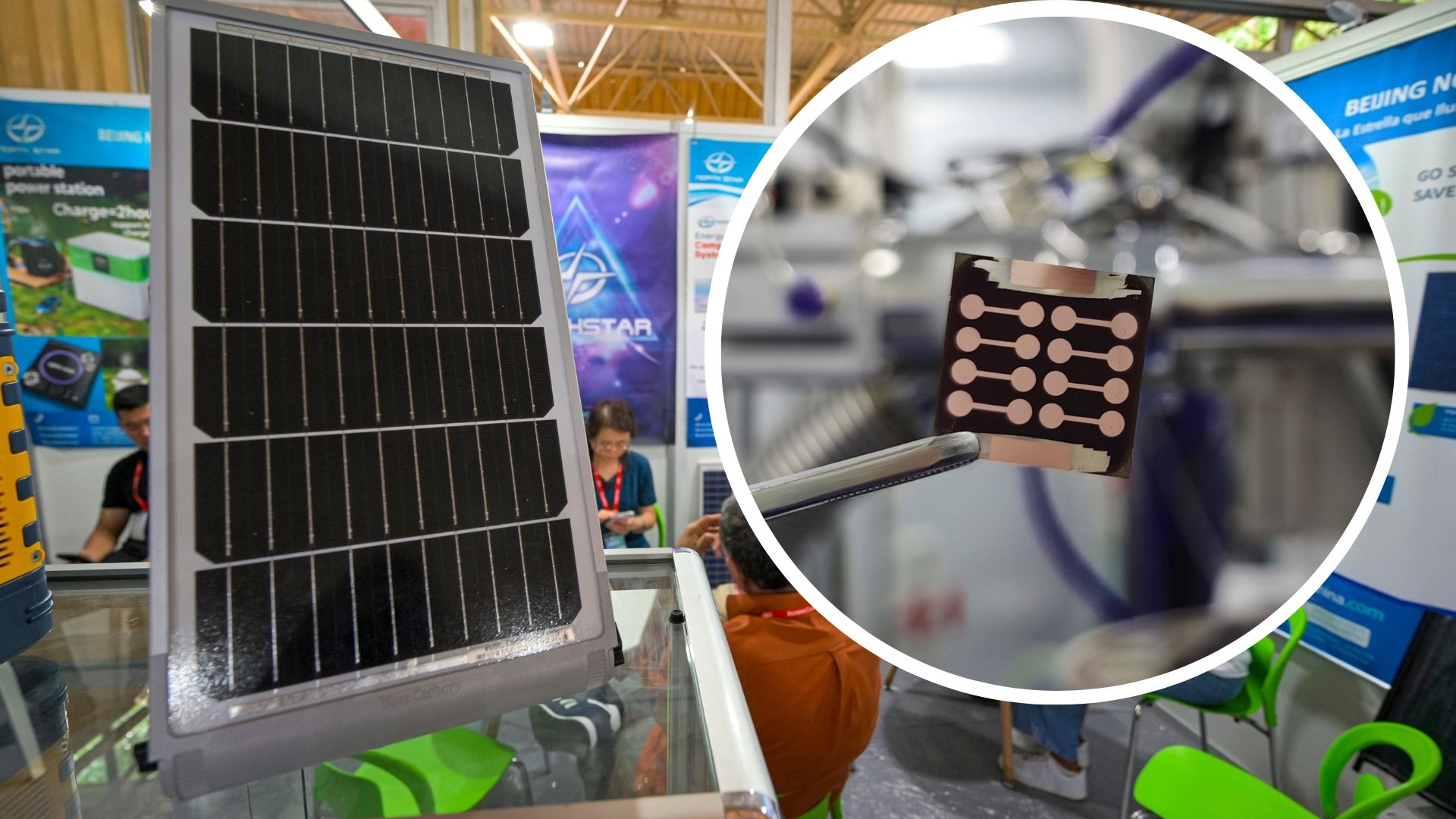
Longi's flexible solar cell achieves record 33.35% efficiency
Interesting Engineering·27 November 2025·China's perovskite-silicon tandem solar cell hits 33.35% efficiency - This breakthrough lays a solid foundation for the commercial development of flexible silicon-based tandem cells in lightweight/flexible high-power photovoltaic applications.
Signals:
- →China achieves record 33.35% efficiency in flexible solar cells, signaling competitive advantage in next-generation energy technology.
- →Breakthrough enables commercial applications in high-value markets like space exploration and vehicle-integrated photovoltaics.
- →Exceptional durability (97% efficiency after 43,000 bending cycles) demonstrates viability for mass production and deployment.
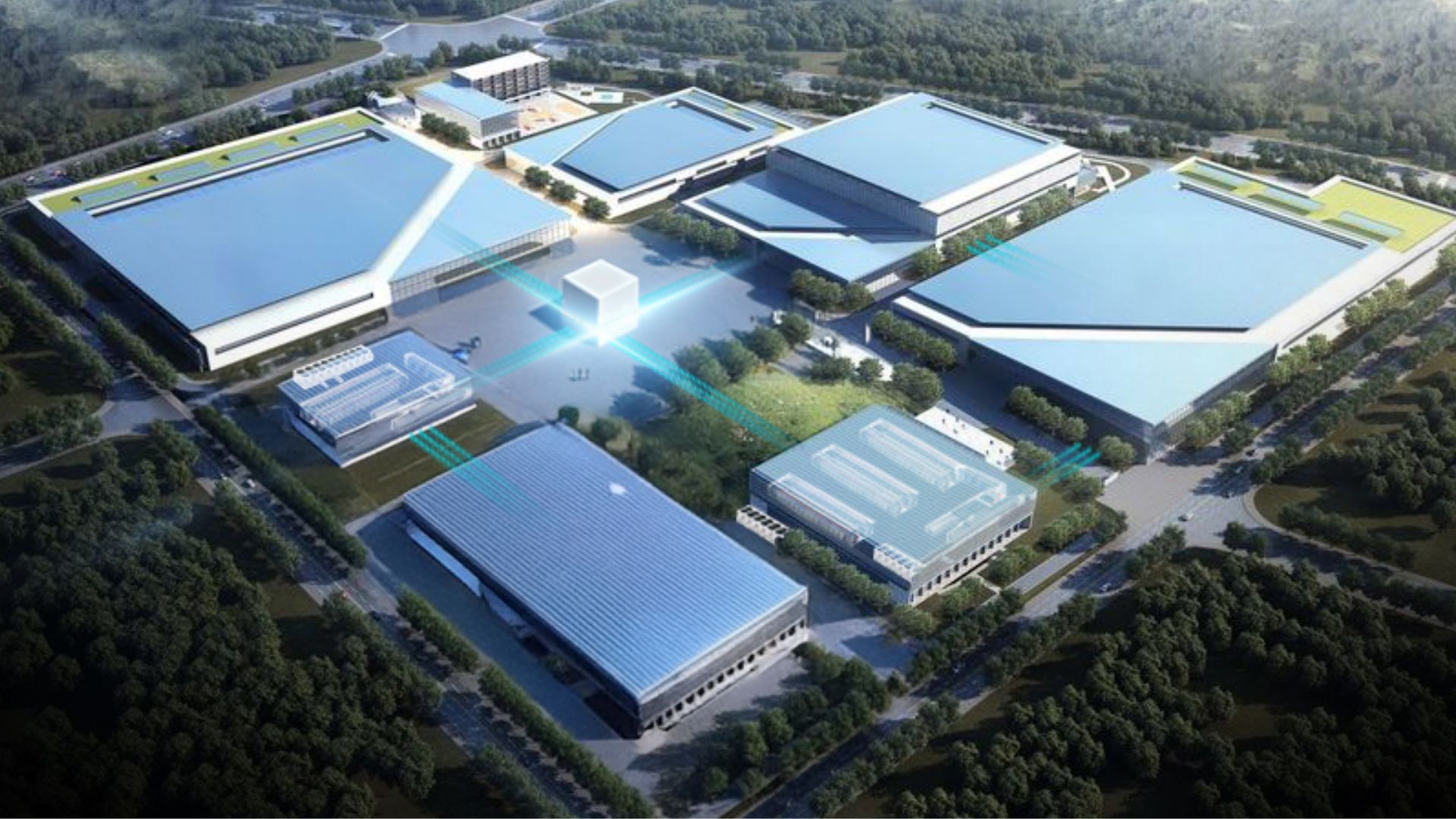
Micro-modular nuclear reactors to power AI data centers
Interesting Engineering·26 November 2025·Micro nuclear reactor targets 100-MW power for AI data centers - Terra Innovatum's reactor offers an energy solution, with Uvation to scale deployment up to 100 MWe to meet AI power demand.
Signals:
- →AI infrastructure expansion critically constrained by power availability, not computing capacity or technology.
- →Modular nuclear reactors offer grid-independent solution, avoiding traditional deployment delays and cost overruns.
- →Technology scalable to 1+ GW addresses projected demand while supporting industrial decarbonization efforts.
China's solar-nuclear hybrid achieves 98% reliability, cuts emissions 37%
Interesting Engineering·26 November 2025·China's solar-nuclear hybrid system boosts grid reliability above 98% - China's researchers stabilized a 100 MW microgrid, integrating a small modular reactor (SMR) and solar power.
Signals:
- →Hybrid system cuts operational costs 18.7% and carbon emissions 37.1% in year-long simulation.
- →China demonstrates 98%+ reliability combining solar and nuclear with AI-driven energy management.
- →Scalable framework addresses renewable intermittency using dual-layer battery and hydrogen storage.
Scientists harness water friction to power devices without batteries
Signals:
- →New water-friction technology could eliminate batteries in sensors, wearables, and automotive applications through autonomous power generation.
- →Achieves record 9% energy conversion using abundant materials (silicon and water), making scalable commercial deployment feasible.
- →Enables maintenance-free sensor systems across industries while reducing pollution and operational costs associated with battery replacement.
Transport

AutoFlight unveils solar-powered floating vertiports for air taxis
New Atlas·30 November 2025·Mobile Vertiport: AutoFlight's Solar Barge for eVTOLs - AutoFlight introduces a solar-powered floating vertiport barge to solve the air taxi landing problem. Discover how this mobile solution supports eVTOL commuting, tourism, and rescue operations.
Signals:
- →Floating solar-powered vertiports solve critical landing infrastructure gap preventing air taxi industry scaling and urban deployment.
- →Mobile barges enable rapid capacity expansion for emergency response, offshore operations, and fluctuating passenger demand scenarios.
- →Addresses historical helicopter service failure point: lack of accessible landing sites in urban waterfront areas.

Indonesia airports introduce AI biometric immigration without stopping
New Atlas·27 November 2025·AI biometric systems are ending airport border queues - Discover how a new AI biometric system at airports in Indonesia is replacing border guards, ending queues, and creating a seamless travel experience.
Signals:
- →Indonesia pioneers AI biometric immigration system eliminating passport queues at two major airports.
- →Technology enables seamless border crossing while freeing staff for passenger assistance during peak times.
- →System demonstrates scalable model combining digital pre-clearance with motion-capture biometrics for global adoption.

LEO Solo flying motorcycle opens pre-orders despite production doubts
New Atlas·27 November 2025·LEO Solo personal eVTOL is now available for preorder - Learn about the LEO Solo, a new single-seat personal eVTOL that requires no pilot license. Preorder this Part 103-friendly flying machine now.
Signals:
- →Personal eVTOL aircraft opens pre-orders despite relying on unavailable solid-state battery technology and missed production deadlines.
- →High disc-loading design creates significant efficiency concerns, limiting flight time to only 10-15 minutes maximum.
- →Company founders have history of unfinished projects and prototype instability, raising questions about commercial viability.

BYD's YANGWANG U8 SUV floats on water for 30 minutes
 CleanTechnica·25 November 2025·BYD Highlights YANGWANG U8's Floating Ability In Short Video - CleanTechnica - Support CleanTechnica's work through a Substack subscription or on Stripe. The YANGWANG U8 can apparently operate on water for up to 30 minutes. At a recent BYD E-Journey in Zhengzhou, China, the company showed off the feature in a giant pool. “The YANGWANG U8 demonstrated its floating capability, maintaining controlled ... [continued]
Signals:
- →BYD's YANGWANG U8 SUV can float and operate on water for 30 minutes during emergencies.
- →Feature addresses growing flood risks from climate change, creating potential market differentiation.
- →Demonstrates advanced engineering capability with 1,200+ horsepower and independent wheel control technology.

Whoosh plans Christchurch test site for overhead cable transport
Signals:
- →Whoosh represents innovative transport infrastructure potentially reducing urban congestion and carbon emissions in New Zealand cities.
- →2027 Queenstown launch timeline requires immediate planning decisions regarding permits, funding, and integration with existing transport networks.
- →Novel point-to-point cable system could influence future urban mobility strategies and public-private transport investment priorities nationwide.
3D Printing

Cadxstudio aims to generate editable CAD files from text prompts
Signals:
- →AI-generated CAD could revolutionize product development by eliminating need for specialized design training.
- →Automated parametric design generation may significantly reduce time and costs in manufacturing workflows.
- →Emerging competition in text-to-CAD space signals potential disruption of traditional engineering design processes.

Airbus, Leonardo, and Thales merge to create European space powerhouse
Signals:
- →European space consolidation creates €6.5B entity to compete with SpaceX, driving demand for 3D printing suppliers.
- →Merger enables standardization of additive manufacturing processes across 25,000 employees, reducing costs and production timelines.
- →Combined scale accelerates serial production and in-orbit manufacturing capabilities, opening new market opportunities by 2027.

Clay-based 3D printing material cures instantly for disaster relief
Interesting Engineering·25 November 2025·US develops 3D-printed concrete substitute for rapid construction - Researchers at OSU have developed the green, clay-based construction material that could make instant 3D-printed homes a plausible reality.
Signals:
- →Material cures instantly and reaches structural strength in 3 days versus 28 for traditional concrete.
- →Reduces carbon emissions by replacing cement (8% of global CO2) with earth-based materials.
- →Enables rapid disaster relief shelter construction using readily available, low-cost materials.
Mining Tech

Engineered viruses extract rare earth elements from mining waste
New Atlas·1 December 2025·Biomining viruses extract rare earth elements safely - Learn how scientists use an engineered virus for biomining rare earth elements, a green alternative to destructive, toxic mining methods.
Signals:
- →Virus-based mining eliminates toxic pollution while extracting valuable rare earth elements from drainage water.
- →Technology reduces dependence on China, which controls 70% of global rare earth mining.
- →Scalable, low-cost biological solution secures materials critical for clean energy and electronics manufacturing.
Quantum Tech

Quantum networks could soon span 2,000 kilometers
SciTechDaily·27 November 2025·Scientists Just Unlocked Quantum Connections That Reach Across Continents - A new atom-by-atom crystal-building method could finally make long-distance quantum communication possible.
Signals:
- →Quantum network range extended from few kilometers to 2,000 km, enabling continental-scale quantum internet infrastructure.
- →New fabrication method (molecular-beam epitaxy) achieves 100x longer coherence times without requiring different materials.
- →Technology breakthrough makes global quantum computing networks commercially and practically feasible for first time.
BCIs and Neuro Tech

AI estimates hand muscle activity from video alone
TechXplore·AI decodes pianists' muscle activity via video - AI and human-movement research intersect in a study that enables precise estimation of hand muscle activity from standard video recordings. Using a deep-learning framework trained on a large, comprehensive multimodal dataset ...
Signals:
- →Enables low-cost, sensor-free muscle activity monitoring using only standard video recordings and AI.
- →Applicable across rehabilitation, sports training, and human-machine interaction beyond piano performance analysis.
- →Democratizes physiological assessment by eliminating expensive EMG equipment requirements for motor control studies.
Bio Tech

Scientists solve century-old organ freezing problem with new technique
SciTechDaily·25 November 2025·A 100-Year-Old Problem Solved? Scientists Discover How To Freeze Organs Without Cracking Them - The breakthrough approach could lead to successful, long-term organ transplants, bringing science fiction closer to becoming medical reality. Cryopreservation, the process of preserving biological tissues by cooling them to subzero temperatures, might sound like something out of science fiction.
Signals:
- →Breakthrough prevents organ cracking during freezing, enabling viable long-term transplant storage and reducing donor shortages.
- →Higher glass transition temperatures in preservation solutions significantly reduce tissue fracture risk during cryopreservation.
- →Technology extends beyond transplants to vaccine stabilization, biodiversity conservation, and reducing food waste globally.
Food Tech

Deep learning identifies wild vs. farmed salmon with 95% accuracy
Phys.org·New deep-learning tool can tell if salmon is wild or farmed - A paper published in Biology Methods and Protocols, finds that it is now possible to distinguish wild from farmed salmon using deep learning, potentially greatly improving strategies for environmental protection. The paper is titled "Identifying escaped farmed salmon from fish scales using deep learning."
Signals:
- →Deep learning achieves 95% accuracy identifying escaped farmed salmon threatening Norway's declining wild populations.
- →300,000 farmed salmon escape annually, causing genetic contamination in two-thirds of Norwegian wild salmon.
- →New automated tool replaces expensive manual monitoring, enabling large-scale environmental protection strategies.
Environment Tech

AI-guided robots plant baby corals on Great Barrier Reef
Interesting Engineering·1 December 2025·Robots plant baby corals to save the Great Barrier Reef from collapse - Scientists are testing a robotic coral-seeding system that can pinpoint the best sites for young corals to survive.
Signals:
- →AI-guided robotics enable scalable coral restoration, potentially reversing Great Barrier Reef bleaching damage.
- →Technology democratizes reef restoration, allowing tourism operators and communities to participate effectively.
- →System demonstrates successful integration of automation with human expertise for environmental conservation.
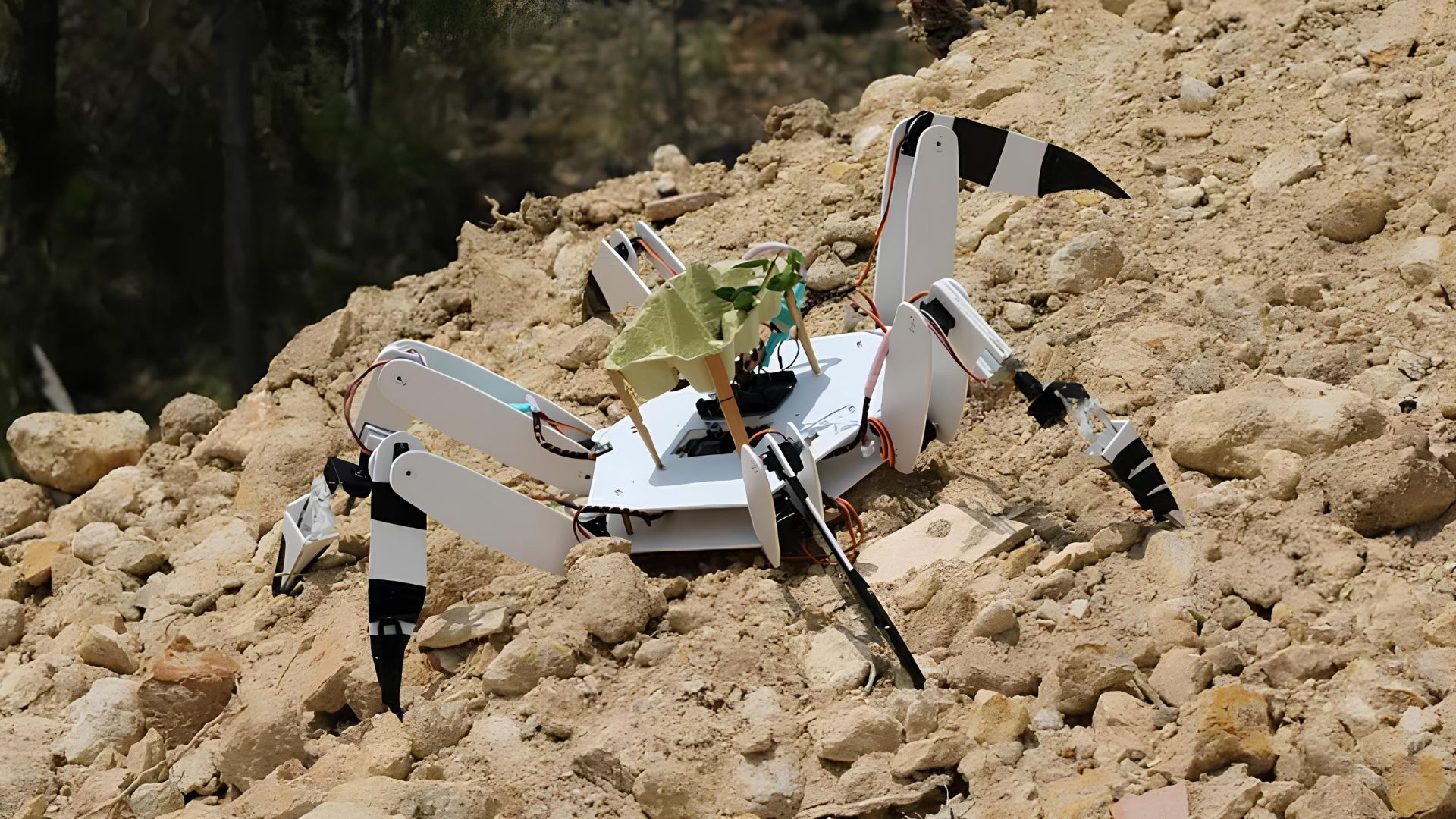
Portuguese teens build spider robot to replant burned forests
Interesting Engineering·28 November 2025·Teen-built spider robot aims to regrow Portugal’s burned forests - As Portugal loses over a million acres to fire, students develop an AI robot that plants trees with up to 90% survival on dangerous terrain.
Signals:
- →Robot achieves 85-90% sapling survival rate versus 0-20% for drone seeding methods.
- →Service-based model offers cost-effective reforestation solution for municipalities and forestry organizations.
- →Addresses critical infrastructure gap: 60% of Portugal's forests on inaccessible steep terrain.
Climate Tech

New 'rock candy' method cuts carbon capture costs by 40%
TechXplore·'Rock candy' technique offers simpler, less costly way to capture carbon directly from air - University of Toronto Engineering researchers have discovered a new way of capturing carbon directly from the air—one that could offer significant cost savings over current methods.
Signals:
- →New carbon capture method could reduce capital costs by up to 40% compared to existing systems.
- →Passive process eliminates expensive fans, blowers, and chemical regeneration plants used in current technology.
- →Uses cheap, abundant materials (polypropylene fibers) and natural wind, making large-scale deployment more economically feasible.
Materials Science

Rutgers creates programmable plastic that self-destructs on command
Interesting Engineering·Self-destructing plastic achieved with built-in 'on/off' switch - Researchers from Rutgers University have devloped a new kind of self-destructing plastic to help solve the wold's plastic waste problems.
Signals:
- →Programmable plastic degradation timelines enable customized product lifecycles from days to decades.
- →Technology addresses plastic waste crisis without requiring new chemicals or manufacturing overhauls.
- →Potential applications span packaging, automotive, and construction industries with environmental compliance benefits.
Nanotech

Microrobot swarms form artificial microtubules for cargo transport
Signals:
- →Magnetic microrobots self-organize into transport pathways through confined biological spaces, enabling targeted drug delivery in blood and tissue.
- →System successfully transported drug-loaded cargo across tumor barriers, achieving near-complete cancer cell death within 12 hours.
- →Reversible, controllable technology works in whole blood and intestinal fluid, offering practical medical and microfluidic applications.

New ion-based cooling technique could boost computer chip power
Phys.org·Mini-fridges on a nanoscale? New cooling technique could make computer chips more powerful - As more devices get piled onto computer chips to increase processing power capacity, heat generation becomes increasingly concentrated. This heat must be removed to keep chip performance high, but is currently achieved by circulating water through millimeter-scale channels to cool nanosized hotspots. This scale mismatch reduces the cooling efficiency by consuming more water than necessary, also raising environmental concerns.
Signals:
- →Nanoscale cooling breakthrough enables more powerful computer chips by efficiently removing concentrated heat from densely-packed processors.
- →Ion-based cooling uses less water than current millimeter-scale methods, addressing environmental concerns in semiconductor manufacturing.
- →Technology compatible with existing semiconductor fabrication, enabling practical implementation in next-generation chip production.
⏳ Zeitgeist

African nations push for colonial crimes recognition through reparations
 Semafor·1 December 2025·African nations push to recognize crimes of colonialism | Semafor - At least 12.5 million people were enslaved and forcibly transported from Africa between the 15th and 19th centuries.
Signals:
- →African Union seeks formal recognition of colonial crimes as crimes against humanity, escalating diplomatic pressure.
- →Estimated trillions in economic damages strengthens legal and financial claims against former colonial powers.
- →UN Secretary-General support signals growing international momentum despite European resistance to reparations.
China launches emergency spacecraft in 20 days for stranded astronauts
Arstechnica·25 November 2025·China launches an emergency lifeboat to bring three astronauts back to Earth - Ars Technica - This is a “successful example for efficient emergency response in the international space industry.”…
Signals:
- →China successfully executed emergency spacecraft launch in just 20 days, demonstrating rapid crisis response capabilities.
- →Space debris poses significant risk to crewed missions, damaging spacecraft windows and threatening astronaut safety.
- →Mature space programs require standby rescue systems and contingency plans for astronaut emergencies.

Ethiopian volcano erupts after 12,000 years, disrupting flights
Interesting Engineering·25 November 2025·Ancient Ethiopian volcano erupts, massive ash spread disrupts flights - The Hayli Gubbi volcano in Ethiopia erupted explosively on Sunday (November 23, 2025) for the first time in approximately 12,000 years.
Signals:
- →Major flight disruptions across India-UAE-Middle East routes due to ash cloud reaching 45,000 feet altitude.
- →Long-dormant volcanoes can unexpectedly reactivate, requiring enhanced monitoring and emergency preparedness planning.
- →Regional economic impacts from stranded tourists, livestock grazing loss, and ongoing air travel disruptions.
Climate

Century-old floods may hit northeastern US annually by 2100
Signals:
- →Century-level floods becoming annual events by 2100 requires urgent infrastructure investment and updated building codes.
- →Sea level rise amplifies damage from weaker storms, multiplying coastal property and economic risks.
- →Social uncertainty in emissions pathways creates planning challenges; adaptation strategies needed regardless of climate action.

Indonesia floods kill 164 as rescue efforts face obstacles
Phys.org·Death toll from floods and landslides on Indonesia's Sumatra island rises to 164 - The death toll from flash floods and landslides on Indonesia's Sumatra island rose to 164 on Friday with 79 people missing, authorities said, as rescue workers found their efforts hampered by damaged bridges and roads and a lack of heavy equipment.
Signals:
- →164 deaths and 79 missing demonstrate severe humanitarian crisis requiring immediate resource allocation and international aid coordination.
- →Damaged infrastructure and isolated villages reveal critical gaps in disaster preparedness and emergency response capabilities needing investment.
- →Climate-driven extreme weather patterns signal increasing future risks requiring policy changes in environmental protection and infrastructure resilience.

Sri Lanka floods kill nearly 200 as capital submerges
Phys.org·Floods hit Sri Lanka's capital as cyclone deaths near 200 - Entire areas of Sri Lanka's capital were flooded on Sunday after a powerful cyclone triggered heavy rains and mudslides across the island, with authorities reporting nearly 200 dead and dozens more missing.
Signals:
- →Nearly 200 dead, 228 missing; Sri Lanka's deadliest natural disaster since 2017 requires immediate response.
- →Over one million people displaced or needing assistance; massive humanitarian crisis demands coordinated relief efforts.
- →State of emergency declared; international aid requested as infrastructure damage disrupts essential services nationwide.

Earth system models overestimate carbon removal by 11%
Phys.org·Earth system models overstate carbon removal: New findings suggest nitrogen fixation is 50% lower than thought - High levels of atmospheric carbon dioxide intensify climate change, but high carbon dioxide levels can also stimulate plant growth. Plant growth removes carbon dioxide from the atmosphere, partially mitigating the effects of climate change. However, plants only grow faster in the presence of high levels of carbon dioxide if they can also acquire enough nitrogen from the atmosphere to do so.
Signals:
- →Climate models overestimate Earth's natural carbon removal capacity by 11% due to flawed nitrogen fixation assumptions.
- →IPCC and similar organizations may need to revise climate projections based on corrected nitrogen data.
- →Actual plant growth under high CO2 will be lower than predicted, affecting climate mitigation strategies.
Biodiversity

Coral reefs face algae takeover by 2100 from ocean acidification
SciTechDaily·30 November 2025·New Study Warns: By 2100, Coral Reefs Could Be Overtaken by Algae - By the year 2100, rising carbon dioxide levels are expected to alter ocean chemistry so severely that coral reef communities in Australia and worldwide will recover more slowly, lose ecological complexity, and become increasingly dominated by fleshy algae. A new international study released in Co
Signals:
- →Ocean acidification will cause coral reefs to lose complexity and recovery capacity by 2100, threatening coastal communities.
- →Unique Papua New Guinea volcanic CO2 seeps provide real-world evidence of future reef degradation under climate scenarios.
- →Reduced baby coral populations indicate declining reef resilience, impacting fisheries and human populations dependent on marine ecosystems.

Humanity's inherent unsustainability: are we doomed by nature and nurture?

Signals:
- →Humanity's inherent unsustainability threatens societal collapse, with current trends tracking MIT's 1972 "business-as-usual" decline scenario despite decades of warnings.
- →Global cooperation on climate, biodiversity, and resource management has failed; emissions rose 68% since 1992 despite international frameworks and agreements.
- →Cultural narratives promoting perpetual growth conflict with biophysical limits, making policy shifts toward sustainable contraction politically unfeasible under current leadership.
Health

WHO recommends GLP-1 drugs for long-term obesity management
New Atlas·1 December 2025·WHO recommends GLP-1 drugs like Wegovy for weight loss - The WHO now recommends GLP-1 drugs like Wegovy for long-term obesity management, but high costs, affordability, and long-term effects remain concerns.
Signals:
- →WHO officially recommends GLP-1 drugs for obesity management, potentially influencing global prescribing guidelines and healthcare policies.
- →Cost and accessibility remain major barriers, though upcoming patent expirations may reduce prices and expand availability.
- →Long-term efficacy concerns emerge as weight regain occurs post-treatment, requiring sustained investment and monitoring strategies.

Study links tattoos to 29% higher melanoma risk
Signals:
- →Tattoos linked to 29% higher melanoma risk, affecting one-third of Swedish adults with potential public health implications.
- →Study controlled for lifestyle factors previous research missed, providing more reliable evidence for health policy decisions.
- →Tattoo ink may cause chronic inflammation via lymph nodes, requiring updated health monitoring and data collection systems.
Economics

China's factory activity unexpectedly contracts in November
Signals:
- →China's factory activity contracted unexpectedly to 49.9 in November, signaling weakening manufacturing amid soft domestic demand.
- →Economic slowdown worsening with fixed-asset investment down 11.4% and property investment declining 14.7% year-over-year.
- →Growth likely below 4.5% in Q4, down from 4.8% in Q3, despite temporary U.S.-China trade truce.
Geopolitics

Coal ash waste could yield $97 billion in rare earth elements
Signals:
- →$97 billion in rare earth elements recoverable from US coal ash, reducing critical mineral import dependence on China.
- →Provides domestic alternative to mining for materials essential to batteries, wind turbines, and electric vehicles.
- →Addresses both resource security and environmental remediation of 52 billion tons of coal waste simultaneously.
💭Meme stream

Teen wins $25,000 for origami that holds 10,000 times its weight
Signals:
- →Origami fold demonstrates exceptional strength-to-weight ratio, holding 10,000 times its own weight.
- →Technology could revolutionize deployable emergency structures for disaster relief operations.
- →Young innovator's research proves scalable engineering applications for collapsible, lightweight structural designs.