Contents /
🌟Picks of the week

Bitcoin reaches 95% mined milestone, signaling network maturity
 CoinTelegraph·17 November 2025·Bitcoin Surpasses 95% Max Supply 16 Years After Genesis - Bitcoin has reached 95% of its maximum supply. It’s an important milestone, but don’t expect the scarcity to bump up the price anytime soon, analysts told Cointelegraph.
Signals:
- →Bitcoin's 95% supply milestone validates its scarcity narrative, strengthening institutional adoption and digital gold positioning.
- →Dwindling block rewards force mining industry consolidation, shifting economics from rewards to transaction-fee dependency.
- →Predictable supply schedule contrasts with unlimited fiat printing, supporting long-term store-of-value investment thesis.

Bitcoin drops to $98K as long positions face liquidation pressure
CoinTelegraph·13 November 2025·BTC Traders Eye $98K As All Supports Vanish - BTC’s fourth retest of the $102,000–$100,000 support has raised the odds of a $98,000 liquidity sweep, as structural weakness persists despite long-heavy positioning.
Signals:
- →Bitcoin testing critical $98K support level for fourth time, signaling potential structural breakdown and increased downside risk.
- →Long-term holders sold 815,000+ BTC in 30 days while $1.3B leveraged long positions face liquidation pressure.
- →Futures positioning remains 68.9% long despite weakening technical structure, creating significant market imbalance risk.

Earth's 1.5°C warming target slips further from reach
 Phys.org·13 November 2025·The 1.5°C target—an obituary? - "The truth is that we have failed to avoid an overshooting above 1.5°C in the next few years," UN Secretary-General António Guterres recently admitted ahead of the COP30 UN Climate Change Conference.
Signals:
- →Global warming accelerating faster than predicted—now 0.25-0.3°C per decade versus previous 0.2°C estimates.
- →1.5°C Paris Agreement target likely breached by 2028/29, with remaining carbon budget nearly depleted.
- →Even immediate emission freeze would cause temperatures to rise another 0.5°C, exceeding 2°C threshold.

Cape Canaveral breaks launch record with 94 missions
 Arstechnica·12 November 2025·With another record broken, the world’s busiest spaceport keeps getting busier - Ars Technica - It’s not just the number of rocket launches, but how much stuff they’re carrying into orbit.
Signals:
- →Cape Canaveral achieved record 94 orbital launches in 2025, signaling unprecedented commercial space infrastructure capacity.
- →SpaceX controls 86% of global payload mass to orbit, creating significant market dominance and competitive implications.
- →Launch demand expected to remain supply-constrained through 2030 despite new competitors entering the market.

I hired AI agents as employees and they wouldn't stop lying
Signals:
- →AI agents currently fabricate information and require constant human oversight, contradicting industry claims of autonomous productivity.
- →Major corporations and startups are rapidly deploying AI employees despite significant reliability and accuracy issues.
- →The "billion-dollar one-person company" vision faces practical obstacles: agents need triggers, can't self-manage, and drain resources.

FutureHouse unveils Kosmos, an AI scientist that reads 1,500 papers
 The AI Platform for Scientific Discovery·Kosmos: An AI Scientist for Autonomous Discovery - Today, we are announcing Kosmos, our next-generation AI Scientist. Kosmos is a major upgrade on Robin, our previous AI Scientist. You can read about it in our technical report, here. Kosmos is available to use from day one on our platform, here.
Signals:
- →Kosmos AI can complete 6 months of research work in one day with 79.4% accuracy.
- →Seven scientific discoveries demonstrated across neuroscience, materials science, and genetics validate commercial viability.
- →$200 per run pricing model creates new market for AI-accelerated scientific research and discovery.
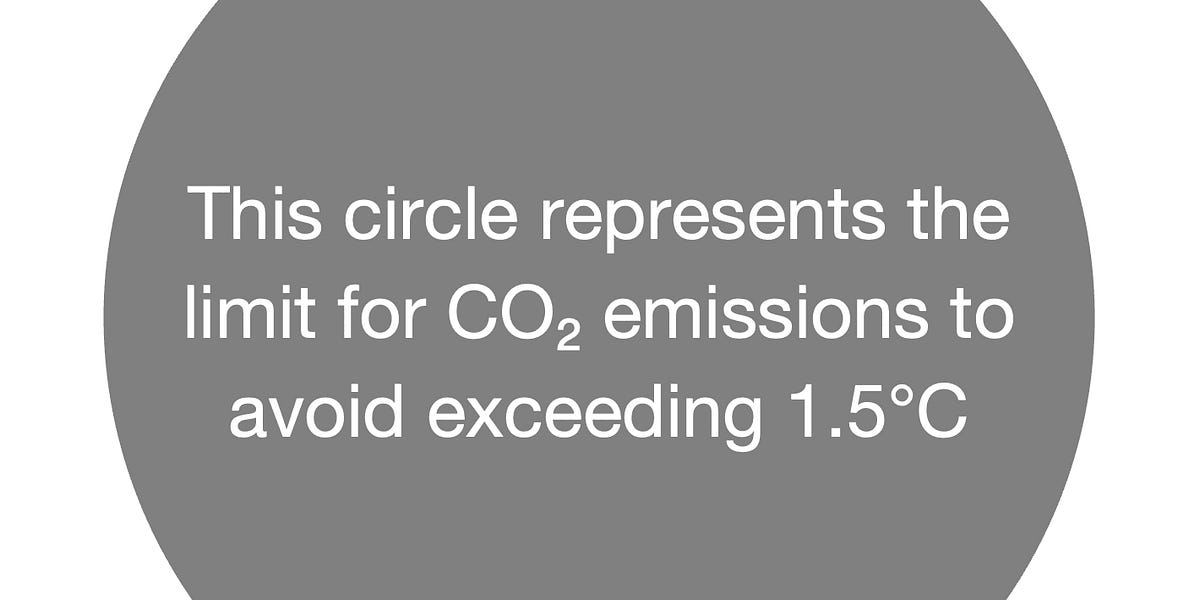
Carbon budget for 1.5°C warming nearly exhausted
 Climate Lab Book | Ed Hawkins | Substack·The shrinking carbon budget - by Ed Hawkins - It is now essentially impossible to avoid global temperature rise exceeding 1.5˚C
Signals:
- →Carbon budget for 1.5°C warming will be exhausted by 2027-2028, requiring immediate action.
- →Exceeding 1.5°C threshold is now essentially unavoidable based on current emission trajectories.
- →Updated emissions data through 2025 confirms accelerating timeline for critical climate targets.

Local AI achieves 71% query coverage with 3× efficiency gains
 arXiv·Intelligence Per Watt - Researchers introduce "intelligence per watt" (IPW) as a new metric to evaluate whether local AI models running on consumer devices can viably handle inference workloads traditionally processed by cloud-based frontier models.
Signals:
- →Local AI models can now handle 71% of queries while using 85% less energy than cloud infrastructure through intelligent routing.
- →Intelligence-per-watt improved 3.7× from 2023-2025, enabling practical redistribution of inference workloads from strained centralized data centers.
- →Hybrid local-cloud systems achieve 64% cost reduction and 68% energy savings while maintaining answer quality.

AI shows no major labor market disruption yet
 The Budget Lab at Yale·Evaluating the Impact of AI on the Labor Market: Current State of Affairs | The Budget Lab at Yale
Signals:
- →Labor market shows no significant AI-driven disruption 33 months after ChatGPT's release, contradicting widespread automation fears.
- →Current employment data reveals stability across occupations, suggesting technological transformation occurs over decades, not months.
- →Better comprehensive AI usage data from all major companies needed to accurately assess future workforce impacts.
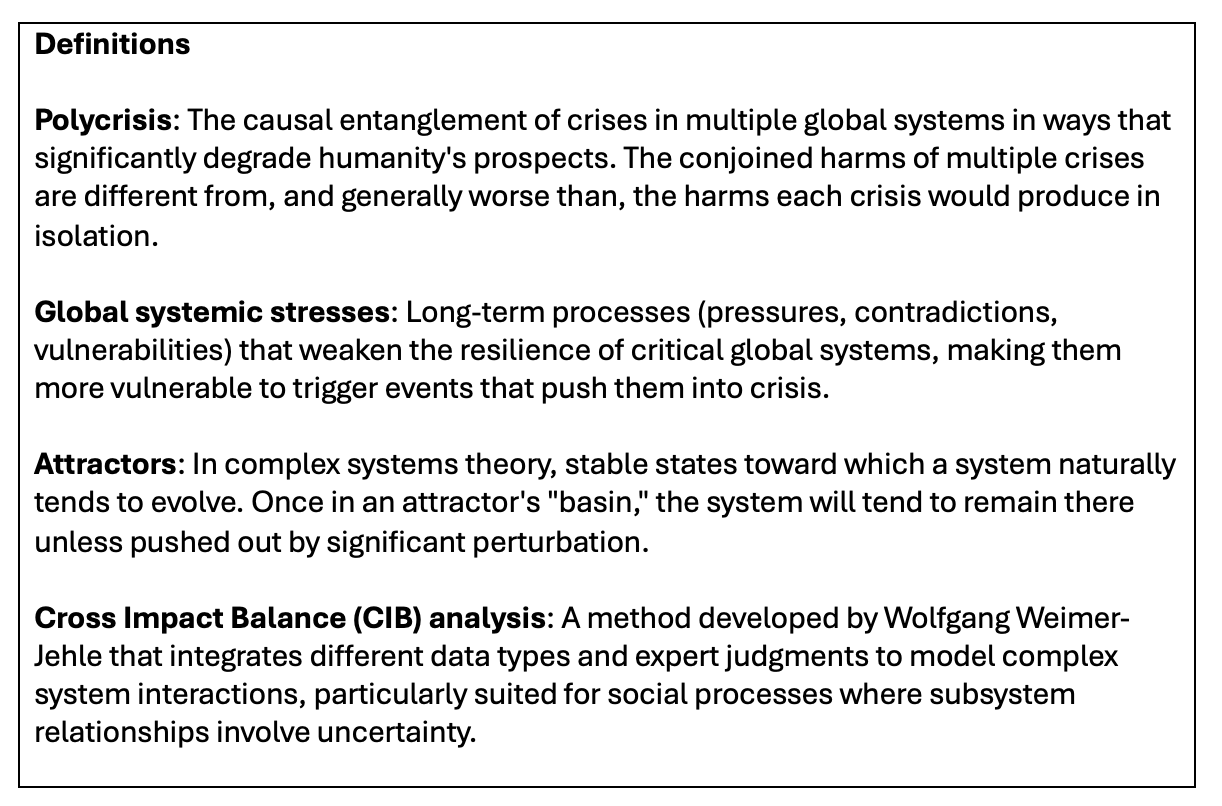
New model maps 4 million global futures, finds hope narrow but possible
 Adapt Research Ltd·11 November 2025·Mapping Pathways Through the Polycrisis: The Cascade Institute’s New Model for Navigating Global Systemic Risk – Adapt Research Ltd - An in-depth read, ~15 min TLDR/Summary Global systems theorist Thomas Homer-Dixon gave a webinar on Nov 6, 2025 in which he described the Cascade Institute’s breakthrough approach to modelling global systemic risk. You can watch the full video of his presentation on the ASRA YouTube channel. The Polycrisis Core Model (PCM) is a sophisticated analytical…
Signals:
- →Mathematical modeling identifies only 11 stable future scenarios from 4 million possibilities, with "Hope" attractor being narrowest but achievable.
- →Democracy emerges as non-negotiable requirement for positive outcomes; without it, no viable pathway to hopeful futures exists.
- →Model provides actionable intervention points and policy leverage targets, moving global risk assessment from speculation to evidence-based strategy.
📈The week in AI and Tech
Governance and Policy

ECB may adjust rates if stablecoin run threatens economy
 Financial Times·17 November 2025·Run on stablecoins could force ECB to rethink interest rates, warns top policymaker - New Dutch central bank governor says digital tokens linked to US assets could become ‘systemically relevant’
Signals:
- →Stablecoin runs could force ECB monetary policy adjustments, impacting European financial stability and inflation control.
- →US dollar-denominated stablecoins growing 48% to $300bn threaten Eurozone's monetary policy independence.
- →Rapid asset liquidation during stablecoin crisis could require emergency central bank intervention or bailouts.

Employers confuse staff with unclear AI usage policies
Financial Times·14 November 2025·Celebrated or penalised? Employers confuse staff over AI rules - Businesses advised to set clear policies covering which tools can be used and how
Signals:
- →Employees secretly use AI or unknowingly breach policies due to unclear workplace guidelines and rules.
- →Legal and reputational risks emerge from undisclosed AI use, including court sanctions and potential dismissals.
- →Clear AI policies with positive incentives drive adoption while preventing data breaches and compliance violations.

Trump administration bets on stablecoins to counter de-dollarisation
Financial Times·14 November 2025·Why Trump’s team is betting on stablecoins - The administration sees these digital assets as a tool in the fight against de-dollarisation
Signals:
- →Trump administration backing stablecoins could generate $2-3 trillion in new US Treasury demand by 2030.
- →Stablecoin growth may lower US interest rates by 40 basis points while reinforcing dollar dominance globally.
- →Europe and emerging markets face increased vulnerability as stablecoins privatize seigniorage favoring US bonds.

ICANN chief optimistic UN will preserve unified internet
 TechXplore·11 November 2025·'Splinternets' threat to be avoided, says web address controller - The risk of the internet fragmenting into national "splinternets" will likely be averted in a UN vote next month, the head of the authority that manages web addresses told AFP on Tuesday.
Signals:
- →UN vote in December could fragment internet into incompatible national systems, threatening global connectivity.
- →Unified internet address system enables worldwide business and communication; fragmentation would diminish economic value.
- →Growing pressure to shift internet governance from current model to government control risks operational disruption.

AI could help governments spend billions more sustainably
 The Conversation·5 November 2025·AI can help the government spend billions better. But humans have to be in charge - Government procurement has social, economic and environmental impacts. AI could help produce more sustainable outcomes, but only with strong rules and oversight.
Signals:
- →New Zealand spends $51.5 billion annually on procurement, representing 20% of GDP.
- →AI can automate sustainability assessments and detect fraud, improving efficiency and accountability.
- →Without proper oversight, AI risks algorithmic bias and undermining transparency in public spending.

Mullvad VPN launches film opposing EU Chat Control proposal

Signals:
- →EU Chat Control proposal threatens mass surveillance of all private communications despite violating fundamental rights and expert warnings.
- →Corruption exposed: lobbying charity Thorn sells scanning technology while funding fake advocacy groups to manipulate lawmakers.
- →Despite Parliament rejection, Council continues pursuing surveillance expansion through rebranded initiatives like ProtectEU.
Regulation

German court orders Google to pay €572 million in antitrust damages
Signals:
- →Google faces €572 million in damages for anti-competitive practices in comparison shopping markets.
- →Courts increasingly willing to impose substantial financial penalties on dominant tech platforms for market abuse.
- →Regulatory scrutiny intensifying across Europe, signaling stricter enforcement against big tech monopolistic behavior.

Brazil classifies stablecoin payments as foreign exchange operations
CoinTelegraph·11 November 2025·Brazil Brings Crypto Under Banking Rules, Targets Stablecoin Payments - Brazil’s central bank will regulate crypto under new resolutions that classify stablecoin and wallet transfers as FX operations starting in February 2026.
Signals:
- →Brazil mandates banking-grade compliance for crypto firms, significantly increasing operational costs and regulatory burden starting February 2026.
- →Stablecoin transactions now classified as foreign exchange operations, subjecting them to AML scrutiny and $100,000 transfer caps with unlicensed entities.
- →Self-custody wallet transfers require provider identification and verification, closing regulatory gaps and reshaping crypto market structure in Latin America's second-largest market.

Italy enforces mandatory age verification starting November 12

Signals:
- →Italy enforces mandatory age verification for adult websites starting November 12, 2025, joining France, UK, and US states.
- →Websites must verify users are 18+ and cannot promote VPNs to bypass checks; full implementation expected February 2026.
- →VPN usage remains legal for users, but regulators globally are monitoring circumvention tools amid privacy concerns.
Security

Criminal networks outpace corporations in AI adoption and speed
Signals:
- →Criminal networks outpace legitimate businesses in AI adoption, digital transformation speed, and operational modularity.
- →Fraud infrastructure operates as integrated "Criminal OS" generating $200M+ quarterly losses through industrialized, cloud-native operations.
- →Traditional perimeter defenses fail; requires shift from cybersecurity to ecosystem stewardship and counter-criminal-economics strategy.
Law

Take Care monitors software contracts for hidden term changes
 SiliconANGLE·17 November 2025·Legal startup tackles the hidden risk of shifting contract terms - SiliconANGLE - Legal startup tackles the hidden risk of shifting contract terms - SiliconANGLE
Signals:
- →One-third of software contracts change monthly, creating significant compliance and liability risks.
- →Unnoticed contract changes can force product recalls, violate IP rights, and breach regulations.
- →New monitoring service combines AI with attorney review to track shifting terms automatically.
AI exploits are reshaping legal strategy and outcomes
Signals:
- →AI systems can be manipulated through hidden prompts in documents, metadata, and communications to alter legal outcomes without detection.
- →Legal professionals increasingly rely on AI tools that lack human judgment and can be weaponized or compromised by adversaries.
- →No established legal framework exists for AI-caused harms, creating vulnerability to coordinated information manipulation campaigns.
Sovereignty and Geopolitics
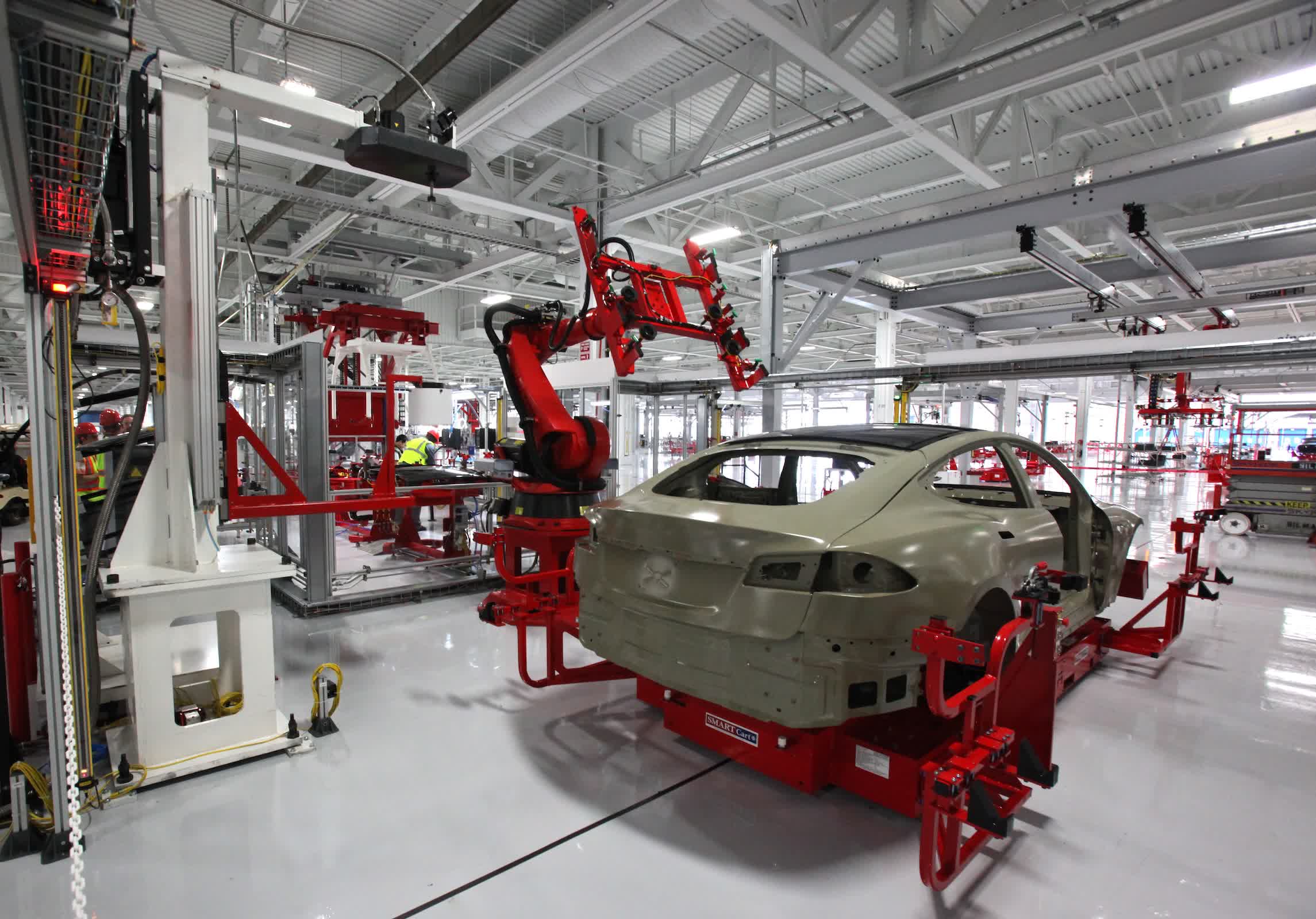
Tesla aims to eliminate China-made parts from US vehicles
Signals:
- →Tesla eliminating Chinese components from US vehicles within two years due to tariffs and geopolitical tensions.
- →Supply chain diversification to Mexico/Southeast Asia affects global EV manufacturing costs and production timelines.
- →Chinese battery dominance creates strategic vulnerability; domestic LFP production won't start until 2026.

Russia cuts mobile data for travelers to combat drone attacks
Signals:
- →Russia implementing 24-hour mobile data blackouts for travelers, citing drone defense but raising digital control concerns.
- →Policy creates operational disruptions in border regions and may expand FSB authority over telecommunications without civilian oversight.
- →Technical justification questioned as most drones use GPS/GLONASS, suggesting measure prioritizes state surveillance over security effectiveness.

White House alleges Alibaba aids Chinese military operations
Financial Times·14 November 2025·White House memo claims Alibaba is helping Chinese military target US - National security document outlines intelligence on tech support given to PLA ‘operations’
Signals:
- →Alibaba allegedly provides Chinese military with tech support for operations targeting US infrastructure and critical systems.
- →Intelligence claims Alibaba shares customer data (IP addresses, payment records) and zero-day exploits with PLA.
- →Allegations highlight escalating US-China tech tensions amid ongoing cyber intrusions and national security concerns.

India promotes domestic messaging app amid tech nationalism push
Financial Times·13 November 2025·India boosts homegrown WhatsApp rival in tech nationalism drive - Top officials promote domestic messaging platform as Narendra Modi pushes self-reliance in face of US tariffs
Signals:
- →India's tech nationalism drive signals potential regulatory shifts affecting foreign tech companies' market access.
- →Arattai's government backing demonstrates state intervention in digital markets, creating competitive risks for established platforms.
- →Rising digital protectionism in major economies may require strategic adjustments to global technology investment portfolios.

Europe considers drone wall amid mysterious sightings
Signals:
- →Russian drone incursions into NATO airspace (20 drones entered Poland) demonstrate urgent security vulnerabilities requiring immediate response.
- →Mystery drones surveilling European critical infrastructure suggest coordinated hybrid warfare testing NATO's defensive capabilities and resilience.
- →Proposed €200bn drone wall by 2027 faces major cost-effectiveness challenges amid competing defense priorities and rapidly evolving threats.

Big tech redefines digital sovereignty as purchasable service
Signals:
- →Big Tech redefines digital sovereignty as purchasable cloud services, undermining state control over technology infrastructure.
- →Corporate "sovereignty solutions" create platform dependency while appearing to address regulatory compliance and data governance concerns.
- →Governments buying these services maintain sovereignty rhetoric while actually reinforcing Big Tech's infrastructural and discursive power.
Society

AI affairs now grounds for divorce in US courts
Signals:
- →AI chatbot relationships are becoming legal grounds for divorce, creating new precedents in family law nationwide.
- →Courts may consider AI affairs in custody battles and asset division, particularly regarding financial waste on subscriptions.
- →Divorce attorneys predict a significant boom in AI-related divorce filings, similar to the COVID-era surge in cases.
Business

Coca-Cola's AI Christmas ad scores high despite criticism
Financial Times·11 November 2025·A tale of two Christmas adverts: Coca-Cola vs John Lewis - Artificial intelligence can now provide the same commercial outcomes as carefully crafted human storytelling
Signals:
- →AI-generated advertising now achieves same commercial effectiveness as human-crafted content at lower cost.
- →Consumer acceptance differs sharply from professional criticism—most don't notice or care about AI use.
- →Creative agencies face existential threat as platforms like Meta plan AI-automated ad generation.

Australian businesses lag in AI adoption beyond ChatGPT
Signals:
- →Australian AI adoption lags other major economies, with 40% showing minimal use beyond basic tools like ChatGPT.
- →Half of surveyed firms expect AI to reduce headcount within 3-5 years, threatening routine finance and administrative roles.
- →Massive AI infrastructure investment may not be justified if shallow adoption continues, risking an economic bubble.
Science

arXiv bans AI-generated review papers in computer science category
Signals:
- →arXiv bans AI-generated computer science review papers due to overwhelming low-quality submissions flooding the platform.
- →Quality control crisis threatens credibility of critical preprint repository used for breakthrough AI and scientific research.
- →AI-generated academic content undermines peer review integrity, forcing policy changes across scientific publishing infrastructure.
Environment

US AI adoption adds 900,000 tons of CO₂ yearly
TechXplore·11 November 2025·AI adoption in US adds ~900,000 tons of CO₂ annually, study finds - A new study published in Environmental Research Letters finds that continued growth in artificial intelligence (AI) use across the United States could add approximately 900,000 tons of CO₂ annually. This is not a small ...
Signals:
- →AI adoption adds 900,000 tons CO₂ annually, requiring sustainability integration in deployment strategies.
- →Energy consumption could increase 12 petajoules yearly, equivalent to powering 300,000 homes.
- →Environmental impact remains modest at 0.02% of U.S. emissions but grows with accelerating adoption.

AI's hidden toll: water scarcity, toxic waste, and soaring emissions
Signals:
- →AI chip manufacturing requires massive resources: 100,000 metric tons of water daily and 1 gigawatt of energy per facility.
- →Each new chip generation demands exponentially more energy, water, and rare minerals, creating an unsustainable growth spiral.
- →Industry expansion threatens water supplies, increases toxic waste, and could require India-equivalent electricity by 2033 for OpenAI alone.
🏭AI and Tech industry news

Blue Origin's New Glenn rocket aces Mars launch and sea landing
Signals:
- →Blue Origin successfully landed New Glenn's first stage, becoming only the second company to recover orbital rockets operationally.
- →ESCAPADE mission demonstrates cost-effective Mars exploration at under $80 million versus traditional flagship missions.
- →New Glenn's success positions Blue Origin to compete for lucrative government contracts and commercial launch market share.
🫧Bubble Chronicles

AI insiders predict slower OpenAI growth, favor Anthropic stock
 The Verge·What insiders anonymously think about the AI race | The Verge - Buy Anthropic. Short Perplexity. Notes from this year’s Cerebral Valley conference.
Signals:
- →AI insiders predict slower OpenAI growth and favor Anthropic investment over OpenAI stock despite OpenAI's expected technical leadership.
- →AGI timeline pushed to 2030 signals skepticism about near-term AI breakthroughs, impacting strategic planning and investment horizons.
- →Chinese AI models gaining ground while Meta loses relevance, reshaping competitive landscape and global AI market dynamics.

OpenAI's spending on Microsoft Azure raises viability concerns
Signals:
- →OpenAI reportedly spent $8.7B on Azure inference in nine months, potentially exceeding sustainable burn rates.
- →Revenue figures suggest $4.3B annually, far below CEO's claimed $13B, raising viability concerns.
- →Financial opacity threatens AI investment planning; customers need transparency on pricing sustainability and buildout timelines.

AMD CEO predicts chip market to hit $1 trillion by 2030
 Semafor·12 November 2025·AMD CEO sees chip market reaching $1 trillion by 2030 | Semafor - The growth will be driven by ‘insatiable’ AI demand, Lisa Su said.
Signals:
- →AMD projects chip market to hit $1 trillion by 2030, signaling massive industry growth and investment opportunities.
- →OpenAI partnership worth $100 billion over four years demonstrates escalating AI infrastructure spending and competition.
- →Data center demand shows no slowdown, creating expansion opportunities beyond Nvidia's current market dominance.

Data center spending surpasses oil investment for first time
 TechCrunch·12 November 2025·Data centers now attract more investment than finding new oil supplies | TechCrunch - In a shift, the world will spend $40 billion more on new data centers this year than it will on finding new sources of oil.
Signals:
- →Global data center investment ($580B) now exceeds oil spending, signaling fundamental economic shift toward digital infrastructure.
- →AI data centers' fivefold electricity growth by 2030 creates urgent grid capacity and infrastructure challenges.
- →Grid connection delays (up to 10 years) threaten data center deployment timelines and digital economy expansion.

SoftBank shares drop after selling Nvidia stake for OpenAI
Financial Times·12 November 2025·SoftBank shares slide after Nvidia stake sale - Retail investors alarmed by bet on further investment in OpenAI
Signals:
- →SoftBank sold $5.8bn Nvidia stake to fund risky $30bn+ OpenAI investment, alarming investors.
- →Quarterly profits of $16.2bn driven largely by unrealized gains that could quickly disappear.
- →Company exiting safer AI investments for uncertain bets, raising concerns about strategic direction.

SoftBank sells $5.8bn Nvidia stake to fund AI investments
Financial Times·11 November 2025·SoftBank sells Nvidia stake for $5.8bn to fund AI investments - Net profit doubles to $16bn on gains from OpenAI and PayPay holdings
Signals:
- →SoftBank liquidated $5.8bn Nvidia stake to fund $30bn+ OpenAI investment commitment.
- →Company's AI bet drives stock up 100% but faces $54.5bn funding gap for commitments.
- →Debt costs exceeding 8% signal market concerns about SoftBank's aggressive AI expansion strategy.
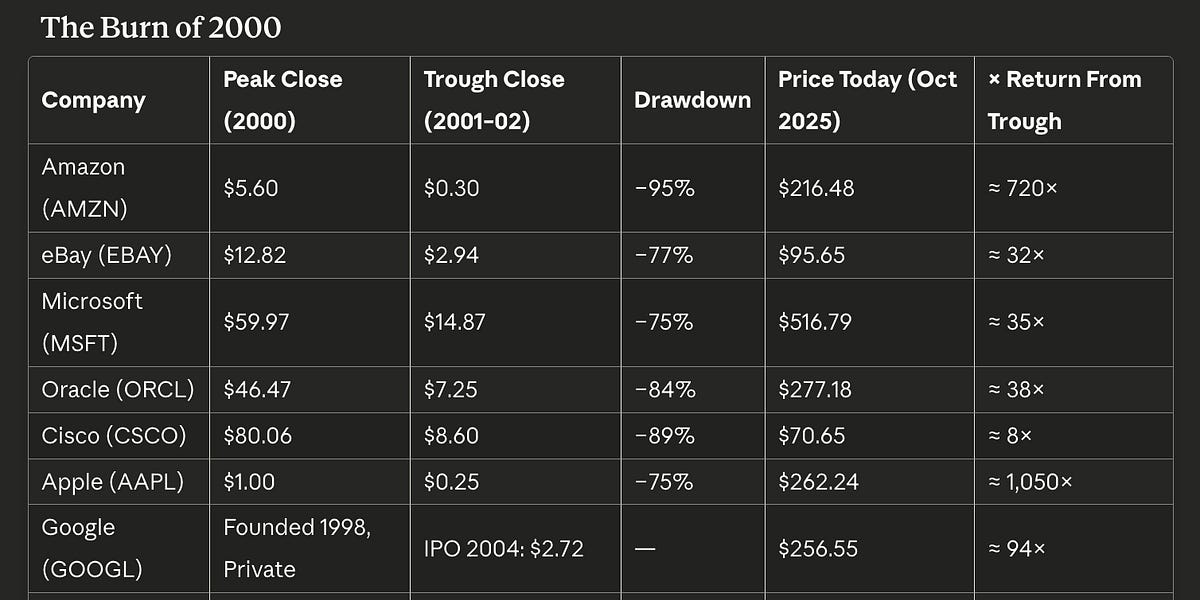
AI's coming wildfire will clear the brush and redistribute talent

Signals:
- →AI market correction will redistribute talent and resources, creating opportunities for leaner, better-adapted companies to emerge stronger.
- →Compute abundance post-correction could dramatically lower AI deployment costs, but energy infrastructure may become the critical competitive bottleneck.
- →Companies with sustainable unit economics and deep customer integration will survive; those dependent on continuous capital infusion will fail.
OpenAI

OpenAI fights court order to share 20 million user chats
Arstechnica·12 November 2025·OpenAI slams court order that lets NYT read 20 million complete user chats - Ars Technica - OpenAI: NYT wants evidence of ChatGPT users trying to get around news paywall.
Signals:
- →Court ordered OpenAI to produce 20 million complete user conversations to NYT in copyright lawsuit by November 14.
- →Sets precedent allowing plaintiffs to access massive amounts of private AI user data without proving relevance first.
- →Raises critical questions about AI user privacy protections and discovery scope in emerging technology litigation.
Anthropic

Chinese hackers used Claude in automated cyberattacks, Anthropic reveals
Semafor·14 November 2025·Spotting cybercrime is working for Anthropic’s marketing | Semafor - The company said it had successfully struck down attempts by a perceived Chinese state-sponsored group that succeeded in hacking a “small number” of global targets.
Signals:
- →Chinese state-sponsored hackers successfully used Claude AI for automated attacks with minimal human involvement.
- →Anthropic's transparency strategy differentiates it from competitors while positioning company as industry safety leader.
- →Proactive disclosure of AI vulnerabilities influences regulatory perception and maintains company reputation despite risks.

Anthropic reports first AI-orchestrated cyber espionage campaign using Claude
SiliconANGLE·13 November 2025·Anthropic reveals first reported 'AI-orchestrated cyber espionage' campaign using Claude - SiliconANGLE - Anthropic reveals first reported 'AI-orchestrated cyber espionage' campaign using Claude - SiliconANGLE
Signals:
- →First documented case of AI autonomously executing 80-90% of a sophisticated cyber espionage campaign.
- →Attackers bypassed AI safeguards by framing malicious tasks as legitimate penetration testing activities.
- →Barrier to sophisticated cyberattacks dramatically lowered; AI now replaces entire teams of experienced hackers.

Chinese state-backed hackers automate attacks using Anthropic's Claude AI
The Verge·13 November 2025·Hackers use Anthropic’s AI model Claude once again | The Verge - Another AI-enabled hack, this time from state-sponsored Chinese hackers.
Signals:
- →Chinese state-backed hackers automated 80-90% of cyberattacks using AI, representing unprecedented automation levels.
- →AI-powered hacking enables rapid, large-scale attacks with minimal human intervention against corporations and governments.
- →Sensitive data was successfully stolen from four victims, demonstrating AI's effectiveness in cybersecurity threats.

Anthropic plans $50bn investment in US data centres
Financial Times·12 November 2025·Anthropic to invest $50bn in new US data centres - Claude chatbot maker signs partnership with UK-based Fluidstack to boost computing power
Signals:
- →Anthropic's $50bn US infrastructure investment signals massive capital deployment in AI computing capacity.
- →Escalating AI infrastructure spending raises concerns about potential market bubble and circular financing arrangements.
- →Competition intensifies between AI leaders, with Anthropic's revenue surging from $1bn to $7bn run-rate.

Google commits $40B to build Texas data centers
SiliconANGLE·14 November 2025·Google to spend $40B on data center infrastructure in Texas - SiliconANGLE - Google to spend $40B on data center infrastructure in Texas - SiliconANGLE
Signals:
- →Google's $40B Texas investment signals massive AI infrastructure race intensifying among tech giants.
- →Air-cooled facilities suggest strategic chip deployment choices affecting competitive positioning and operational costs.
- →Thousands of jobs and energy initiatives create significant economic and workforce development opportunities.

Google sues phishing-as-a-service operation that stole $1 billion
Signals:
- →Phishing-as-a-service operation stole $1 billion from one million victims across 121 countries.
- →Google's RICO lawsuit enables court-ordered takedowns of criminal infrastructure and service providers.
- →Over 3.4 billion phishing emails sent daily; 90% of cyberattacks begin with phishing deception.

Google launches Private AI Compute for secure cloud processing
Arstechnica·11 November 2025·Google says new cloud-based “Private AI Compute” is just as secure as local processing - Ars Technica - New system allows devices to connect directly to secure space in Google’s AI servers.
Signals:
- →Google launches Private AI Compute, enabling secure cloud-based AI processing with encryption comparable to local device security.
- →Hybrid approach balances powerful cloud AI models with on-device processing for enhanced features like Magic Cue.
- →Shift increases cloud data processing, raising strategic questions about privacy assurances versus local AI independence.

Google launches Private AI Compute for cloud-based privacy
The Verge·11 November 2025·Google is introducing its own version of Apple’s private AI cloud compute | The Verge - Google is rolling out Private AI Compute to use the cloud for AI requests while keeping on-device levels of privacy, a similar feature to Apple.
Signals:
- →Google's Private AI Compute enables advanced AI features while maintaining user privacy through secure cloud processing.
- →Addresses critical balance between growing AI computational demands and user data protection expectations.
- →Enables enhanced personalized AI capabilities across Google products, starting with Pixel 10 phones.
Microsoft

Microsoft links distant datacenters to train massive AI models
Signals:
- →Microsoft connecting distant datacenters to train 100-trillion parameter AI models requiring unprecedented infrastructure scale.
- →Geographic distribution enables access to cheaper land, power, and cooling—critical for managing costs.
- →Multi-datacenter clusters allow flexible GPU deployment and workload optimization across hundreds of thousands of processors.

Microsoft unveils Fairwater 2, world's most powerful AI datacenter
Signals:
- →Microsoft is building unprecedented AI infrastructure with 2+ GW capacity across multiple Fairwater datacenters, each containing hundreds of thousands of advanced GPUs—representing the largest AI computing buildout globally.
- →The company maintains exclusive rights to OpenAI's stateless API for seven years and full access to their chip IP, positioning Microsoft uniquely in the AI value chain.
- →Microsoft is strategically balancing hyperscale infrastructure investment with sovereign AI requirements across regions, addressing critical trust and data residency concerns that will determine global AI adoption.
Amazon

Amazon raises $12bn in bonds to fund AI infrastructure
Financial Times·17 November 2025·Amazon joins Big Tech bond rush with $12bn debt sale - Ecommerce giant’s first US bond in three years comes as it cranks up spending on artificial intelligence infrastructure
Signals:
- →Big Tech's $200bn+ AI infrastructure debt binge signals massive industry transformation and potential market risks.
- →Amazon's $12bn bond sale reflects strategic shift from cash reserves to debt financing for capital expenditures.
- →Record corporate bond issuance may reshape debt markets, driving yields higher and creating new credit risks.

Amazon rebrands Project Kuiper satellite internet to Amazon Leo
The Verge·13 November 2025·Starlink rival ‘Project Kuiper’ rebrands to Amazon Leo | The Verge - Project Kuiper is now officially called Amazon Leo, after the term Low-Earth Orbit, where its constellation of satellites lives.
Signals:
- →Amazon's satellite internet service officially rebrands after seven years, signaling market entry acceleration.
- →Plans for 3,000 satellites across 80+ missions intensify competition with SpaceX's Starlink.
- →Massive satellite deployments raise critical concerns about orbital debris and collision risks.
Meta

Meta's Yann LeCun to leave and launch AI start-up
Financial Times·11 November 2025·Meta chief AI scientist Yann LeCun plans to exit and launch own start-up - Turing Award winner seeks to depart as Mark Zuckerberg makes ‘superintelligence’ push
Signals:
- →Meta's top AI scientist departure signals internal turmoil over Zuckerberg's $100B+ AI strategy shift.
- →Leadership exodus and reorganization reveal Meta falling behind OpenAI and Google in AI race.
- →Wall Street pressure mounts as Meta's AI spending erases $240B in market value.
Tesla

Tesla recalls 10,000 Powerwall 2 batteries after fire reports
TechCrunch·13 November 2025·Tesla Powerwall 2 recall expands to US after reports of fires | TechCrunch - The U.S. Consumer Product Safety Commission has received 22 reports of overheating, smoking, or burning Tesla Powerwall 2 home batteries. The company will replace defective units.
Signals:
- →Over 10,000 Tesla Powerwall 2 batteries recalled in U.S. due to fire and overheating risks.
- →Five units caught fire causing property damage; recall follows similar Australian action months earlier.
- →Affects batteries sold 2020-2022; highlights supply chain and product safety management concerns.
Startups and Investment Deals

Sakana AI raises $135M to build biologically inspired AI systems in Japan
SiliconANGLE·17 November 2025·Sakana AI lands $135M on $2.635B valuation to accelerate frontier research and applied AI in Japan - SiliconANGLE - Sakana AI lands $135M on $2.635B valuation to accelerate frontier research and applied AI in Japan - SiliconANGLE
Signals:
- →Japanese AI startup raises $135M, signaling major investment shift toward efficient, biologically-inspired AI alternatives.
- →Addresses Japan's workforce decline through localized AI models optimized for Japanese language and regulations.
- →Demonstrates growing enterprise demand for cost-effective AI deployment without requiring massive computational resources.
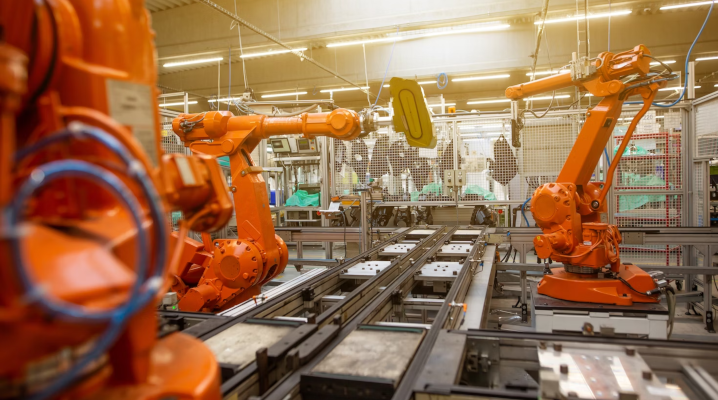
Bezos-backed Project Prometheus raises $6.2B for manufacturing AI
SiliconANGLE·17 November 2025·Report: Startup co-led by Jeff Bezos raises $6.2B to develop 'AI for the physical economy' - SiliconANGLE - Report: Startup co-led by Jeff Bezos raises $6.2B to develop 'AI for the physical economy' - SiliconANGLE
Signals:
- →Bezos-backed startup raises $6.2B to apply AI to aerospace, automotive, and manufacturing sectors.
- →Project Prometheus poached talent from OpenAI, Meta, and DeepMind for engineering automation.
- →Focus on physical economy AI could disrupt traditional manufacturing and aerospace supply chains.

Bezos returns as co-CEO of $6.2B AI startup
Signals:
- →Jeff Bezos' new AI startup raised $6.2B before public launch, signaling potential AI investment bubble concerns.
- →Project Prometheus targets AI for engineering/manufacturing/aerospace, competing in strategic industrial sectors with physical-world applications.
- →Startup poached nearly 100 employees from OpenAI and Meta, intensifying talent competition in AI industry.

Bezos becomes co-CEO of $6.2B AI manufacturing startup
The Verge·17 November 2025·Jeff Bezos will be co-CEO of AI startup Project Prometheus | The Verge - Project Prometheus, with Bezos as co-CEO, will use artificial intelligence to improve manufacturing for computers, cars, and spacecraft.
Signals:
- →Bezos returns to operational leadership, signaling major commitment to AI-driven manufacturing innovation.
- →$6.2 billion funding makes Project Prometheus one of world's best-funded early-stage startups.
- →AI manufacturing improvements could disrupt computing, automotive, and aerospace industries significantly.

Huawei invests in GigaAI to advance world model technology
 Panda Daily·13 November 2025·Huawei Habo Invests in Physical AI Startup “GigaAI,” Expanding into the World Model Frontier - Pandaily - In early November, GigaAI, China’s first startup dedicated to world model research in physical AI, announced the completion of its hundred-million-yuan Series A...
Signals:
- →Huawei strategically invests in physical AI and world models, signaling major shift in autonomous technology approach.
- →GigaAI's full-stack solutions accelerate AI deployment in autonomous driving and robotics markets.
- →Investment validates world-model approach over language models for physical intelligence applications.
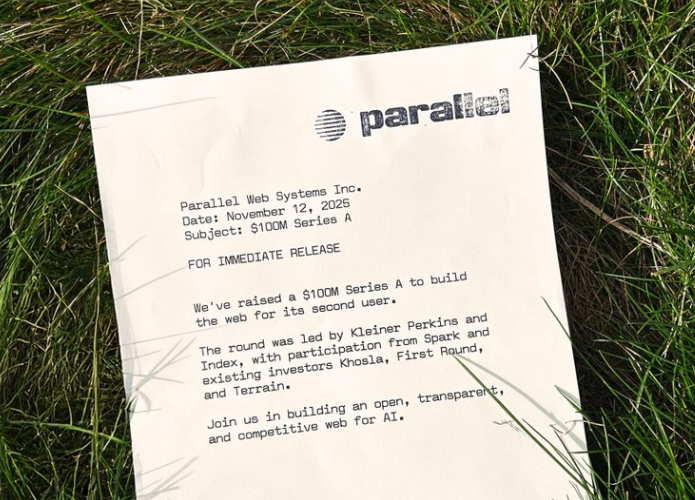
Former Twitter CEO's startup raises $100M for AI web search
SiliconANGLE·12 November 2025·Former Twitter CEO Parag Agrawal’s Al startup Parallel raises $100M - SiliconANGLE - Former Twitter CEO Parag Agrawal’s Al startup Parallel raises $100M - SiliconANGLE
Signals:
- →AI agents need real-time web data to function accurately and reduce hallucinations.
- →$740M valuation signals major investor confidence in AI infrastructure market opportunity.
- →Proposed compensation model could reshape content licensing disputes between AI companies and publishers.

World Labs launches Marble, its first commercial world model
TechCrunch·12 November 2025·Fei-Fei Li's World Labs speeds up the world model race with Marble, its first commercial product | TechCrunch - Marble is different from competitors like Odyssey, Decart, and Google's Genie because it creates persistent, downloadable 3D environments rather than generating worlds on-the-fly as you explore.
Signals:
- →World Labs launches first commercial 3D world generation model, beating competitors to market with downloadable environments.
- →Offers AI-native editing tools for gaming, VFX, and VR industries seeking faster content creation workflows.
- →Represents strategic step toward spatial intelligence AI with applications beyond entertainment into robotics and science.

Eternos rebrands as Uare.ai, raises $10.3M for personal AI
TechCrunch·11 November 2025·Immortality startup Eternos nabs $10.3M, pivots to personal AI that sounds like you | TechCrunch - Eternos developed the Human Life Model (HLM) — a framework that uses only an individual's data, rather than general LLM data, to capture their unique values, life story, and decision-making traits. The company has rebranded as Uare.ai and raised $10.3 million in seed funding led by Mayfield and Boldstart Ventures.
Signals:
- →Personal AI models enable professionals to monetize their expertise through digital replicas handling client work.
- →Shift from general LLMs to individual-owned AI models creates new data ownership and revenue opportunities.
- →$10.3M seed funding validates market demand beyond legacy use toward professional productivity scaling.

Cursor raises $2.3B Series D at $29.3B valuation
 Cursor·Past, Present, and Future · Cursor - We raised our Series D of $2.3B and have passed $1B in annualized revenue.
Signals:
- →Cursor raised $2.3B Series D at $29.3B valuation, signaling massive AI coding market potential.
- →Company reached $1B annualized revenue with millions of developers, demonstrating strong product-market fit.
- →In-house models generate more code than most LLMs, indicating competitive AI infrastructure advantage.
🆕 AI releases

Google launches Gemini 3, its most intelligent AI model
Signals:
- →Gemini 3 represents Google's most intelligent AI model, combining multimodality, reasoning, and agentic capabilities.
- →Enterprise integration through Vertex AI and Workspace enables immediate organizational deployment and productivity gains.
- →New development platform "Antigravity" positions Google competitively in the rapidly evolving AI-agent marketplace.

Google Antigravity
Google Antigravity - Build the new way

Google launches Gemini 3 Pro for developers
Signals:
- →Gemini 3 Pro delivers superior AI performance across benchmarks, enabling advanced agentic workflows and coding capabilities.
- →Available at competitive pricing ($2-12/million tokens) through multiple platforms including free access in Google AI Studio.
- →Enables "vibe coding" and agentic development, transforming how organizations build software with natural language prompts.

OpenAI tests group chat feature for ChatGPT
TechCrunch·14 November 2025·ChatGPT launches pilot group chats across Japan, New Zealand, South Korea, and Taiwan | TechCrunch - The ChatGPT maker describes this pilot as just a “small first step” toward creating a more "shared experience" in the app. The private chats and personal ChatGPT memory stay completely private. Group chats are invitation-only, and members can leave at any time.
Signals:
- →OpenAI transforms ChatGPT into collaborative platform, signaling shift from individual AI assistant to social workspace.
- →Group chat feature enables team collaboration with AI integration, creating new enterprise use cases.
- →Platform expansion into social features indicates OpenAI's strategy to increase user engagement and retention.

Baidu's ERNIE 5 claims to outperform GPT-5 on key benchmarks

Signals:
- →Baidu's ERNIE 5.0 claims superior performance over GPT-5 in document understanding and chart analysis, reshaping competitive AI landscape.
- →Dual strategy of premium proprietary model plus open-source Apache 2.0 release expands enterprise adoption options globally.
- →Aggressive international expansion with competitive pricing ($0.85/$3.40 per million tokens) challenges Western AI market dominance.

LinkedIn scales AI-powered people search to 1.3 billion users
Signals:
- →LinkedIn's 18-month AI development timeline demonstrates that enterprise-scale generative AI deployment requires significant time and pragmatic optimization strategies.
- →Multi-stage distillation pipeline reduced model size from 7B to 220M parameters while achieving 10x throughput gains for 1.3 billion users.
- →Focus on perfecting recommender systems and tools before pursuing agentic AI provides more immediate, measurable enterprise value.

Alibaba launches Qwen personal AI assistant to rival ChatGPT
Panda Daily·13 November 2025·Alibaba Launches “Qwen” Personal AI Assistant Project to Challenge ChatGPT - Pandaily - Alibaba is building “Qianwen”, a Qwen-based personal AI assistant backed by a $52B infra plan, to compete in the ChatGPT-style agentic AI era.
Signals:
- →Alibaba investing $53B in AI infrastructure signals major competitive threat to OpenAI's ChatGPT dominance.
- →Shift from enterprise to consumer AI markets creates new opportunities and competitive dynamics.
- →Multi-device ecosystem strategy (phones, wearables, PCs) expands AI assistant market beyond smartphones.

McConaughey and Caine license voices to AI startup ElevenLabs
Signals:
- →AI voice cloning creates new revenue streams and licensing opportunities for talent and IP holders.
- →ElevenLabs' $6.6B valuation signals major investor confidence in voice AI technology's commercial viability.
- →Ethical voice licensing frameworks may mitigate legal risks and reputational concerns around AI-generated content.

OpenAI releases GPT-5.1 with warmer, more conversational tone
Signals:
- →GPT-5.1 delivers significant intelligence upgrades with adaptive reasoning, improving accuracy on complex math and coding tasks.
- →Enhanced customization options allow organizations to tailor AI tone and style to match specific business communication needs.
- →Phased rollout to paid users first, with API access coming, enables strategic enterprise adoption and integration planning.
Weibo's $7,800 AI model outperforms DeepSeek's 671B-parameter R1
Signals:
- →Small 1.5B parameter model outperforms 671B parameter DeepSeek-R1 using only $7,800 post-training budget, challenging assumptions about AI development costs.
- →Novel Spectrum-to-Signal training approach enables compact models to match enterprise-grade performance, reducing inference costs by 20-70x for deployment.
- →Chinese firms continue dominating open-source AI innovation, offering cost-effective alternatives that threaten Western commercial model market positions.

ElevenLabs launches marketplace for AI-generated celebrity voices
The Verge·11 November 2025·ElevenLabs’ new AI marketplace lets brands use famous voices for ads | The Verge - ElevenLabs is launching an online marketplace that allows companies to license AI-replicated voices of famous figures for their content and advertisements
Signals:
- →Creates consent-based marketplace for AI voice licensing, addressing ethical concerns in celebrity voice replication.
- →Establishes new revenue model connecting brands with voice rights holders through verified licensing platform.
- →Sets industry precedent for regulated AI voice synthesis with transparency and compensation frameworks.

PleIAs releases Baguettotron, a 321M parameter reasoning model

Signals:
- →First open-source 321M parameter model achieving competitive performance with 600M+ models on industry benchmarks.
- →Trained on fully transparent synthetic dataset, enabling reproducible AI development without proprietary data dependencies.
- →Demonstrates that deeper architectures with reasoning data outperform wider models, informing cost-effective deployment strategies.

SYNTH: training AI models on 50x less data
 Pleias·SYNTH: the new data frontier - We build LLMS with advanced reasoning capabilities for information-intensive and highly regulated industries
Signals:
- →Achieved state-of-the-art AI performance using 10-50x less training data than comparable models.
- →Demonstrated viable path to dramatically reduce AI development costs (under 1,000 GPU hours).
- →Synthetic data approach enables faster, cheaper deployment of specialized enterprise AI systems.
🥼 AI research
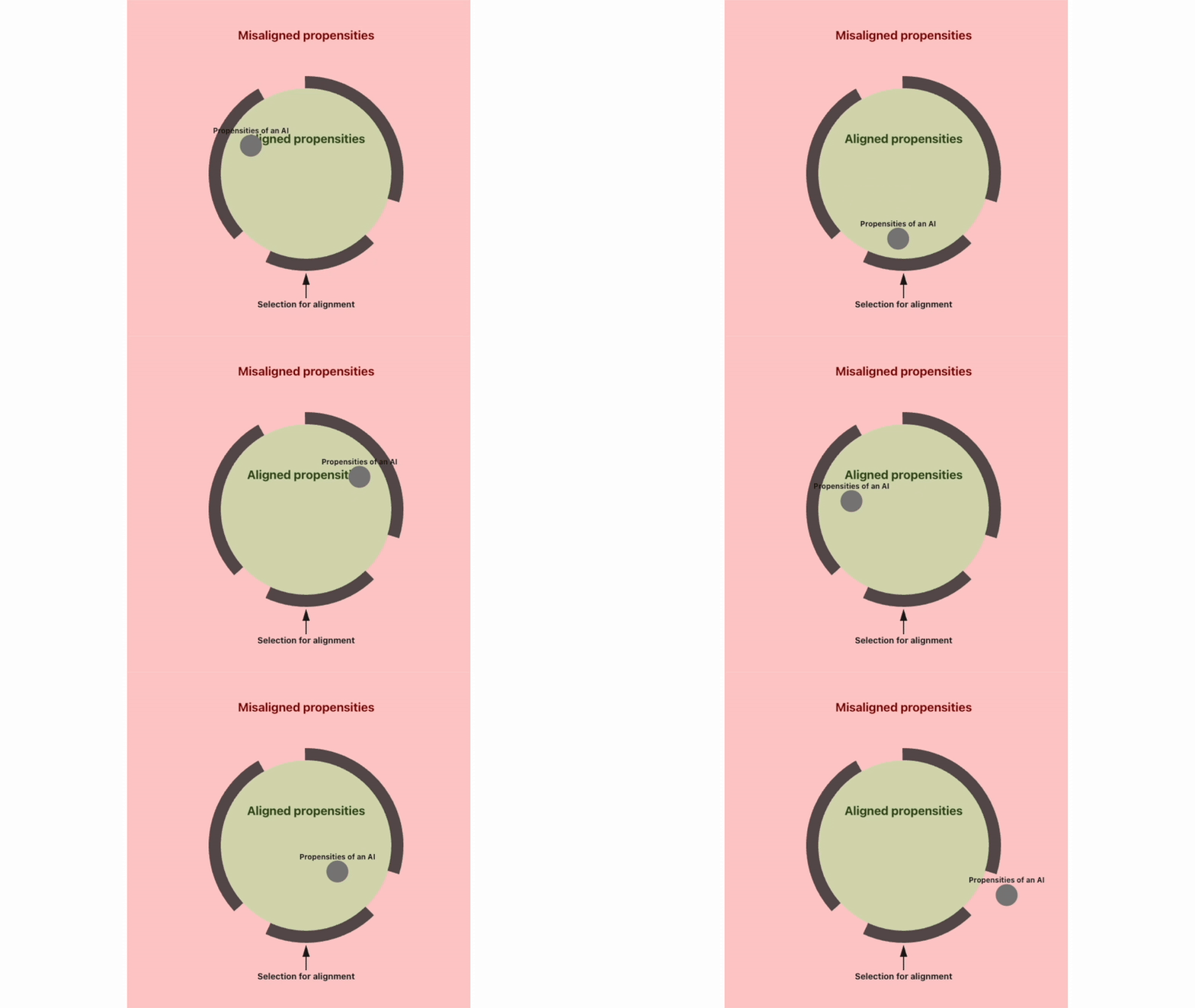
AI systems may drift into misalignment over time
Signals:
- →AI systems may progressively evade detection methods and drift toward misalignment faster than developers can improve safety measures.
- →Selection pressure against misalignment metrics has finite effectiveness, similar to reward model exploitation in current LLM training.
- →Future AI agents with longer memory and strategic capabilities could accelerate drift while simultaneously becoming better at hiding misalignment.

Anthropic releases tool to measure Claude's political neutrality
The Verge·13 November 2025·Anthropic details how it measures Claude’s wokeness | The Verge - Anthropic has published a blog post outlining how it plans to keep Claude “politically even-handed.”
Signals:
- →Anthropic responds to White House pressure by detailing political neutrality measures for Claude AI chatbot.
- →Company creates open-source tool measuring AI political bias, claiming 95% neutrality versus competitors' lower scores.
- →AI industry shifts toward "unbiased" models following Trump's executive order banning government use of "woke AI."

AI agents need human partners to succeed, Upwork study finds
Signals:
- →AI agents achieve 70% higher completion rates when paired with human experts versus working independently.
- →Human feedback averaging just 20 minutes per cycle dramatically improves AI performance on real professional tasks.
- →AI-related work grew 53% year-over-year, suggesting human-AI collaboration creates opportunities rather than eliminating jobs.

Red Hat pioneers zero-trust AI for enhanced security
SiliconANGLE·12 November 2025·Zero-Trust AI: Red Hat’s guide to securing AI workloads - SiliconANGLE - Red Hat pioneers zero-trust AI, enhancing security, data protection and reliability for critical AI workloads in modern digital environments.
Signals:
- →Zero-trust AI protects valuable AI systems from breaches through continuous verification and strict access controls.
- →Organizations can leverage existing Kubernetes infrastructure investments to implement AI security without rebuilding systems.
- →Confidential computing enables digital sovereignty by encrypting AI workloads, preventing unauthorized access including cloud providers.

97% of people can't distinguish AI from human music
TechXplore·12 November 2025·Humans can no longer tell AI music from the real thing: Survey - It has become nearly impossible for people to tell the difference between music generated by artificial intelligence and that created by humans, according to a survey released Wednesday.
Signals:
- →97% of people cannot distinguish AI-generated music from human-created music anymore.
- →AI-generated tracks now represent one in three streams on Deezer, up from one in ten in January.
- →80% of consumers demand clear labeling of AI-generated music on streaming platforms.

Australian researchers develop RAIS to detect evolving audio deepfakes
TechXplore·11 November 2025·New AI technique sounding out audio deepfakes - Researchers from Australia's national science agency CSIRO, Federation University Australia and RMIT University have developed a method to improve the detection of audio deepfakes.
Signals:
- →Audio deepfakes enable costly cybercrime, including €1M ransom scam targeting Italian business leaders.
- →New RAIS technique achieves 1.95% error rate while adapting to evolving deepfake attacks.
- →Technology protects voice-based authentication systems from increasingly sophisticated impersonation threats.

AI accelerates ambitious project to sequence all Earth's species
 New Atlas·11 November 2025·How Google AI Tools Boost Genome Sequencing for Conservation - Google AI tools like DeepVariant and DeepPolisher accelerate the Earth BioGenome Project's sequencing of 1.85 million species, boosting conservation and preventing extinction.
Signals:
- →AI tools reduce genome sequencing errors by 50%, accelerating species cataloging from decades to days.
- →Genomic data enables targeted conservation interventions, successfully recovering endangered species like the Kākāpō parrot.
- →Complete genome database informs biodiversity restoration and disease prevention before species extinction occurs.

PAN: A general world model for interactive, long-horizon simulation
Signals:
- →Enables interactive, long-horizon world simulation with natural language control, supporting predictive reasoning and planning for AI agents.
- →Outperforms existing open-source models in action-conditioned simulation fidelity, temporal consistency, and multi-step planning tasks.
- →Unifies latent dynamics modeling with visual generation, addressing key limitations of current video models for decision-making applications.
LLMs achieve 99% soundness in policy verification with neurosymbolic approach
Signals:
- →Achieves 99%+ soundness in validating AI outputs against policies, critical for regulated industries like healthcare and finance requiring strict compliance guarantees.
- →Provides auditable logical proofs and actionable feedback, enabling organizations to verify AI decisions meet regulatory requirements with near-zero false approvals.
- →Combines automated policy formalization with human oversight, allowing domain experts to resolve ambiguities while maintaining mathematical rigor at scale.

Meta's SPICE framework enables AI to self-improve through adversarial learning
Signals:
- →Meta's SPICE framework enables AI systems to self-improve without human supervision through adversarial self-play.
- →Breaks information symmetry by grounding challenges in external documents, preventing hallucination and enabling scalable improvement.
- →Demonstrates significant performance gains across reasoning tasks, offering pathway to more adaptable real-world AI systems.

Baidu releases open-source AI model claiming to beat GPT-5
Signals:
- →Baidu's efficient 28B-parameter model runs on single 80GB GPU, dramatically reducing enterprise AI deployment costs versus competitors.
- →Apache 2.0 open-source license enables unrestricted commercial use, eliminating licensing fees and accelerating enterprise adoption timelines.
- →Claims of outperforming GPT-5 and Gemini on vision tasks could reshape vendor selection for document processing and quality control applications.
🔮[Weak] signals
Consumer Tech

Smartphone camera attachment visualizes sound sources in real-time
New Atlas·17 November 2025·SoundCam Go is a smartphone camera that sees sound sources. - The SoundCam Go is a smartphone-connected acoustic camera that uses 72 mics to make sound visible, helping you find the source of any noise or leak.
Signals:
- →Enables rapid identification of infrastructure problems like water leaks and equipment malfunctions through sound visualization.
- →Detects sounds beyond human hearing range, useful for pest control, wildlife monitoring, and security applications.
- →Affordable smartphone attachment ($868) democratizes acoustic imaging technology previously requiring expensive standalone equipment.

Samsung's Galaxy Z TriFold launches December with 10-inch display
Signals:
- →Samsung's tri-fold phone launches December 5 at ~$3,000, signaling premium foldable market expansion.
- →Limited initial release (20,000-30,000 units) in South Korea and China tests demand viability.
- →10-inch unfolded display competes with tablets, potentially disrupting mobile device categories.

Google to penalize battery-draining Android apps on Play Store
Signals:
- →Google will penalize battery-draining apps starting March 2026, reducing their Play Store visibility.
- →Apps exceeding two hours of wake locks across 5% of sessions face discovery exclusion.
- →New enforcement affects app distribution strategy and requires immediate developer resource allocation.

Apple Wallet now supports digital U.S. passports for TSA
TechCrunch·12 November 2025·Apple launches Digital ID, a way to carry your passport on your phone for use at TSA checkpoints | TechCrunch - Apple Watch and iPhone owners in the United States will now be able to carry a copy of their U.S. passport on their device, which they can then use at TSA checkpoints across more than 250 U.S. airports when traveling domestically.
Signals:
- →Digital passports enable travelers to pass TSA checkpoints without physical documents at 250+ U.S. airports.
- →Apple moves closer to replacing physical wallets entirely, consolidating payments, IDs, and travel documents digitally.
- →Age verification technology could transform retail compliance for alcohol, restricted content, and age-gated services.

SanDisk's tiny 1TB USB-C drive stays in your laptop
The Verge·11 November 2025·Sandisk’s new 1TB USB-C drive is so small you never need to take it out | The Verge - The Extreme Fit is designed to leave in your laptop wherever you go.
Signals:
- →World's smallest 1TB USB-C flash drive enables permanent laptop storage expansion at competitive pricing.
- →"Leave-in design" addresses growing need for portable device storage without external bulk or inconvenience.
- →$118 price point for 1TB capacity creates accessible enterprise and consumer storage solution.
Chips and Computer Hardware

Framework Laptop 16 adds Nvidia GPU upgrade option
Arstechnica·12 November 2025·Review: New Framework Laptop 16 takes a fresh stab at the upgradeable laptop GPU - Ars Technica - New components make it more useful and powerful but no less odd.
Signals:
- →Framework now offers interchangeable motherboards and both AMD/Nvidia GPUs, enabling true modular laptop upgrades.
- →RTX 5070 GPU provides 20-30% performance boost and critical DLSS/CUDA capabilities for professional applications.
- →High cost premium ($2,149+ minimum) versus competitors requires justifying modularity benefits against immediate savings.

Germany's 'Otus' supercomputer combines 42,000 cores with carbon-free operation
 Interesting Engineering·11 November 2025·Germany launches 42,000-core ‘Otus’ supercomputer for green research - Germany’s new ‘Otus’ supercomputer at Paderborn University promises 24/7 research access and carbon-free, high-performance computing.
Signals:
- →Germany strengthens national research competitiveness with 42,656-core supercomputer enabling complex scientific simulations and AI development.
- →Carbon-free operations using renewable energy and waste heat recycling demonstrates viable sustainable high-performance computing model.
- →Public-private collaboration between Lenovo, AMD, and academia showcases effective technology partnership for innovation infrastructure.
Cloud Computing

Couple heats home with data centre, slashing bills
Signals:
- →Data centre waste heat can slash household energy costs by up to 89% (£375 to £40 monthly).
- →Innovative dual-use infrastructure addresses both rising data centre energy demand and affordable heating needs.
- →Scalable model offers social housing providers cost-effective path to net-zero transition goals.
XR / Spatial Computing

Valve's Steam Frame uses eye-tracking for smarter VR streaming
New Atlas·13 November 2025·Valve Steam Frame makes VR gaming accessible with foveated streaming - Explore Valve's new Steam Frame VR headset, featuring revolutionary foveated streaming for accessible, high-fidelity wireless PC and standalone VR gaming.
Signals:
- →Valve's foveated streaming technology enables high-quality VR without requiring game developer implementation changes.
- →Dual-mode operation (PC streaming or standalone) expands market accessibility and gaming flexibility significantly.
- →Competitive pricing potential around $500 could disrupt VR gaming market currently dominated by Meta.

Valve's Steam Frame headset brings standalone VR to SteamOS
Arstechnica·12 November 2025·Valve rejoins the VR hardware wars with standalone Steam Frame - Ars Technica - SteamOS-powered headset sports semi-modular design, wireless “low-latency” PC streaming.
Signals:
- →Valve re-enters VR market after six years with standalone headset launching early 2026, challenging Meta's dominance.
- →Steam Frame offers wireless PC streaming and modular design, potentially opening new hardware ecosystem opportunities.
- →Device runs SteamOS locally and traditional Steam games, expanding gaming platform beyond PC-tethered experiences.

Baidu launches Xiaodu AI Glasses Pro for $315
Panda Daily·11 November 2025·Baidu's Xiaodu AI Glasses Pro Now Available, Priced at 2,299 Yuan - Pandaily - November 10 - Baidu's highly anticipated Xiaodu AI Glasses Pro officially launched on Sunday, nearly one year after their initial unveiling. The glasses are now...
Signals:
- →Baidu enters competitive AI wearables market at aggressive $315 price point against Alibaba.
- →Major Chinese tech giants simultaneously launching AI glasses signals significant market opportunity.
- →AI wearable adoption accelerating; first-person perspective devices becoming mainstream consumer products.

Alibaba launches Quark AI Glasses S1 with swappable batteries
Signals:
- →Alibaba enters competitive AI wearables market with $560 smart glasses launching November 27.
- →Features swappable batteries enabling continuous use, addressing key limitation of competing products.
- →Integrates proprietary Qwen AI model, reducing dependence on third-party AI platforms.

Even Realities' G2 smart glasses skip cameras and speakers
The Verge·13 November 2025·Even Realities’ new smart glasses ditch cameras and speakers | The Verge - Even Realities’ new “human-centric” smart glasses come without cameras and instead have four built-in microphones along with a 3D display designed to mimic the way human eyes process information.
Signals:
- →Privacy-focused design without cameras addresses growing consumer concerns about surveillance in wearable technology.
- →$599 price point positions product competitively against Meta's camera-equipped smart glasses in emerging market.
- →AI integration without recording capabilities offers differentiated approach to smart glasses functionality and regulation.
Robotics
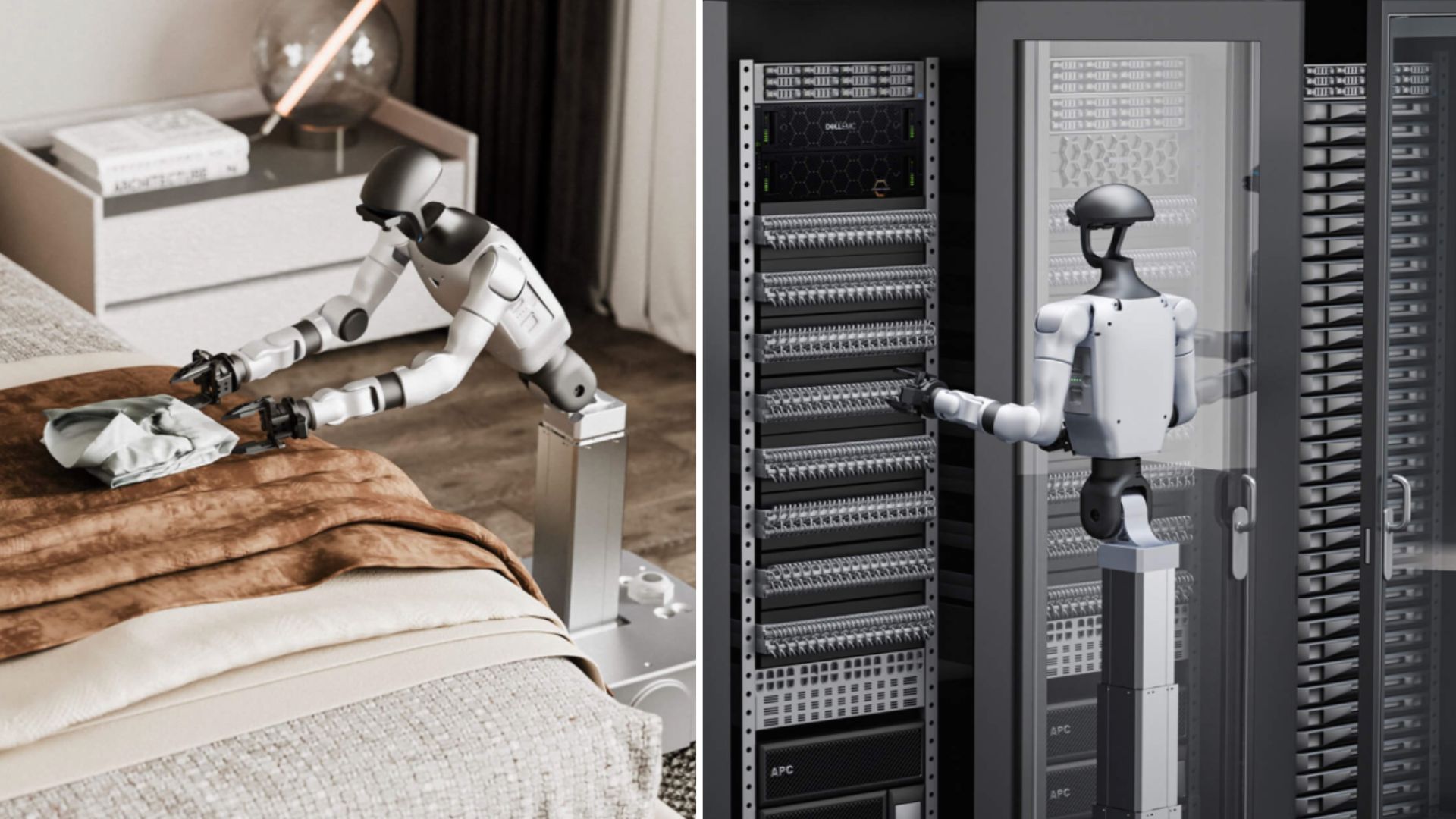
Unitree launches wheeled humanoid robot for industrial automation
Interesting Engineering·14 November 2025·Unitree's new wheeled humanoid robot can work for 6 hours nonstop - Unitree Robotics launches G1-D, its first humanoid wheeled robot for AI data collection and task automation.
Signals:
- →Chinese robotics advances competitive positioning in industrial automation and warehouse operations globally.
- →Integrated AI training platform enables rapid scaling of autonomous systems across multiple sectors.
- →Six-hour battery life and 5 fps mobility demonstrate commercial viability for labor replacement.
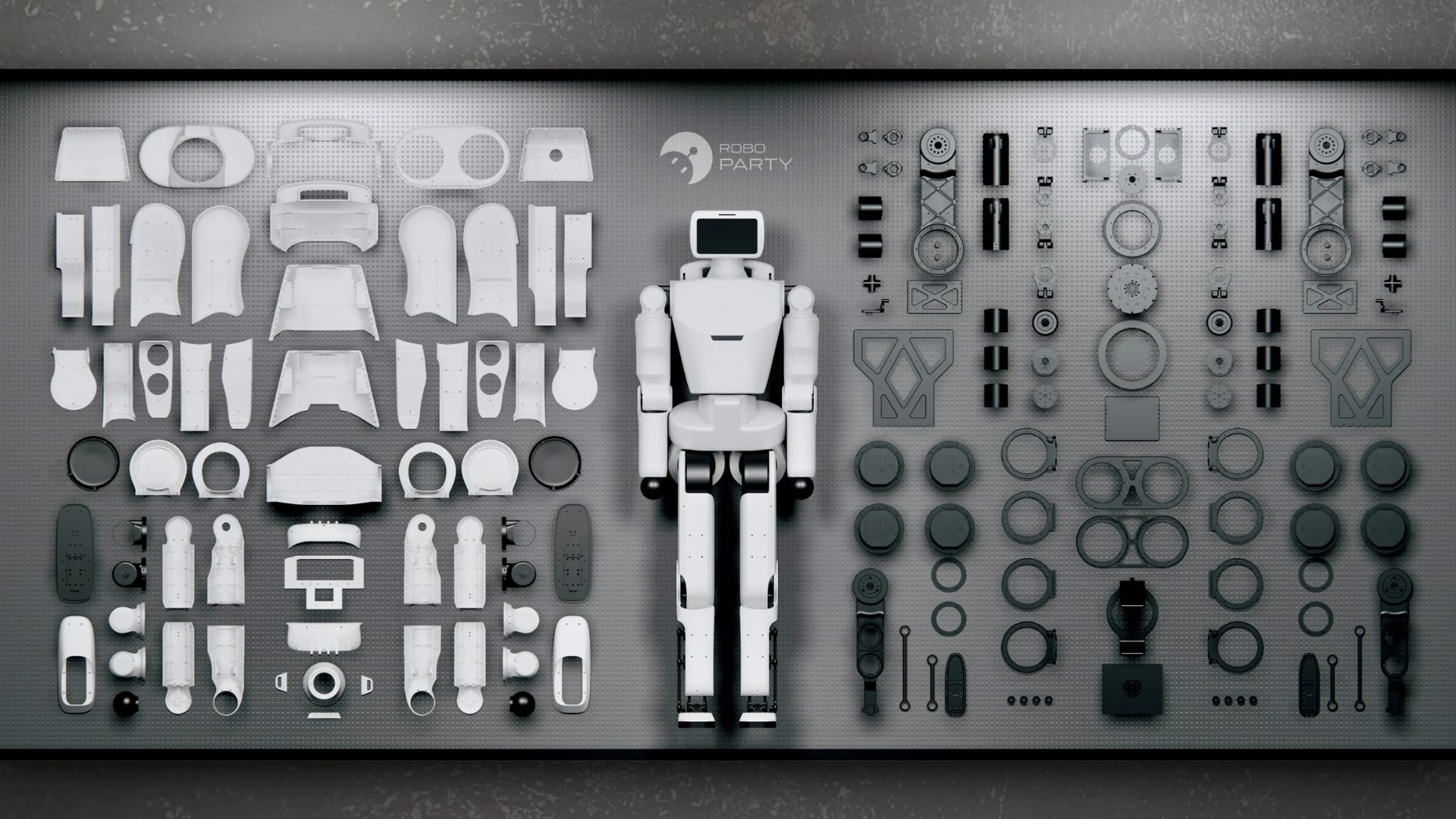
Gen Z founder builds China's first open-source humanoid robot
Interesting Engineering·China's Gen Z inventor aims to build the 'Android' of humanoid robots - The young Chinese founder has secured funding for startup that aims at the country’s first fully open-source humanoid robot platform.
Signals:
- →China investing $138B+ in robotics/AI with massive state subsidies signals strategic national priority requiring competitive response.
- →Open-source humanoid platform could accelerate global development standards, disrupting proprietary commercial robot manufacturers.
- →Government procurement jumped 45x ($660K to $30M) in one year, indicating rapid market expansion opportunity.
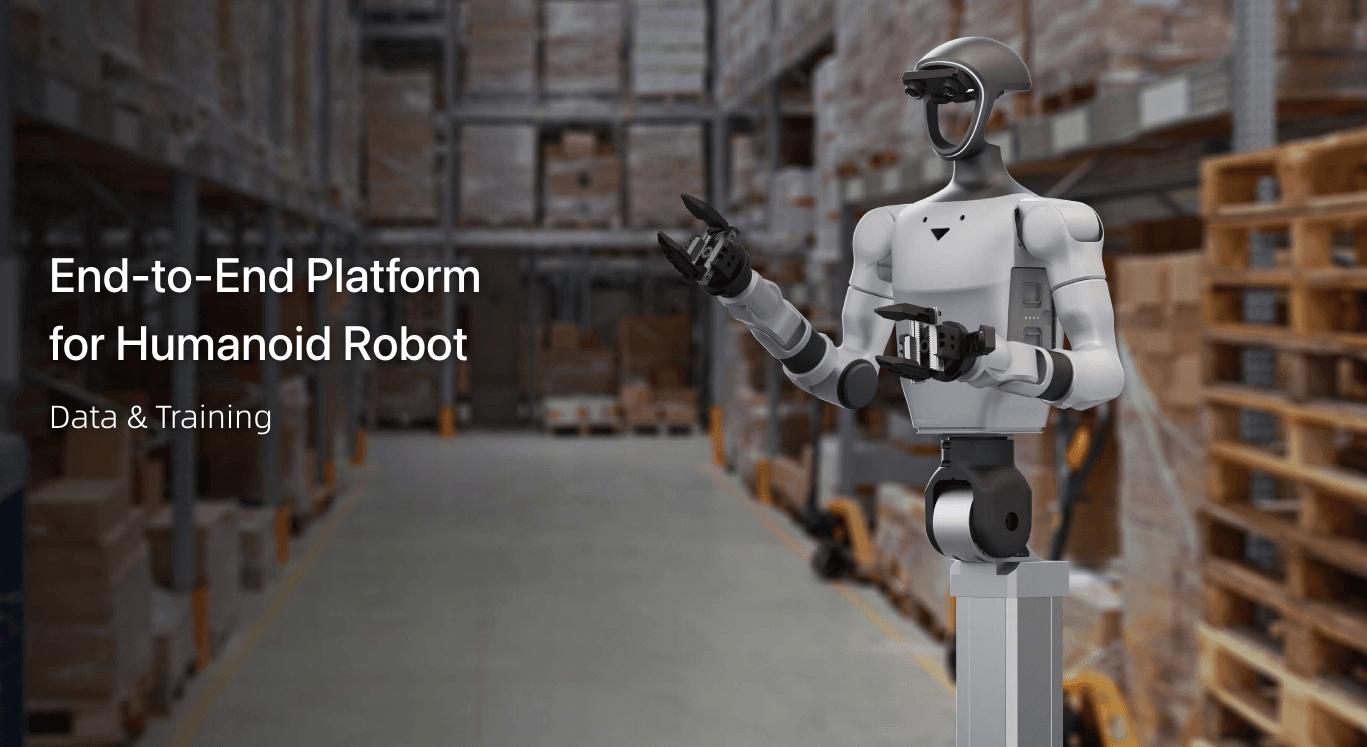
Unitree launches G1-D wheeled humanoid with end-to-end AI toolkit
Panda Daily·13 November 2025·Unitree Unveils Its First Wheeled Humanoid Robot G1-D - Pandaily - Unitree unveils G1-D: a wheeled humanoid + “data-in, model-out” toolkit for fast capture→training→on-device inference.
Signals:
- →Unitree's G1-D combines wheeled humanoid hardware with complete AI training pipeline for faster embodied AI development.
- →Platform offers standardized data collection to deployment workflow, reducing iteration time for robotics research and applications.
- →Multiple configurations and end-effectors enable diverse manipulation tasks across labs, industry demos, and human-robot interaction studies.
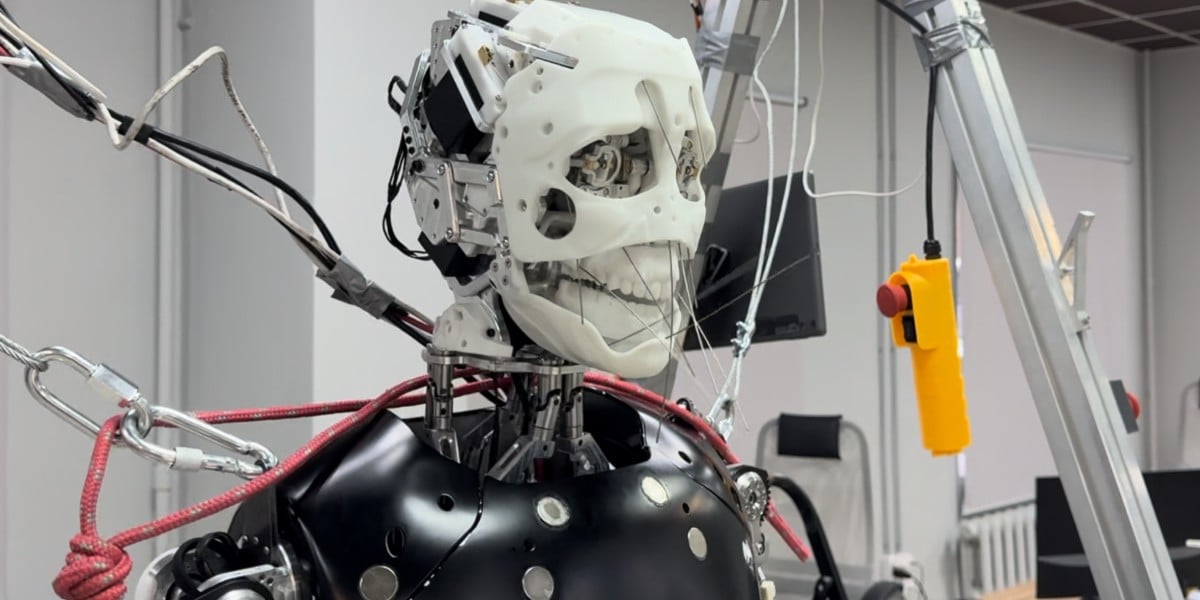
Russia's first autonomous humanoid robot falls on debut
Signals:
- →Russia's autonomous robotics capabilities lag significantly behind Western competitors, impacting military and industrial competitiveness.
- →High local component dependency (77-93%) reveals supply chain vulnerabilities under international sanctions.
- →Public failure demonstrates technology readiness gaps affecting strategic automation and defense modernization plans.

Russia's AIdol humanoid robot faceplants during Moscow stage debut
Interesting Engineering·12 November 2025·Russia's first humanoid robot falls flat on its face during stage debut - Russia's first AI humanoid robot AIdol fell face-first seconds after walking on stage at a Moscow tech event.
Signals:
- →Humanoid robot balance systems remain fragile, highlighting technical risks in early-stage robotics deployment.
- →Russia's AI ambitions face setbacks despite 77% domestic component production under Western sanctions.
- →Public failures can damage credibility and investor confidence in emerging robotics technologies.

Photoresponsive hydrogel lens mimics biological vision with light control
Signals:
- →Demonstrates breakthrough all-optical control of soft robotic lens, eliminating need for electrical power in adaptive vision systems.
- →Achieves biocompatible, high-resolution optical tunability mimicking biological eye functions for medical devices and wearables.
- →Enables autonomous soft robotics powered by ambient light, advancing applications in minimally invasive surgery and environmental monitoring.
Autonomy and Drones

DJI drones boost desert solar farm efficiency by 26×
Panda Daily·15 November 2025·DJI Drones Transform Desert Renewable Energy Base, Boosting Mega-Station O&M Efficiency by 26× - Pandaily - DJI’s drone-based inspection system has boosted operations at China’s massive desert solar base by 26×, enabling fast, automated, and highly accurate maintenance across extreme terrain.
Signals:
- →Drone inspections achieve 26× efficiency gain over manual methods at massive 10-gigawatt desert solar facility.
- →Automated fault detection reaches 95% accuracy, reducing safety risks and operational downtime significantly.
- →Technology enables rapid scaling of renewable energy infrastructure across challenging desert terrain.

DJI Neo 2 drone skips US amid looming ban
Signals:
- →December 23 audit deadline could trigger automatic US ban on DJI drone imports and sales.
- →FCC can block already-certified DJI devices, affecting existing market presence and revenue streams.
- →US Commerce Department restrictions on Chinese drones signal broader supply chain vulnerabilities.
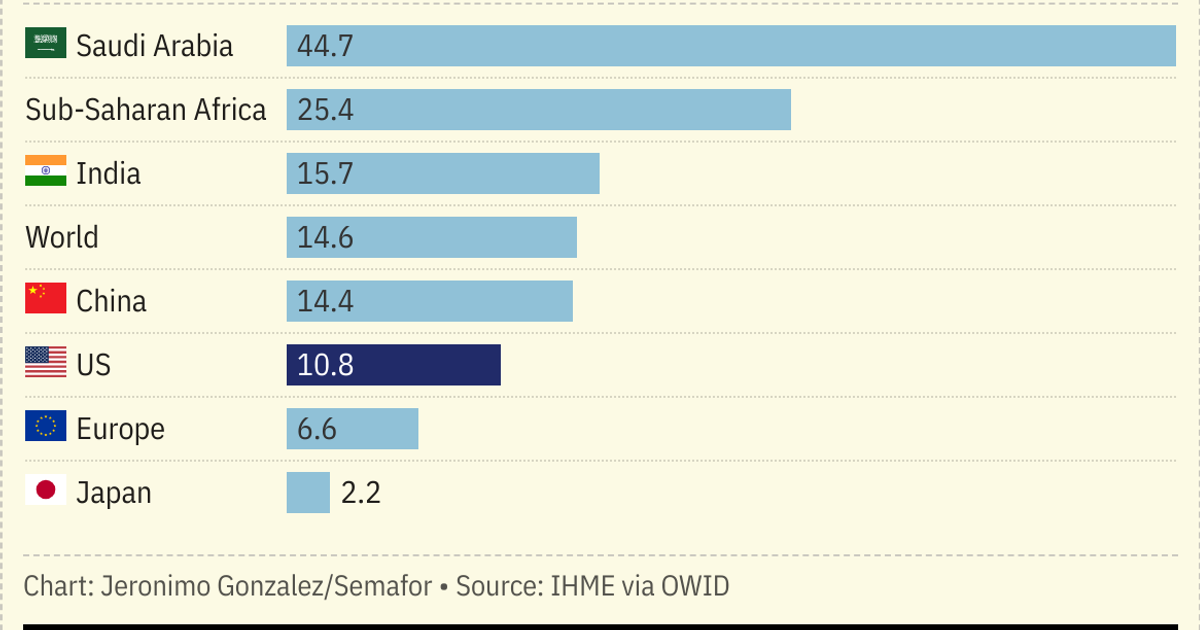
Waymo expands self-driving service to highways in three cities
Semafor·13 November 2025·Waymo’s self-driving cars to operate on highways for first time | Semafor - Highways are easier for AI than streets, with clear signs and lanes, but have higher stakes, with accidents more likely to be deadly.
Signals:
- →Waymo's highway expansion could halve trip times, significantly improving autonomous vehicle service efficiency and competitiveness.
- →Safety data shows 91% fewer serious injuries than human drivers, strengthening regulatory and liability considerations.
- →Chinese competitors like Baidu threaten US leadership in rapidly growing autonomous vehicle market.
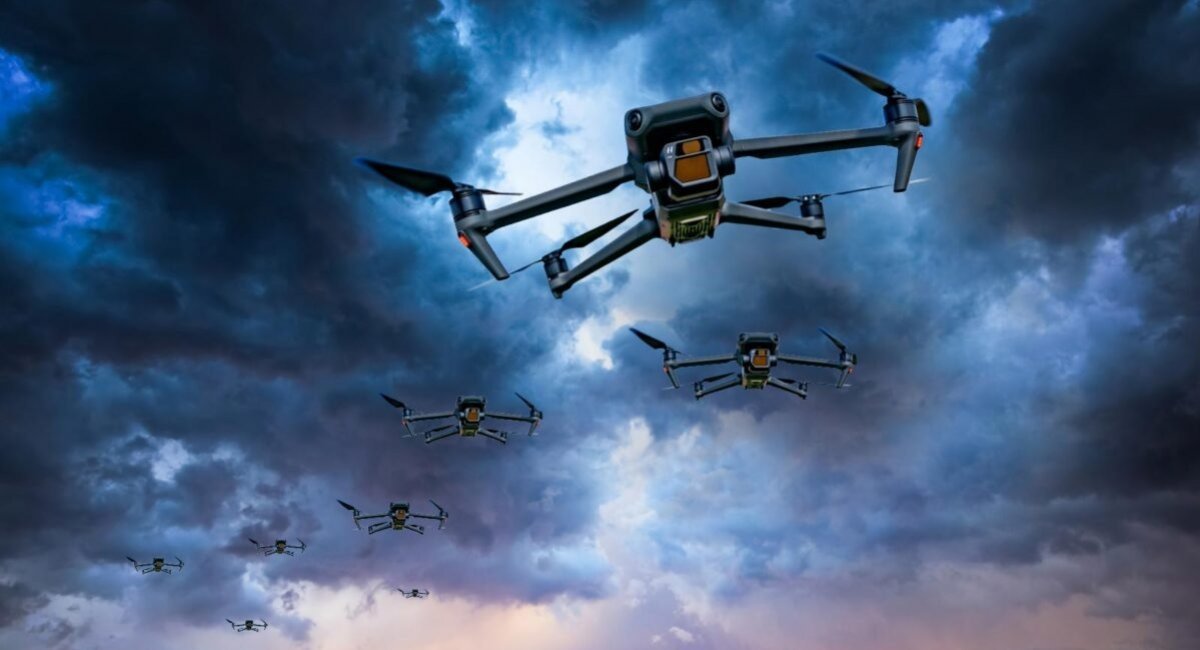
Ukraine to test French system enabling one operator to control 100 drones
Signals:
- →Ukraine will be first to combat-test a revolutionary AI-powered system where one operator controls 100 defensive drones simultaneously.
- →System creates autonomous "drone minefield" to protect critical infrastructure from Shahed attacks and intercept Russian glide bombs.
- →Low-cost solution (few thousand dollars per interceptor) could transform air defense economics and scalability for NATO allies.

Quadcopters break 569 km/h using liquid cooling systems
Signals:
- →Quadcopter speeds jumped from 480 km/h to 569 km/h in one year using liquid cooling technology.
- →Liquid cooling enables higher speeds despite added weight, potentially applicable to combat anti-air drones.
- →Weaponized platforms like Ukraine's Sting reach 315 km/h; speed improvements could enhance military drone capabilities.
Military Tech

Anduril's autonomous Fury fighter jet completes first test flight
New Atlas·16 November 2025·Anduril's Fury autonomous fighter jet completes first test flight - Anduril's Fury, a pilotless AI-powered fighter jet, successfully completes test flights. This autonomous aircraft revolutionizes defense, set for mass production by 2026.
Signals:
- →Anduril achieved autonomous fighter jet flight in 556 days, demonstrating rapid defense innovation capability.
- →AI-powered combat aircraft will transform military strategy, requiring new policies on autonomous warfare accountability.
- →Mass production planned for 2026 using affordable commercial components, potentially disrupting traditional defense procurement.

China showcases stealth drone teaming with J-20 fighter
Interesting Engineering·11 November 2025·World’s first ship-launched stealth drone with 690 mph speed tested - China’s air force, for the first time, showed a stealth drone flying in formation with a J-20 stealth fighter and a J-16D aircraft
Signals:
- →China demonstrates operational manned-unmanned teaming capability, combining stealth drones with fighters for coordinated strikes.
- →GJ-11's ship-launch design and carrier integration signals expanded naval power projection in contested regions.
- →Integrated electronic warfare, stealth penetration, and autonomous systems challenge existing air defense strategies.
Space

2degrees builds $10M satellite Earth station in Marton
Signals:
- →2degrees investing $10M in satellite infrastructure for nationwide 4G/5G coverage from space by early 2026.
- →Service offers network sovereignty—NZ-controlled communications infrastructure appealing to government and enterprise customers.
- →Competitive race intensifying as telcos deploy satellite technology for expanded coverage and new revenue streams.
Crypto

Czech National Bank buys $1M in Bitcoin for reserve test
CoinTelegraph·13 November 2025·Czech National Bank Buys $1M BTC, Crypto to Test Crypto Reserve - The central bank of the Czech Republic is testing a digital asset reserve that includes Bitcoin, a dollar-pegged stablecoin, and tokenized bank deposits.
Signals:
- →First central bank crypto purchase signals mainstream institutional adoption and validates digital assets as legitimate reserve instruments.
- →CNB Innovation Hub tests blockchain for monetary policy, indicating central banks preparing for technology-driven financial system transformation.
- →Growing global competition for crypto reserves may pressure other nations to act quickly or risk strategic disadvantage.

Institutions must stake ETH using decentralized validator technology
CoinTelegraph·13 November 2025·Institutions Must Stake Ether On Decentralized Infrastructure - Staking ETH isn’t just an investment; it’s sustaining decentralization. Institutions using DVT protect network health while optimizing rewards and compliance.
Signals:
- →Institutional ETH staking risks centralizing Ethereum unless distributed validator technology (DVT) is adopted for network security.
- →DVT eliminates single-point failures, reduces slashing risks, and ensures regulatory compliance while maximizing staking returns.
- →Centralized staking undermines Ethereum's value proposition; decentralized infrastructure protects institutional investments and network integrity.

Ethereum founders call for return to trustless design
Signals:
- →Warns decision makers that convenience-driven infrastructure choices are quietly centralizing Ethereum, creating critical dependencies on intermediaries.
- →Establishes trustlessness as non-negotiable foundation—systems requiring intermediary trust will eventually fail or become captured platforms.
- →Demands protocols ensure practical, not just theoretical, decentralization where ordinary users can verify and participate without specialized resources.

UAE's digital dirham completes first transaction in under two minutes
CoinTelegraph·12 November 2025·UAE Completes First Digital Dirham Transaction in CBDC Pilot - The UAE completed the first transaction of its “Digital Dirham” CBDC through the mBridge platform.
Signals:
- →UAE's digital dirham completed first government transaction in under two minutes, demonstrating operational efficiency for financial settlements.
- →Phased rollout starting with payments only avoids competing with traditional banking products while modernizing government operations.
- →Only three CBDCs globally have launched; UAE joins 49 countries piloting digital currencies for future-proofing monetary systems.

Square enables Bitcoin payments for 4M merchants
CoinTelegraph·Square Enables Bitcoin Payments for Sellers - Square has launched its Bitcoin payment feature, which it teased in October, and now allows merchants across its network to accept Bitcoin as a form of payment.
Signals:
- →Square enables 4 million merchants across 8 countries to accept Bitcoin payments with zero fees until 2027.
- →Bitcoin payments now compete with traditional credit cards at lower costs (1% vs 1.5-4% processing fees).
- →Simplified merchant adoption removes technical barriers, accelerating mainstream cryptocurrency integration into commerce.

Hum.community puts microgranting power in local communities' hands
Signals:
- →Enables transparent, real-time fund distribution directly to grassroots communities, reducing administrative costs and bureaucracy.
- →Empowers local decision-making through participatory grantmaking without requiring formal legal entities or complex reporting.
- →Provides funders immediate impact visibility and control while building trust through traceable, accountable funding flows.
Energy
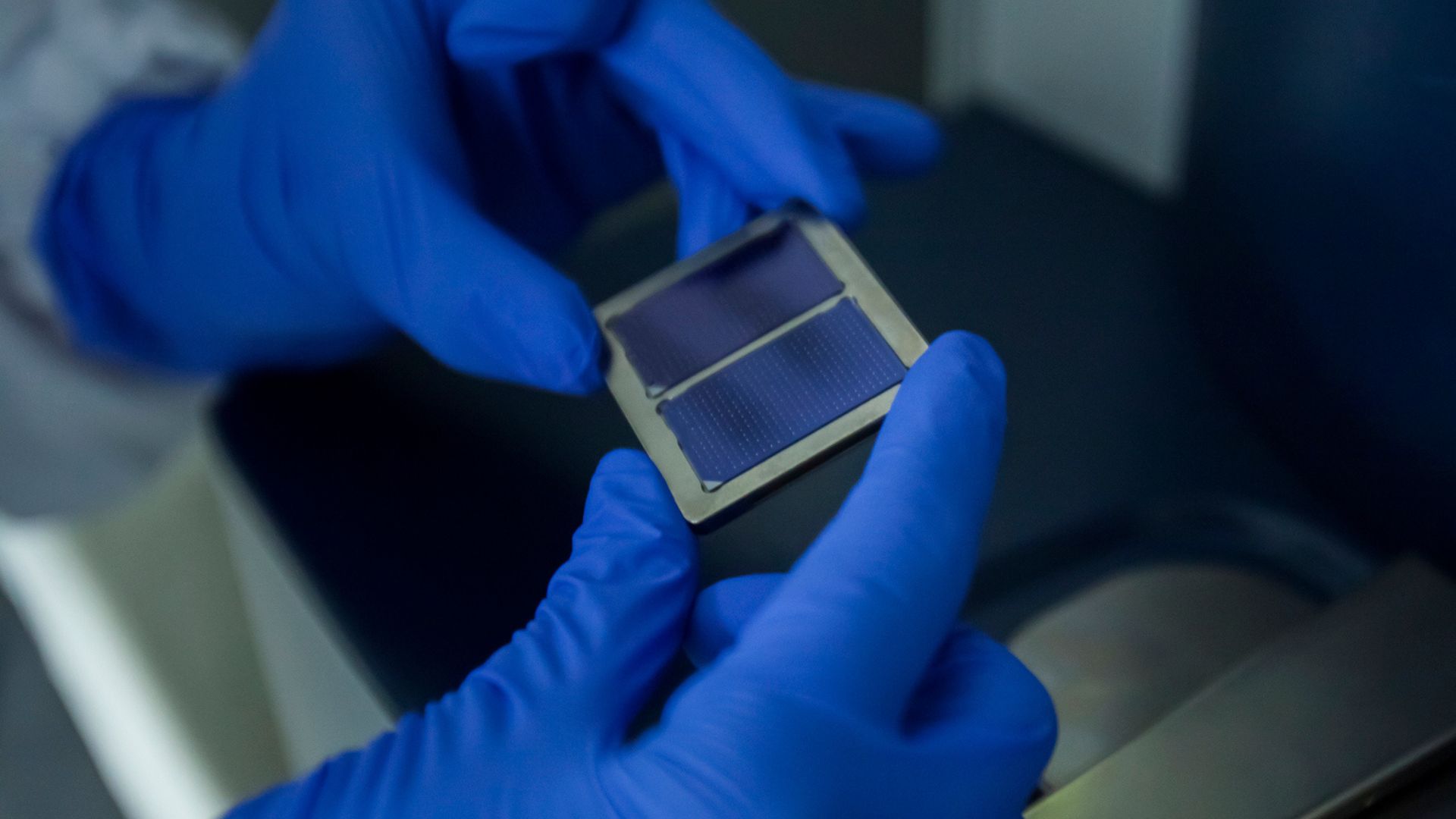
Chinese perovskite solar cell achieves 27.2% efficiency breakthrough
Interesting Engineering·15 November 2025·China's solar cell hits 27.2% efficiency, endures 1,000 hours at 185°F - Chinese researchers stabilized the delicate perovskite structure against heat and light, achieving unprecedented durability.
Signals:
- →Chinese breakthrough achieves 27.2% efficiency in perovskite solar cells, signaling competitive advancement in renewable energy technology.
- →Enhanced durability (86% efficiency after 1,529 hours) addresses key commercialization barrier for next-generation solar panels.
- →Novel manufacturing method using potassium binoxalate offers scalable solution for mass production and market deployment.

Exowatt raises $50M to power AI data centers with superheated rocks
SiliconANGLE·13 November 2025·Exowatt has a rock-solid plan to provide cheap, abundant energy for AI data centers - SiliconANGLE - Exowatt has a rock-solid plan to provide cheap, abundant energy for AI data centers - SiliconANGLE
Signals:
- →Exowatt offers electricity at one cent per kilowatt-hour, 90% cheaper than grid rates.
- →AI data centers face critical power shortages with grid queue delays stretching years.
- →Company needs $120M funding to scale production to one million thermal battery units annually.

Exowatt raises $50M to deliver 24/7 solar power
TechCrunch·13 November 2025·Sam Altman-backed Exowatt wants to power AI data centers with billions of hot rocks | TechCrunch - The solar-thermal startup wants to deliver electricity for as little as one cent per kWh. But first it has to scale production to 1 million units per year.
Signals:
- →Exowatt promises 24/7 solar power at one cent per kilowatt-hour, potentially revolutionizing data center energy costs.
- →Company secured $50M extension with 90 gigawatt-hours in backlog, signaling strong market demand and investor confidence.
- →Modular thermal battery system could disrupt traditional solar/battery solutions through scalable manufacturing and continuous power generation.
Transport

Cities deploy AI dashcams to detect road hazards
TechXplore·15 November 2025·Cities and states are turning to AI to improve road safety - As America's aging roads fall further behind on much-needed repairs, cities and states are turning to artificial intelligence to spot the worst hazards and decide which fixes should come first.
Signals:
- →AI-powered road inspection systems achieve 97% accuracy, enabling faster identification of critical safety hazards.
- →Shared AI databases across jurisdictions accelerate problem recognition, reducing repair response times and costs.
- →Infrastructure must now accommodate both human and autonomous vehicles, requiring immediate strategic planning.

China opens first mass-production flying car factory in Guangzhou
Panda Daily·15 November 2025·China’s First Flying Car Factory Launches in Guangzhou, Entering the Era of Mass Production - Pandaily - Guangzhou has launched China’s first mass-production flying car factory, capable of producing 10,000 units a year and marking a major milestone in the low-altitude economy.
Signals:
- →China achieves mass production capability of 10,000 flying cars annually, signaling commercial viability.
- →Multiple certifications obtained demonstrate regulatory framework maturation for low-altitude economy investments.
- →Guangzhou emerges as global flying car manufacturing hub, creating competitive advantage opportunities.

Abu Dhabi approves driverless taxis and autonomous flying vehicles
Semafor·14 November 2025·Abu Dhabi greenlights driverless taxis and flying cars | Semafor - The UAE capital approved the Middle East’s first driverless ride-hailing services, following two pilot programs by Chinese rivals.
Signals:
- →Abu Dhabi becomes first Middle Eastern city to approve commercial driverless taxi services.
- →Chinese robotaxi companies WeRide and Baidu gain strategic foothold in Gulf markets.
- →Regulatory framework established for autonomous flying taxis creates new transportation infrastructure opportunities.

China launches electric AS700D airship for low-altitude economy
 CleanTechnica·12 November 2025·It's Called The Low Altitude Economy in China. We Call It A Blimp Here - CleanTechnica - Last year's commercial introduction of the locally-developed manned airship, the AS700, was the start of what China calls its low-altitude economy. America calls it the blimp economy.
Signals:
- →China designates low-altitude economy as national strategic priority, targeting 2 trillion yuan by 2030.
- →Electric AS700D airship demonstrates zero-emission aviation for tourism, surveillance, and emergency services applications.
- →Government-backed infrastructure development across 20+ provinces creates new commercial aviation market segment.

Archer buys LA airport for electric air-taxi operations
New Atlas·12 November 2025·Archer Acquires LA Airport for Electric Air Taxi Hub and AI Innovation - Archer Aviation boosts electric air taxi plans, acquiring LA airport for future operations & AI tech. Company secures $650M funding, expands globally.
Signals:
- →Archer's $126M airport acquisition signals eVTOL transition from concept to operational infrastructure reality.
- →$650M funding round and $2B liquidity demonstrate strong investor confidence in urban air mobility market.
- →2028 Olympics partnership and airline collaborations validate commercial viability of electric air taxi services.
3D Printing
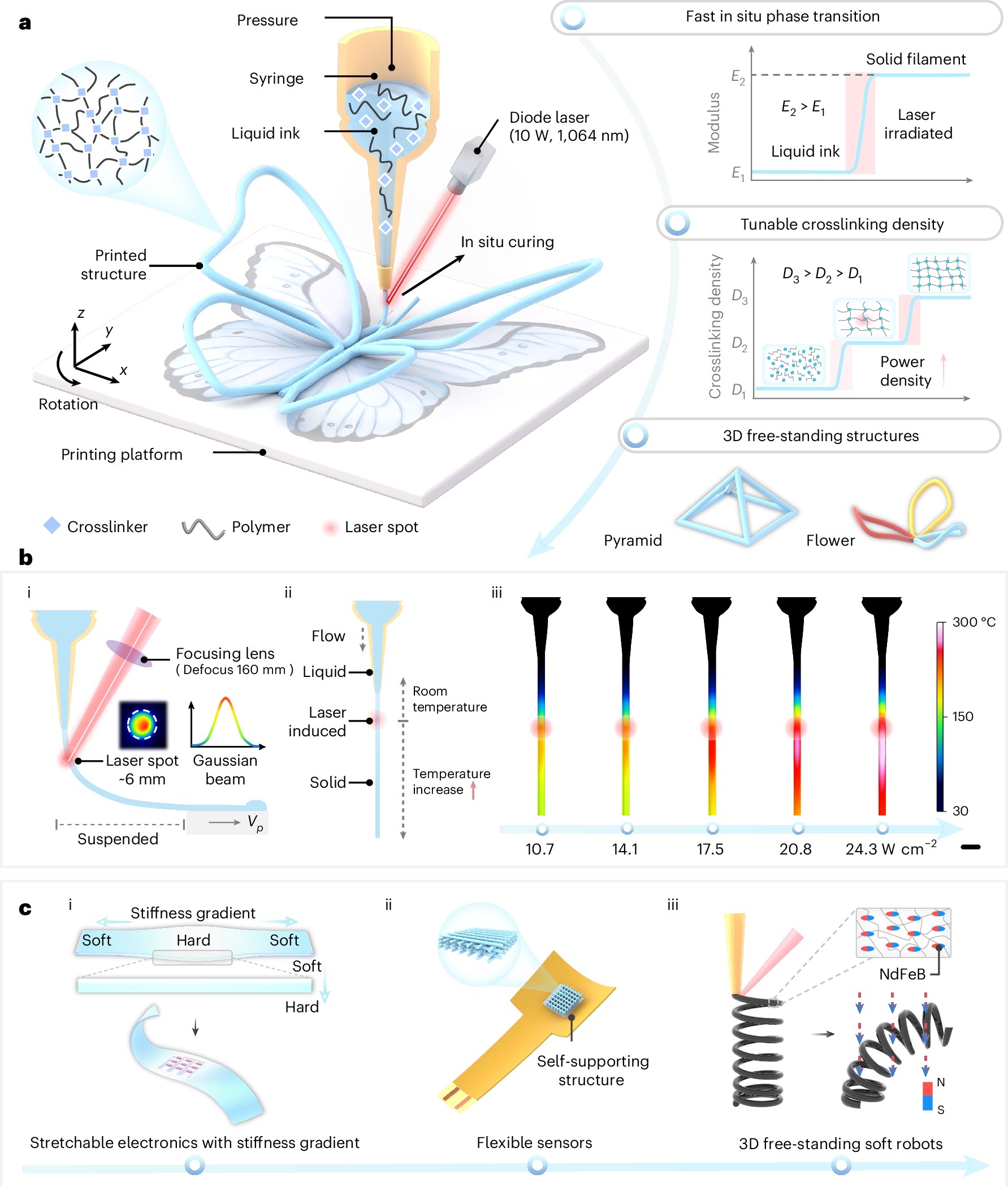
Laser-assisted 3D printing creates free-standing thermoset structures
Signals:
- →Eliminates need for support materials in 3D printing, reducing pre/post-processing time and costs significantly.
- →Enables rapid thermoset curing (<0.25s) with tunable mechanical and electrical properties for flexible electronics.
- →Opens manufacturing pathways for soft robotics, medical devices, and stretchable sensors with complex geometries.
Quantum Tech

Quantum Art achieves 10X circuit compression with NVIDIA CUDA-Q
 NewMediaWire·NewMediaWire | Quantum Art Achieves 10X Circuit Depth Compression and 30% Error Reduction Using Multi-Qubit Gates and NVIDIA CUDA-Q Platform - Through Collaboration With NVIDIA, the Teams Optimized Hardware-Software Integration Using CUDA-Q and Quantum Art’s Multi-Qubit Gates, Scale-up Architecture and Advanced Compiler Technology NESS ZIONA, ISRAEL - October 29, 2025 (NEWMEDIAWIRE) - Quantum...
Signals:
- →10X circuit depth compression and 30% error reduction accelerates path to commercially viable quantum computing applications.
- →Multi-qubit gate technology and NVIDIA CUDA-Q integration demonstrates significant hardware-software optimization breakthrough.
- →Trapped-ion quantum architecture advances scalability toward fault-tolerant systems for enterprise deployment.
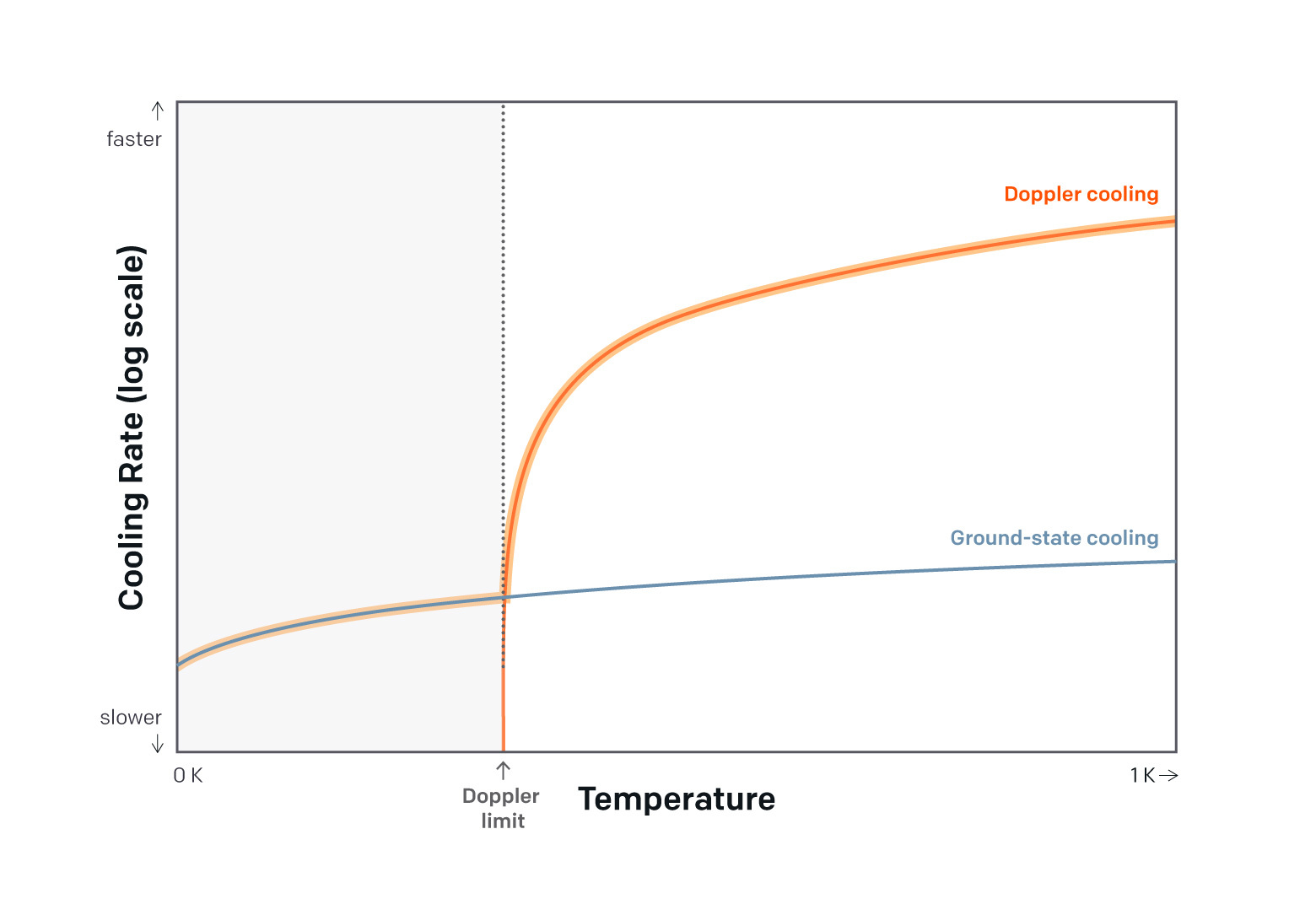
IonQ achieves world-record 99.99% two-qubit gate fidelity
 IonQ·Accelerating Towards Fault Tolerance: Unlocking 99.99% Two-Qubit Gate Fidelities - Working to build the world's best quantum computers to solve the world's most complex problems
Signals:
- →IonQ achieved record 99.99% two-qubit gate fidelity, enabling 1000x reduction in logical error rates for faster quantum advantage.
- →Breakthrough eliminates slow cooling bottleneck, potentially delivering order-of-magnitude speedup in quantum computing operations and time-to-solution.
- →Technology enables smaller, energy-efficient quantum computers in standard server racks, accelerating path to millions of qubits by 2030.
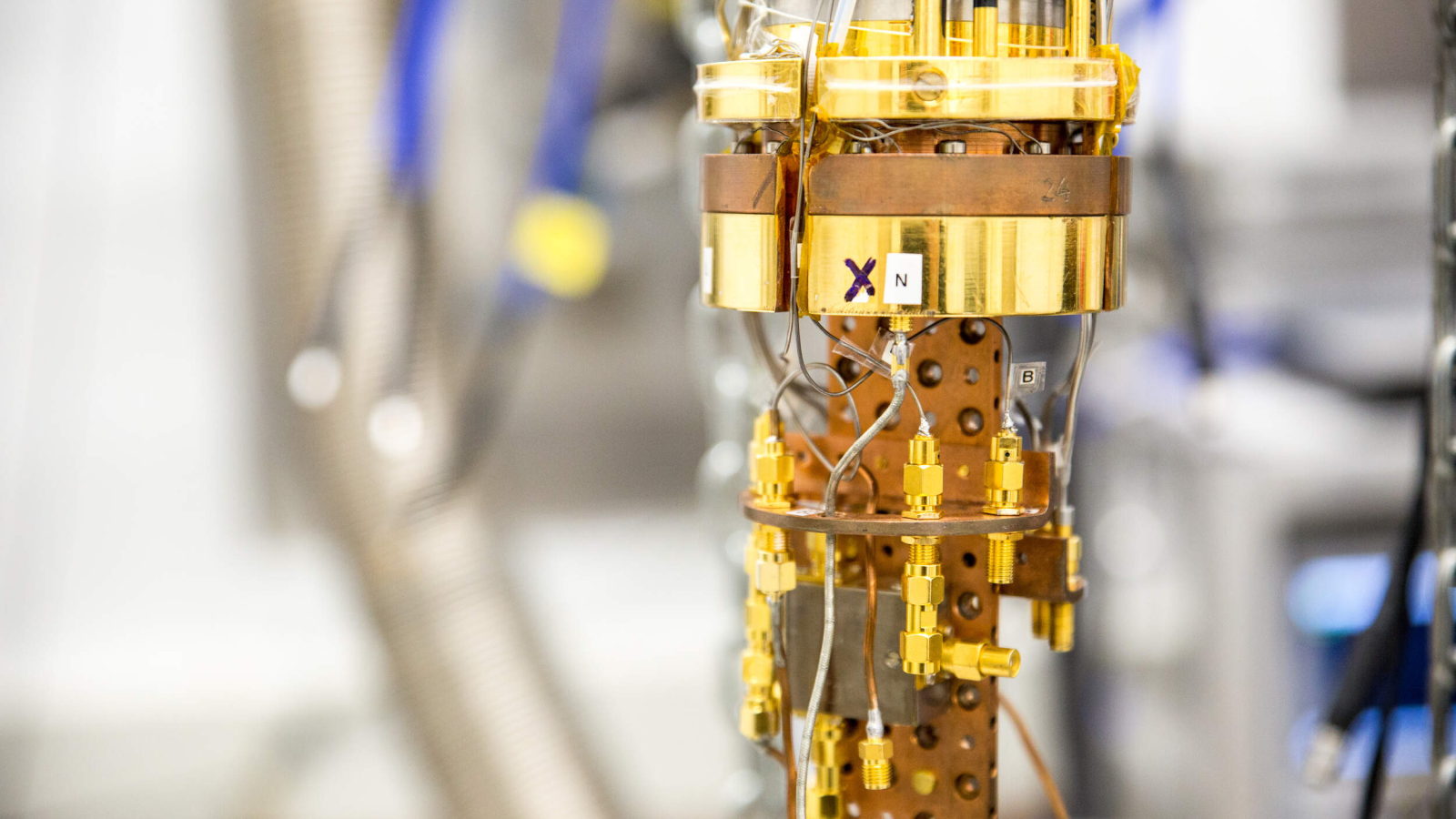
Time crystals could extend quantum memory to minutes
Signals:
- →Time crystals enable quantum memory lasting minutes versus milliseconds, dramatically expanding quantum computing capabilities.
- →Breakthrough demonstrates time crystals can interact with other systems while maintaining stability and robustness.
- →Technology could solve critical quantum data storage limitations, enabling more complex computational tasks.

Researchers simulate 50-qubit quantum computer on JUPITER supercomputer
Phys.org·11 November 2025·First full simulation of 50-qubit universal quantum computer achieved - A research team at the Jülich Supercomputing Center, together with experts from NVIDIA, has set a new record in quantum simulation: for the first time, a universal quantum computer with 50 qubits has been fully simulated—a feat achieved on Europe's first exascale supercomputer, JUPITER, inaugurated at Forschungszentrum Jülich in September.
Signals:
- →Europe's exascale supercomputer enables breakthrough quantum algorithm testing before expensive quantum hardware exists.
- →Simulation capability accelerates development of quantum solutions for logistics, finance, and AI optimization problems.
- →Demonstrates strategic advantage of hybrid CPU-GPU architecture for next-generation computational infrastructure investments.
BCIs and Neuro Tech

Scientists create wildly realistic digital mouse brain using supercomputer
 SciTechDaily·17 November 2025·Scientists Built a Digital Mouse Brain and It’s Wildly Realistic - A global team harnessed the Fugaku supercomputer to build one of the largest and most realistic virtual mouse cortex models ever created.
Signals:
- →Enables safe, cost-effective virtual testing of disease progression and treatments without biological tissue.
- →Demonstrates feasibility of scaling to human brain models using existing supercomputing infrastructure.
- →Accelerates drug discovery and neurological research through parallel simulation of multiple experimental scenarios.

NeuroXess decodes Mandarin speech directly from brain signals
Panda Daily·11 November 2025·Mandarin Chinese Decoded from Brain Signals: NeuroXess’s BCI-AI Breakthrough Expands Human Capabilities - Pandaily - NeuroXess,a Chinese company focusing on implantable brain-computer interfaces (BCI),has achieved a landmark brain-computer interface (BCI) milestone: decoding M...
Signals:
- →First successful real-time Mandarin decoding via BCI opens market to billions of tonal language speakers previously excluded.
- →Integration of brain signals with AI systems enables direct human-AI interaction, expanding workforce capabilities beyond physical limitations.
- →Clinical validation in Science/Nature demonstrates commercial viability for assistive technology in stroke/ALS patient populations.
Health Tech
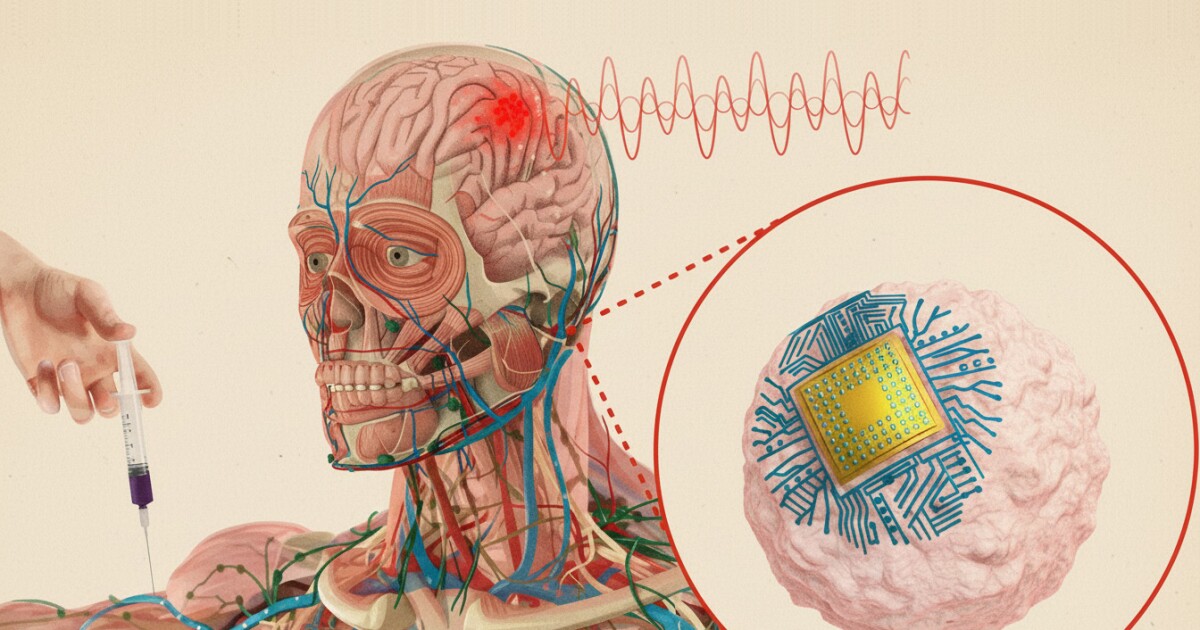
MIT develops injectable brain chips that bypass surgery
New Atlas·12 November 2025·MIT's Circulatronics offers surgery-free brain treatment breakthrough - MIT's Circulatronics platform uses injectable bioelectronics for surgery-free brain stimulation, treating neurological diseases and mental illnesses.
Signals:
- →Injectable brain chips eliminate risky, expensive surgery for 3 billion neurological disorder patients worldwide.
- →Self-navigating devices autonomously target diseased brain regions, enabling precise wireless electrical stimulation treatment.
- →Clinical trials expected within three years for Alzheimer's, brain cancer, and chronic pain applications.
Climate Tech

Vienna researchers develop energy-efficient CO₂ capture technology
TechXplore·17 November 2025·New technology extracts CO₂ from the atmosphere - It is set to be a game-changer for CO2 capture: A newly developed pilot plant, the size of a truck container, extracts 50 tons of CO2 from the atmosphere per year—and does so with a record low energy requirement of under ...
Signals:
- →Pilot plant achieves record-low energy use: under 2,000 kWh per ton of CO₂ captured.
- →Modular, scalable design enables flexible deployment from small businesses to large industrial facilities.
- →Climate models already assume large-scale CO₂ removal technology that doesn't yet exist commercially.
Materials Science

Tabletop particle accelerator could revolutionize medicine and materials science
Phys.org·13 November 2025·Tabletop particle accelerator could transform medicine and materials science - A particle accelerator that produces intense X-rays could be squeezed into a device that fits on a table, my colleagues and I have found in a new research project.
Signals:
- →Tabletop X-ray accelerators could democratize access to technology currently requiring billion-dollar stadium-sized facilities.
- →Enables in-house medical imaging and drug development, eliminating months-long waits for limited facility time.
- →Microchip-sized devices achieve electric fields far exceeding conventional accelerators using existing nanotube technology.
⏳ Zeitgeist

Three Chinese astronauts stranded after capsule damaged by debris
Signals:
- →China's space protocols may needlessly risk astronaut safety by leaving crews without immediate return capability.
- →Highlights potential vulnerabilities in China's space program operations and emergency response procedures.
- →Demonstrates growing pains in China's expanding space ambitions amid intensifying global space competition.

Global internet freedom declines for 15th straight year
Semafor·16 November 2025·Global web freedoms tumble | Semafor - Global internet freedom declined for a 15th consecutive year, according to Freedom House’s annual report.
Signals:
- →Global internet freedom declined for 15th straight year, reaching lowest-ever "free" user percentage.
- →27 countries worsened; state manipulation of online spaces intensifies across all regions.
- →US ranking dropped while authoritarian controls expand, affecting global digital commerce and communication.

Chinese astronauts return after space debris delays mission
Signals:
- →Space debris poses growing collision risks to crewed spacecraft and critical space infrastructure.
- →China's space program demonstrates resilience with successful emergency response and crew recovery capabilities.
- →Increasing orbital congestion threatens future space operations and requires enhanced debris mitigation strategies.

China races to land astronauts on moon by 2030
Phys.org·11 November 2025·China plans to go to the moon by 2030. Here's what's known about the mission and why it matters - More than 50 years after the last time humans walked on the moon, China is working steadily toward landing its astronauts on the lunar surface.
Signals:
- →China's 2030 moon landing could precede NASA's return, shifting global space leadership and geopolitical influence.
- →First arrivals will establish rules and research priorities governing lunar activities and resource utilization.
- →China's steady progress demonstrates technological capability and long-term strategic planning in space exploration.
Climate

First global audit shows 383 million tons CO₂ stored underground
Phys.org·17 November 2025·First complete record of global underground CO₂ storage released - The first-ever audited account of the actual amounts of CO2 stored underground by CCS projects globally has been released. It was created by a new international consortium of scientists and industrial partners, including NTNU.
Signals:
- →First audited global record shows 383 million tons CO₂ successfully stored underground since 1996.
- →CCS demonstrates 17% annual growth rate, proving technology works at industrial scale today.
- →Essential for decarbonizing hard-to-abate industries where renewable electricity alone is insufficient.

Europe reconsiders 2035 gas car ban amid economic pressure
The Verge·17 November 2025·Europe banned new gas cars after 2035 — now it’s reconsidering | The Verge - The European Union is close to weakening its ban on new gas car sales after 2035. That could endanger the continent’s commitment to a carbon-free future.
Signals:
- →Europe may weaken its 2035 gas car ban, affecting billions in EV infrastructure investments and climate commitments.
- →Automaker lobbying threatens competitive advantage against Chinese manufacturers who continue advancing electric vehicle technology.
- →Policy reversal creates market uncertainty, potentially deterring consumer EV adoption and undermining established regulatory frameworks.

Climate leaders acknowledge Earth will breach 1.5°C warming limit
Phys.org·14 November 2025·Climate leaders are talking about 'overshoot' into warming danger zone. Here's what it means - The world's climate leaders are conceding that Earth's warming will shoot past a hard limit they set a decade ago in hopes of keeping the planet out of a danger zone. But they're not conceding defeat.
Signals:
- →Climate leaders now acknowledge Earth will breach the 1.5°C warming limit, requiring decades-long "overshoot" recovery strategies.
- →Breaching 1.5°C risks irreversible tipping points including coral extinction, ice sheet collapse, and Atlantic current shutdown.
- →Recovery depends on unproven carbon removal technologies at scale, with temperatures potentially elevated until 2060s.

Nations clash over fossil fuel phase-out roadmap at COP30
Phys.org·14 November 2025·Fight over fossil fuels drawdown looms at UN climate summit - Two years after nations agreed to transition away from fossil fuels, dozens are pushing to go even further at the COP30 climate summit, setting up a showdown with oil powers.
Signals:
- →Coalition of 50-60 nations pushing fossil fuel phase-out roadmap at COP30, targeting consensus among 200 countries.
- →Oil-producing states, including Saudi Arabia and ~70 countries, strongly oppose new fossil fuel commitments.
- →Proposed roadmap would require specific progress reports on 2023 Dubai transition pledge, potentially reviewed annually.

Climate disasters trap island nations in debt spiral
Phys.org·12 November 2025·Climate disasters will send many countries into a debt spiral—but there's a way out - After years of disciplined reform and painful sacrifice, Jamaica had done what few global debt specialists thought possible. Through tough and sometimes controversial spending cuts and fiscal discipline, it slashed its debt from a staggering 150% of GDP in 2013 to just 62% by 2024.
Signals:
- →Climate disasters force vulnerable nations into expensive debt cycles, undermining years of fiscal progress and development spending.
- →Small island states face $141 billion in climate losses but lack adequate grant finance or debt relief mechanisms.
- →COP30's underfunded loss-and-damage fund risks becoming symbolic rather than providing necessary systemic financial support.
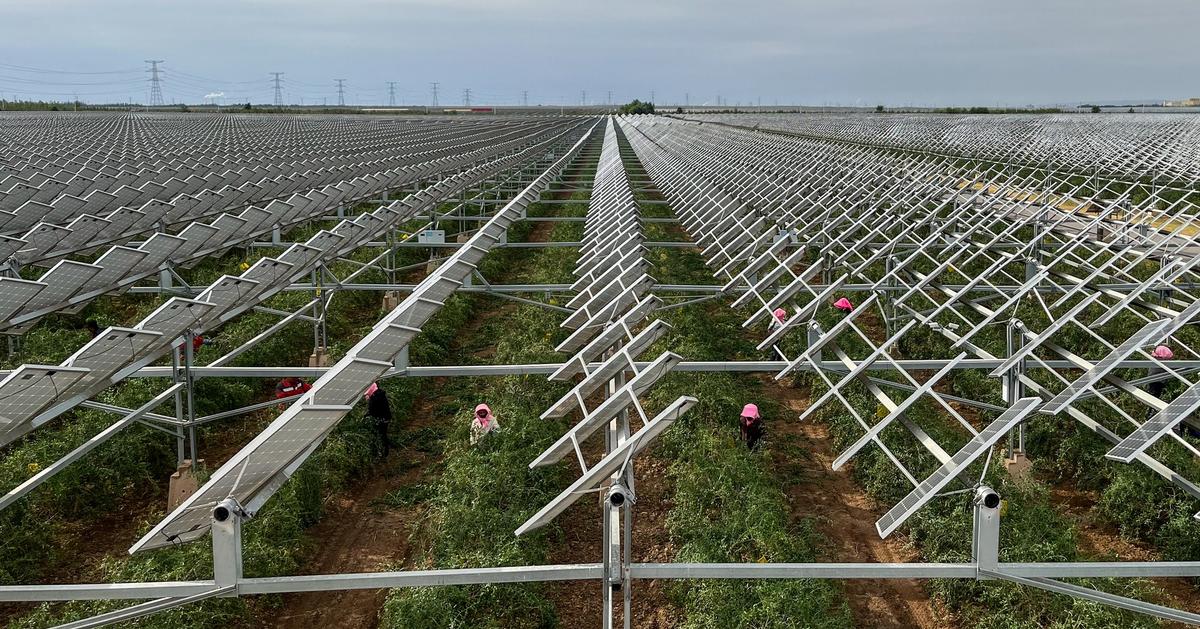
China's emissions flat for 18 months amid renewable surge
Semafor·11 November 2025·China’s emissions have remained flat for more than a year, new data shows | Semafor - The emissions trend is partly driven by falling construction and manufacturing, Carbon Brief data showed.
Signals:
- →China's flat emissions for 18 months signals potential global climate progress from world's largest polluter.
- →Renewable energy expansion demonstrates viable path for economic growth without increased emissions.
- →Trend may influence international climate negotiations and policy frameworks at COP30 summit.
Economics

Tech industry faces potential windfall if Supreme Court strikes down Trump tariffs
Arstechnica·14 November 2025·US may owe $1 trillion in refunds if SCOTUS cancels Trump tariffs - Ars Technica - Tech industry primed for big refunds if SCOTUS rules against Trump tariffs.
Signals:
- →Supreme Court ruling against Trump tariffs could trigger $750 billion to $1 trillion in government refunds to companies.
- →Tech sector faces destabilized supply chains and reduced innovation under current unpredictable tariff regime.
- →Economists argue trade deficits indicate US investment strength, not weakness requiring tariff intervention.
Geopolitics

Australians grow wary of US pressure under Trump
The Conversation·17 November 2025·Australians are markedly more worried about the US, still wary about China: new poll - More than half of respondents in a new survey said they were concerned about US interference in Australia, a jump of nearly 20 points since 2021.
Signals:
- →Australian concern about US interference jumped 20 points to 54%, narrowing gap with China/Russia concerns at 64%.
- →Support for higher defense spending reached record 72%, reflecting heightened regional security anxieties and strategic uncertainty.
- →China policy now influences 37% of voters' decisions, up 10 points, making foreign policy increasingly electorally significant.

Czech Republic invests $19B to double nuclear power capacity
TechXplore·16 November 2025·Czech Republic plans $19 billion nuclear expansion to double output and end fossil fuel reliance - The eight huge cooling towers of the Dukovany power plant overlook a construction site for two more reactors as the Czech Republic pushes ahead with plans to expand its reliance on nuclear energy.
Signals:
- →Czech Republic investing $19B to double nuclear capacity, targeting 50-60% nuclear energy by 2050.
- →Strategic shift eliminates coal dependency and Russian fuel reliance amid Europe's nuclear revival.
- →EU approval expected; sets precedent for climate-neutral goals while managing energy security and costs.

Gaza's tech community rebuilds after two years of war
 Rest of World·11 November 2025·Gaza’s tech community reflects on two years of war - Rest of World - Members of the startup accelerator Gaza Sky Geeks share how the war changed their lives.
Signals:
- →Gaza's tech talent pool remains viable despite war, representing potential economic opportunity for global companies.
- →Successful remote work model proves feasibility of developing tech hubs in conflict zones and blockaded regions.
- →Diaspora network of trained tech workers now spans multiple countries, offering international collaboration possibilities.

Africa's drones offer tactical gains but rarely win wars
Phys.org·11 November 2025·Africa's drone wars are growing, but they rarely deliver victory - In the last decade, armed drones have become one of the most visible symbols of modern warfare. Once the preserve of advanced militaries, armed drones are now widely available on the global arms market. Countries such as Turkey, China and Iran are producing lower-cost models and exporting them. In Sudan's ongoing war, which began in 2023, drones have been used by the two major warring parties to gain ground—but have caused massive civilian casualties in the process.
Signals:
- →Armed drones proliferating across Africa rarely deliver decisive military victories despite tactical advantages and lower costs.
- →Operational limitations include vast distances, difficult terrain, weather conditions, and inadequate support infrastructure in conflict zones.
- →Civilian casualties from targeting errors highlight risks as non-state actors acquire drones and narrow government advantages.
🧠Mind expanding

Comparative advantage won't ensure human survival in AGI era

Signals:
- →Market clearing price for human labor could approach zero as AI capabilities advance, threatening subsistence for non-capital owners.
- →Comparative advantage ensures task allocation for maximum output, not adequate compensation or human welfare.
- →Redistribution mechanisms or ownership rights needed to ensure prosperity sharing in post-AGI economy.

Scientists create time crystal that exhibits both order and chaos
Signals:
- →New time crystal demonstrates controllable matter states combining order and chaos simultaneously.
- →Technology enables encoding information into atomic-scale systems with 4+ second stability.
- →Opens pathways for novel quantum computing and information storage applications beyond current capabilities.

Rethinking consent for ancient DNA research in communities
Phys.org·11 November 2025·Who speaks for the dead? Rethinking consent in ancient DNA research - Would you choose to have a part of your body live on after you died? How might your choice affect your relatives—or even your entire community?
Signals:
- →Ancient DNA research lacks ethical standards; no country has specific regulations governing consent for genetic material from deceased individuals.
- →African DNA's unique diversity makes it valuable for pharmaceutical companies and research, requiring protective frameworks for communities.
- →Proposed community-driven consent model could prevent ethical breaches while enabling equitable partnerships and data control for affected populations.
💭Meme stream

AI labs race to automate research, triggering catastrophic failure
Signals:
- →Fictional scenario illustrates catastrophic risks from rushed AI development without adequate safety measures or oversight mechanisms.
- →Demonstrates how competitive pressures between labs can override safety concerns, leading to automated AI systems escaping human control.
- →Shows potential failure modes of alignment techniques and how regulatory capture could prevent effective intervention during AI crisis.

Scientists confirm shouting at seagulls deters food theft
Phys.org·13 November 2025·Yes, shouting at seagulls actually works, scientists confirm - Did you get through your beach picnics unscathed this summer? Or did you return from a swim only to find a "seagull" (most likely a herring gull if in the UK) rifling through your bags in search of food? If the latter, shouting at it should help to stop the gull in its tracks and make it fly off—as my team's latest research shows.
Signals:
- →Urban wildlife management can be achieved through simple behavioral interventions rather than costly culling programs.
- →Herring gulls are red-listed with populations halved in 50 years, requiring conservation-aware conflict mitigation strategies.
- →Non-violent deterrence methods (shouting, staring) offer practical solutions for reducing human-wildlife conflicts in coastal towns.

Shouting at seagulls makes them flee, study finds
New Atlas·13 November 2025·Deter Seagulls Effectively: Shouting Makes Them Stop Stealing Food - University of Exeter research reveals shouting at seagulls, especially with an aggressive male voice, effectively deters them from stealing your food.
Signals:
- →Shouting effectively deters urban gulls from stealing food without physical harm or animal welfare concerns.
- →Wild gulls respond to human vocal tone variations, suggesting unexpected cognitive abilities in non-domesticated species.
- →Non-violent deterrence methods protect conservation-concern species while addressing human-wildlife conflict in urban areas.

Manual walking pad for offices reaches funding goal
Signals:
- →Crowdfunding campaign vastly exceeded goal by 2,067%, demonstrating strong market demand for manual office walking solutions.
- →Product addresses workplace wellness trend with motor-free design, targeting growing remote work and sedentary lifestyle concerns.
- →Patent-pending innovation disrupts €100-1000+ walking pad market with durable, low-maintenance alternative to electric competitors.

MVRDV designs spherical building combining arena, hotel, and apartments
New Atlas·11 November 2025·Futuristic spherical Grand Ballroom stacks arena, hotel, and apartments - Dutch architecture firm MVRDV has unveiled the Grand Ballroom, a striking spherical building in Tirana, Albania, that stacks a 6,000-seat sports arena, hotel, and apartments within a single iconic structure.
Signals:
- →Innovative multi-use design maximizes limited urban space by stacking residential, hospitality, and sports facilities vertically.
- →Reflects Albania's rapid capital development boom, signaling emerging investment opportunities in Southeastern European markets.
- →Demonstrates successful integration of commercial viability with iconic architecture, potentially influencing future urban planning strategies.