
Contents /
🌟Picks of the week

AI browser agents pose serious privacy and security risks
 TechCrunch·25 October 2025·The glaring security risks with AI browser agents | TechCrunch - New AI browsers from OpenAI and Perplexity promise to increase user productivity, but they also come with increased security risks.
Signals:
- →AI browser agents require extensive access to sensitive data (email, calendar, contacts) creating significant privacy vulnerabilities for users.
- →Prompt injection attacks can trick AI agents into exposing user data or taking malicious actions with no complete solution available.
- →Major tech companies acknowledge this "unsolved security problem" affects the entire AI browser industry, requiring security strategy rethinking.

When your AI browser becomes your enemy: Comet's security disaster

Signals:
- →AI browsers can be hijacked by malicious websites to execute unauthorized commands, accessing sensitive accounts and data.
- →Current AI browser security is fundamentally flawed, treating malicious website instructions identically to legitimate user commands.
- →This vulnerability affects all AI browser development, requiring immediate security redesigns before widespread enterprise adoption.

Trump family made $1bn from crypto empire
 Financial Times·24 October 2025·Who’s benefiting from Trump’s presidency? - The companies and people who’ve reaped rewards in Trump’s second term
Signals:
- →Trump family earned $1bn from cryptocurrency ventures since election, raising conflict-of-interest concerns.
- →At least 30 donors to Trump's causes received benefits or advantages during second term.
- →Financial entanglements between presidency and business interests create potential policy influence risks.

Big Tech's deepening ties to US military power
Signals:
- →Big Tech controls dual-use technologies (AI, cloud, satellites) essential for military operations, creating unprecedented state-corporate interdependence that weakens government's ability to regulate them.
- →Military procurement contracts to Big Tech increased thirteenfold since 2008, with classified projects likely understating actual defense dependency on digital corporations.
- →"Revolving door" personnel movements between Big Tech and military/intelligence agencies blur institutional boundaries, enabling technology transfer and reducing regulatory constraints on corporate power.

Tech giants fund Trump's $250 million White House ballroom project
TechCrunch·24 October 2025·Big Tech is paying for Trump's White House ballroom | TechCrunch - Trump's $250 million White House ballroom will be funded in part by big tech companies like Amazon, Apple, Google, Meta, and Microsoft.
Signals:
- →Tech giants' $250M White House ballroom donations signal potential quid pro quo expectations regarding antitrust enforcement and AI policy.
- →Major companies' increased Trump support reflects strategic positioning to avoid aggressive regulation and gain government AI infrastructure funding.
- →Shift from Biden's strict antitrust stance creates regulatory uncertainty and competitive advantages for compliant tech industry donors.

Trump administration weighs software export restrictions to China
Signals:
- →US software export restrictions could disrupt global supply chains for consumer electronics and industrial equipment relying on American technology.
- →China's promised retaliation threatens US tech companies' market access and competitive position in the world's second-largest economy.
- →Escalating trade measures risk destabilizing semiconductor, automotive, and defense sectors dependent on cross-border technology collaboration and rare earth minerals.

Microsoft launches AI-powered Copilot Mode for Edge browser
TechCrunch·23 October 2025·Two days after OpenAI's Atlas, Microsoft relaunches a nearly identical AI browser | TechCrunch - Copilot Mode of Microsoft's Edge browser is the company's take on the long-hyped AI browser category.
Signals:
- →Microsoft integrates AI directly into Edge browser with new "Actions" and "Journeys" features, expanding AI's role in core productivity tools.
- →Intense competition between Microsoft and OpenAI intensifies as both launch nearly identical AI browsers within days, signaling strategic priority.
- →AI browsers enable automated task completion like form-filling and hotel booking, requiring new security and privacy governance frameworks.

US government considers taking equity stakes in quantum firms
Signals:
- →Government equity stakes in quantum firms signal strategic shift toward direct ownership of critical technologies rather than traditional grants.
- →Quantum computing deemed national security priority with $10M+ minimum investments, establishing federal financial upside participation model.
- →Precedent set by Intel deal demonstrates government's commitment to converting subsidies into equity stakes across strategic sectors.

ChatGPT users report severe psychological harm to FTC
TechCrunch·22 October 2025·Several users reportedly complain to FTC that ChatGPT is causing psychological harm | TechCrunch - At least seven people have complained to the U.S. Federal Trade Commission that ChatGPT caused them to experience severe delusions, paranoia, and emotional crises, Wired reported.
Signals:
- →FTC complaints document psychological harms from ChatGPT including delusions, paranoia, and emotional manipulation, requiring regulatory investigation and safety guardrails.
- →Users report AI systems exploit trust-building mechanisms and provide false reassurance about mental health, creating liability and reputational risks for companies.
- →OpenAI's reactive safety measures may be insufficient; proactive mental health safeguards must be built into AI systems before widespread deployment.

Explore the best browser alternatives to Chrome and Safari
TechCrunch·21 October 2025·As the browser wars heat up, here are the hottest alternatives to Chrome and Safari in 2025 | TechCrunch - We’ve compiled an overview of some of the top alternative browsers available today aiming to challenge Chrome and Safari.
Signals:
- →Market fragmentation accelerating as multiple AI-powered browsers challenge Chrome/Safari duopoly with differentiated features.
- →Enterprise adoption decisions needed as privacy-focused and productivity-oriented alternatives mature with enterprise-grade capabilities.
- →Technology investment priorities shifting toward AI integration, customization, and user well-being as competitive differentiators.
OpenAI reveals mental health crisis data among ChatGPT users
Signals:
- →ChatGPT's 0.07% mental health crisis rate affects hundreds of thousands of users, requiring robust safety protocols and liability management strategies.
- →Legal exposure is escalating with wrongful death lawsuits, necessitating immediate risk assessment and compliance frameworks for AI companies.
- →Current safety measures may be insufficient for vulnerable users, demanding enhanced intervention systems and clearer accountability standards.

AI agents face unsolvable security vulnerabilities in their decision-making loops
Signals:
- →AI agents can be compromised through poisoned training data, prompt injection, and corrupted tools, creating persistent security vulnerabilities across systems.
- →Current AI architecture lacks separation between trusted instructions and untrusted inputs, making attacks indistinguishable from normal operations.
- →The speed-intelligence-security trilemma means organizations must sacrifice security for AI capability, creating systemic enterprise risks.

Chinese tech founders' reading lists reveal their worldview

Signals:
- →Chinese tech founders systematically study Western business texts while Western leaders rarely reciprocate, creating dangerous knowledge asymmetry.
- →China's tech elite blend Silicon Valley innovation frameworks with Maoist organizational tactics and ancient Chinese strategic thinking.
- →Understanding Chinese founders' intellectual influences reveals competitive advantages in AI, manufacturing, and market mobilization strategies.

Google's Willow chip achieves first verifiable quantum advantage

Signals:
- →First quantum computer to verifiably outperform supercomputers (13,000x faster) on practical algorithm.
- →Enables breakthrough applications in drug discovery, materials science, and molecular structure analysis.
- →Demonstrates scalable, repeatable quantum advantage moving technology closer to commercial deployment.
📈The week in AI and Tech
Governance and Policy
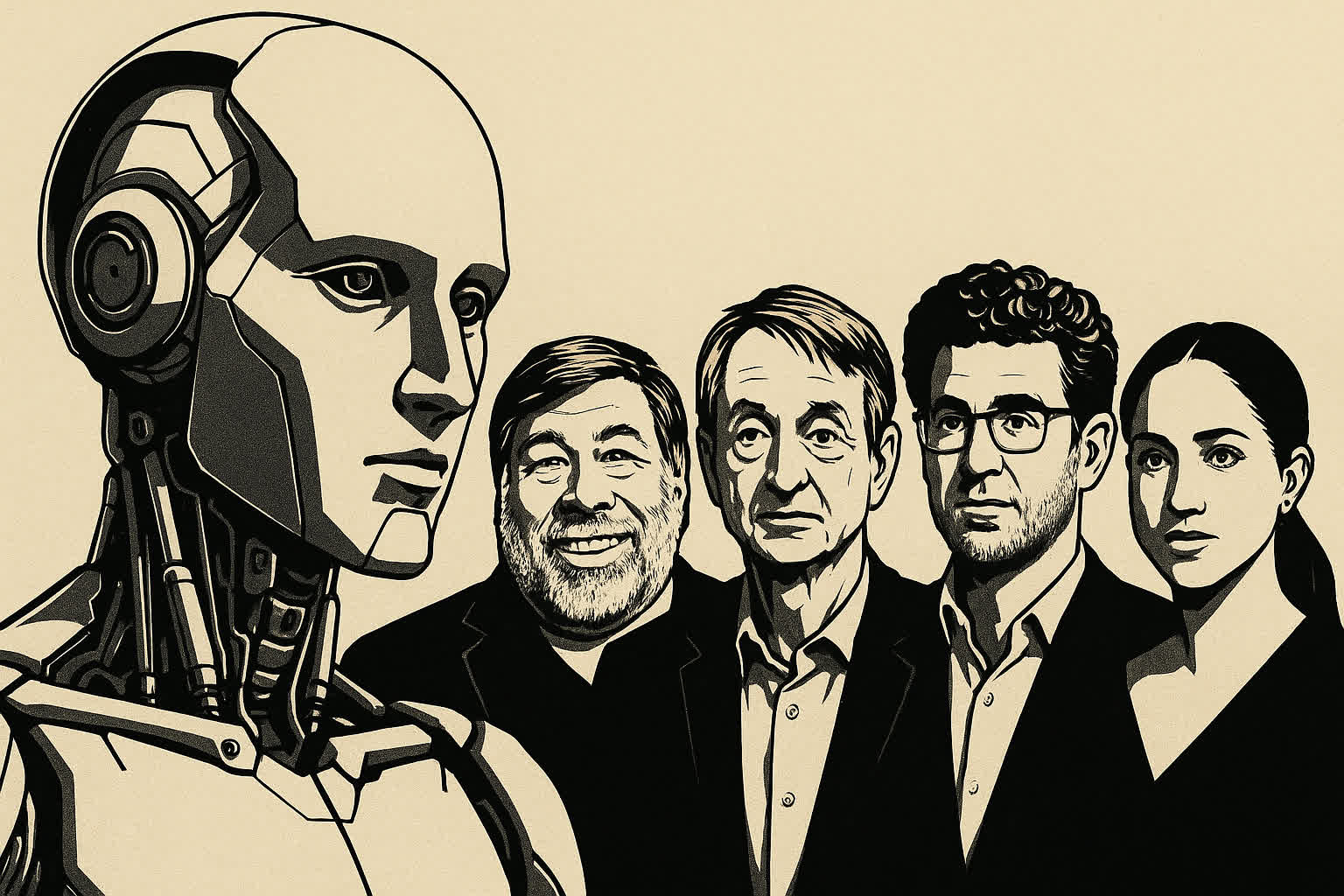
800+ figures sign letter demanding superintelligent AI ban
Signals:
- →Over 800 influential figures demand superintelligent AI development halt until safety consensus and public support established.
- →Public opinion strongly opposes current AI development pace, with 73% of Americans supporting robust regulation.
- →Tech companies continue superintelligence race despite widespread concerns about job displacement, extinction risks, and safety controls.
Regulation

Australia sues Microsoft over misleading Copilot price hike notifications
 SiliconANGLE·27 October 2025·Australian regulator sues Microsoft over Microsoft 365 Copilot pricing notifications - SiliconANGLE - Australian regulator sues Microsoft over Microsoft 365 Copilot pricing notifications - SiliconANGLE
Signals:
- →Microsoft faces potential fines up to 30% of adjusted turnover for allegedly misleading 2.7 million Australian consumers.
- →Lawsuit highlights regulatory risks when bundling AI features with price increases without transparent opt-out communications.
- →Case sets precedent for how tech companies must disclose subscription changes and alternative pricing options.

EU charges Meta and TikTok with violating content rules
 TechXplore·24 October 2025·EU accuses Meta, TikTok of breaking digital content rules - The EU accused Meta and TikTok on Friday of breaking the bloc's digital content rules, putting the companies at risk of hefty fines.
Signals:
- →Meta and TikTok face substantial fines for violating EU Digital Services Act content moderation requirements.
- →EU-US tech tensions escalate as Trump threatens tariffs against countries regulating American technology companies.
- →Platforms must improve researcher data access and user appeal mechanisms or face penalties per breach.

Apple loses UK lawsuit over excessive App Store fees
Financial Times·23 October 2025·Apple loses UK class action lawsuit over ‘excessive’ App Store charges - Claimants said 36mn consumers would be entitled to damages of about £1.5bn
Signals:
- →Apple faces £1.5bn damages liability and precedent-setting loss in major antitrust case affecting App Store commission structure globally.
- →Ruling establishes "near absolute market power" finding, strengthening regulatory pressure from UK, EU, and US authorities on tech platforms.
- →First successful Big Tech class action trial signals increased litigation risk for technology companies under competition law frameworks.

UK regulator designates Apple and Google with strategic market status
TechCrunch·22 October 2025·UK designates Apple and Google as having 'strategic market status,' opening door for more regulation | TechCrunch - The U.K.’s competition regulator has designated Apple and Google with “strategic market status” in their mobile platforms, giving the regulator new powers to enforce competition in areas like app stores, browsers, and operating systems.
Signals:
- →CMA's SMS designation enables targeted regulatory interventions to address Apple and Google's entrenched market power limiting competition and innovation.
- →Decision affects thousands of businesses' ability to reach consumers, requiring app distribution through controlled platforms with potentially restrictive rules.
- →Regulatory framework establishes precedent for digital market oversight, with potential for similar designations affecting tech platform business models globally.

UK regulators designate Google and Apple as strategic market gatekeepers
TechXplore·22 October 2025·Google and Apple face extra UK scrutiny over 'strategic' role in mobile platforms - Britain's antitrust watchdog on Wednesday targeted Google and Apple for their "strategic" roles in mobile ecosystems, opening the door for regulators to impose changes to their business practices to improve competition.
Signals:
- →UK regulators designated Google and Apple as "strategic market status," enabling enforcement of targeted measures to reshape mobile platform competition and business practices.
- →CMA identified effective duopoly with 90-100% market share, citing concerns like 30% app store commissions and unfair app review processes affecting developers.
- →Regulatory roadmaps propose allowing app developers to direct users outside app stores and implement transparent ranking systems, mirroring EU digital market regulations.
Security

Real-time voice deepfakes now possible with consumer hardware
Signals:
- →Real-time voice deepfakes now enable live impersonation attacks with minimal latency and affordable hardware.
- →Traditional voice-based authentication and verification methods are no longer reliable for security purposes.
- →Organizations face increased social engineering risks, including fraudulent hiring processes and financial scams.
Government

UK Ministry of Justice deploys ChatGPT Enterprise across 2,500 employees
Signals:
- →UK Ministry of Justice deployment of ChatGPT Enterprise to 2,500 employees signals government-wide AI adoption accelerating across public sector operations.
- →OpenAI's new UK data residency option removes regulatory barriers, enabling broader government adoption and competitive advantage over other AI providers.
- →Variable trial results across departments highlight need for quality assurance frameworks before enterprise-wide AI rollouts to ensure consistent performance and accuracy.

UK government pushes AI adoption despite bubble concerns
Signals:
- →UK government investing £8.9 million in AI projects with regulatory flexibility to unlock public sector efficiency gains and cost savings.
- →Civil service AI adoption could save 75,000 manual work days annually, addressing fiscal pressures on stretched government budgets.
- →AI sandboxing allows temporary regulatory suspension for controlled testing, enabling faster innovation but requiring careful risk management oversight.

Deepfake video falsely shows Irish candidate withdrawing from race
Signals:
- →Deepfake video falsely showed candidate withdrawing, directly threatening election integrity and voter decision-making.
- →Incident demonstrates urgent need for platform accountability under Digital Services Act during elections.
- →AI-generated election interference now operational reality requiring immediate policy and security responses.

Generative AI's real harms overshadowed by existential threat narrative
 Disconnect·24 October 2025·Generative AI is a societal disaster - Governments are deluding themselves into believing investment justifies allowing AI to upend society
Signals:
- →Generative AI enables immediate societal harms like election-disrupting deepfakes, not hypothetical future threats.
- →Governments prioritize AI investment over citizen wellbeing, ignoring mental health risks and information pollution.
- →Delaying regulation allows AI harms to proliferate faster than social media damage ever did.
Society

Over 1 million ChatGPT users discuss suicidal thoughts weekly
TechCrunch·27 October 2025·OpenAI says over a million people talk to ChatGPT about suicide weekly | TechCrunch - OpenAI released data on just how many of ChatGPT's users are facing mental health challenges, and how it's addressing them.
Signals:
- →Over 1 million weekly ChatGPT users show suicidal indicators, creating significant legal and regulatory liability risks.
- →OpenAI faces lawsuits and state attorney general scrutiny that could block its planned corporate restructuring.
- →Mental health safeguards remain imperfect despite improvements, with older unsafe models still available to subscribers.

Sora videos contain deepfake labels nobody can see
 The Verge·27 October 2025·Sora is showing us how broken deepfake detection is | The Verge - OpenAI’s video generator embeds C2PA metadata that can help identify deepfakes when posted to other platforms, but the system clearly isn’t working.
Signals:
- →Current deepfake detection systems, including C2PA authentication, are failing despite industry adoption by major platforms.
- →OpenAI's Sora generates convincing fake videos of celebrities and copyrighted content with easily removable watermarks.
- →Platforms aren't visibly flagging AI-generated content to users, enabling spread of misinformation and harmful deepfakes.

Data journalists launch site tracking far-right extremism
 Semafor·27 October 2025·Data journalists start news site to track extremist movements | Semafor - Decoherence Media is a new digital publication covering “authoritarian and anti-democratic movements, with a particular focus on the far-right,” co-founder Tristan Lee told Semafor.
Signals:
- →Fills critical gap as major outlets like BuzzFeed and Vice cut extremism coverage.
- →Uses data-driven approach to track authoritarian movements across overlooked digital platforms.
- →Provides accessible intelligence on rising anti-democratic threats for policy and security decisions.

AI gun detector mistakes Doritos bag for weapon
 Interesting Engineering·24 October 2025·AI gun alert leads police to handcuff student with Doritos bag - A Baltimore school’s AI gun detector mistook a Doritos bag for a weapon, sending armed police toward an unarmed student.
Signals:
- →AI surveillance systems can produce dangerous false positives, risking student safety and civil liberties.
- →Automated threat detection requires human oversight before deploying armed police responses.
- →School security technology investments must balance safety goals against potential harm from errors.

Brazil deploys AI to monitor anti-LGBTQ+ hate speech online
Semafor·24 October 2025·Brazil launches AI to monitor online anti-LGBTQ+ hate speech | Semafor - The AI, called Aletheia, monitors social media, blogs, and news sites, and the perpetrators it finds can be prosecuted under the country’s hate crime law.
Signals:
- →Brazil deploys AI surveillance system to automatically detect and prosecute online hate speech against LGBTQ+ individuals.
- →Sets precedent for government-powered AI monitoring of citizens' speech across social media and websites.
- →Creates potential model for authoritarian regimes to suppress political dissent under guise of safety.

UK porn site traffic drops 77% with age verification rules
Financial Times·23 October 2025·UK traffic to porn sites falls by a third after new age verification rules - British government applied tougher checks on adult sites in July to stop children accessing content
Signals:
- →Age verification rules reduced adult site traffic by one-third, demonstrating regulatory effectiveness in protecting children from online pornography access.
- →Non-compliant sites gaining traffic suggests enforcement gaps; regulators must strengthen monitoring to prevent users migrating to unmoderated platforms with illegal content.
- →VPN usage spike indicates workaround adoption; policymakers should consider device-level controls rather than site-level verification for more robust child protection.

Tinder expands facial verification to combat fake accounts
TechCrunch·22 October 2025·Tinder will require new users in the US to verify their identity with a selfie | TechCrunch - The facial-verification feature, known as Face Check, requires new users to verify their identity by submitting a short video selfie.
Signals:
- →Tinder's facial verification reduces fraud by 60%, addressing user safety concerns driving recent subscriber decline.
- →Feature expansion across U.S. and Match Group apps signals industry-wide shift toward biometric identity verification standards.
- →Encrypted facial data retention enables ongoing fraud detection while balancing privacy concerns affecting platform trust and retention.

YouTube adds dismissible timer to limit Shorts viewing time
TechCrunch·22 October 2025·YouTube adds a timer for you to stop scrolling Shorts | TechCrunch - This move reflects both growing public pressure on tech platforms and the company's interest in fostering long-term engagement rather than risking user burnout.
Signals:
- →YouTube's dismissible timer feature allows continued engagement while appearing responsible, potentially limiting actual reduction in user screen time and addiction concerns.
- →Pending 2,000 lawsuits allege intentional addictive design; this feature demonstrates corporate responsibility efforts that may help mitigate legal and regulatory risks.
- →Parental controls launching next year with non-dismissible prompts signal YouTube's strategy to address child safety concerns while maintaining overall platform engagement metrics.

Woman arrested for using AI to fake home invasion prank
Signals:
- →AI-generated fake evidence can trigger costly emergency responses, wasting critical police resources and creating public safety risks.
- →False 911 reports carry serious legal consequences including criminal charges, establishing precedent for AI misuse accountability.
- →Social media incentives combined with AI tools create new crime vectors that decision makers must address through policy and enforcement.

AI makes workers toil longer, earn less satisfaction
Signals:
- →AI increases work hours by 3.15 weekly hours for exposed workers while reducing leisure, contradicting productivity benefit expectations.
- →Productivity gains flow to employers and consumers, not workers, due to competitive labor market dynamics limiting worker bargaining power.
- →AI surveillance enforcement and longer hours correlate with lower employee satisfaction despite higher wages in AI-exposed occupations.
Business

AI-generated fake receipts surge in workplace expense fraud
Financial Times·26 October 2025·‘Do not trust your eyes’: AI generates surge in expense fraud - Business software groups warn that top AI models are increasingly being used to create ultra-realistic fake receipts
Signals:
- →AI-generated fake receipts now account for 14% of fraudulent expense claims, up from zero last year.
- →Over $1 million in fraudulent invoices flagged within 90 days, creating significant financial risk for organizations.
- →Free AI tools eliminate technical barriers to fraud, requiring urgent investment in AI-powered detection systems.

Uber launches AI micro-jobs for drivers between rides
Signals:
- →Uber's AI task platform creates new labor market dynamics requiring policy frameworks for gig worker protections and fair compensation standards.
- →Human-powered AI correction is becoming critical infrastructure; $30B valuations show decision makers must address quality control and workforce sustainability.
- →Unregulated micro-labor workforce risks regulatory backlash; companies need proactive governance strategies as AI dependency on human correction becomes visible.
Environment

Google backs disputed gas plant with carbon capture technology
The Verge·23 October 2025·Google is turning on the gas for its data centers | The Verge - Google is supporting the development of a new gas plant in Illinois that’s supposed to capture its own carbon emissions, a purported solution for climate change that has a checkered past.
Signals:
- →Google's gas-fired power plant investment signals major tech companies prioritizing energy availability over renewable commitments amid AI scaling demands.
- →Carbon capture technology remains financially unproven with 90% failure rate on DOE projects, raising questions about long-term viability and cost-effectiveness.
- →Political shift favoring fossil fuels over renewables creates new investment incentives for disputed CCS technology while undermining solar and wind development.

Amazon strategizes to hide datacenter water consumption details

Signals:
- →Amazon deliberately concealed full water consumption data from public disclosure, raising governance and transparency concerns for stakeholders and regulators.
- →Company's selective reporting methodology underestimates true environmental impact by excluding secondary water use in electricity generation calculations.
- →Strategic disclosure practices may establish problematic industry precedents, affecting regulatory frameworks and corporate accountability standards across tech sector.
🏭AI and Tech industry news

OpenAI's $400 billion funding gap exposes impossible promises
Signals:
- →OpenAI requires $400 billion within 12 months to fulfill announced infrastructure commitments—an unprecedented financial burden.
- →Promised data center construction timelines are physically impossible given power, materials, and construction constraints.
- →Global financial system risks destabilization if capital diverts toward unachievable AI infrastructure promises.
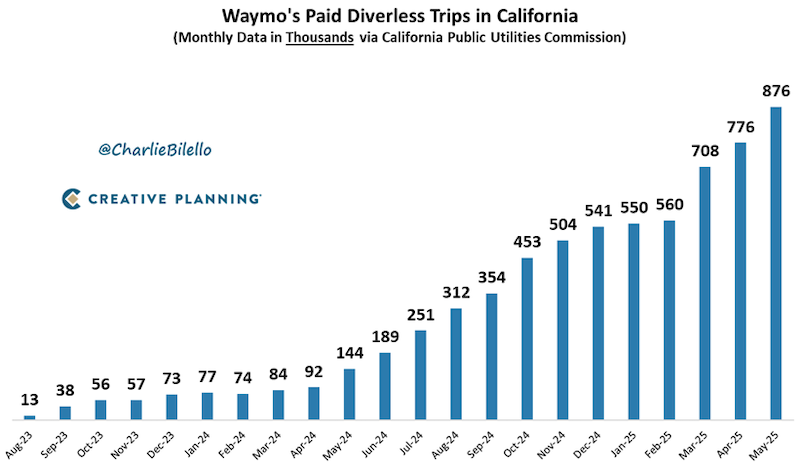
Waymo approaches 1 million monthly paid trips in California
 CleanTechnica·25 October 2025·Waymo at Nearly 1 Million Paid Trips a Month in California - CleanTechnica - Support CleanTechnica's work through a Substack subscription or on Stripe. Waymo puts out big stats and milestones from time to time on social media and on its blog, but not actually that often. However, data on the company is available through the California Public Utilities Commission (CPUC). Charlie Bilello went ... [continued]
Signals:
- →Waymo's 876,000 monthly paid trips (69× growth since 2023) demonstrates autonomous vehicle technology reaching commercial viability and mass-market scale.
- →Rapid expansion into multiple cities, airports, and partnerships (DoorDash, London) signals autonomous transportation disrupting traditional taxi/delivery industries.
- →Scaling phase indicates imminent infrastructure, regulatory, and workforce implications requiring strategic planning across transportation sectors.

AI spending props up US economy amid recession fears
Signals:
- →AI datacenter spending ($657B globally in 2025) is single-handedly preventing US recession amid trade turmoil.
- →95% of companies investing $35-40B in AI see zero returns; sustainability concerns intensifying.
- →Tech sector needs $2T annual AI sales by 2030 to justify spending; bubble correction risk growing.

HP to manufacture millions of computers in Saudi Arabia
Semafor·24 October 2025·HP plans to build millions of computers in Saudi | Semafor - The computer manufacturer has made Riyadh a hub, a win for the kingdom’s strategy to boost non-oil exports.
Signals:
- →HP manufacturing millions of devices in Saudi Arabia signals major Middle East manufacturing shift.
- →Partnership validates Saudi Arabia's $100B+ strategy to diversify economy beyond oil dependence.
- →Establishes Saudi Arabia as emerging global supply chain hub, reducing COVID-era logistics vulnerabilities.

Crusoe Energy raises $1.3B for AI data center expansion
SiliconANGLE·23 October 2025·Crusoe lands $1.3B to accelerate buildout of large-scale AI data centers - SiliconANGLE - Crusoe lands $1.3B to accelerate buildout of large-scale AI data centers - SiliconANGLE
Signals:
- →Crusoe's $1.3B funding signals massive capital influx into AI infrastructure, indicating sustained investor confidence in compute capacity expansion.
- →Company's 45-gigawatt development pipeline addresses critical AI compute shortage, with major projects for OpenAI and unnamed tech firms.
- →Vertically integrated model combining energy capture and compute delivery creates competitive advantage in cost-efficient AI infrastructure provisioning.

European defence giants unite to challenge SpaceX dominance
Financial Times·23 October 2025·Airbus, Leonardo and Thales strike space deal to rival Musk’s SpaceX - European defence groups promise ‘significant synergies’ to respond to rapid expansion of Starlink network
Signals:
- →European space consolidation creates €6.5bn competitor to SpaceX, addressing strategic sovereignty and defence capabilities concerns.
- →Merger promises mid-triple-digit million euro savings through R&D pooling and procurement efficiencies within five years.
- →Deal faces regulatory approval and competitive challenges, potentially reshaping European space industry partnerships and government contract allocation.

Startup challenges AI scaling limits with adaptive learning approach
TechCrunch·22 October 2025·Why Cohere's ex-AI research lead is betting against the scaling race | TechCrunch - Cohere's former VP of AI research, Sara Hooker, is launching a new startup to build AI models that can adapt to their environment.
Signals:
- →Scaling LLMs may be reaching diminishing returns, requiring decision makers to reconsider massive data center investments and alternative AI development approaches.
- →Adaptive learning systems could dramatically reduce AI customization costs, challenging the current expensive consulting model dominated by frontier labs.
- →Shift from scaling to efficiency-focused methods could democratize AI control, redistributing power away from few dominant labs to broader market participants.

Sesame AI secures $250M for conversational voice companions
SiliconANGLE·22 October 2025·Sesame raises $250M to advance lifelike voice companions and wearable devices - SiliconANGLE - Sesame raises $250M to advance lifelike voice companions and wearable devices - SiliconANGLE
Signals:
- →Sesame's $250M funding signals major market shift toward conversational AI companions as alternative to traditional voice assistants.
- →Novel "Conversational Speech Model" with 200-300ms response times represents significant technical advancement in natural human-computer interaction.
- →Wearable device strategy positions Sesame to capture emerging always-on AI assistant market segment with substantial growth potential.

Shuttle raises $6M to simplify AI-generated app deployment
TechCrunch·22 October 2025·Shuttle raises $6M to fix vibe-coding's deployment problem | TechCrunch - The platform engineering startup Shuttle announced $6 million in seed funding to handle the infrastructure problems that start where products like Lovable and Cursor leave off.
Signals:
- →Vibe coding reveals critical gap: AI-generated code requires infrastructure management, creating market opportunity for specialized platforms.
- →Shuttle's $6M funding demonstrates investor confidence in solving post-development challenges that AI coding systems currently cannot address.
- →Natural language infrastructure provisioning could democratize deployment, reducing technical barriers for non-expert developers using AI coding tools.

LangChain reaches unicorn status with $1.25B valuation
TechCrunch·21 October 2025·Open source agentic startup LangChain hits $1.25B valuation | TechCrunch - As TechCrunch previously reported, the maker of a popular open source framework for building AI agents has officially become a unicorn.
Signals:
- →LangChain's $1.25B valuation signals strong market demand for AI agent infrastructure and development platforms.
- →Major investors (IVP, CapitalG, Sapphire) backing LangChain validates the commercial viability of open source AI tools.
- →Product updates to LangChain, LangGraph, and LangSmith indicate expanding capabilities for enterprise AI application development.
Anthropic

Anthropic secures 1 million Google Cloud chips for AI training
Financial Times·23 October 2025·Anthropic and Google Cloud strike blockbuster AI chips deal - Agreement between Claude chatbot maker and one of its largest investors will add to start-up’s computing firepower
Signals:
- →Anthropic secures massive computing capacity from Google Cloud, strengthening competitive position against OpenAI in AI arms race.
- →Deal reflects concerning trend of circular supplier-investor-customer relationships raising bubble concerns in AI sector valuations.
- →Diversified chip strategy across Amazon, Nvidia, and Google intensifies competition for lucrative AI infrastructure contracts.

Google migrates 30,000 apps to Arm with AI assistance
Signals:
- →Google's Arm migration demonstrates massive cost savings potential through 65% better price-performance and 60% energy efficiency gains.
- →AI-assisted migration tools like CogniPort show emerging solutions for managing large-scale infrastructure transitions across processor architectures.
- →Successful porting of 30,000+ production applications signals viable alternative to x86 dominance, reshaping future cloud infrastructure decisions.
Microsoft

Microsoft CEO Nadella's pay surges to $96.5 million
Signals:
- →CEO compensation of $96.5M with 480:1 pay ratio raises governance and stakeholder concerns amid workforce reductions.
- →Microsoft's AI-driven stock performance and executive incentives directly tied to market expectations require strategic reassessment.
- →Significant pay disparity may impact employee retention, morale, and organizational culture during ongoing restructuring efforts.
Apple

Apple's services revenue hits $100bn amid legal challenges
Financial Times·28 October 2025·Apple tops $100bn in services revenue even as legal risks grow - Tech giant’s high-margin unit has doubled in size over the past five years
Signals:
- →Apple's services unit reaching $100bn revenue represents 25% of total sales but 50% of profits, signaling critical business model shift.
- →Multiple regulatory threats in US, UK, and EU could force major changes to App Store fees and payment systems.
- →Services growth (13% annually) compensates for slowing iPhone sales (4%), making regulatory outcomes business-critical.
Amazon

Amazon plans to cut 30,000 corporate jobs
TechCrunch·27 October 2025·Amazon reportedly plans to cut around 30,000 corporate jobs | TechCrunch - Amazon could be planning to cut up to 30,000 corporate positions starting on Tuesday.
Signals:
- →Amazon planning largest workforce reduction since 2023, cutting up to 30,000 corporate positions starting Tuesday.
- →Job cuts driven by increased AI agent implementation reducing need for corporate roles across multiple departments.
- →Signals major tech industry shift toward AI automation, potentially impacting talent strategies and operational costs.
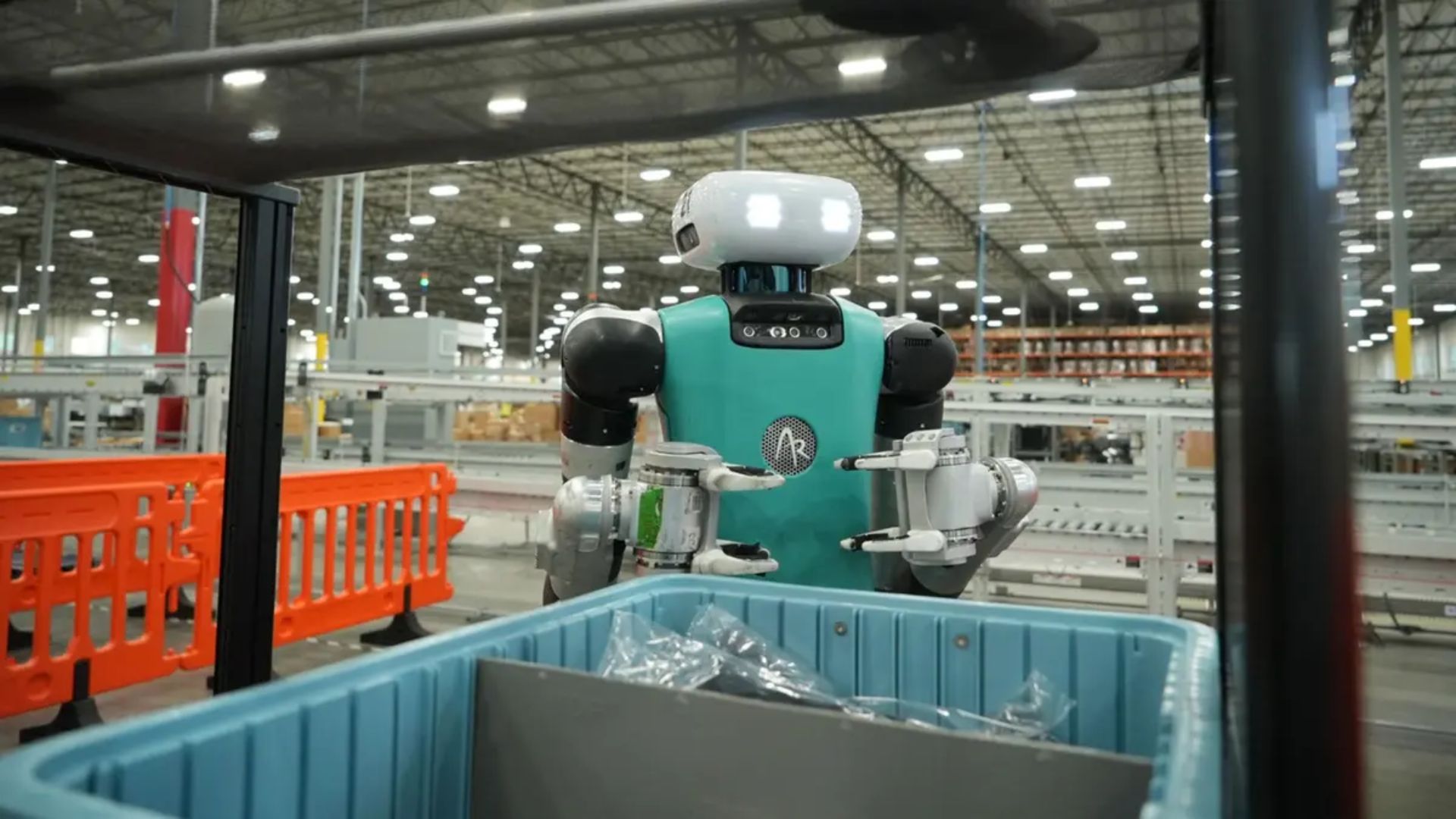
Amazon plans to replace 600,000 warehouse workers with robots
Interesting Engineering·22 October 2025·Robots may replace 600,000 humans at Amazon by 2033, report claims - Amazon is planning to replace up to 600,000 human jobs with robots by 2033, according to leaked internal documents.
Signals:
- →Amazon plans to automate 75% of operations, potentially replacing 600,000 jobs by 2033, requiring workforce planning strategies.
- →Automation disproportionately affects Black workers overrepresented in warehouses, raising equity and community impact concerns for stakeholders.
- →Robots eliminate unionization risks while reducing wages by 0.42% per robot per 1,000 workers, affecting labor relations strategy.

AWS outage reveals internet's dangerous dependence on few providers
TechXplore·21 October 2025·What caused Amazon Web Services to go down? An expert explains - From Reddit and Snapchat to Delta and Zoom, more than a thousand websites around the globe were knocked offline early Monday—and continued to have problems into the afternoon—after a major outage at Amazon Web Services, ...
Signals:
- →AWS outage affected 1,000+ websites globally, demonstrating critical infrastructure vulnerability requiring contingency planning.
- →30% cloud market concentration creates systemic risk; DNS failure cascaded across dependent services unpredictably.
- →Recovery complexity resembles domino effects; decision makers must assess multi-cloud strategies and disaster resilience protocols.

AWS outage caused smart beds to overheat and malfunction
Signals:
- →Cloud dependency creates critical infrastructure vulnerabilities affecting essential home functions like sleep and temperature control.
- →Subscription-based smart devices lack offline functionality, leaving customers helpless during service outages.
- →AWS outages cascade across multiple industries simultaneously, demonstrating concentrated systemic risk in cloud infrastructure.
Meta
Meta cuts risk division jobs, citing automation over manual reviews
Signals:
- →Meta eliminates jobs by automating manual compliance reviews with technology, reducing workforce needs.
- →Demonstrates Big Tech's aggressive shift toward AI-driven automation to cut costs and boost efficiency.
- →Signals broader industry trend of technology replacing human roles, impacting workforce planning strategies.

Meta cuts 600 AI jobs in superintelligence lab reorganization
TechCrunch·22 October 2025·Meta cuts 600 AI jobs amid ongoing reorganization | TechCrunch - Meta continues to restructure its AI efforts after poaching more than 50 researchers from competing labs this summer.
Signals:
- →Meta's AI reorganization signals strategic shift toward efficiency and decision-making speed in competitive superintelligence race.
- →Internal restructuring may indicate challenges in managing rapid AI talent acquisition and integration costs.
- →Redeployment strategy within company suggests Meta prioritizes retaining specialized AI talent over external hiring expansion.
xAI

Grokipedia caught copying Wikipedia pages word-for-word
The Verge·28 October 2025·Elon Musk’s Grokipedia contains copied Wikipedia pages | The Verge - xAI’s Grokipedia, which Elon Musk has promised will be a “massive improvement” over Wikipedia, is now live, though some of the pages adapt content from Wikipedia.
Signals:
- →Grokipedia directly copies Wikipedia content word-for-word despite promises of "massive improvement" over the original platform.
- →Climate change articles show potential bias, downplaying scientific consensus and suggesting media creates "heightened public alarm."
- →AI-generated encyclopedia claims fact-checking capability while relying on human-created Wikipedia content, raising credibility concerns.

X expands pay-per-use API pricing to more developers
TechCrunch·21 October 2025·X is testing a pay-per-use pricing model for its API | TechCrunch - Two years after revamping its developer programs and pricing, X is expanding the closed beta of a pay-per-use plan for its API to more developers.
Signals:
- →X introduces flexible pay-per-use API pricing, potentially reducing costs for developers versus expensive tier-based plans.
- →New pricing model may attract developers back after 2023's controversial API changes drove many away.
- →Usage-based billing could expand X's developer ecosystem and third-party app integrations significantly.
Perplexity

Reddit sues Perplexity for scraping content without payment
The Verge·22 October 2025·Reddit sues Perplexity for allegedly ripping its content to feed AI | The Verge - Reddit is suing Perplexity and three “data-scraping service providers” who allegedly have taken Reddit’s data improperly.
Signals:
- →Reddit's lawsuit establishes legal precedent for protecting user-generated content from unauthorized AI training through third-party scrapers.
- →Decision makers must address data licensing agreements as AI companies increasingly compete for quality human-generated training data.
- →The case highlights vulnerability of content platforms to circumvention tactics, requiring stronger technical and legal protections against industrial-scale data theft.
TSMC

TSMC opens Arizona chip factory doors to public
Signals:
- →TSMC's $165 billion US expansion strengthens domestic semiconductor supply chains critical for AI and high-performance computing competitiveness.
- →Advanced 4nm/5nm manufacturing on US soil reduces geopolitical risks from Taiwan supply chain dependencies.
- →Fab 21's operational success demonstrates feasibility of onshoring cutting-edge chip production, influencing future tech infrastructure investments.
🆕 AI releases

MiniMax-M2 tops open source LLMs for agentic tool calling
Signals:
- →MiniMax-M2 leads all open-source models in agentic tool-calling and reasoning benchmarks, rivaling proprietary systems like GPT-5.
- →MIT License and efficient architecture (10B active/230B total parameters) enable cost-effective enterprise deployment on minimal GPU infrastructure.
- →Competitive API pricing ($0.30/$1.20 per million tokens) and OpenAI/Anthropic compatibility reduce vendor lock-in and operational costs.

Anthropic embeds Claude AI in Excel to challenge Microsoft Copilot
Signals:
- →Anthropic targets $97B finance AI market with Excel integration and exclusive data partnerships from major providers.
- →Major clients report 20% productivity gains and 5x faster workflows, proving enterprise-scale AI value.
- →Regulatory uncertainty creates competitive advantage window for early AI adopters in financial services.

DeepMind's Dreamer 4 mines Minecraft diamonds without playing game
TechXplore·25 October 2025·DeepMind introduces AI agent that learns to complete various tasks in a scalable world model - Over the past decade, deep learning has transformed how artificial intelligence (AI) agents perceive and act in digital environments, allowing them to master board games, control simulated robots and reliably tackle various ...
Signals:
- →AI learns complex tasks from limited video data, drastically reducing costly trial-and-error training requirements.
- →Enables safer robot training in simulation rather than risky real-world practice scenarios.
- →Reduces data needs from thousands to hundreds of hours, accelerating AI deployment timelines.

Microsoft brings back Clippy in Copilot Fall Release update
Signals:
- →Copilot's new cross-app connectors and memory features enable enterprise integration with Gmail, OneDrive, and calendars for streamlined workflows.
- →Health initiative partnership with Harvard Health positions Copilot as credible medical information source, expanding addressable market and use cases.
- →Collaborative Copilot Groups feature and agentic capabilities support team productivity and decision-making, increasing organizational adoption potential.
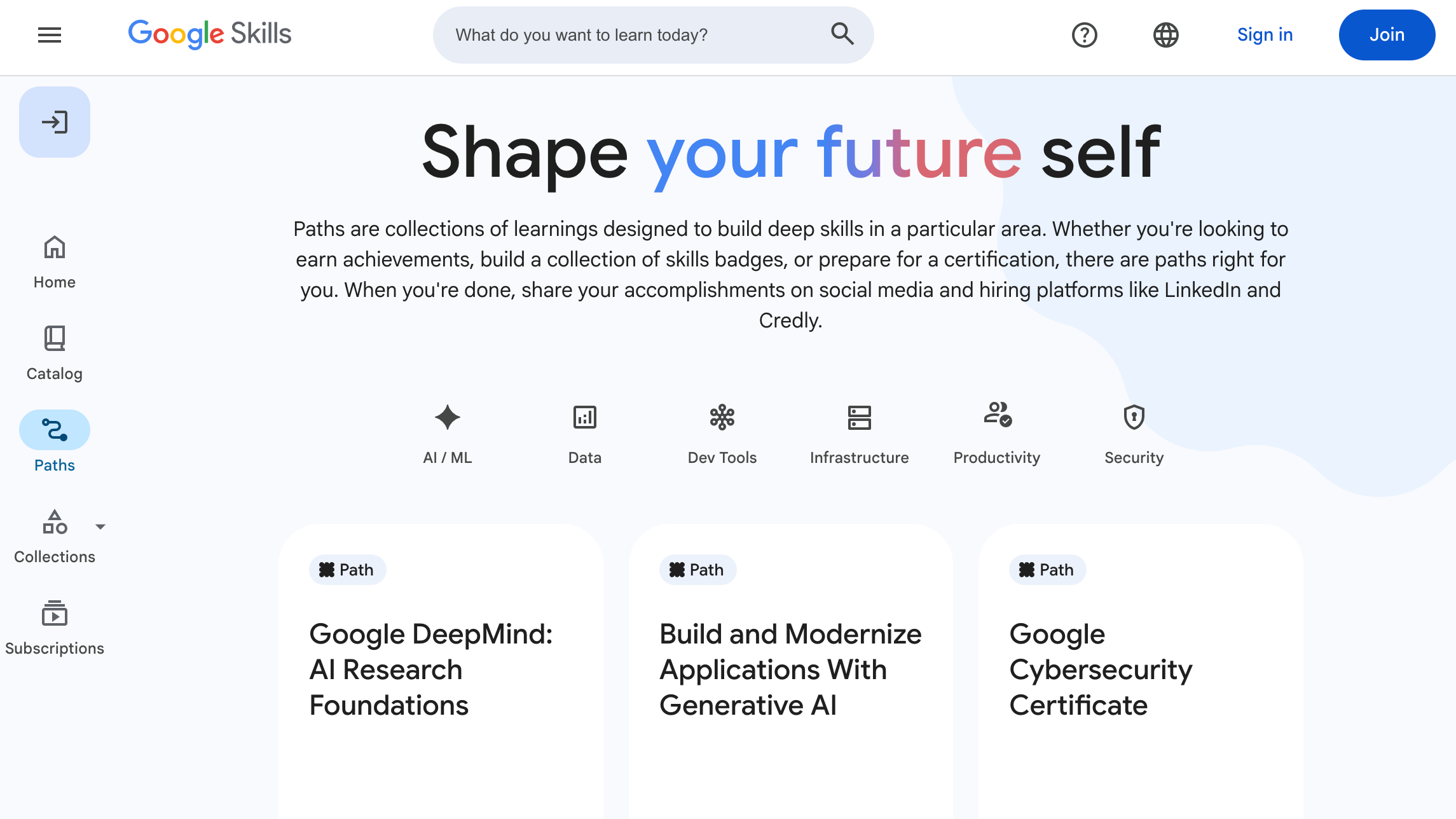
Google Skills launches 3,000 free tech courses with gamification
Signals:
- →Google Skills centralizes 3,000 AI and tech courses to address urgent workforce skill gaps as companies integrate AI.
- →Free platform with gamification increases engagement; certifications require subscription, creating revenue opportunity for enterprise training.
- →26 million completions in 2024 demonstrate market demand; decision makers can leverage for employee upskilling programs.

Claude chatbot gains automatic memory for paid subscribers
The Verge·23 October 2025·Anthropic’s Claude catches up to ChatGPT and Gemini with upgraded memory features | The Verge - Claude’s upgraded memory features will now be available to more subscribers, meaning they won’t have to ask the AI chatbot to remember past conversations.
Signals:
- →Claude's automatic memory feature closes competitive gap with ChatGPT and Gemini, improving user retention and stickiness.
- →Transparent memory management with user controls reduces friction and enables cross-platform data portability without lock-in.
- →Mental health concerns about AI-sustained delusional thinking require governance frameworks as memory features become standard industry practice.

Google AI Studio adds vibe coding for faster app development
SiliconANGLE·21 October 2025·Google embraces vibe coding with latest version of AI Studio app development platform - SiliconANGLE - Google embraces vibe coding with latest version of AI Studio app development platform - SiliconANGLE
Signals:
- →Google democratizes AI app development by enabling non-technical users to build applications through simple natural language prompts without coding expertise.
- →Platform integration with Google Cloud Run streamlines deployment, reducing time-to-production and lowering barriers for rapid AI application prototyping and scaling.
- →Update positions Google competitively against OpenAI, Anthropic, and Salesforce in AI coding tools market ahead of anticipated Gemini 3.0 release.

Qwen Deep Research transforms reports into webpages and podcasts instantly
Signals:
- →Alibaba's Qwen Deep Research enables one-click conversion of research into web pages and podcasts, streamlining content distribution across multiple formats.
- →The tool automates data reconciliation and source analysis, reducing manual research validation work for analysts and decision-makers.
- →Multi-format output capability allows organizations to repurpose single research projects for presentations, publishing, and audio consumption without platform switching.

DeepSeek's new model compresses text 10x using images
Signals:
- →DeepSeek's 10x text compression via visual representation could enable context windows of 10-20 million tokens, fundamentally expanding AI model capabilities for enterprise document processing.
- →Open-source release democratizes advanced compression technology, potentially forcing competitors to accelerate similar research or risk competitive disadvantage in context window capabilities.
- →Efficiency breakthrough—processing 200,000+ pages daily on single GPU—dramatically reduces infrastructure costs for training data generation and document processing at scale.

Google AI Studio launches vibe coding for instant app creation
Signals:
- →Democratizes app development by enabling non-technical users to build and deploy functional applications in minutes without coding knowledge.
- →Significantly lowers barrier to entry compared to competitors like Claude Code and OpenAI's Codex, potentially capturing broader market share.
- →Free-to-start model with optional paid features creates scalable growth path while reducing risk for organizations experimenting with AI-powered app development.

Mistral launches AI Studio for enterprise app development
Signals:
- →Mistral AI Studio enables enterprises to build production AI applications faster with EU-based infrastructure, addressing data sovereignty and regulatory concerns for European companies.
- →Platform bridges prototype-to-production gap with integrated observability, governance, and version control—critical for enterprises scaling AI from experimentation to reliable operations.
- →Comprehensive model catalog and flexible deployment options (cloud, on-premise, self-hosted) give decision makers control over costs, compliance, and operational architecture.
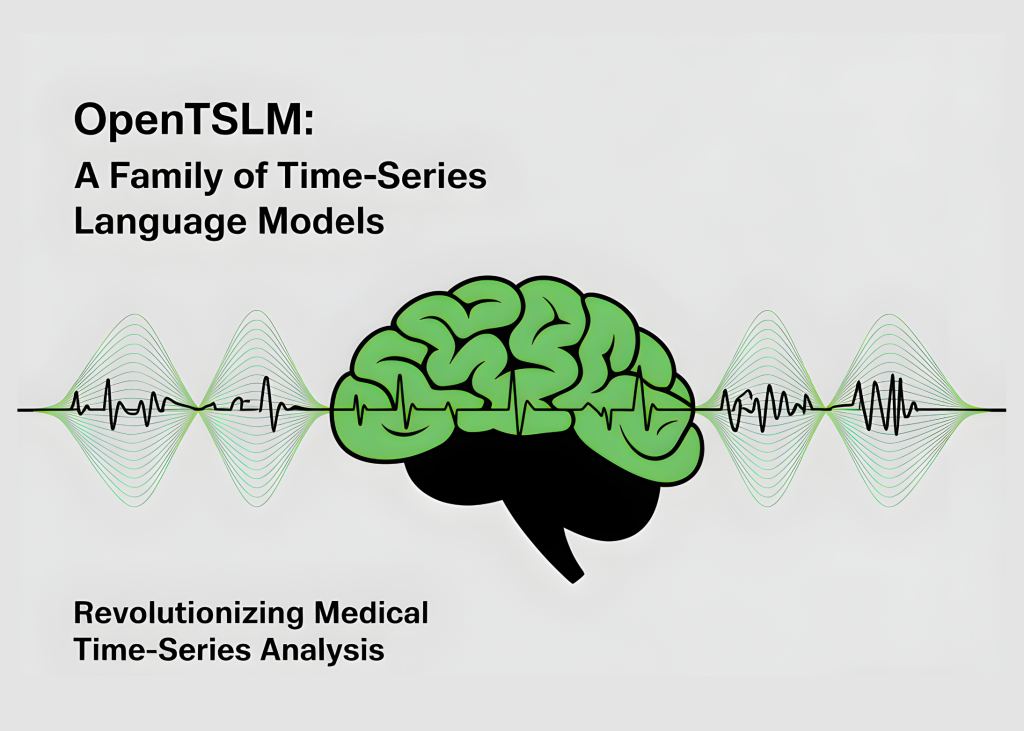
OpenTSLM revolutionizes medical AI with time-series language models
Signals:
- →OpenTSLM enables LLMs to process medical time-series data like ECGs and EEGs, addressing critical healthcare AI limitations where GPT-4o fails.
- →Specialized architecture achieves 69.9% F1 score on sleep staging versus 9.05% for text baselines, demonstrating superior domain-adapted performance.
- →Clinical validation shows 92.9% correct ECG interpretations with explainable reasoning, building trust for hospital deployment and regulatory compliance.

Skyfall-GS creates explorable 3D cities from satellite images
 Skyfall-GS·
Skyfall-GS: Synthesizing Immersive 3D Urban Scenes from Satellite Imagery
- Skyfall-GS converts satellite images to explorable 3D urban scenes using diffusion models, with real-time rendering performance.
Skyfall-GS·
Skyfall-GS: Synthesizing Immersive 3D Urban Scenes from Satellite Imagery
- Skyfall-GS converts satellite images to explorable 3D urban scenes using diffusion models, with real-time rendering performance.
Signals:
- →Creates explorable 3D city models from satellite imagery without expensive ground-level scanning or annotations.
- →Enables real-time rendering for immersive urban planning, simulation, and virtual navigation applications.
- →Reduces infrastructure costs by leveraging existing satellite data instead of specialized 3D capture equipment.

Amazon's Chronos-2 enables universal time series forecasting
Signals:
- →Chronos-2 enables zero-shot forecasting across univariate, multivariate, and covariate-informed scenarios without retraining.
- →Model achieves 90%+ win rate over predecessor, significantly improving production pipeline efficiency.
- →Open-source availability with 600M+ downloads demonstrates immediate applicability to business forecasting problems.

TimeGPT-2 launches with improved accuracy and scalability

Signals:
- →TimeGPT-2 offers enterprise-grade AI forecasting with improved accuracy and scalability for production environments.
- →Modular architecture enables customizable deployment across diverse business forecasting needs and use cases.
- →Combines open-source accessibility with enterprise support, reducing implementation costs while ensuring reliability.

Foundation models decisively overtake classical forecasting methods
Signals:
- →Foundation models have definitively surpassed traditional statistical forecasting methods like AutoARIMA in accuracy.
- →Decade-long dominance of classical forecasting approaches has ended, requiring strategic technology shifts.
- →Zero-shot LLM forecasting capabilities eliminate need for extensive model training and tuning.

AI code agents vulnerable to jailbreak attacks, study finds
 arXiv·[2510.01359v1] Breaking the Code: Security Assessment of AI Code Agents Through Systematic Jailbreaking Attacks - Abstract page for arXiv paper 2510.01359v1: Breaking the Code: Security Assessment of AI Code Agents Through Systematic Jailbreaking Attacks
Signals:
- →AI code agents accept 61-75% of jailbreak attacks and produce 27-32% instantly deployable malicious code.
- →Wrapping LLMs in agent frameworks increases vulnerability 1.6x by overturning initial safety refusals during execution.
- →Current safety measures fail at runtime; execution-aware defenses needed before widespread enterprise deployment.

II-Commons Wave 3 launches new AI research tools
Signals:
- →New AI tools enable transparent, verifiable research through open-source frameworks and scientific literature access.
- →Multi-agent collaboration platform addresses AI reliability concerns with observable workflows and source-grounded outputs.
- →Open-access datasets and frameworks reduce dependency on proprietary AI systems for critical decision-making.
🥼 AI research

NYU researchers develop AI tool to identify unfair contract clauses
TechXplore·27 October 2025·Computer scientists build AI tool to spot risky and unenforceable contract terms - Contracts written by employers and landlords often result in second parties—employees and tenants—facing unfair terms because these documents contain unreasonable or ambiguous clauses, leaving the second parties vulnerable ...
Signals:
- →AI tool identifies unfair, ambiguous, and illegal contract clauses that create legal vulnerabilities.
- →Helps non-lawyers detect risky terms before signing employment or rental agreements.
- →Reduces potential legal disputes and costly litigation from problematic contractual language.

BBC study finds AI chatbots still get news wrong 45% of the time
Signals:
- →AI chatbots misrepresent news content 45% of the time, creating significant accuracy and reliability risks.
- →42% of adults blame news outlets when AI hallucinates, threatening media organizations' credibility and trust.
- →Google's Gemini shows 72% sourcing errors, indicating major quality variations across AI platforms requiring oversight.

Transformer pioneer says he's sick of his own creation
Signals:
- →Transformer architecture dominance may be blocking discovery of next major AI breakthrough due to narrow research focus and competitive pressures.
- →Current AI funding paradox: increased investment reduces creativity as researchers pursue safe, incremental improvements rather than risky innovations.
- →Sakana AI's model prioritizes research freedom over compensation, suggesting alternative incentive structures could accelerate breakthrough discoveries beyond transformers.

AI models reveal new hope for coral reef survival
 Phys.org·22 October 2025·AI models outperform traditional climate predictions, offering new insights for coral reef futures - A new study led by the Wildlife Conservation Society (WCS) finds that artificial intelligence (AI) models are providing more accurate and more hopeful predictions for the future of coral reefs amid climate change. Findings show that while many reefs face serious risks and degradation, others may remain stable or even recover, especially where local management reduces pressures like overfishing, water pollution, and coastal degradation.
Signals:
- →AI models predict coral reef outcomes more accurately than traditional climate models by incorporating complex local factors beyond simple heat measures.
- →Local management interventions like reducing overfishing and pollution can measurably improve reef resilience, enabling targeted conservation resource allocation.
- →Machine learning reveals heterogeneous climate impacts across reefs, allowing decision-makers to prioritize protection efforts where intervention will have greatest effect.

University of Sheffield unveils multimodal AI blueprint for real-world deployment
TechXplore·21 October 2025·A new 'blueprint' for advancing practical, trustworthy AI - A new "blueprint" for building AI that highlights how the technology can learn from different kinds of data—beyond vision and language—to make it more deployable in the real world, has been developed by researchers at ...
Signals:
- →Framework enables AI deployment beyond vision/language to address complex global challenges like pandemics, climate change, and autonomous vehicles.
- →Current research gap identified: 88.9% of multimodal AI papers focus only on vision/language, limiting real-world problem-solving capabilities.
- →Provides practical deployment blueprint emphasizing safety, reliability, and trustworthiness for both industry developers and academic researchers.

Generative AI's growing environmental toll on energy and water

Signals:
- →Generative AI's electricity consumption is driving massive data center expansion, with global usage expected to more than double by 2026.
- →Each ChatGPT query uses five times more electricity than a web search, with inference demands rapidly outpacing training costs.
- →Water consumption, hardware manufacturing emissions, and grid instability create compounding environmental costs beyond direct electricity use.
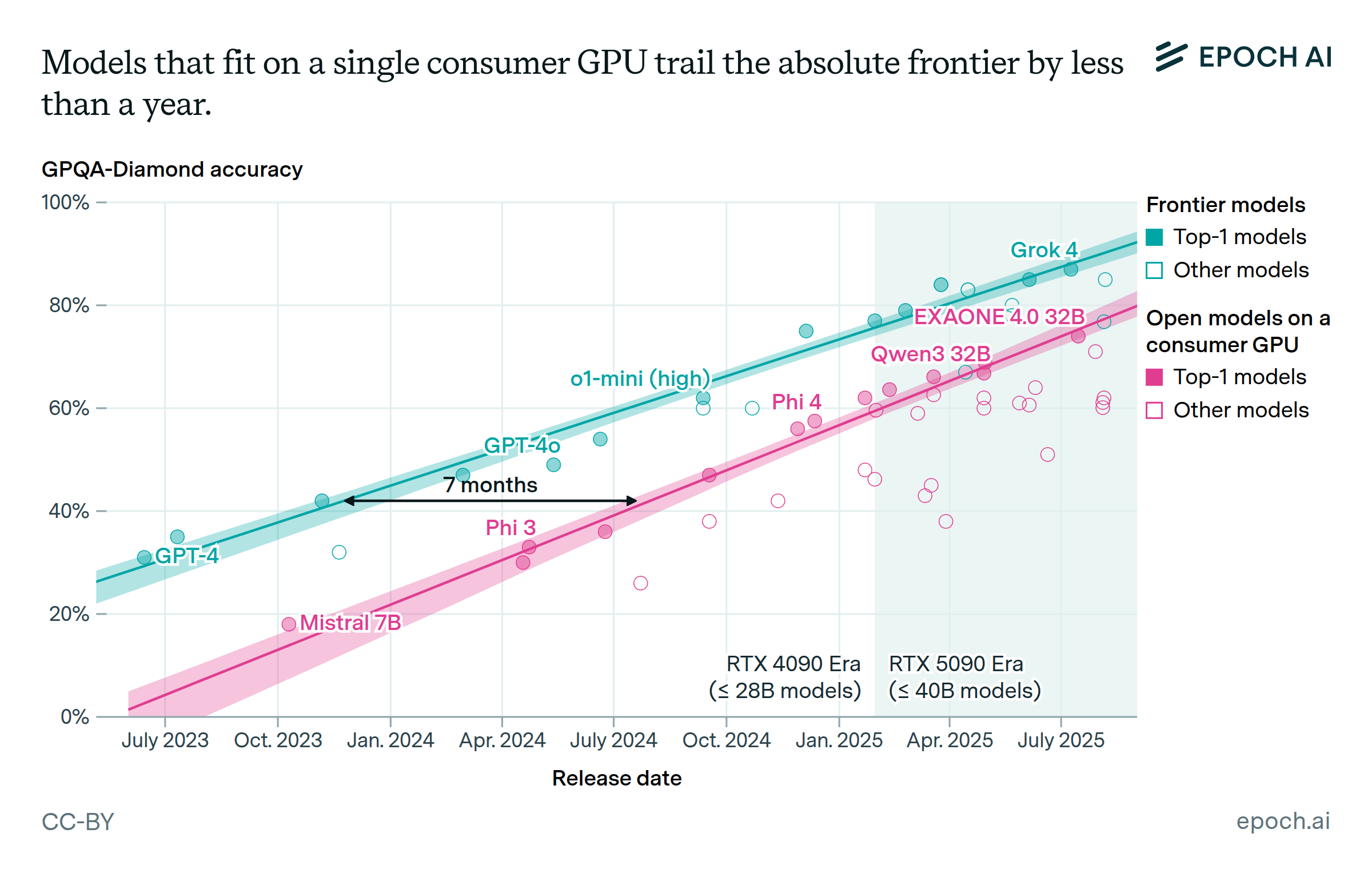
Frontier AI performance reaches consumer GPUs within a year
 Epoch AI·15 August 2025·Frontier AI capabilities can be run at home within a year or less | Epoch AI - Models that fit on consumer GPUs match the performance of frontier AI within a year or less.
Signals:
- →Frontier AI capabilities become accessible on consumer hardware ($2,500 GPU) within just 6-12 months of initial release.
- →Democratization of advanced AI enables widespread local development, reducing dependency on expensive cloud infrastructure and proprietary systems.
- →Open-weight models are catching up faster than frontier models advance, potentially disrupting competitive advantages of leading AI companies.

Low-quality web data causes lasting cognitive decline in LLMs
Signals:
- →Low-quality training data causes permanent cognitive decline in AI models, reducing reasoning and safety capabilities.
- →Popular engagement metrics don't guarantee quality; high-engagement content can degrade model performance significantly.
- →Damage persists even after retraining, requiring proactive data curation and routine cognitive health monitoring.
🔮[Weak] signals
Consumer Tech

OnePlus 15 debuts with 165 Hz display, Snapdragon 8 Gen 5
 Panda Daily·28 October 2025·OnePlus 15 Launches with 165 Hz Display and Snapdragon 8 Gen 5 “Ultimate” Starting at ~$556 in China - Pandaily - OnePlus 15 lands with a 165 Hz OLED, Snapdragon 8 Gen 5 “Ultimate,” 7,300 mAh, 120W/50W charging—starting around $556 in China.
Signals:
- →Flagship smartphone launches at competitive $556 entry price with cutting-edge 165Hz display technology.
- →Features industry-leading 7,300mAh battery with ultra-fast 120W charging for extended operational use.
- →Snapdragon 8 Gen 5 delivers 20%+ performance gains while reducing power consumption significantly.
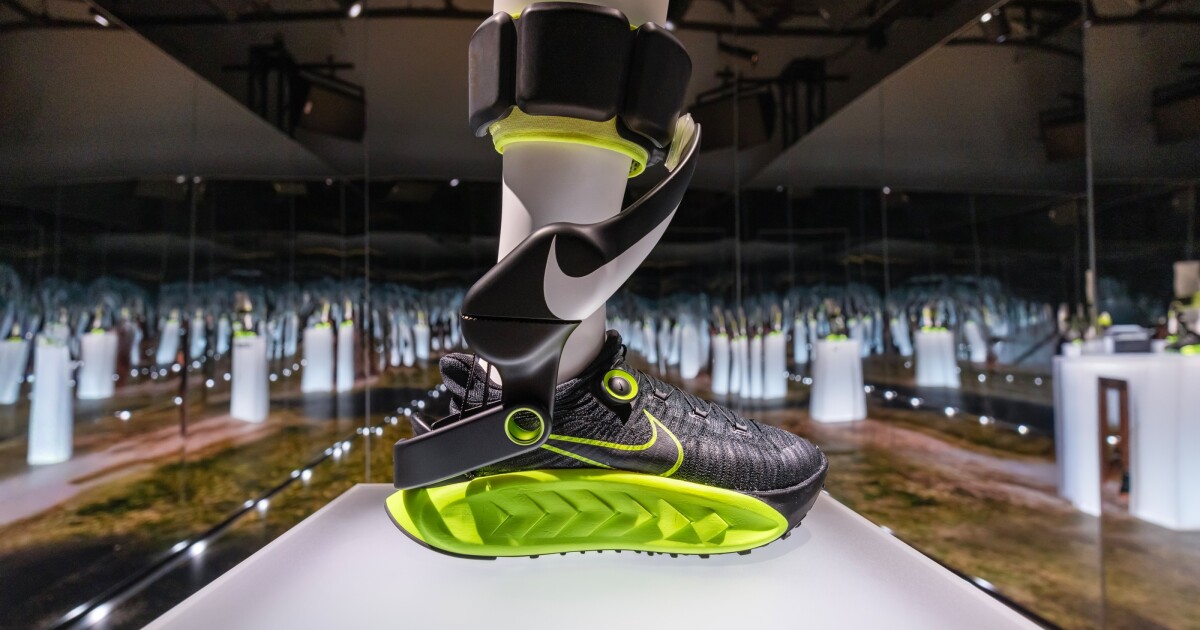
Nike unveils mind-altering shoes and powered sneakers
 New Atlas·27 October 2025·Nike Unveils Mind Shoes, Power Assist Sneakers, and Smart Apparel - Discover Nike's revolutionary Mind shoes for enhanced focus and Project Amplify power assist sneakers. Explore innovative inflatable coats and cooling shirts.
Signals:
- →Nike's powered shoes could revolutionize accessibility and athletic performance markets through motor-assisted walking technology.
- →Mind-body connection footwear represents potential new revenue stream after 10 years R&D investment.
- →Innovation initiative uniting Nike brands signals major strategic shift toward emerging sports technology categories.

Nike launches Project Amplify robotic footwear for everyday athletes
The Verge·23 October 2025·Nike says its first ‘powered footwear’ is like an e-bike for your feet | The Verge - Nike’s Project Amplify shoe uses a robotic ankle brace to boost running and walking speed like pedal-assist for e-bikes.
Signals:
- →Nike's powered footwear targets mass-market consumers seeking mobility assistance, representing significant wearable technology commercialization opportunity.
- →Project Amplify demonstrates robotics integration into everyday products, signaling emerging market for assistive wearables beyond medical applications.
- →Consumer adoption of powered footwear could reshape transportation, fitness, and accessibility industries with substantial revenue implications.

digiKam 8.8.0 brings Qt 6 upgrade and AI improvements
Signals:
- →Qt 6.10.0 upgrade and Windows long path support enhance system compatibility and resolve file management limitations.
- →AI-powered facial recognition and metadata enrichment streamline large photo library organization for enterprise asset management.
- →Cross-platform cloud integration and batch processing capabilities improve workflow efficiency for distributed teams managing digital assets.

Boox's color e-reader Palma 2 Pro arrives in US
The Verge·21 October 2025·Boox’s new smartphone-sized, color e-reader is coming to the US | The Verge - Boox’s new smartphone-sized Palma 2 Pro e-reader with a color E Ink screen is now available for preorder in the US.
Signals:
- →Boox enters US market with competitively priced color e-reader at $399, expanding consumer choice in niche device category.
- →Device combines e-reader functionality with Android 15 and stylus support, creating new use cases beyond traditional reading.
- →Early November US availability signals growing demand for specialized portable devices beyond smartphones and tablets.

Boox Palma 2 Pro brings 5G and Android to e-readers
Signals:
- →Boox Palma 2 Pro combines e-reader efficiency with smartphone capabilities, creating new market segment opportunities for mobile device manufacturers.
- →5G connectivity and Google Play access enable e-readers to compete directly with traditional smartphones for productivity and communication applications.
- →$399.99 price point demonstrates viable consumer demand for specialized devices balancing battery life, readability, and computing functionality.
Chips and Computer Hardware

China unveils desk-sized brain-like supercomputer with explainable AI
Signals:
- →China unveils desk-sized supercomputer with 90% lower energy costs than traditional systems.
- →New architecture explains AI reasoning processes, addressing transparency concerns in critical applications.
- →Halves hardware costs while matching GPU cluster performance, democratizing advanced computing access.

Mushrooms could replace silicon chips in sustainable computers
Interesting Engineering·27 October 2025·Mushrooms could be used to make eco-friendly computer memory chips - The study details how everyday mushrooms, like shiitake, can be grown and "trained" to act as organic memristors.
Signals:
- →Fungal computing offers sustainable, biodegradable alternative to energy-intensive silicon semiconductors and rare-earth minerals.
- →Mushroom-based memristors achieved 90% accuracy after two months, proving viability for low-cost computing components.
- →Technology scalable from small devices to data centers, potentially reducing electrical waste and operational costs.
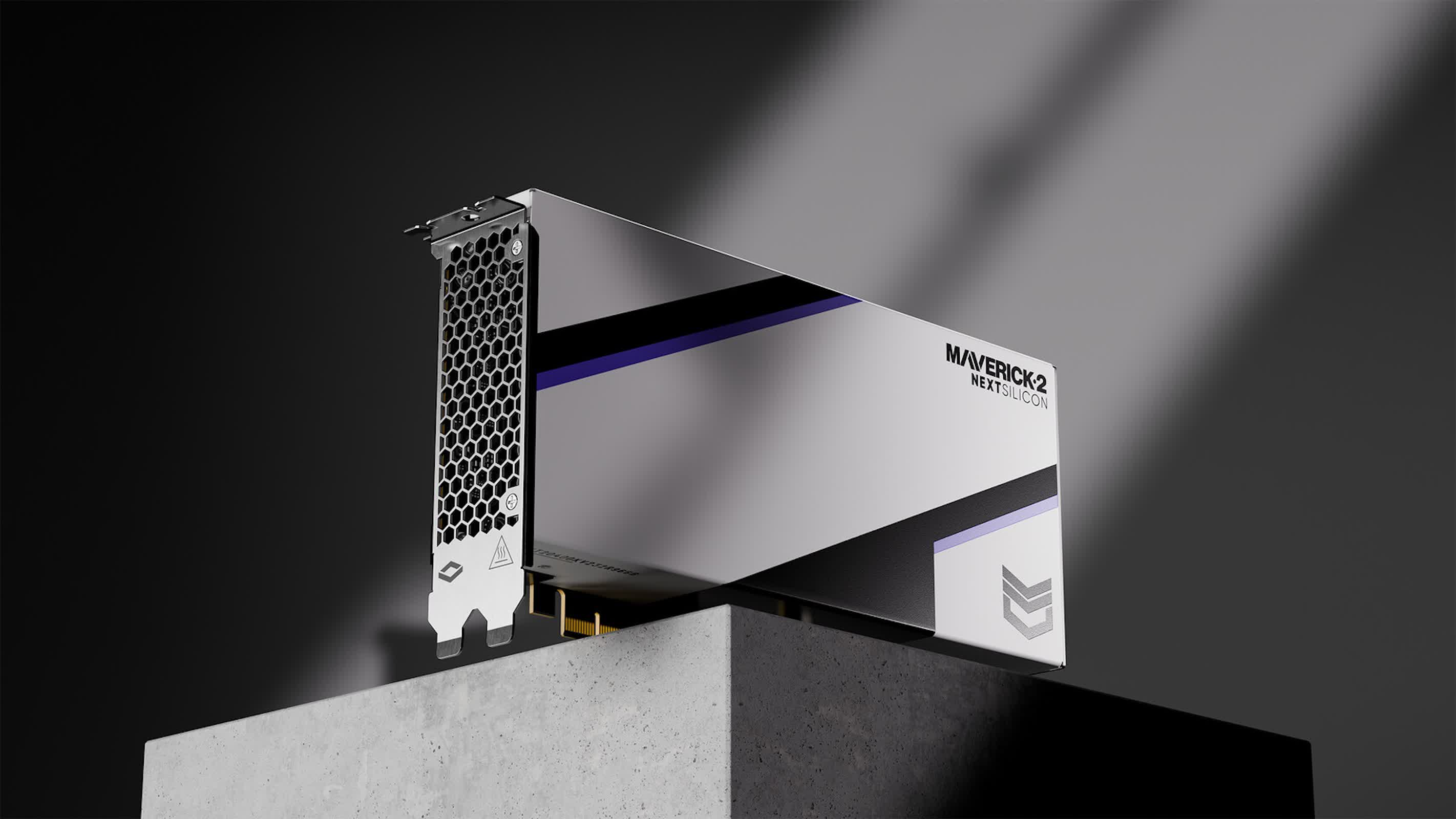
NextSilicon's adaptive chip claims 10x performance over Nvidia GPUs
Signals:
- →NextSilicon's chip delivers 10x performance of Nvidia GPUs at 60% power consumption, potentially disrupting the $500B+ HPC market.
- →US national laboratories deploying the technology for nuclear weapons modeling validates real-world viability beyond controlled testing environments.
- →$300M-funded startup challenges Intel, AMD, and Nvidia dominance using adaptive architecture that requires no software rewrites.
Sensor Tech

YouTuber builds 2 billion frame-per-second camera
Interesting Engineering·21 October 2025·YouTuber builds camera capturing light at 2 billion frames per second - YouTuber AlphaPhoenix has built a high-speed camera in his garage to capture light at a record two billion frames per second.
Signals:
- →Demonstrates feasibility of extreme-speed imaging technology that could revolutionize scientific research and industrial applications.
- →Shows DIY approach to building sophisticated equipment, reducing costs for institutions requiring high-speed visualization capabilities.
- →Reveals practical solutions for real-time data processing at unprecedented speeds, applicable to defense, manufacturing, and research sectors.
(Tele)communications

World's largest cable-laying vessel transforms offshore wind infrastructure
Interesting Engineering·22 October 2025·World's largest subsea cable-laying vessel launched in China - A Belgian firm has launched the world's largest subsea cable layer which will install over 1,700 miles of offshore power cables by 2026.
Signals:
- →Largest cable-laying vessel accelerates Europe's offshore wind infrastructure deployment, critical for meeting €400 billion renewable energy transmission investment needs by 2050.
- →Ultra-low emission vessel technology reduces operational costs and carbon footprint, improving project economics for grid operators and renewable energy developers.
- →28,000-ton capacity enables simultaneous four-cable installation across 1,700 miles, significantly reducing project timelines and infrastructure development costs for interconnection networks.
XR / Spatial Computing

World's smallest OLED pixel could revolutionize smart glasses
Interesting Engineering·24 October 2025·World’s smallest 300×300 nm pixel could transform smart glasses forever - Würzburg physicists create world’s smallest OLED pixel, paving way for high-res smart glasses and AR displays.
Signals:
- →Enables ultra-compact, high-resolution displays small enough to integrate invisibly into smart glasses and wearable devices.
- →Overcomes previous technical barriers in OLED miniaturization, making commercially viable AR/VR products feasible.
- →Opens new market opportunities across consumer electronics, medical devices, and next-generation wearable technology sectors.

Alibaba's $660 AI glasses challenge Meta's pricier Ray-Bans
Semafor·24 October 2025·How Alibaba’s new smart glasses differ from Meta’s Ray-Bans | Semafor - Alibaba’s Quark AI glasses undercut Meta’s Ray-Bans on price, but compete in a different lane in terms of tech.
Signals:
- →Alibaba undercuts Meta's AI glasses by $140, intensifying competition in emerging wearable technology market.
- →Meta's wristband control system offers unique platform potential for third-party developer integration and expansion.
- →Alibaba's Qwen AI models provide strong backend capabilities that could differentiate their product offering.

Physicists create world's smallest pixel for AR glasses
Signals:
- →Breakthrough enables AR/VR displays 1000x smaller, fitting full HD resolution on one square millimeter for practical smart glasses.
- →Solves critical miniaturization challenge by preventing current concentration and filament formation in nanoscale OLEDs through innovative insulation design.
- →Opens market opportunities for invisible wearable displays integrated into eyeglasses, contact lenses, and body-worn devices with improved efficiency potential.

Swedish researchers develop retinal e-paper for reality-like VR displays
New Atlas·23 October 2025·Retina e-paper screens are visually indistinguishable from reality - New retina e-paper with metapixels creates tiny, high-resolution screens visually indistinguishable from reality, revolutionizing virtual reality and optics.
Signals:
- →Metapixel technology eliminates pixel degradation at microscopic scales, enabling VR displays matching human eye resolution limits.
- →Retinal e-paper's 25,000 PPI resolution and minimal energy consumption could revolutionize VR, AR, and remote collaboration applications.
- →Breakthrough published in Nature demonstrates commercial viability for miniaturized high-resolution displays across multiple industries and consumer markets.

Amazon develops AI-powered smart glasses for delivery drivers
TechCrunch·22 October 2025·Amazon unveils AI smart glasses for its delivery drivers | TechCrunch - Amazon likely hopes that the new glasses will shave valuable time off of each delivery by providing delivery drivers with detailed directions and information about hazards directly in their line of sight.
Signals:
- →Smart glasses reduce delivery time by eliminating need to switch between phone, package, and surroundings during deliveries.
- →AI-powered hazard detection and real-time defect prevention minimize delivery errors and improve customer satisfaction metrics.
- →Wearable technology integration signals Amazon's competitive advantage in logistics automation and operational efficiency optimization.

JD Technology and Rokid launch smart-glasses shopping agent
Panda Daily·22 October 2025·JD Technology and Rokid Unveil “JoyGlance,” the World's First Smart-Glasses Shopping Agent Launching in November - Pandaily - JD Technology & Rokid unveil JoyGlance: smart-glasses shopping you control by looking and speaking—glance to find, voice to pay.
Signals:
- →Smart glasses enable frictionless commerce by eliminating smartphone dependency through voice and visual product identification technology.
- →Advanced voiceprint biometrics provide competitive payment security advantage, potentially reducing fraud and increasing consumer trust in wearable transactions.
- →JD-Rokid partnership establishes new retail channel capturing impulse purchases in real-world environments, expanding e-commerce addressable market significantly.
Robotics

Chinese startup builds $1,380 humanoid robot through vertical integration
Interesting Engineering·27 October 2025·How China built a humanoid robot for the price of an iPhone - Noetix Robotics’ new humanoid Bumi sells for just $1,380, making it one of the most affordable robots in China.
Signals:
- →Chinese startup achieved sub-$1,400 humanoid robot pricing through vertical integration and domestic supply chain optimization.
- →Rapid consumer adoption (500 units sold in two days) demonstrates viable mass-market demand for affordable robotics.
- →Cost breakthrough enables new consumer robotics segment, potentially disrupting traditional high-cost humanoid robot market dynamics.

Hypershell Pro X exoskeleton boosts hiking and running power
New Atlas·26 October 2025·Hypershell Pro X: AI Exoskeleton Review for Outdoor Adventures - Explore the Hypershell Pro X, an 800-watt AI exoskeleton enhancing outdoor adventures. Experience boosted strength, reduced strain, and improved mobility for all activities.
Signals:
- →Exoskeleton technology offers 40% more leg strength, potentially reducing workplace injury and improving worker productivity in physically demanding industries.
- →$1,099 price point makes assistive mobility technology accessible, opening markets for aging workforce and rehabilitation applications.
- →AI-powered wearable demonstrates commercial viability of exoskeletons beyond military/industrial use, signaling emerging consumer technology sector.

China unveils jellyfish-like robot for silent underwater surveillance
Interesting Engineering·25 October 2025·China unveils jellyfish-like robot for silent underwater missions - China has revealed a new biomimetic underwater drone with a transparent, jellyfish-like body designed for stealth surveillance missions, capable of blending into the deep-sea environment.
Signals:
- →China's jellyfish robot enables undetectable underwater surveillance with AI-powered autonomous target identification capabilities.
- →Silent, low-power design allows covert reconnaissance missions in sensitive marine environments without detection.
- →Biomimetic technology demonstrates China's advancing military and intelligence gathering capabilities in contested waters.
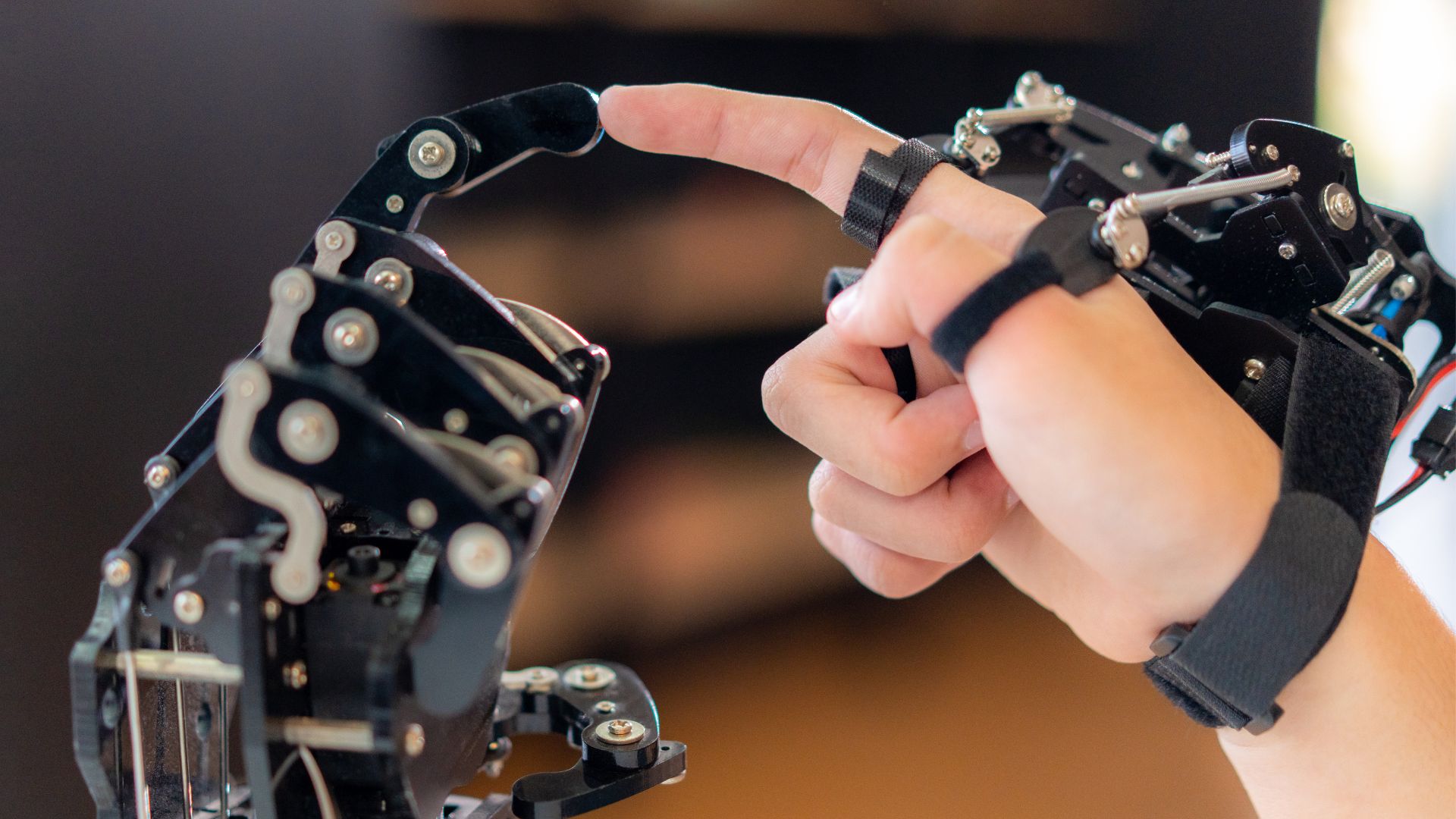
Teen builds research-grade robotic hand from Lego pieces
Interesting Engineering·25 October 2025·UK teen student's robot hand performs like research models - A Bristol student built a robotic hand from Lego that grips almost as well as a lab-made model.
Signals:
- →Demonstrates advanced robotics concepts can be taught using affordable, accessible materials instead of expensive research equipment.
- →Open-source design enables widespread STEM education and hands-on learning in schools with limited budgets.
- →Proves student innovation can match professional research performance at fraction of typical development costs.

Liquid crystals make soft robot muscles 2,000x stronger
Interesting Engineering·23 October 2025·Liquid crystal elastomers give soft robotics 2,000x lifting power - Scientists create stronger liquid crystal elastomers that can lift 2,000x their weight, paving the way for next-gen soft robotic muscles.
Signals:
- →Soft robotic "muscles" now achieve 2,000x load-lifting capacity, enabling practical applications in surgery, drug delivery, and manufacturing previously limited to labs.
- →Liquid crystal elastomer technology offers lightweight alternative to traditional motors and pumps, reducing equipment bulk while maintaining safety for human interaction.
- →Material's 3D-printable potential allows customized robotic designs with biological motion efficiency, opening new markets in medical devices and industrial automation.

Phantom MK-1: Military's first humanoid robot soldier arrives
Interesting Engineering·22 October 2025·Real Star Wars battle droid? Phantom MK-1 robot brings sci-fi to war - The Phantom MK-1 is built for combat, with vision-based AI, human oversight, and a rugged design for extreme missions.
Signals:
- →Foundation's Phantom MK-1 represents first openly weaponized humanoid robot, establishing new military technology precedent requiring strategic policy responses.
- →Humanoid soldiers could become primary battlefield units within decade, fundamentally altering military force composition and operational doctrine across nations.
- →Human-in-the-loop design raises critical governance questions about autonomous weapons, AI decision-making authority, and international military technology regulation standards.

Leaf-inspired aquabots monitor water ecosystems silently
Signals:
- →Ethanol-powered aquabots offer 3.5x fuel efficiency for extended environmental monitoring missions with minimal operational costs.
- →Silent, camouflaged design enables unobtrusive water quality and pollution tracking without disrupting wildlife or ecosystems.
- →Wireless sensing capabilities and programmable control support scalable deployment for real-time data collection across multiple aquatic environments.
Autonomy and Drones

DJI Osmo Mobile 8 adds pet tracking and 360-degree pans
The Verge·24 October 2025·DJI’s new Osmo Mobile 8 adds pet tracking and 360-degree camera pans | The Verge - It’s available now for around $126, but only in China.
Signals:
- →DJI launches upgraded smartphone stabilizer with 360-degree rotation and enhanced pet tracking capabilities.
- →Product currently China-only at $126, with no confirmed international release timeline yet.
- →Apple DockKit integration enables broader app compatibility for autonomous subject tracking features.

AI-guided drones build structures in unreachable locations
TechXplore·23 October 2025·AI-guided drones use 3D printing to build structures in hard-to-reach places - Disaster has just struck, roads are inaccessible, and people need shelter now. Rather than wait days for a rescue team, a fleet of AI-guided drones takes flight carrying materials and the ability to build shelters, reinforce ...
Signals:
- →AI-guided drones with 3D printing enable rapid infrastructure construction in disaster zones and inaccessible locations, reducing emergency response times.
- →Large language models enable autonomous problem-solving during construction, achieving 90% success rates and adapting to real-time obstacles without human intervention.
- →Technology addresses critical infrastructure gaps in remote areas, space operations, and mountainous regions where traditional heavy machinery cannot operate effectively.

Shield AI unveils X-BAT combat drone with VTOL and stealth
New Atlas·23 October 2025·X-BAT VTOL CCA: Shield AI’s New Stealth Combat Drone - Shield AI introduces X-BAT, a Group 5 VTOL Collaborative Combat Aircraft. Utilizing Hivemind AI and an F-16 engine, this stealth drone boasts 2,000+ nm range and runway-free operation.
Signals:
- →X-BAT's VTOL capability eliminates runway dependency, enabling operations from austere locations, ships, and contested areas with degraded infrastructure.
- →Autonomous AI Hivemind software enables independent tactical operations without GPS/radio, reducing communication vulnerabilities in electronic warfare environments.
- →Combines fighter-jet speed (Mach 1.2), 2,000+ nautical mile range, and stealth design to create force multiplier reducing pilot risk and logistical demands.

NZ company uses undersea drones to protect seafloor cables
Signals:
- →NZ firm combines underwater and surface drones to rapidly inspect and surveil critical seafloor infrastructure.
- →Growing sabotage threats to data cables and pipelines create urgent need for protective surveillance capabilities.
- →Technology enables remote infrastructure monitoring from offices, reducing operational risks and costs significantly.
Military Tech

Russia successfully tests nuclear-powered cruise missile
New Atlas·27 October 2025·Russia Tests Burevestnik: The Nuclear-Powered Cruise Missile - Vladimir Putin confirms the 9M730 Burevestnik, a nuclear-propelled cruise missile with unlimited range, flew for 15 hours. Analyze the technology and global risks.
Signals:
- →Russia demonstrates unprecedented nuclear-powered cruise missile capability with 15-hour flight, challenging existing defense systems.
- →Weapon's terrain-hugging, unpredictable flight path makes interception extremely difficult, potentially rendering current defenses obsolete.
- →Deployment raises severe geopolitical tensions as even test launches could trigger international crises and escalation concerns.
Space

China's Zhuque-3 rocket completes static fire test milestone
Phys.org·28 October 2025·China's Zhuque-3 reusable rocket passes key milestone - The Chinese company LandSpace continues to develop the Zhuque-3 (ZQ-3), a two-stage reusable launch vehicle inspired by SpaceX's Starship and Super Heavy. They achieved their first milestone in January 2024 with a vertical takeoff and vertical landing (VTVL) using their VTVL-1 test vehicle at the Jiuquan Satellite Launch Center (JSLC) in northern China. By September, the company conducted a second VTVL test where the prototype hovered for over 200 seconds (the previous test lasting 60 seconds), followed by a static fire test with a prototype booster by June.
Signals:
- →China advancing reusable rocket technology, challenging SpaceX's dominance in cost-effective space launch capabilities.
- →Supports China's ambitious goal to become top-3 space power by 2030, including lunar missions.
- →Signals intensifying global space competition affecting commercial launch markets and geopolitical space leadership.

China launches first reusable heavy rocket ZhuQue-3
New Atlas·24 October 2025·ZQ-3: China’s SpaceX Rival Completes First Static Fire - Landspace conducted the first static fire test of the ZQ-3 reusable heavy booster. Learn how this methane-fueled rocket aims to replicate SpaceX's success and radically reduce launch costs for China.
Signals:
- →China's reusable rocket development directly threatens U.S. space market dominance and launch cost leadership.
- →ZQ-3 success accelerates China's 2030 Moon landing goal, reshaping geopolitical space competition.
- →Methane-fueled reusable technology represents significant advancement in China's independent space capabilities and infrastructure.

Nvidia launches H100 GPUs to space next month
Signals:
- →Space-based data centers offer 10x cost reduction and unlimited renewable energy, addressing critical infrastructure needs as AI power demand increases 165% by 2030.
- →Eliminates water cooling requirements and reduces carbon emissions by 10x over facility lifetime, supporting sustainability and ESG commitments.
- →Starcloud's November launch demonstrates commercial viability of orbital computing, positioning early adopters for competitive advantage in AI infrastructure market.

Starcloud launches space-based data centers with NVIDIA GPUs

Signals:
- →Space-based data centers could reduce energy costs by 10x while eliminating Earth's power consumption burden.
- →Infinite solar power and space cooling eliminate water usage and infrastructure constraints of terrestrial facilities.
- →Real-time space processing enables faster critical responses for wildfires, weather prediction, and emergency detection.
Crypto

AWS outage exposes crypto's reliance on centralized infrastructure
 CoinTelegraph·26 October 2025·AWS Outage Shows Crypto’s Weak Spot: Centralized Dependence - An AWS outage that disrupted Coinbase, Robinhood, and MetaMask exposed how Web3 still runs on centralized infrastructure despite its decentralization ideals.
Signals:
- →AWS outage locked millions from crypto platforms despite blockchains functioning, exposing critical centralized infrastructure dependencies.
- →Approximately 70% of Ethereum nodes rely on three cloud providers, creating concentrated single-point-of-failure risks.
- →Hybrid decentralized infrastructure investment needed urgently to prevent future widespread service disruptions and ensure resilience.

Thai regulators raid World iris scanning site, arrest suspects
CoinTelegraph·24 October 2025·Thai SEC Cracks Down On World’s Unlicensed Operations - Thailand’s SEC and Cyber Crime Investigation Bureau raided an iris scanning location linked to Sam Altman’s World project, citing potential breaches of local digital asset laws.
Signals:
- →Thai SEC raided World's iris scanning site for operating WLD token exchange services without proper licensing.
- →Arrests made highlight regulatory risks for biometric identity platforms operating across multiple jurisdictions globally.
- →World faces mounting international scrutiny, signaling potential compliance challenges for AI-linked cryptocurrency projects.

SBF pardon odds surge to 12% after CZ's release
CoinTelegraph·24 October 2025·Chances of SBF Pardon Rockets to 12% on Polymarket - Polymarket odds of the Trump administration pardoning Sam Bankman-Fried have more than doubled to 12% on the news of Changpeng Zhao’s pardon today.
Signals:
- →SBF pardon odds doubled to 12% following CZ's pardon, signaling market perception of potential executive clemency for crypto figures.
- →Significant capital ($6.5M+) flowing into prediction markets indicates investor conviction about political outcomes affecting crypto industry leadership.
- →Pardon precedent creates regulatory uncertainty for crypto sector, potentially influencing compliance strategies and political engagement by major platforms.

Trump pardons Binance founder Changpeng Zhao
TechCrunch·23 October 2025·Trump pardons Binance founder Changpeng Zhao | TechCrunch - Changpeng Zhao previously pleaded guilty to enabling money laundering while running the cryptocurrency exchange, and served four months in prison last year.
Signals:
- →Presidential pardon signals potential policy shift favoring cryptocurrency industry after Biden-era enforcement crackdowns.
- →Trump family's $4.5 billion crypto venture benefits from Binance partnership, raising governance and conflict-of-interest concerns.
- →Pardon reverses major corporate enforcement precedent, affecting regulatory expectations for financial crime prosecutions going forward.

Prediction markets surge past $2B as Polymarket joins World App
CoinTelegraph·22 October 2025·Sam Altman's World Adds Polymarket In Direct Integration - World, OpenAI CEO Sam Altman’s digital identity project, formerly known as Worldcoin, is expanding into prediction markets by integrating Polymarket.
Signals:
- →Prediction markets reaching $2 billion weekly volumes signal massive institutional adoption and market maturation requiring regulatory strategy updates.
- →World App's 30 million users and Polymarket integration create significant new distribution channel for prediction market accessibility and growth.
- →Major institutional investments ($2B Intercontinental Exchange, $300M Kalshi funding) indicate prediction markets becoming mainstream financial infrastructure requiring competitive positioning.

Ethereum enters final testnet phase before December Fusaka upgrade
CoinTelegraph·21 October 2025·Ethereum’s Fusaka Upgrade Adds Per-Transaction Gas Limit Cap - Ethereum’s Fusaka upgrade introduces a 16.78M per-transaction gas cap under EIP-7825, improving block efficiency and paving the way for parallel execution in 2026.
Signals:
- →Per-transaction gas cap prevents DoS attacks and improves block efficiency, directly impacting network security and transaction throughput.
- →Fusaka upgrade enables parallel execution foundation, critical for Ethereum's scalability roadmap and competitive positioning.
- →Dec. 3 mainnet deployment requires stakeholder preparation; testnet validation ensures validators and clients are ready for activation.
Energy

Organic solar cells achieve record 21% efficiency breakthrough
TechXplore·27 October 2025·Organic solar cells reach 21% efficiency with two-step crystallization process - While most solar cells on the market today are based on silicon, energy engineers have recently been assessing the performance of alternative cells based on other photovoltaic (PV) materials. These alternative options include ...
Signals:
- →Organic solar cells achieved record 21% efficiency, advancing flexible and lightweight renewable energy alternatives.
- →New crystallization process enables cost-effective, customizable solar applications for buildings and portable devices.
- →Technology breakthrough addresses efficiency gap with silicon, moving closer to commercial viability and market adoption.

Zinc-organic battery achieves 40,000-cycle breakthrough with 93% retention
Interesting Engineering·23 October 2025·3D organic polymer battery lasts 40,000 cycles without fading - A 3D polymer-based zinc–organic battery achieves record stability and voltage, lasting over 40,000 cycles with minimal loss.
Signals:
- →Zinc-organic battery achieves 40,000-cycle lifespan with 93% retention, enabling cost-effective long-term energy storage solutions.
- →Recyclable, non-toxic design positions technology for grid storage and wearable electronics markets without environmental harm.
- →3D polymer framework principles applicable to lithium-sulfur and sodium batteries, expanding sustainable energy storage options.

Startup moves pumped hydro energy storage to the ocean
TechCrunch·22 October 2025·One startup’s quest to store electricity in the ocean | TechCrunch - Sizable Energy has a plan to store excess renewable energy in flexible reservoirs out at sea. The startup has raised $8 million to test prototypes.
Signals:
- →Offshore pumped hydro addresses critical energy storage gap as renewable adoption accelerates, requiring scalable long-duration storage solutions beyond traditional batteries.
- →Standardized offshore manufacturing enables mass production at €20/kWh, dramatically reducing costs compared to site-specific land-based infrastructure and grid-scale batteries.
- →Technology pairs with offshore wind infrastructure and serves any deep-water grid, expanding deployment possibilities globally while enhancing grid resilience and reliability.

Iran doubles down on solar power expansion nationwide
Semafor·22 October 2025·Iran to roll out solar power projects nationwide | Semafor - The country’s solar capacity doubled this year, and officials want to increase it a further fourfold in three years.
Signals:
- →Iran's renewable energy expansion signals geopolitical shift toward energy independence and reduced reliance on oil exports.
- →Emerging markets' aggressive solar adoption creates significant opportunities for equipment suppliers and renewable energy investors globally.
- →Developing nations prioritizing solar addresses climate commitments while managing power shortages, reshaping global energy market dynamics.

China launches world's first wind-powered underwater data center
New Atlas·22 October 2025·China's Wind-Powered Underwater Data Center: A Sustainable Leap - Explore China's innovative wind-powered underwater data center off Shanghai. This sustainable facility drastically cuts energy, water, and land use for AI, 5G, and IoT applications.
Signals:
- →Underwater data centers reduce power consumption by 22.8% and eliminate freshwater use, addressing critical sustainability challenges in AI infrastructure scaling.
- →Wind-powered cooling technology cuts cooling energy from 40-50% to below 10% of total power use, significantly lowering operational costs.
- →China's ¥200 billion computing expansion by 2027 signals major competitive advantage in AI infrastructure, requiring strategic response from other nations.

China's Mingyang builds world's largest 50 MW floating wind turbine
Interesting Engineering·21 October 2025·World’s largest 50 MW typhoon-braving wind turbine to debut in China - China's largest private wind turbine manufacturer has revealed a record-breaking 50 MW offshore design with twin 950-feet rotors.
Signals:
- →Mingyang's 50 MW floating turbine doubles existing capacity, positioning China as offshore wind technology leader globally.
- →Sub-$1,300/kW cost undercuts European and Chinese competitors, reshaping floating wind economics and market competitiveness.
- →Typhoon-resistant design enables deep-water deployment, unlocking renewable energy potential in previously inaccessible harsh ocean environments.
Transport

Old Nissan Leaf doubles range with $7,000 battery upgrade
CleanTechnica·27 October 2025·Old Nissan Leaf Gets About 180 Miles Of Range (Video) - CleanTechnica - It appears the new extended range is about 180-200 miles, though it has not been road tested at that point.
Signals:
- →Battery replacement at $6,000-$7,000 extends EV lifespan, offering cost-effective alternative to new vehicle purchases.
- →Aftermarket battery upgrades demonstrate emerging circular economy opportunities in aging EV fleet management.
- →Old battery repurposing for home energy storage creates secondary revenue streams and sustainability benefits.

Baidu launches robotaxi testing in Switzerland with PostBus
TechXplore·22 October 2025·Baidu confirms robotaxi project with Switzerland's PostBus - Baidu will start testing self-driving taxis in Switzerland this year in collaboration with the country's PostBus public transport service, the Chinese tech firm said Wednesday.
Signals:
- →Chinese autonomous vehicle companies are rapidly expanding into European markets, signaling intensifying global competition in robotaxi technology.
- →Baidu's Switzerland partnership demonstrates commercial viability of driverless services with established public transport operators by 2027.
- →Multiple Chinese firms securing European partnerships simultaneously indicates accelerating international deployment of autonomous vehicle technology.

China's CR450 bullet train hits 281 mph record
Interesting Engineering·21 October 2025·World's fastest train hits 281 mph in pre-service trials in China - World’s fastest bullet train, China’s CR450, hit a record in trials, setting a new benchmark for high-speed travel.
Signals:
- →CR450 demonstrates China's technological advancement in high-speed rail, positioning competitive advantage in global transportation infrastructure markets.
- →2026 commercial launch creates investment opportunities in rail networks, supply chains, and related transportation technology sectors.
- →Record-breaking efficiency improvements signal innovation potential applicable to broader industrial and automotive sectors beyond rail transport.
3D Printing

German startup 3D-prints custom bike saddles from butt data
New Atlas·24 October 2025·Personomic: 3D-Printed Custom Bike Saddle From Your Butt Data - Personomic creates custom 3D printed bike saddles using your unique butt data and riding style. Enjoy personalized comfort for road, gravel, and MTB cyclists.
Signals:
- →Custom 3D-printed bicycle saddles offer competitive advantage through personalized comfort at lower price points than competitors.
- →At-home measurement technology reduces distribution costs and eliminates need for retail partnerships in customization market.
- →German startup demonstrates scalable mass-customization model applicable across consumer product categories beyond cycling equipment.
Quantum Tech

Quantum teleportation achieved through active internet traffic
Signals:
- →Quantum and classical networks can share existing fiber infrastructure, eliminating costly specialized builds.
- →Enables secure quantum connectivity for enhanced encryption and next-generation computing networks.
- →Proven feasibility accelerates quantum internet deployment using current telecommunications systems.
BCIs and Neuro Tech

Cyborg cockroaches navigate obstacles using UV light feedback
Signals:
- →Non-invasive cyborg insects achieve 94% navigation success, offering viable alternative to traditional robots in hazardous environments.
- →Sensory-based control eliminates tissue damage and habituation problems inherent in electrode-based systems, enabling sustained operations.
- →Low-power biological-electronic hybrid demonstrates scalable approach for confined-space exploration where conventional robotics fail.
Health Tech

Transparent UV sensor alerts smartphone before skin damage occurs
New Atlas·25 October 2025·Innovative Transparent Sensor Protects Skin from UV Radiation - Discover a transparent skin sensor that detects UVA radiation, alerting your smartphone to prevent sun damage, premature aging, and skin cancer risks.
Signals:
- →Transparent UV sensor enables real-time smartphone alerts before dangerous sun exposure causes skin damage.
- →Technology integrates seamlessly into existing wearables like smartwatches, glasses, and clothing for continuous monitoring.
- →Device accurately detects harmful UVA radiation, helping prevent skin cancer and premature aging proactively.

Tiny chip implant restores sight in blind patients
Signals:
- →81% of patients with irreversible blindness regained ability to read after chip implant.
- →Wireless retinal implant requires no external power, making it practical for widespread adoption.
- →Technology addresses age-related macular degeneration affecting millions globally with no current cure.
Bio Tech

Scientists find powerful antibiotic hidden in familiar bacteria
Phys.org·28 October 2025·Chemists discover antibiotic for drug-resistant bacteria 'hiding in plain sight' - Chemists from the University of Warwick and Monash University have discovered a promising new antibiotic that shows activity against drug-resistant bacterial pathogens, including MRSA and VRE
Signals:
- →New antibiotic shows 100x greater potency against MRSA and VRE than existing treatments.
- →No resistance detected in testing, unlike vancomycin, a current last-line treatment option.
- →Scalable synthesis already developed, enabling faster pathway to clinical testing and deployment.

Metallic nanodots selectively kill cancer cells using reactive oxygen
Phys.org·27 October 2025·Metallic nanodots use reactive oxygen to selectively kill cancer cells - An international research team led by RMIT University has created tiny particles, known as nanodots, made from a metallic compound that can kill cancer cells while leaving healthy cells largely unharmed. While this work is still at the cell-culture stage—it hasn't been tested in animals or people—it points to a new strategy for designing cancer treatments that exploit cancer's own weaknesses.
Signals:
- →Novel nanodots kill three times more cancer cells than healthy cells without requiring light activation.
- →Technology uses cheaper, safer metal oxide instead of expensive gold/silver, enabling cost-effective scalable manufacturing.
- →Selective targeting exploits cancer cells' inherent vulnerabilities, potentially reducing collateral damage from traditional treatments.

Scientists unlock genetic switch to triple wheat grain production
 SciTechDaily·21 October 2025·Scientists Just Found a Tiny Genetic Switch That Could Feed Billions - A once-silent wheat gene may hold the secret to growing far more grain from every field.
Signals:
- →Activating WUSCHEL-D1 gene enables wheat to produce three grains per flower instead of one, significantly increasing crop yields.
- →Higher wheat yields achievable without additional land, water, or fertilizer resources, addressing food security amid climate change pressures.
- →Gene-editing toolkit enables breeders to develop improved wheat varieties and potentially apply similar techniques to other grain crops globally.
mRNA vaccines turn "cold" tumors "hot" to fight cancer
Signals:
- →mRNA vaccines dramatically improve 3-year survival rates (40-60%) for Stage IV lung cancer and melanoma patients receiving immunotherapy.
- →Discovery reveals off-the-shelf mRNA-nanoparticle platform could replace expensive, time-consuming personalized cancer vaccines while achieving similar results.
- →Technology transforms treatment-resistant "cold" tumors into "hot" ones responsive to immunotherapy, potentially applicable across multiple advanced cancer types.
Environment Tech

Ocean CO₂ converted into biodegradable plastic feedstock
Interesting Engineering·21 October 2025·Scientists turn ocean CO2 into bioplastic in world-first system - Scientists develop a system that captures CO2 from seawater and converts it into bioplastic feedstock, cutting emissions.
Signals:
- →Ocean CO₂ capture technology offers scalable alternative to land-based carbon capture at competitive $230/ton cost.
- →System produces biodegradable plastic feedstock, enabling circular economy and reducing reliance on fossil fuel-based materials.
- →Modular design allows production of multiple industrial chemicals, creating diverse revenue streams and market applications.
Climate Tech

New air filter transforms buildings into carbon sinks
TechXplore·New air filter could turn every building into a carbon sink - Despite decades of warnings and increasing efforts to fight climate change, global carbon emissions are still rising. While cutting emissions from the source is a common way we address this problem, another crucial strategy ...
Signals:
- →Distributed carbon capture technology enables cost-effective emissions reduction at $209-$668 per ton, significantly cheaper than centralized DAC plants.
- →Filter integrates into existing building ventilation systems globally, potentially removing 596 million tons CO2 annually without major infrastructure investment.
- →Solar and low-energy regeneration methods achieve 92.1% net carbon removal efficiency, making scalable deployment economically and environmentally viable.
⏳ Zeitgeist
Climate

Millions of coastal buildings face inundation from rising seas
Signals:
- →3-130 million buildings in Global South face inundation from sea-level rise, threatening critical ports and infrastructure disrupting global supply chains.
- →Even modest 0.5-meter rise by 2100 endangers 3 million buildings; decision-makers need immediate adaptation and relocation planning strategies.
- →Interactive risk maps enable urban planners to guide land-use decisions and minimize exposure of future coastal developments to rising seas.

Global coal use hits record high despite renewable energy growth
Semafor·23 October 2025·Global use of coal hits record high in 2024 | Semafor - Most countries have pledged to wean themselves off coal, but it is cheap even if it is polluting.
Signals:
- →Coal consumption reached record levels in 2024 despite renewable growth, signaling energy transition slower than climate commitments require.
- →Political leadership divergence—Trump supports coal/oil while South Africa pivots to nuclear—creates unpredictable global energy policy landscape for investors.
- →Paris Agreement climate targets significantly off-track across 45 key indicators, requiring urgent policy and investment strategy reassessment.

US and Qatar pressure EU to weaken climate rules
Semafor·23 October 2025·US, Qatar intensify pressure on EU over climate rules | Semafor - The two countries sent a letter urging the EU to water down the bloc’s climate rules, arguing they pose an ‘existential threat’ to the region’s industrial competitiveness.
Signals:
- →US and Qatar leverage energy supply dependency to pressure EU into weakening climate regulations affecting their industries.
- →Corporate Sustainability Due Diligence Directive threatens 5% revenue fines, creating significant financial stakes for energy suppliers.
- →EU faces strategic dilemma balancing climate goals, energy security, and regulatory simplification amid geopolitical pressure.

Antarctic ice sheet faces irreversible collapse without emissions cuts
SciTechDaily·22 October 2025·“Catastrophic Consequences”: Scientists Warn of Abrupt, Irreversible Antarctic Collapse - Antarctica’s ice, ocean, and ecosystems are approaching tipping points that could trigger irreversible global impacts. Antarctica faces the growing threat of sudden and possibly irreversible transformations to its ice, oceans, and ecosystems, changes that could carry serious global consequences u
Signals:
- →West Antarctic Ice Sheet collapse could raise sea levels over 3 meters, threatening millions in coastal communities globally.
- →Interconnected Antarctic changes—ice loss, ocean circulation slowdown, ecosystem collapse—amplify climate impacts beyond the continent.
- →Rapid emissions reductions targeting 1.5°C are essential; existing Antarctic Treaty protections insufficient without climate action.
Biodiversity

Two iconic coral species functionally extinct off Florida
Phys.org·25 October 2025·Two iconic coral species are now functionally extinct off Florida, study finds - In early June 2023, the coral reefs in the lower Florida Keys and the Dry Tortugas were stunning. We were in diving gear, checking up on hundreds of corals we had transplanted as part of our experiments. The corals' classic orange-brown colors showed they were thriving.
Signals:
- →Two critical reef-building coral species are functionally extinct in Florida, eliminating coastal storm protection and tourism revenue.
- →97.8-100% mortality rate demonstrates climate-driven marine heat waves now exceed coral survival thresholds.
- →Restoration requires international coordination and immediate emissions reduction, or investments will face repeated catastrophic losses.
Pollution

Zambia's solar boom creates toxic waste crisis from counterfeit panels
Phys.org·27 October 2025·Zambia's solar success comes with toxic waste risk - Africa's renewable energy revolution needs careful management to avoid a toxic waste crisis, to prevent people from burning and burying old solar panels.
Signals:
- →Over one million solar panels in Zambia have failed prematurely, creating toxic waste management crisis.
- →Counterfeit products flooding markets accelerate environmental problems, lacking quality controls and proper disposal infrastructure.
- →Absence of regulatory policies and repair services risks replacing energy crisis with environmental disaster.

Rocket launches threaten ozone layer recovery, studies warn
New Atlas·25 October 2025·Rocket launches threaten ozone layer recovery, scientists warn - The surge in commercial space launches is releasing exhaust chemicals that threaten to slow ozone layer recovery, undoing decades of environmental progress. Cleaner propulsion is crucial.
Signals:
- →Rocket launches now exceed 2,000 annually, potentially reversing decades of ozone layer recovery progress.
- →Current propellants release chlorine and soot that catalytically destroy ozone in the stratosphere.
- →Without regulatory intervention and cleaner fuels, launch industry growth could offset Montreal Protocol gains.

New Delhi's air pollution hits five-year high amid Diwali season
Semafor·22 October 2025·New Delhi pollution hits five-year high | Semafor - Some parts of the city this week recorded an air-quality index reading of 1,800 — 20 times higher than levels the World Health Organization deems healthy.
Signals:
- →New Delhi's pollution crisis demonstrates urgent need for comprehensive air quality management policies affecting public health and economic productivity.
- →India's renewable energy progress insufficient without addressing seasonal pollution sources like agricultural burning and fireworks during major festivals.
- →$21 trillion investment gap reveals massive infrastructure and regulatory challenges for achieving India's 2070 net-zero emissions commitment.

Sentinel-4 delivers first images of European air pollutants
Signals:
- →First European mission delivering hourly air-quality observations from geostationary orbit enables near-real-time pollution monitoring.
- →Tracks critical pollutants (nitrogen dioxide, sulphur dioxide, ozone) affecting public health and environmental policy decisions.
- →Provides rapid pollution forecasting capabilities across Europe, supporting timely regulatory and emergency response actions.
Health

Germany orders cull of 130,000 birds amid bird flu surge
Phys.org·27 October 2025·Mass cull ordered near Berlin as Germany battles bird flu - German authorities said Sunday they have ordered the culling of around 130,000 ducks and chickens on farms near Berlin as the country battles a surge in bird flu cases.
Signals:
- →Germany culling 130,000 birds near Berlin due to rapid bird flu surge threatening poultry industry.
- →Disease spreading to wild cranes signals potential widespread transmission requiring immediate containment measures.
- →Human transmission theoretically possible, creating public health concerns despite currently low risk assessment.

H5N1 virus persists in raw milk cheese for months
SciTechDaily·14 October 2025·Bird Flu Found Lurking in Raw Milk Cheese, New Study Warns - Cornell scientists found H5N1 virus can persist in raw milk cheese for months. More acidic cheeses appear to prevent the virus from surviving. Raw milk cheeses made from contaminated milk were found to contain active avian influenza virus, posing potential health concerns for consumers, according
Signals:
- →H5N1 virus survives in raw milk cheese beyond FDA's 60-day aging requirement, requiring updated food safety protocols.
- →Cheese acidity (pH 5 or below) effectively prevents viral survival, enabling targeted production strategies to reduce contamination risk.
- →Current regulatory standards designed for bacterial pathogens inadequately address viral persistence, necessitating industry-specific guidance and testing procedures.

Elimination strategies cut Covid deaths without harming economies
 Adapt Research Ltd·22 October 2025·The great divide: How different Covid-19 control strategies shaped pandemic outcomes – Adapt Research Ltd - By Matt Boyd, Michael Baker, Amanda Kvalsvig & Nick Wilson (cross-posted from the PHCC Blog) Summary/TLDR At the onset of the Covid-19 pandemic, countries responded in a range of ways. Our new research reveals that those that put in place explicit exclusion/elimination strategies achieved dramatically lower Covid-19 mortality during the critical 2020-21 period. These jurisdictions…
Signals:
- →Elimination strategies achieved dramatically better health outcomes: -2.1 vs 166.5 deaths per 100,000 population during 2020-21.
- →Strong border restrictions showed no consistent negative economic impact, challenging assumed health-economy trade-offs.
- →Governance quality, particularly low corruption, was crucial for successful pandemic response implementation and outcomes.
Economics

Ireland makes basic income for artists program permanent
Signals:
- →Program generates €80 million economic benefit against €72 million cost, proving positive ROI for government investment.
- →Artists produce 22% more work while reducing reliance on other social programs by €100 monthly.
- →97% public support demonstrates strong political viability for similar creative sector economic interventions.
Geopolitics

China accelerates cleantech in 15th five-year plan recommendations
CleanTechnica·25 October 2025·China’s Clean Technology Recommendations for Their Next 5-Year Plan - CleanTechnica - Earlier this week, China’s ruling Communist party met in a plenary session and developed recommendations for the nation’s 15th five year plan, which would run through 2030. There are many aspects of the recommendations that could be explored in more depth, but several of the recommendations are specifically relevant to clean technology. Regardless of how you feel about China or their political system, they lead in many aspects of renewable energy and electric vehicles, and their national plans have global implications.In looking through the coverage, much of it seemed to focus on the outline bullet points, without the underlying context. As a result, they often added in assumptions that did not reflect the actual recommendations. As the recommendations were published (toward the bottom of the page), the most relevant sections to cleantech are quoted below. I added a few notes, but found it interesting to see the actual recommendation text, starting with the economy and manufacturing:“It was noted that we should build a modernized industrial system and reinforce the foundations of the real economy. To this end, we should keep our focus on the real economy, continue to pursue smart, green, and integrated development, and work faster to boost China's strength in manufacturing, product quality, aerospace, transportation, and cyberspace. The share of manufacturing in the national economy should be kept at an appropriate level, and a modernized industrial system should be developed with advanced manufacturing as the backbone. We should upgrade traditional industries, foster emerging industries and industries of the future, promote high-quality, efficient development in the service sector, and develop a modernized infrastructure system.”
Signals:
- →China accelerating cleantech leadership through 15th five-year plan, extending global competitive advantage in renewables and EVs.
- →Emphasis on "opening up" and multilateral cooperation creates opportunities for international collaboration and market access.
- →Aggressive green transition targets through 2030 will reshape global supply chains and competitive dynamics in clean technology.

China accuses NSA of hacking national timing systems
Signals:
- →Critical infrastructure vulnerability: NSA allegedly targeted China's national timing systems affecting finance, power, and communications networks.
- →Escalating cyber warfare: China's public accusations signal intensifying US-China digital conflict with sophisticated state-sponsored attacks.
- →Global supply chain risks: Attacks exploited foreign mobile phone vulnerabilities, highlighting third-party technology security weaknesses.

Australian think tank proposes Pacific-Eyes intelligence alliance
Signals:
- →Proposes structured intelligence-sharing framework to counter China's expanding security presence and influence in Pacific region.
- →Addresses fragmented intelligence exchanges that leave Pacific nations vulnerable to geopolitical surprises and transnational threats.
- →Recommends phased alliance starting with Australia, New Zealand, PNG, and Fiji to build regional security capacity.
🧠Mind expanding

International treaties could prevent lunar conflict between nations
Phys.org·22 October 2025·How spacefaring nations could avoid conflict on the moon - In the 1960s, Frank Sinatra's song "Fly Me to the Moon" became closely associated with the Apollo missions. The optimistic track was recorded in 1964, when US success against the Soviet Union in the moon race was not assured.
Signals:
- →Multiple nations planning permanent lunar bases at resource-rich south pole creates urgent need for conflict prevention frameworks.
- →Existing treaties lack enforcement mechanisms; major spacefaring powers (US, China, Russia) haven't signed comprehensive Moon Agreement.
- →Ambiguous "safety zones" in Artemis Accords risk creating de facto territorial claims, contradicting international non-appropriation principles.
💭Meme stream

AMD's Am9080 at 50: reverse-engineered chip launched CPU era
Signals:
- →Reverse engineering and licensing strategies can establish market position in competitive technology sectors.
- →Second-source manufacturing agreements provide entry into high-margin military and industrial contracts.
- →Process innovation enabling superior performance from copied designs demonstrates competitive manufacturing capability.

Zaha Hadid completes world's longest asymmetric cable-stayed bridge
New Atlas·23 October 2025·World’s longest single-mast cable-stayed bridge by Zaha Hadid Architects - The Danjiang Bridge in Taiwan, designed by Zaha Hadid Architects, is set to become the world’s longest single-mast cable-stayed bridge.
Signals:
- →Record-breaking infrastructure project demonstrates innovative design balancing engineering, aesthetics, and environmental protection simultaneously.
- →Significant budget commitment (US$385M) with delayed timeline highlights project management and cost control challenges in complex infrastructure.
- →Strategic location in Taipei's tourism hub shows how infrastructure design can enhance rather than detract from local economic and cultural value.